Star Trek Producer Defines When TNG Became Great, Challenges New Shows To Create More High-Concept Episodes
Renowned Star Trek executive producer Brannon Braga shares when he thinks Star Trek: The Next Generation became great before laying out his hopes for what he wants to see from future Star Trek series.
Braga joined Star Trek: The Next Generation in season 4 and wrote many high-concept episodes that pushed the boundaries of Star Trek, including "Cause and Effect," "Frame of Mind, and the series finale, "All Good Things...", which he penned with Ronald D. Moore. Braga and Moore co-wrote Star Trek Generations and Star Trek: First Contact before Brannon moved to Star Trek: Voyager, eventually becoming showrunner and creating Seven of Nine (Jeri Ryan). Finally, Braga co-created Star Trek: Enterprise with Rick Berman.

Brannon Braga joined The 7th Rule with Cirroc Lofton and Ryan T. Husk to help wrap up the podcast's 3-year mission to review every episode of Star Trek: The Next Generation. After Husk praised Braga for taking TNG to another level with his high-concept episodes, Brannon reveals his feeling that "Yesterday's Enterprise" (which premiered before he joined TNG) was the turning point that made The Next Generation great. Read Braga's quote below:
Brannon Braga: “I think, to me, anyway, the first episode to really [be high-concept] was ‘Yesterday’s Enterprise,’ which I did not write. I think that was a breakout episode. And, in fact, to me, a lot of people say, “No, ‘Best of Both Worlds’ was the moment the show…” ‘Yesterday’s Enterprise,’ I think, was the moment the show became great. And that was a high-concept, time travel-type episode.”
Although Braga admits that he's "not that familiar with" the current Paramount+ Star Trek era executive produced by Alex Kurtzman, Brannon detailed his hopes that future Star Trek writers endeavor to create high-concept stories "that challenge the audience's sense of reality." Read Brannon's quote below:
“Moving forward, one of the things that give me pause are Star Treks that are continuity-driven, because I worry that… I love high-concept episodes. I would just hope that people would continue to come up with cool, fresh ideas. I certainly tried to do so on Voyager. I would often think about a Voyager episode, ‘If this were a TNG, would be considered to be one of the greats?’ I just continued to do my thing on Voyager, where I had even more freedom, and eventually would run the show.
“I should also say that it’s not necessarily easy coming up with these ideas. It’s not like… A really cool concept is like mining for gold. They don’t come along that often. I would just hope that people would see the potential in the franchise. It’s such a great one. It’s so clean. You’ve got the benefit of characters that people love, hopefully, and want to spend time with, and yet, you can put them in any situation you can possibly think of. The sky really is the limit. You can do anything.
When I think about the new shows [of] the past 10 years, which I’m not that familiar with, but what I would ask the fans is, are there those episodes where you go, ‘That’s a classic? That one.’ In the same way that people go back to my era of Star Trek. And there’s agreement on what the top 10 episodes are, pretty much. Everyone pretty much agrees. Does this era have that? And I don’t know the answer to that question. Maybe it will take more time for that assessment to come.
But I think high concepts that challenge the audience’s sense of reality, and makes you think about reality in a different way, is a tall order. But if you can do it, they love it. They love it. If you can come up with a story that just completely turns reality inside out, and on Star Trek, you’ve got to literalize it. It’s not like Groundhog Day, which is one of the great science fiction movies. It came out after ‘Cause and Effect,’ for the record. They didn’t have to explain anything. On Star Trek, you’ve gotta come up with that extra twist to get out of the time loop. And for the record, it took me a long time to get out of that, and a whole writing staff. I didn’t do it by myself.”
Watch Brannon Braga on The 7th Rule below:
Brannon Braga speaks for a segment of fans who became Trekkies during the 1990s Rick Berman-produced era of Star Trek, which was also Braga's heyday with the franchise. Popular consensus is that longtime fans miss thought-provoking episodes that challenge the viewer, which isn't often found in Alex Kurtzman's era of Star Trek.
multi-answer Which Star Trek: The Next Generation character would you most like to see star in their own spin-off series?
Star Trek on Paramount+ redefined "high-concept" by producing different kinds of series for different audiences, leaning into serialization with Star Trek: Discovery and Picard, animated comedy in Star Trek: Lower Decks, animated adventure for younger viewers with Star Trek: Prodigy, and the young adult, college-set Star Trek: Starfleet Academy.
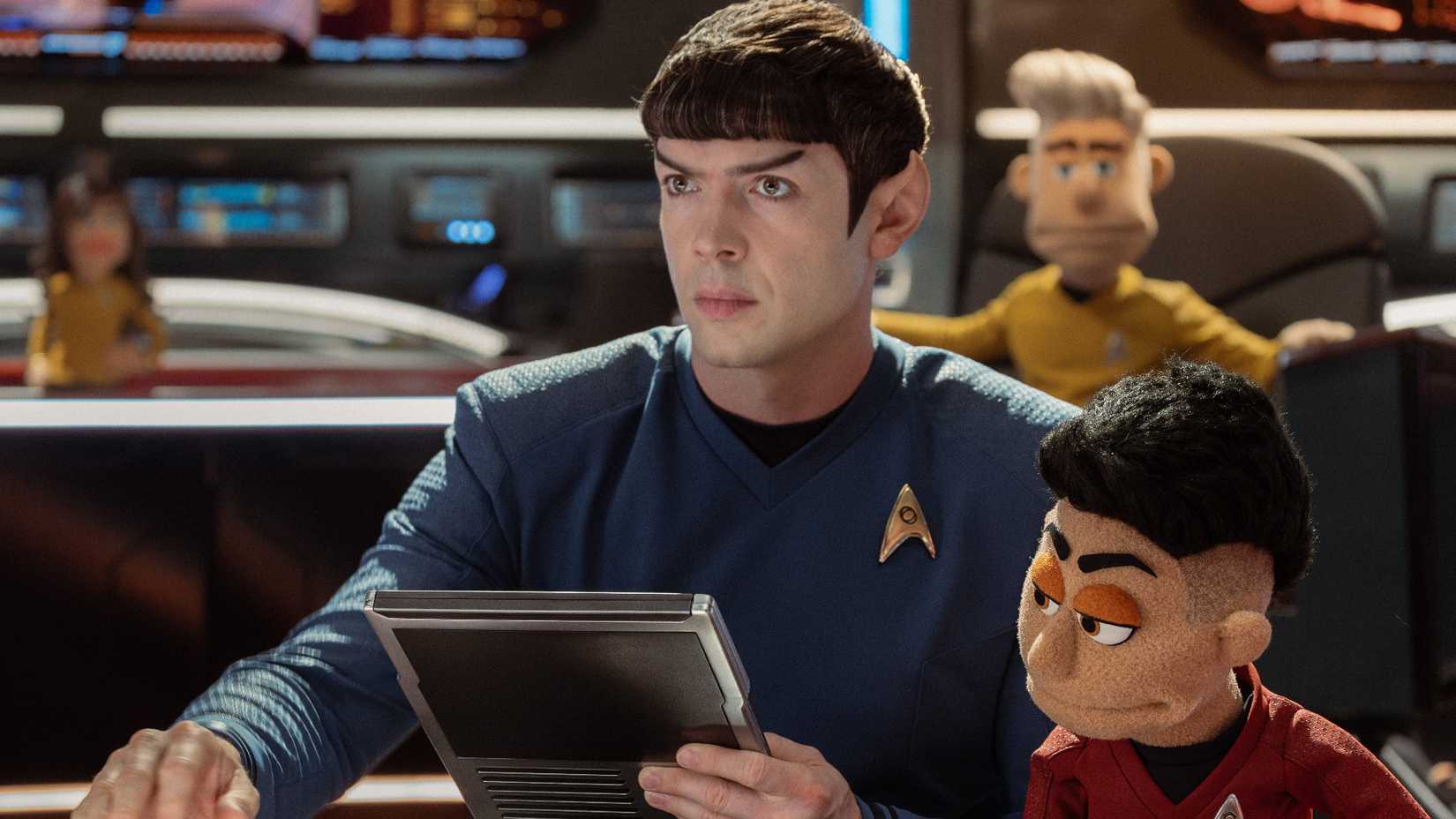
Star Trek: Strange New Worlds is "high-concept" in a different way. The Starship Enterprise-set prequel boldly jumps across genres, finding new ways to showcase the unlimited talents of Strange New Worlds cast. Star Trek: Strange New Worlds season 4's episodes have remade popular movies to explore time-travel, horror, madcap comedy, film noir, and even puppets.
However, Alex Kurtzman's era of Star Trek will soon conclude with the upcoming series finales of Star Trek: Starfleet Academy and Star Trek: Strange New Worlds, both expected to premiere on Paramount+ in 2027.
Wherever Paramount+ takes Star Trek next, many loyal fans would hail and agree with Brannon Braga's opinion that the next era of Star Trek should endeavor to create new "high-concept" episodes that challenge the audience the way the best of Star Trek: The Next Generation did.