Mortal Shell 2 Fulfills the First Game’s Potential and Is One of the Greatest Soulslikes (Review)
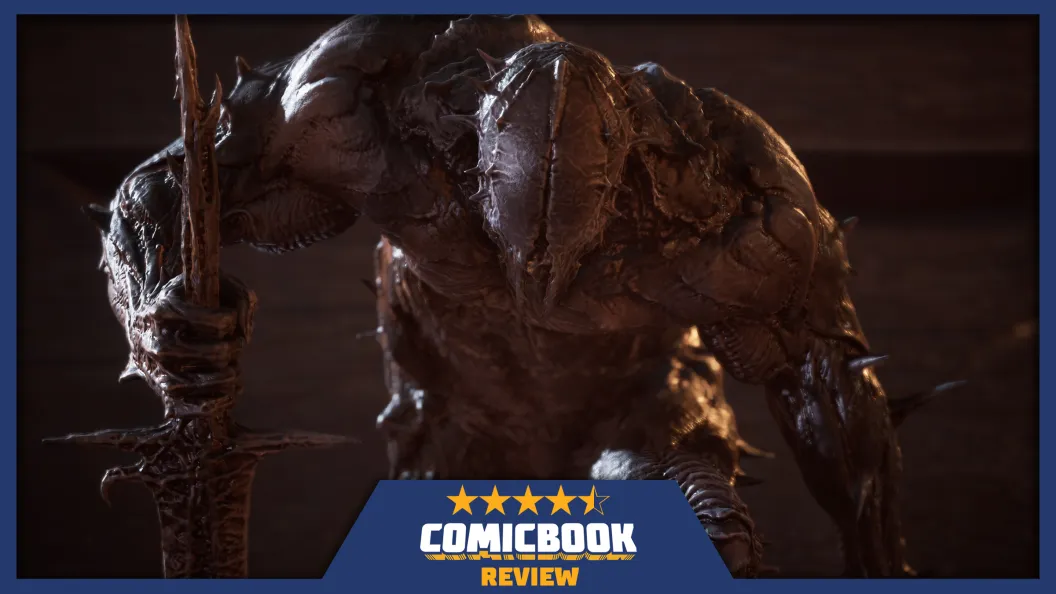
Mortal Shell was built on modesty. Whereas most Soulslikes indulge in massive maps and dozens upon dozens of hours of play, Mortal Shell reigned things in and could be conquered in around 10 hours. Such restraint is rare for new studios such as Cold Symmetry, as many first-time teams — even ones built from former AAA talent like Cold Symmetry — fall victim to overly ambitious visions. It was a respectable first attempt, buoyed by its small scope that showed a glimpse at what was possible. Mortal Shell 2 is the second draft that makes good on the promises lurking just beneath the shell of the first game, resulting in one of the strongest and most rewarding entries the Soulslike genre.
Mortal Shell 2, like the original, is able to stand so tall because of its pacing. Instead of painstakingly waiting seconds for a mere slash from a sword to finish its arc, Mortal Shell 2 delights in pulling shackles off players and giving them more mobility. If Soulslikes were on a spectrum from Nioh to Dark Souls, Mortal Shell 2 would comfortably be lounging near Team Ninja’s samurai-rich series.
Rating: 4.5/5
| Pros | Cons |
|---|---|
| Its no-fat approach means exploration is meaningful and the power curve is satisfyingly shorter | Some small bugs and a handful of minor design quibbles hold it back |
| Combat favors faster action and only has some Soulslike-esque weightiness | The absurd difficulty spike at the end hurts the pacing |
| The dense map wonderfully folds in on itself and constantly encourages players to explore |
Mortal Shell 2 Moves Quickly and Empowers Players
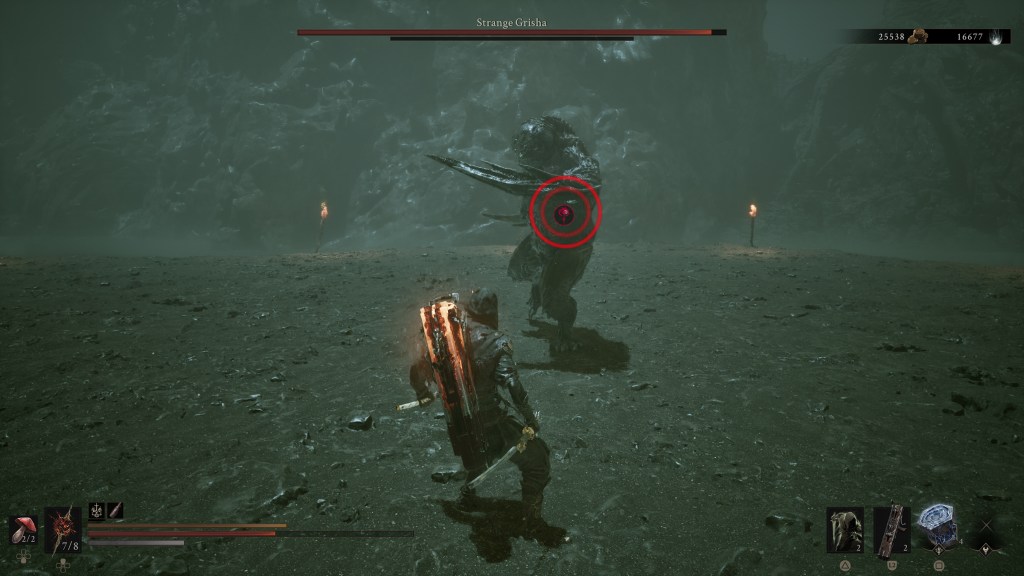
This tempo is welcome since it allows battles to fly by much quicker. A solid amount of animation canceling (the ability to bail out of attacks), reliable dodge, complete lack of a stamina bar, and relatively agile weapon swings all mean players aren’t locked into long animations and can go on the offense much more often. Getting in a few quick slashes with the handy katana and axe hybrid called the Axatana, finishing them off a few shotgun rounds, and then pulling off a perfect parry on lunging foe is just part of how players can turn the battlefield into a playground of violence. The aggression is a big part of the appeal here and is what separates Mortal Shell 2 from its numerous FromSoftware-inspired competitors that prioritize committing to moves and methodically chipping away at adversaries.
Said games often have enemies who move faster than the protagonist, which can create a frustrating disconnect; bosses from Elden Ring should not feel like they were ripped out of Ninja Gaiden 2. Mortal Shell 2‘s hero and the various evil beings in this cursed world are similarly matched, so the faceoffs between them feel much more fair. Like the aforementioned Nioh series, Mortal Shell 2 still has some heft to its movement and doesn’t ever feel like Devil May Cry, but it’s a great balance. Players have to think before acting, yet they aren’t encumbered by slow movement.
Mortal Shell 2‘s combat is elevated by the numerous loadout options players have at their disposal. Eight melee weapons, seven ranged ones, eight classes each with their own skill trees, three unique parries, and 73 total perks and special abilities can be mixed and matched in a staggering amount of ways and center around empowering those who want to put in the time to fine-tune their loadouts. Players can opt to go with the Eredrim Shell and his powerful shoulder charge and spec toward stat-boosting executions and a shotgun that further causes stamina damage or utilize Sester Genessa’s ghostly clone summons and a gatling gun to play more at a distance. There’s also the fiery Lazlo and his flame armor that could be combined with the slow hammer and the Harden parry for bigger blows that take some more windup.
The Harden parry makes for a great comparison point between Mortal Shell 2 and its predecessor as a whole. Being able to turn completely to stone at any time — as long as it is off its short cooldown — is a novel way to spin a standard parry into something with more utility; it can be used to cover up a bad swing, deflect a blow with the right timing, or immediately punish an overextended enemy. It’s still here and just as useful, but it’s now surrounded by many more options that, in turn, help make Hardening an even deeper mechanic.
Mortal Shell 2‘s Unholy World Is Excellently Designed
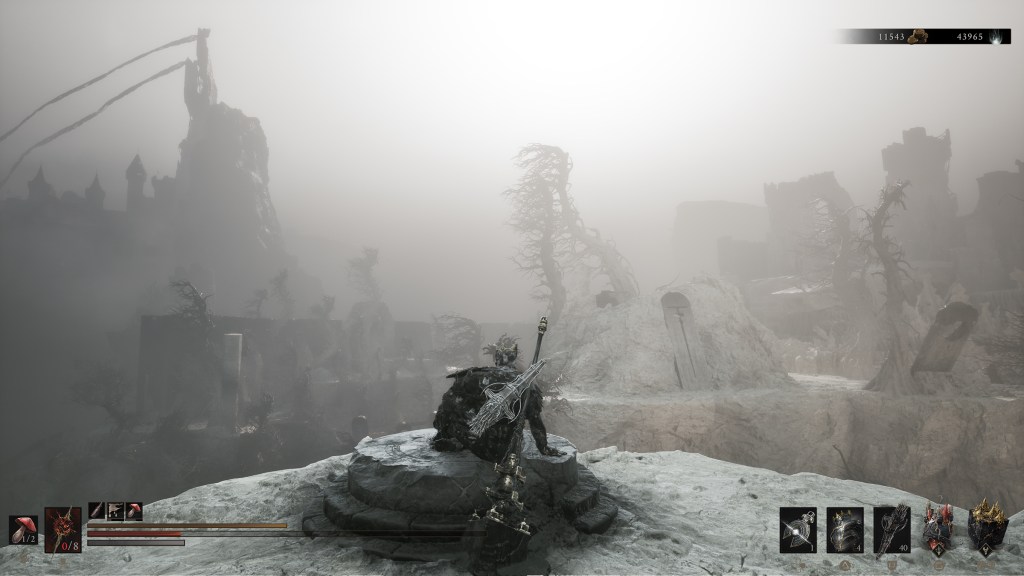
Most of these tools are scattered around Mortal Shell 2‘s malevolent map and highlight how well it is all laid out. This is an accomplishment because Mortal Shell 2 is much bigger than the first game and almost makes that older iteration of Fallgrim look like a diorama in comparison. The space is divided up into many biomes, each one more cursed than the last. One is a castle torn asunder by beasts, while another is a titan graveyard where massive skeletons litter the plains as much as the desperate beasts stranded in the ruins. They’ve all got their own visual identity and are significantly more complex than the first game’s rather pedestrian stages.
Whereas the original Mortal Shell had barren levels with little personality, its sequel has stages full of life and debris. The upgrade is astonishing, and the various points where it’s possible to sit down and admire the vistas seem like Cold Symmetry’s attempt at getting players to notice the improvements. It’s unfortunate the game currently has no photo mode.
But, more importantly, these beautiful landscapes are also beautifully designed. Each biome presents a web of possible paths and snakes into its neighbor in clever ways. One branch will often pull players one way, and that branch will only further branch on from there. It’s easy to spend hours investigating these overwhelming amount of roads only to, at the end, come to the first fork in the road but from the opposite end.
The way in which it loops in and around itself and uses curiosity to guide players through those loops is impressive. Stumbling upon a hidden treasure, new weapon, or even just a path that connects to a previously traversed trail are all fitting rewards for poking around, especially when some of these journeys lead to unexpected events. That nonlinear structure can sometimes lead to checkpoints being pretty far apart since not everyone will come at each route the same way, but the liberation this approach yields is worth the tradeoff.
Mortal Shell 2 Doesn’t Waste the Player’s Time
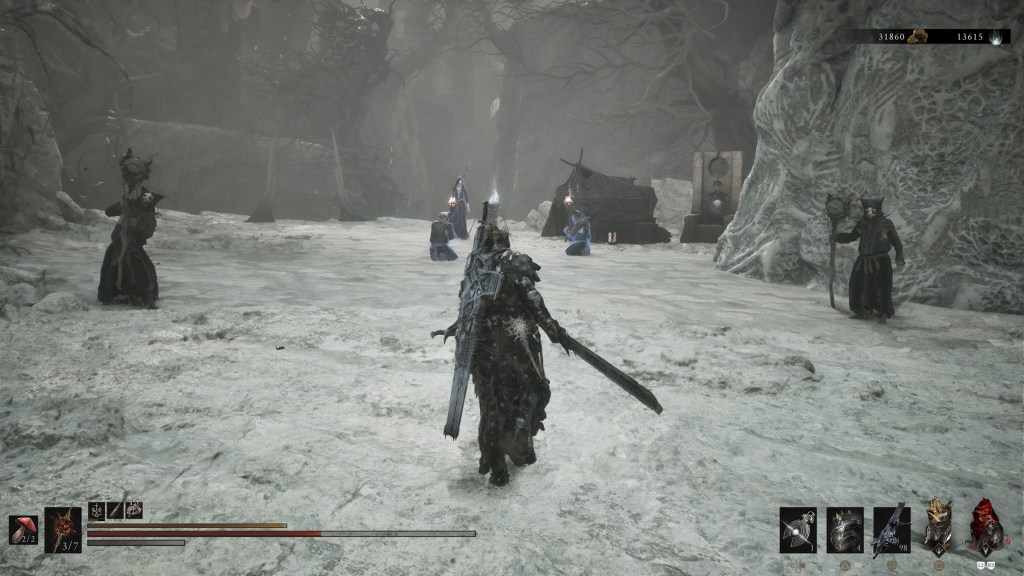
It’s clear Cold Symmetry borrowed from the Elden Ring playbook by designing its world for the player’s eye, but, unlike that beloved 2022 title, Mortal Shell 2 is a more condensed title that doesn’t stretch out over a hundred or so hours. It doesn’t contain much dead space or filler and is instead focused on density. There’s no endless running between zones or large stretches of nothing. Just about all that fat has been lopped off, meaning it’s safe to assume an area almost always has a purpose, be it a new Shell or secret, and isn’t there just to pad out the game.
Having an open game like this top out around 30 or so hours is refreshing because it demonstrates action RPGs like this don’t need to hit a certain hour count to be worthy. This also has the knockdown effect of letting players build power more quickly since the power curve doesn’t have to be artificially stretched out over a longer period of time; the game also welcomes respeccing and loadout switching and, thankfully, doesn’t make it too arduous. Mortal Shell 2 is much longer that its forebear, but it is able to keep its slimmed-down spirit alive all the same by not filling its world with fluff. And this is incredibly refreshing in an industry where ridiculous hour counts and all-encompassing bloat are plaguing more and more games.
The final stretch seems a little like padding, though, because of its massive difficulty spike. Getting one-shotted by spongy bosses or two-shotted by elite grunts can feel ridiculous and halts the momentum the game had building up until then. Mortal Shell 2 is a fittingly challenging experience at times, yet these late-game challenges are frustrating and border on being cheap.
Mortal Shell 2‘s Various Bugs and Story Diminish the Experience Just a Bit
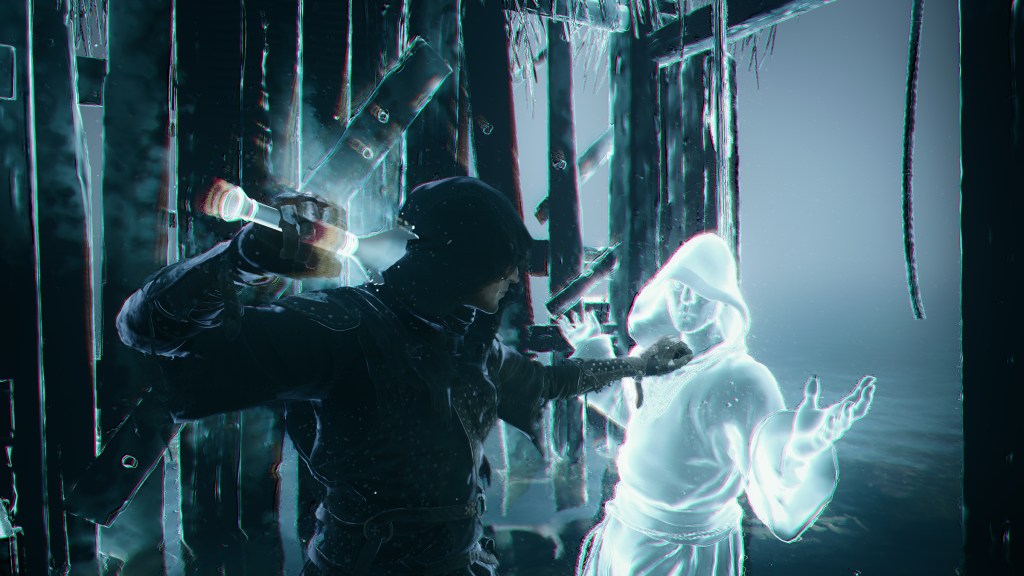
Mortal Shell 2 ascends over many of its peers, yet it still has a few of its own demons. A bug or two can pop up every now again, some of which can bounce the player up into the clouds or get them stuck in some nasty crevice. It’s rarely punishing and isn’t a constant, but it’s something that can happen.
It also lacks some of the quality-of-life features other genre heavyweights have. For example, fast traveling doesn’t show visual previews of the checkpoint in question, which can be confusing when looking for a specific destination. Dropped Gloom — its version of Souls — is ludicrously hard to see and isn’t deposited outside of boss lairs or picked up automatically upon entering. The Gloom counter on the heads-up display also doesn’t light up when players can level up. They’re still small annoyances, but any shortcomings will be noticeable in such a competitive genre. At least it is possible to easily pause the game.
It’s also a genre with its share of obtuse stories that have players picking through lore and nebulous cutscenes to decide what’s going on, and while Mortal Shell 2 has some elements it wants players to closely inspect, it’s not deep enough to warrant it. Collecting the ovum for the Undermether — an Eldritch version of female genitalia that can fly — is a straightforward goal that’s easy to follow, but just about everything else is hazy. It’s often unclear what the factions are or why the bosses matter. Some of the backstory is filled out through vignettes that unlock after upgrading Shells, but it’s not easy to see them all, given the cost of maxing out every class. With very few readable collectables and the lack of a codex, Mortal Shell 2‘s lore is sadly as barren as the Undermether’s ransacked womb.
However, at least Mortal Shell 2, as a whole, is not as devoid of meaning and is instead the result of letting a team like Cold Symmetry find its footing. Mortal Shell started out with a few novel ideas and served as a proving ground in a way many teams don’t often get. Because of this ability to iterate, Mortal Shell 2 is able to have a lengthier list of tools that allow players to experiment with different playstyles, a snappier combat system that is unimpeded by stingy stamina bars or slow movement, and a well-honed world that isn’t just empty fields and copy-and-paste buildings. When teams are given the chance to touch up their first drafts, fantastic sequels can blossom, and few games make that clearer than Mortal Shell 2.
A PS5 copy of Mortal Shell 2 was provided by the publisher for the purpose of this review.
What do you think? Leave a comment below and join the conversation now in the ComicBook Forum!