5 Forgotten FPS Games That Are Surprisingly Better Than You’d Believe
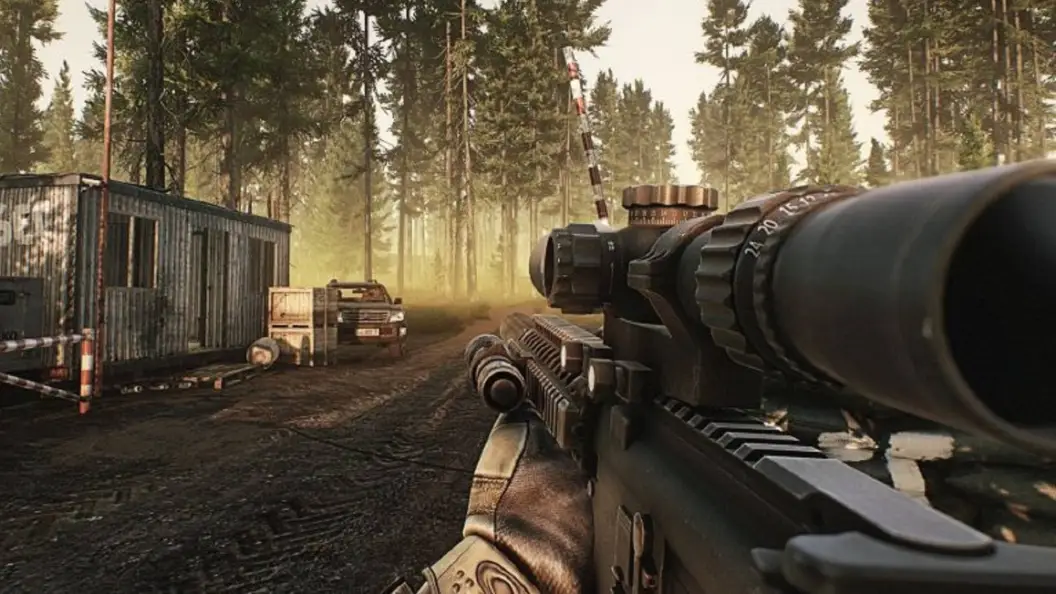
Currently, first-person shooters (FPS) are one of the most popular game genres out there, but exist in a variety of titles that feel somewhat similar to play. Between ongoing titles like ARC Raiders, Call of Duty: Black Ops 7, Battlefield 6, Marathon, and the recently released Wardogs, shooters can feel very similar these days. However, there are plenty of classic FPS games that are far more diverse than the “cookie-cutter” feel of the genre’s current trends, offering unique experiences even years after their launch.
There are plenty of cult classic FPS games that still hold up today, mainly for how their single-player content often twists the formula of the genre. There are some FPS games with strong multiplayer presences on select servers, such as Titanfall 2, but those titles are well-known for being excellent due to their longevity. Frequently, some of the best FPS projects you’ll ever play have been forgotten to time, replaced by more generic games that stick to the same warfare framework over and over again.
5. Bulletstorm
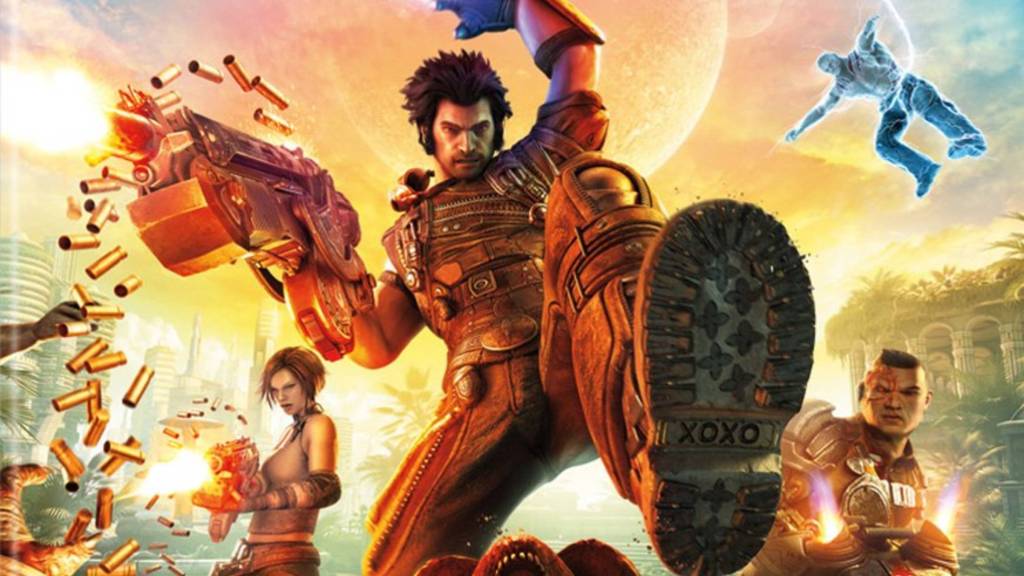
Bulletstorm is an incredibly inventive FPS from 2011 with a similar aesthetic to Gears of War, but with a far different gameplay style. This is not a game just about shooting whatever enemy appears on screen, but replacing that standard gunplay with skill expression and depth. Players are incentivized to fight creatively through the Skillshot system in Bulletstorm, which rewards you for stylishly finishing off foes rather than just shooting them haphazardly.
You earn points in Bulletstorm by kicking enemies into hazards, sliding before shooting, or using the game’s signature energy leash to drag opponents closer to you. The classic “drag and blast” with a close-range shotgun in this game is incredibly satisfying, but that just scratches the surface of all the unique ways you can engage enemies in firefights. In many ways, Bulletstorm is to FPS games like Devil May Cry is to action games, where style and mastery over gameplay mechanics build completely personalized approaches to whatever the game throws at you.
Combat is constant experimentation to see what weapons and abilities work well together to get through different situations. Although the story and writing of Bulletstorm aren’t the greatest, the FPS lives and dies off its arcade-like gameplay. The more you invest in the Skillshot system, the more points you earn for extra ammo, weapon upgrades, and more bonuses. Chaotic environments help the game’s combat stand out in interesting sandboxes too, turning Bulletstorm into a title you can replay many times without it ever getting old.
4. Severed Steel
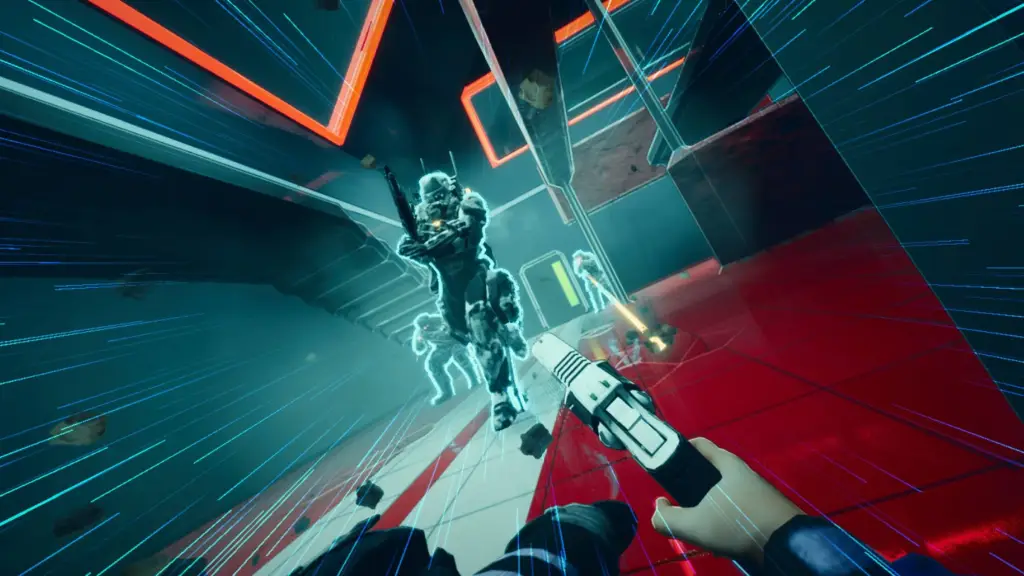
2021 saw a variety of the usual FPS games release, but Severed Steel went under the radar compared to other series projects. This is a shame, because this game is one of the most refined FPS titles to come out in the genre in the last decade. Severed Steel is a fast-paced, fluid shooter where players are encouraged to be hyper mobile across fully destructible environments, promoting an almost super heroic type of power fantasy. Alongside a cyberpunk-inspired OST, this game is a pulse-pounding and exciting FPS that drops realism for sleek, sci-fi visuals and gameplay.
Severed Steel shares a premise to games like Ghostrunner, where players can jump off walls, slide, and are almost constantly sprinting and shooting in extremely rapid sequences. Shooting is meant to be secondary to movement, yet Severed Steel has powerful weapons that feel very strong due to how they can destroy environments. The loop of this title is to create your own paths to engage with groups of enemies, either by destroying walls to get the jump on them or creating hazards that foes will struggle to get through to reach you.
Just like Bulletstorm, implementing new ideas and experimenting is crucial to Severed Steel, vastly improving its replayability. Slow motion in this game also lets you slow down the rapid pace of the gameplay, giving you much needed time to adjust to events taking place. Meaty gunplay and Titanfall-like omnidirectional motion combines the best features of multiple FPS franchises into one conclusive experience. The anime influence, stylized neon colors, and other great points of presentation of Severed Steel also make it an FPS unlike many that have been released in recent years.
3. Singularity
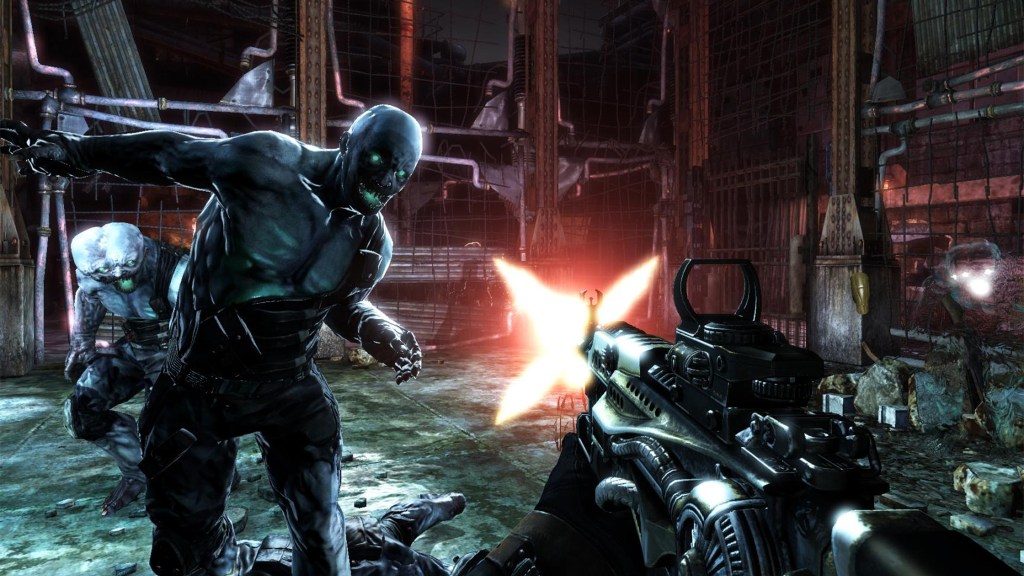
The 2010 title Singularity is a much lesser-known horror FPS hybrid, much like the F.E.A.R. or Metro series. However, Singularity is not “worse” than either of those two franchises, in fact, some players would argue that it does far more innovative things than either of the more established series. For example, Singularity revolves entirely around manipulating time, with players able to use a tool called the TMD (Time Manipulation Device) to perform a variety of actions within very strong levels.
The darker, sci-fi horror ambience of Singularity takes place in a somewhat modern setting, with dreary 2010 modern-day investigations and jumps back in time to 1955 eras of Soviet experimentation. The high-concept of this game’s time-based story extends to the gameplay, where use of the TMD can age enemies to dust, turn back the clock on environmental objects to repair them, or even slow time down in bubbles to hinder enemy actions. There is a level of tactical decision making in this game that goes beyond most FPS games, using pieces of BioShock or Half-Life to turn Singularity into quite a memorable shooter.
2. Prey (2006 & 2017)
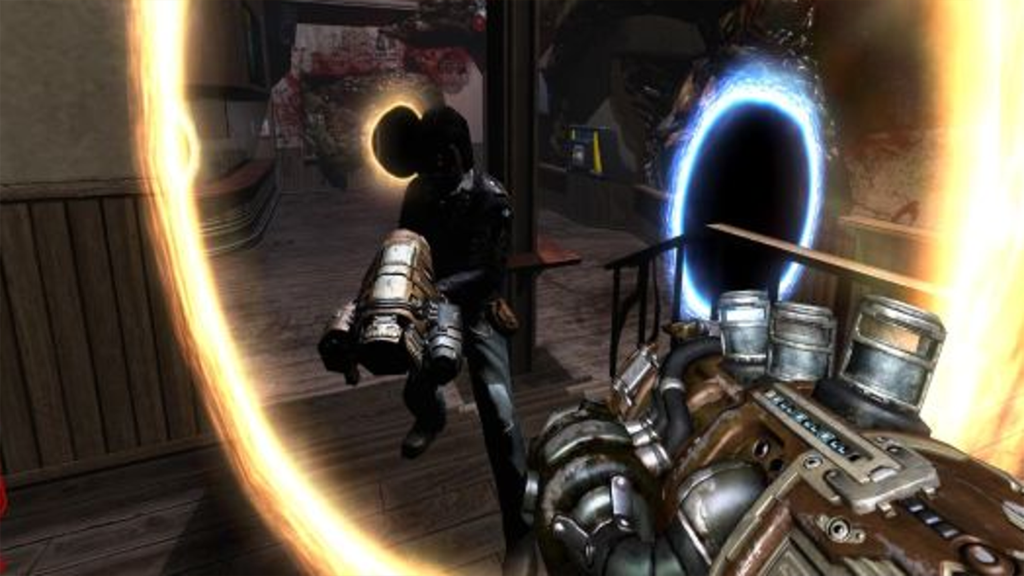
Every version of the Prey games, from the 2006 original to the remake in 2017, are excellent additions to the FPS genre for how they break trends from what players expect. At first, you may think that the only innovation of Prey (2006) is the use of portals and gravity paths, similar to Valve’s Portal games with slightly less scope. This is only one of the fascinating mechanics this game uses, though, as it also adopts a variety of other interesting systems, including:
- Spirit Walking – Players can create an astral version of themeselves, using their projection to solve puzzles and get past environmental obstacles.
- Second Chance – When you die in Prey, you don’t just reload at a checkpoint, you have an opportunity to enter a strange mini-game. In a “spirit realm,” you can shoot targets to earn full health and respawn right where you left off.
- Living Map – The Sphere map of Prey (2006) actively reactions to your actions, existing as a living, alien, organic environment that changes as you interact with it.
The fact that Prey invented Portal‘s signature mechanic a year before that game popularized it is already a point that makes the FPS worth trying. The creative systems the first game invented carry over into the 2017 remake too, where players are once again dropped into an atmospheric setting full of sci-fi intricacies. Much like the first game, the second Prey treats its world as a massive sandbox full of puzzles, with players able to approach it in any way they please. The creative problem-solving of the series evolved beyond a standard FPS, making it something based more in player agency.
Prey (2017) is also based more in survival horror, something reflected in the enemies players face and their own actions. Yet, you can face these horrors in more ways than just shooting them, as each Prey provides you with creative ways to deal with Mimics, or creatures that can disguise themselves as everyday objects. At the end of the day, Prey games are less about FPS action, and more focused on presenting unique problems that you can’t always solve by blasting away every enemy in sight.
1. Crysis 3
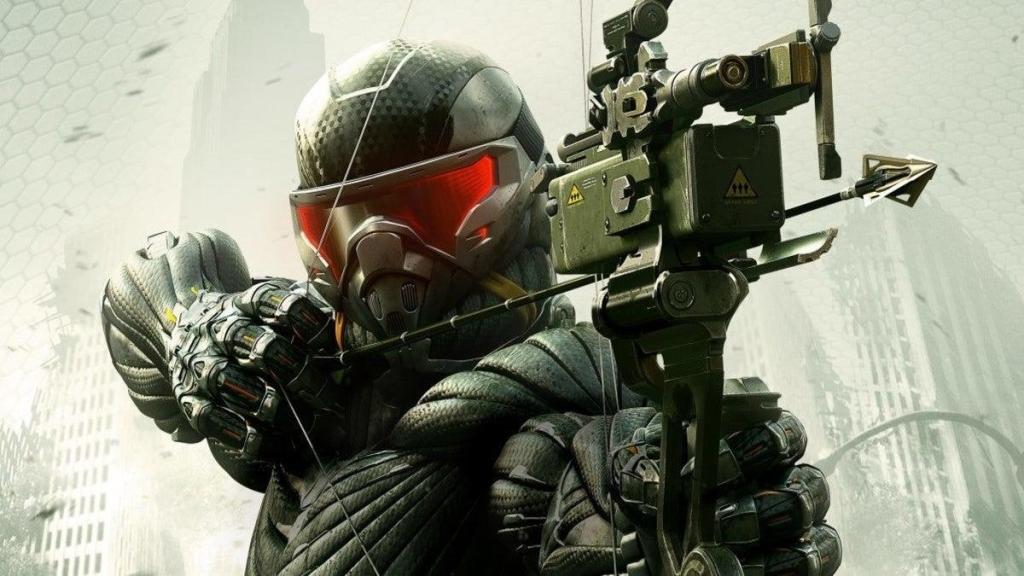
There are few FPS games as immersive and sleek as Crysis 3, a 2013 FPS where players don a high-tech CryNet Nanosuit bound to protagonist Prophet. One of the game’s biggest strong suits is the cutting edge visuals, which were years ahead of its time. Even if Crysis 3 were to come out today, the graphics of its open-ended sandbox would contend with any modern FPS release easily. Unlike a majority of other FPS games, Crysis 3 does not put players into linear missions within its campaign, rather giving players opportunities to explore a massive sandbox and pursue goals of their own making.
The mechanics of this game are extensive, from your ability to harden your suits exoskeleton, go into a silent stealth mode, or implement a variety of firearms based on your play style. Players can use a hunting bow with multiple arrow types to approach a situation, or go in guns blazing with traditional rifles, pistols, etc. Every FPS combat style is present here, enhanced with the sci-fi features natural to your Nanosuit. As the game evolves and presents you with tougher enemies, establishing mastery over Crysis 3‘s systems are necessary, as you learn to exploit weak points and tactically take down new foes.
The tactical element of Crysis 3 is ever-present as you play too, as their are multiple ways to get past enemies and engage in highly lethal combat situations. The game can be surprisingly challenging too, demanding fast-paced decision making and going into firefights with a solid plan of attack. In my opinion, this game has all the best elements of any FPS, yet is vastly underrated for how it pushes their limits more than most titles are willing to do.