5 Long Anime Series That Are Absolute Masterpieces, No Notes
The vast majority of anime series are only greenlit for 12–13 or 24–26 episodes, but there are certain anime that extend well beyond that limit by dozens or even hundreds of episodes. For most series, earning over 50 episodes is a rare achievement that proves the story has something worthwhile to share with audiences, with some of the most popular spanning hundreds of episodes.
That said, there are countless long anime series that don’t run for over 200 episodes, making them a bit more accessible while still proving a rewarding, lengthy experience for fans who want to invest their time into a larger storyline. With long anime series spanning across every genre, there are some for every viewer, but these series are among the most unforgettable must-watch titles that are worth every second.
Legend of the Galactic Heroes

Legend of the Galactic Heroes is a classic anime from 1988 that centers on a 150-year conflict between the autocratic Galactic Empire and the democratic Free Planets Alliance. The story follows two opposing characters, Reinhard von Lohengramm, an Imperial commander who plots to overthrow a corrupt aristocracy within the Galactic Empire and unify the galaxy under his own rule, and Yang Wen-li, an Alliance officer who reluctantly continues to fight and protect the democracy, who rise to power and reshape the galaxy.
The original OVA contains 110 episodes and is arguably one of the greatest epic space operas ever made. Both Reinhard and Yang are determined to help society despite severely different viewpoints, and both sides of the war have strengths and weaknesses. By never reducing either side of the battle as heroic or villainous, the series effectively created a thought-provoking, intense storyline that challenges the audience as much as its own characters.
Anime fans who enjoy stories with strong character depth and political intrigue will find that Legend of the Galactic Heroes provides on practically every front. Paired with the series’ realism and willingness to explore consequences without softening them, the story stands as a mature, complex masterclass that everyone who comes across it deserves to watch at least once.
Monster
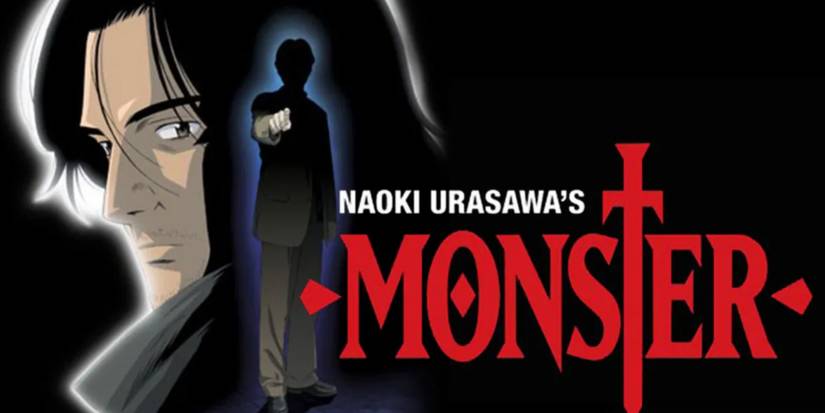
Kenzo Tenma is introduced as a gifted neurosurgeon at the beginning of Monster, but his life and career suddenly derail after he defies his superiors to save a young boy over a politician. Nine years later, that same boy, Johan Liebert, has grown to become a ruthless serial killer who frames Tenma for his crimes, forcing him into hiding and driving him to track Johan across Europe in order to put an end to the monster whose life he saved.
With 74 episodes, Monster is arguably one of the greatest anime available with its complex characters studies and grounded, morally ambiguous storytelling. As the series follows Tenma’s manhunt, the narrative ensures there’s space to explore the lives of those he meets along the way, often delivering memorable, satisfying payoffs throughout the journey that add nuance to the central storyline.
The series explores heavy themes including guilt, identity, morality, nihilism, and redemption in ways that push viewers to question their own views as the story unfolds. At its core, the series questions human nature and whether or not it’s the environment that ultimately shapes who or what a person becomes. From beginning to end, Monster keeps viewers on the edge of their seats, delivering a masterpiece with no bad episodes.
The Monogatari Series

The Monogatari Series stands out among this list due to the fact that it's technically not a single anime, but rather an interconnected collection of series and films that follow one continuous timeline. Koyomi Araragi, a high school student who survives a vampire attack and becomes part-vampire, serves as the central connective thread, however, Araragi is not always the central focus of each series. The storyline often shifts perspectives to the expanded cast, allowing their own stories to shape the larger, overarching story.
With over 100 episodes and four theatrical films, the Monogatari Series is both expansive and greatly intricate. Along with shifting perspectives, the story also has non-linear storytelling and rather densely written dialogue. The series also does not spoon-feed its audience, and much of its depth and lore is told through visual metaphors and trauma that disguises itself as monsters or is twisted by unreliable narrators and outright lies.
That said, those qualities are exactly part of what makes the Monogatari Series as compelling as it is. Its distinctiveness doesn’t end there, as the series is filled with surreal imagery, rapid editing, unconventional compositions, and visual details that often reflect or contradict a character’s mental state. With each installment, the series reveals more and more about the story in ways that keep audiences guessing.
Natsume's Book of Friends

Natsume’s Book of Friends centers on Takashi Natsume, an orphaned high school student who has the ability to see yokai. After he inherits the Book of Friends from his grandmother Reiko, Natsume finds that each page contains the names of spirits she defeated and bound to her service. However, rather than wielding that power for himself, Natsume sets out to return each of their names along with his companion Madara, a powerful spirit who takes the form of a cat.
The series has nearly 90 episodes within its main series, but also has several OVAs, special episodes, and theatrical films as well. Natsume’s Book of Friends explores countless individual stories that deal with themes like grief, loneliness, memory, compassion, belonging, and much more. As a largely episodic series, the story can shift from lighthearted to emotionally heavy, with some episodes featuring high-stakes conflict.
Among the most rewarding aspects of the series is watching as Natsume gradually becomes more comfortable in accepting kindness and learning to trust in others. That growth stands out as part of the reason Natsume’s Book of Friends connects so well with its audience. Viewers who enjoy heartwarming comfort series will likely fall in love with Natsume’s journey and find that his healing and development make the series especially memorable.
Major

Major follows Goro Honda, later known as Goro Shigeno, through nearly every stage of his personal life and baseball career. After he loses his father at a young age, Goro becomes determined to become a professional baseball player just like his father was, carrying that ambition from childhood until he makes it to the big leagues. Unlike some of the most popular sports anime, Major follows Goro through kindergarten to the American major leagues, telling stories from each stage of his life.
With over 150 episodes spanning six seasons, Major gives Goro time to grow, fail, and get back up, adding depth to his story while keeping it grounded. Along his journey, he faces injuries, rivalries, family changes, and other personal setbacks that repeatedly force him to take a step back and reconsider what success actually means to him. While baseball remains a constant throughout, the series gives equal development and depth to the supporting cast, making it a well-rounded anime that touches practically every base.
By following Goro as he moves through life, the story is able to capture something that not many other sports anime can. As viewers watch him grow and push forward throughout his life, the story progression allows audiences to connect with his character on a much deeper level, giving him a truly complete character arc that constantly evolves with him. Major’s depth and scope easily make it a masterpiece that is worth every episode.