The Walking Dead Is Briefly Switching Genres For One Night Only
Plenty of TV shows refuse to slot neatly into a single genre, but The Walking Dead is not one of them. Drawing inspiration from greats such as George A. Romero and Stephen King, The Walking Dead exists firmly within the zombie horror realm, and has done so ever since it debuted on screens almost 16 years ago. During that time, the AMC series has incorporated a truck-load of character drama and generous helpings of action, but to call The Walking Dead anything other than post-apocalyptic zombie horror would be inaccurate.
That remains true even in The Walking Dead's spinoffs-only era, and particularly with Maggie and Negan's The Walking Dead: Dead City. While its urban surroundings and neon lights fueled by zombie-filled methane tanks add a unique noir-ish element, Dead City has refused to stray from the franchise's home turf of outbreak survival, undead near-misses, and clashes against other survivors.
After two seasons of familiar territory, however, The Walking Dead: Dead City is flexing its genre muscles in season 3. After the opening two installments followed franchise norms, it's episode 3, "Emigrants," that pushes The Walking Dead into the entirely new, and very unexpected, genre of medical drama.
Dead City season 3 sees Maggie relocate from Virginia to Manhattan, merging her community with the survivors led by Renata. Occupying a large hospital and several apartment buildings, Maggie decided in episode 2 that the best path forward was inviting others to join their cause, and so lit up the Statue of Liberty to advertise their open-door policy. This glowing beacon attracts considerable interest come episode 3, with survivors pouring to the island from all over New York.
The Walking Dead Welcomes You To Grey's (Rotting) Anatomy
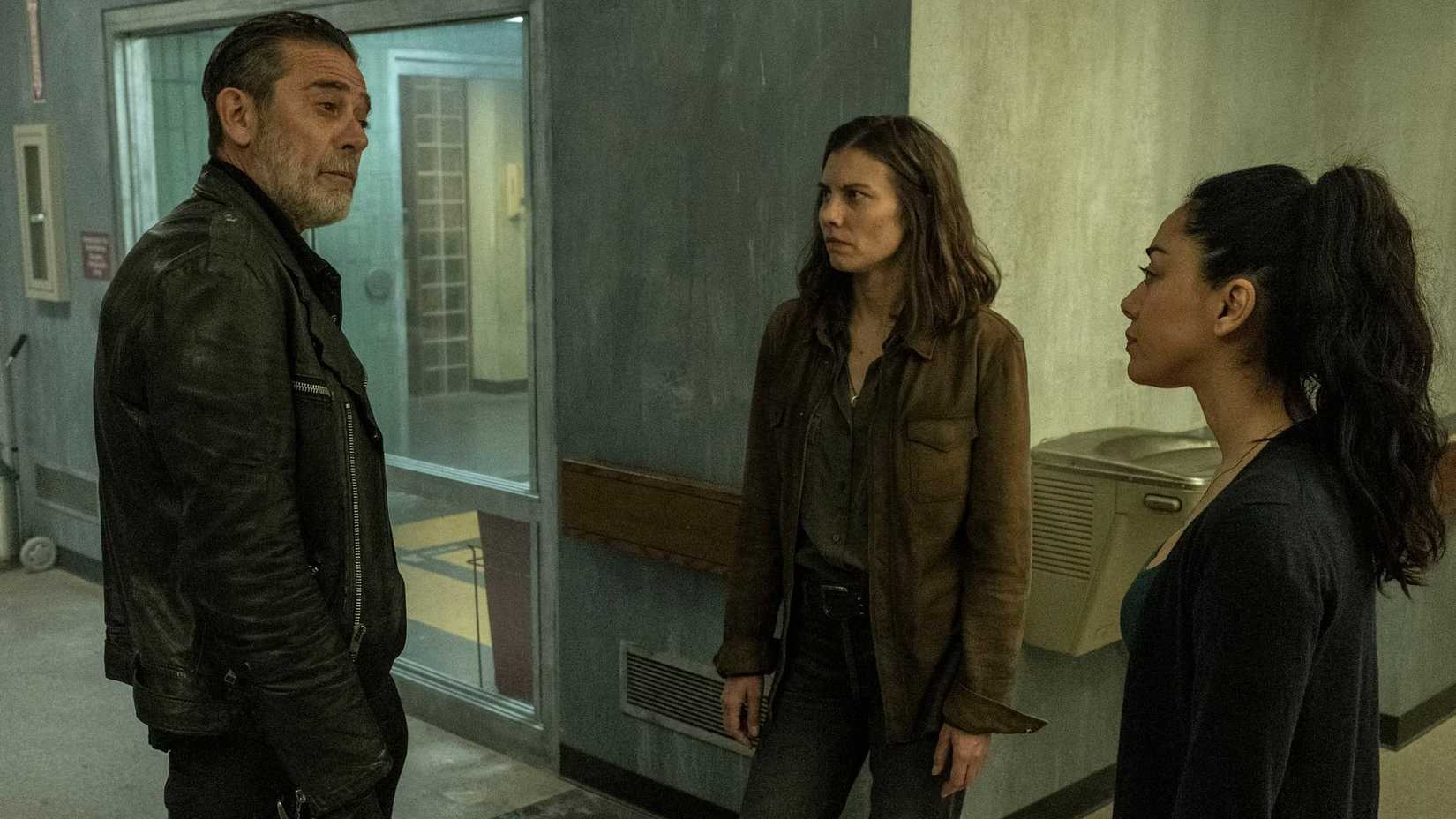
The premise of "Emigrants" is that the incoming survivors lured by Maggie's Lady Liberty stunt have been warring among themselves, and arrive at Renata's door with a host of nasty injuries and ailments. Oozing burns, broken bones, blood where blood shouldn't be - it's a veritable emergency room of bumps and scrapes for the hospital to deal with.
What follows is essentially The Pitt with zombies. Maggie and her allies become the 'doctors' (even if only one of them is actually trained), and the newcomers become the patients, creating the exact kind of setup seen on any respectable medical series on network or cable. Most of the episode is a rush to treat everyone despite increasingly hectic conditions, fraught interpersonal tensions, and dwindling supplies, which, again, is exactly what you'd find in a regular medical drama.
From the rushing between beds and desperate medical interventions to the overuse of anatomical jargon and that one patient who doesn't quite make it, "Emigrants" absolutely does not feel like your usual dose of The Walking Dead. Even the hospital's wavering electricity supply and the brief breakout of a fire mirror the kind of unforeseen obstacles doctors very often face in Grey's Anatomy or Casualty, forcing heroes to overcome mounting odds to keep their patients breathing.
Sure, Patrick Dempsey and George Clooney never had to worry about the deceased getting up and biting other patients, but "Emigrants" still tones The Walking Dead's zombie element right down in order to focus more on the frantic medical shenanigans.
The Walking Dead's Shift Into Medical Drama Territory Is... Surprisingly Good
Needless to say, The Walking Dead's switch from 'kill the dead' to 'heal the living' presents a major risk. Dead City season 3's "Emigrants" could easily have been a failed experiment that missed the point of the franchise spectacularly. We're pleased to report that isn't the case.
The episode's focus on a single setting makes for a suspense-filled 40-minutes, and while the undead do take a back seat, it's fascinating to witness the familiar chaos and emotion of a hospital emergency room when the doctors must also contend with flesh-hungry corpses lurking around every curtain. It's a genuinely intriguing one-time premise, which The Walking Dead sorely needs after plugging away at the same genre for so long.
Equally impressive is how, amidst the circus on the hospital floor, Dead City manages to juggle many different narrative balls at once. This is virtually a bottle episode, but every major character undergoes development. Negan rediscovers his former self in an attempt to squash the newcomers' beef, the early seeds of a bond between Maggie and Luis are sown, Renata and Dillard prove themselves in a tough situation, and Hershel actually does something useful for once. There's a real feeling that these characters walk through fire and emerge from the other side stronger, and that's a testament to the episode's writing.
The Walking Dead's Past Genre Experiments Have Been A Mixed Bag

With so many spinoffs to its name, "Emigrants" is not the first time AMC's Walking Dead franchise has poked a toe into a different genre. Alas, not all of those previous efforts yielded success.
The Walking Dead: World Beyond attempted to meld the usual guts and gore with a coming-of-age teen drama story. The series had bright spots over the course of its two seasons, but the hybrid approach never completely gelled, and it's an entry the franchise could live without.
Faring better, Fear the Walking Dead occasionally sprinkled some neo-western vibes into its pot. The dusty landscapes and lonely gunmen served The Walking Dead's post-apocalyptic world well, setting the OG spinoff apart from its parent series and leading to some truly standout episodes.
Anthology collection Tales of the Walking Dead proved to be a mixed bag. The comedic time loop episode offered both a fun diversion and a sideways look at the early hours of the zombie outbreak, while a spooky ghost story starring Daniella Pineda and the MCU's Danny Ramirez failed to stand out among the six-episode selection.
Like Dead City, Daryl Dixon took the opportunity to cut loose midway through its third season, dropping a standalone episode heavily inspired by Mad Max, with a dash of Seven Samurai thrown in for good measure. The result was an undoubted highlight of Daryl's Spanish expedition, containing some of the best action set-pieces in the franchise's long history.
Meanwhile, Rick and Michonne led The Walking Dead into the war epic genre via the cinematic The Ones Who Live. Focusing on the Civic Republic Military, the 2024 spinoff swapped zombies, survival, and the apocalypse for corruption, chemical weapons, and conspiracies. Like other recent spinoffs, The Ones Who Live successfully blended these new flavors with The Walking Dead's base ingredients.
Despite so much genre-flipping over the years, a medical drama episode is undoubtedly the most ambitious of The Walking Dead's stylistic detours. The fact that it might just be The Walking Dead: Dead City's best episode yet is a minor miracle.