4 Unexpected Game Updates That Changed Everything Years After Launch

Not every game gets to live forever, but some are lucky enough to receive updates after multiple years have passed since their release. These late changes can sometimes re-invent experiences, defining a new era for a game to gain new players and grow a fresh audience from what it had before. Sometimes, these revolutionary updates will usher in a renewed effort to develop a game, either “fixing” lackluster launches or introducing exciting new content for old and returning players to support wholeheartedly.
There are plenty of game-defining updates that come at the end of their life cycle, usually through expansions like The Taken King for the original Destiny. While those updates helped solidify what made certain games great, they were part of planned and developing roadmaps that never slowed down since the title got into players’ hands. Some of the most impressive updates are unexpected ones that take place years after development slowed or stopped entirely, as they bring back promising titles from the dead.
4. The Witcher 3: Wild Hunt (Remastered Update)

The most recent update on this list is the one for The Witcher 3: Wild Hunt, which turns the game into a remastered version of itself almost 11 years after its initial launch. The remastered version of The Witcher 3 is not simply a series of visual and quality-of-life changes by developer CD Projekt Red, but a complete overhaul of the game’s biggest pain points. New combat and magic animations, new enemy behaviors, refined skill trees, and a brand new expansion of content are but a few of the things coming to the remastered version of the game.
While the fresh Songs of the Past expansion is planned to bridge The Witcher 3 into The Witcher 4 in 2027, September 2026 marks when the rest of the remastered features become available. There are so many enhancements from the original game, which was already praised heavily in the years since its release. Even winning Game of the Year back in 2015, The Witcher 3: Wild Hunt is one of those games players never really thought could get much better. Thankfully, the remastered update seems to be intended with the hindsight to keep the game alive for many more years.
Most players are excited for the reworks in the new update regarding some of the clunkier gameplay systems of The Witcher 3. For example, players can expect new movement options for both Geralt and his horse Roach, along with better quest tracking and UI/UX features. At the same time, transmogrification on all items gives players more freedom than ever before, turning long playthroughs within the RPG into even bigger experiences. If anything, the remastered update could turn The Witcher 3 into a GOTY contender once again.
3. No Man’s Sky (NEXT Update 1.5)
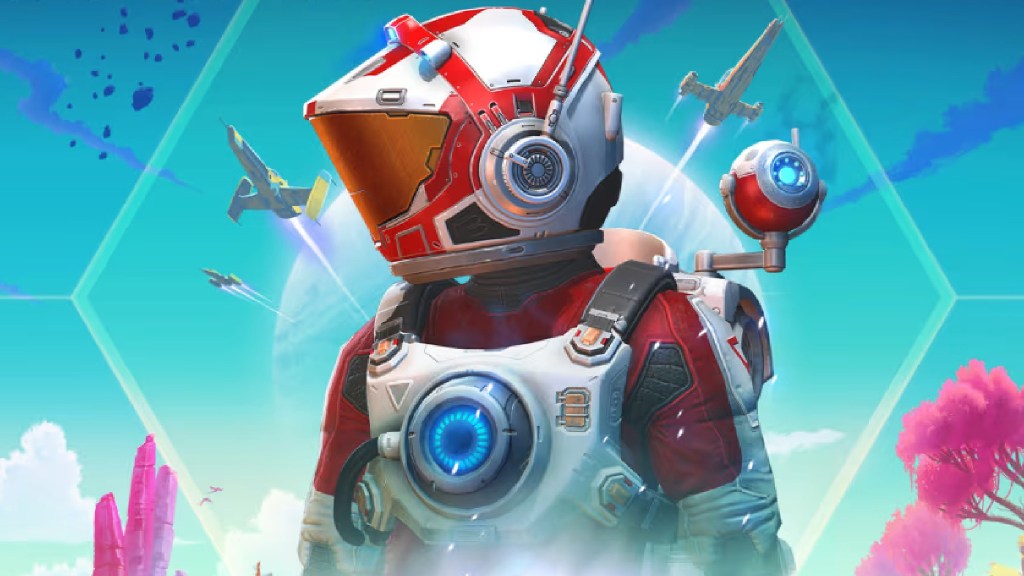
The amount of game-changing updates in No Man’s Sky are practically never ending, but they couldn’t exist without the “Next Update 1.5” changes that transformed the game’s direction. Originally, No Man’s Sky had a disastrous release back in 2016, with a huge universe of infinite worlds, but almost nothing to do on any of them. Ever since, the developers at Hello Games have tirelessly worked to introduce free update after free update for the game, with the upcoming “Cosmos Update 7.0” changes planning on making the title bigger than ever in 2026.
However, none of those updates could have happened without 2018’s 1.5 Update, which overhauled the game to almost make it brand-new. For starters, the update introduced a completely new visual style for the entire title, overhauling graphics and implementing a third-person perspective that is now the standard. Improved terrains were combined with the integration of base building mechanics, making the game less of a test of scientific discoveries and more like a robust survival title akin to Minecraft or Valheim.
The sci-fi systems of No Man’s Sky also gained a new edge with multiplayer in Update 1.5, allowing players to join up in fully synced up servers, creating impressive strongholds together on strange worlds. Exploration and fighting alien life was made better too, with the game improving in a variety of other ways. This update is largely attributed to giving No Man’s Sky its new identity, and helping it finally move on from the negative opinions players had about it on launch.
2. Terraria (1.4 Journey’s End Update)
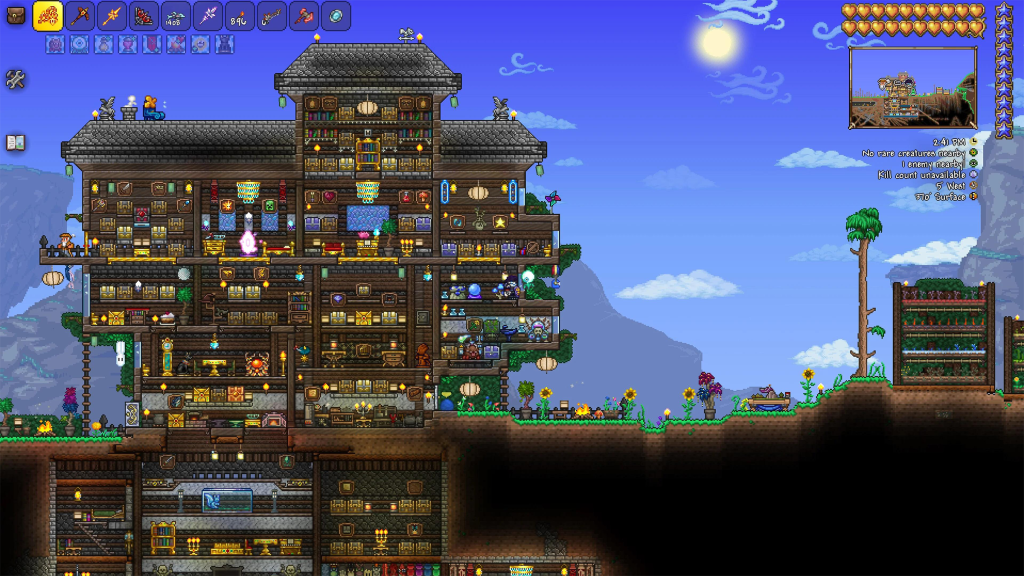
Although an argument can be made that Terraria‘s 1.2 Update revolutionized the survival sandbox, the recent 1.4 “Journey’s End” update may have had the greater impact. For the longest time, Update 1.3 was considered the “last” big series of changes for Terraria, as it finalized endgame progression and introduced new difficulty modes and bosses tied to those final stages of a player’s experience. Yet, Update 1.4 wrapped up the game even further, coming out in 2020, nine years after the game first released.
With Terraria still hitting record player numbers on Steam in 2026, Update 1.4 can largely be attributed to the dynamic recollection of players eager to see the game’s conclusion. Update 1.4 may has well been a new release in and of itself, as the changes for it included thousands of new items and an equal number of UI/UX adjustments, such as boss health bars and minimap border options. Some of the other big additions to the game were:
- Added Journey Mode for complete creative control
- Added Master Mode for the game’s highest difficulty setting
- Added the Bestiary for a complete enemy encyclopedia
- Included multiple weather systems for dynamic worlds
- Created new NPC and settlement features for interactive mini-games
- Invented a new Luck system to add more unpredictable elements to the game
Texture pack support also made Terraria look better than it ever has, with a variety of new music creating the most audibly satisfying version of the game as well. New enemies, NPCs, block types, and other changes made every aspect of the title feel fresh, even to players with hundreds of hours already logged into the game. Even with the history Terraria had already established, one update put it back onto players’ radars.
1. Skullgirls

Skullgirls is an exciting fighting game released in 2014, but one many players thought had lived its life cycle by the time the 2020s rolled around. Despite all odds, this game managed to make a creative comeback after major shake ups to its internal studio. Former developers left their original company after a successful mobile version of the game, eventually finding new support along with a ton of help from community crowd funding. The love players had for this game allowed it to come back in full force in 2024, through an update that changed Skullgirls drastically.
The moment the game was back under refreshed management, the team behind Skullgirls announced a new wave of DLC characters, finally creating fighters the developers had always wanted to make. The first DLC fighter was Annie of the Stars, a complex character with magical girl powers and some moves strikingly similar to Guilty Gear‘s protagonist — Sol Badguy. Fighting game fans embraced Skullgirl’s new character with open arms, allowing the team to release new fighters like Umbrella, Black Dahlia, and eventually the title’s final boss Marie over the next couple of years.
The perseverance this game had to endure one of gaming’s more tumultuous industry periods is a testament to how well its systems already were to enable the update. Gorgeously animated characters, robust rollback online netcode, and other solid features kept a solid audience that lasted for over a decade with loyal fervor. Skullgirls‘ update introduced a series of balance changes too, creating a refined version of the game that still persists in the fighting game community to this day.