GameStop Pokemon Power Packs Cross Dangerous Line Into “Unlicensed Gambling”
GameStop’s Pokemon TCG Power Packs Are “Plain, Unlicensed Gambling”, Says Professor
Since 2020, Sam has written over 2,500 articles and specializes in telling the stories of the people behind the games. He’s interviewed the biggest game directors, some of the industry’s top talents, told the stories of how indie games came to be, and spoken to players about what really makes them tick. He’s also interviewed some of the world’s biggest musical artists to find out how the medium has inspired their work, and TV and Film actors about their roles in video game adaptations. He even hosted a PAX panel in 2021 and made a documentary in 2024 surrounding the creation of a Disney game.
Alongside this, Sam focuses on breaking news. He got the scoop on Perfect Dark’s cancellation, got context around some AI drama, and revealed how Lady Dimitrescu’s actress would love to step back into the character’s giant shoes. These articles have been picked up by the biggest gaming sites, including IGN, GameSpot, and PC Gamer. He also loves to dive into the numbers behind the games.
Sam’s journey in games journalism has taken him all over the world. He’s covered Gamescom in Germany, Summer Game Fest in Los Angeles, and Tokyo Game Show in Japan, each on more than one occasion.
He’s been learning Japanese since 2024 with the intention of identifying and translating Japanese-language news and bringing it to English-language audiences first, something he’s done countless times.
Sam’s first review was 2020’s Battletoads reboot, and he’s since reviewed games in The Legend of Zelda, Super Mario, and Pokemon franchises.
The state of the Pokemon Trading Card Game has been not great for a little while. I've been covering its plight for over 18 months now, and it seems that day by day, things are getting worse. With the 30th anniversary set approaching, we could be about to hit a fever pitch, and we've already seen product waves being scalped to high heaven. Things are currently so bad that Nintendo is threatening to intervene alongside The Pokemon Company.
The scene is now full of grifters trying to make a quick buck on one of the most popular hobbies in the world in any way possible. One of the more prominent, less spoken-about get-rich-quick schemes these people (and massive stores) are "mystery packs" or "repacks".
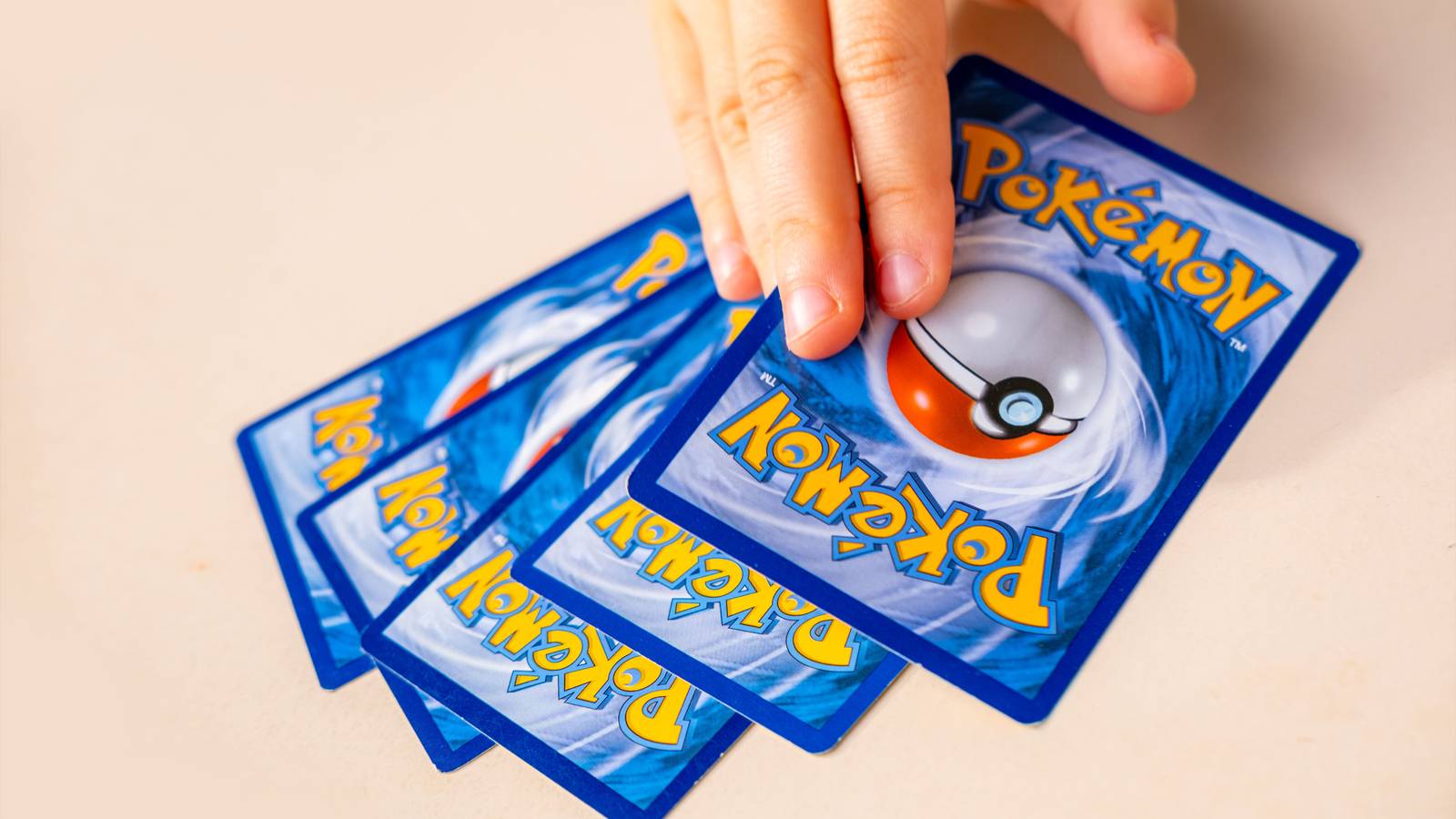
These products are somewhat similar to regular Pokemon TCG packs; however, they are created by the seller. They often contain a low-percentage chance of pulling an extremely valuable card, but more often than not, will be full of cards valued at less than the buyer has paid.
Buyers from all over the world latch onto these products. When will they ever get the chance to get a $500 card for just $25? But that's exactly the problem: they prey on collectors' impulsive natures and addictive personalities to sell their products, when the likelihood of getting anything good is infinitesimal.
This practice has now gotten so bad that one university professor, who has done research into videogame loot boxes, trading cards, and consumer protection, has called it "plain illegal, unlicensed gambling."
GameStop's Pokemon TCG Power Packs One Of A Number Of Products Branded As "Illegal Gambling"

Stores all over the world have gotten in on the mystery pack hype. GameStop in the US has its Power Packs, Total Cards in the UK has Mystery Card Bundles, and in Japan you'll find the origins of the practice: the Oripa (Original Pack). One quick look on eBay shows that regular people are doing the same. The online marketplace is flooded with people trying to shift their own mystery packs, from anywhere between $5 and $2,500. It's a shady practice with companies often offloading cheaper cards, luring people in with the chance of winning big.
Websites like Packz do similar, specializing in mystery packs that contain graded cards. These range from $25 for the Starter Pack to $1,000 for the Champion Pack. With the Champion Pack, buyers have a 70 percent chance of losing money. Cards valued at $500–$700 have a chance of appearing 44 percent of the time, while cards with a value of $700–$1000 will appear 25.6 percent of the time. The site offers flashy visuals, much like a slot machine, to make opening the packs online that much more exciting (and thus addictive). The adverts for this sort of thing are everywhere, and it all feels very predatory.
In an investigation into the mystery pack/repack scene, Kanto Post spoke to Dr. Leon Xiao, assistant professor at the City University of Hong Kong. Xiao has a PhD in video game law, specializing in "the regulation of loot boxes, gacha, and other gambling-like monetization mechanics in video games that offer random rewards."
The specific products you have identified are just plain illegal, unlicensed gambling,
“The specific products you have identified are just plain illegal, unlicensed gambling,” Dr. Xiao told Kanto Post. While Xiao presents just one legal analysis rather than a formal ruling, his expertise in the area speaks for itself. “The consumer is playing a game of chance for a prize (defined as 'money or money's worth,' which these cards would be as they can be easily converted into cash),” he continued, describing how the product could be considered as breaching gambling law.
Packz's presentation of its odds as a value, rather than as the odds of pulling a specific card, is where this breach could arise.
Of this, Xiao said, "It would be misleading and in breach of consumer law if the pack is advertised as if the particularly valuable card could be won more often than what is factually true. Disclosures are almost certainly required under US, UK, and EU consumer law. But many original packs do not provide sufficient probability disclosure information for players to figure out their exact probabilities for obtaining a specific card.” He shared a research paper with Kanto Post suggesting that "80% of analyzed trading card products did not provide probability information, and while the remaining 20% did, they were often incomplete, hard to locate, or misleading."
So, How Is This Different To Normal Pokemon Booster Packs?
 The Pokemon Company
I spoke to Kanto Post's Callum Self to clear up a few things, namely: how do these repacks differ from Pokemon's own Booster Packs? Fundamentally, they both have a set number of cards that buyers will open, hoping to pull something good. The answer is simple: pre-determined values.
"Booster Packs are produced by The Pokemon Company, so they’re effectively just production cost, while the repacks are focused on market pricing," he told me. "My personal belief is that if TPC had a set price for every card, [ie if they advertised the value of cards, like the new Pitch Black Mega Darkrai ex, which has a market value of £300], they would breach gambling law themselves."
It's another horrible situation, and it highlights how many bad-faith actors are just in the TCG to line their pockets with cash.