'Resident Evil' Review: Possibly The Best Video Game Movie Ever
What is it exactly that has made Resident Evil the premiere survival horror franchise a whole 30 years after the original game was released? Is it the convoluted lore revolving around biological weapons, sinister megacorporations, and a shadow war being waged using zombie outbreaks? Is it the larger-than-life action hero archetypes like Leon S. Kennedy, a perpetual heartthrob of fan-fiction and TikTok edits? Or is it the refined, atmospheric gameplay, which sees players descend into a nightmare crisis that forces them to conserve resources, explore labyrinthine settings filled with unknown danger, and face their fears head-on in the form of ingenious mutated grotesqueries?
Zach Cregger’s Resident Evil playfully engages with the first, is totally uninterested in the second, and cashes all in on the third. For a movie and a filmmaker to have spent months at ground zero of a battle over what form video game adaptations should take, it’s ironic that Resident Evil would end up being one of the best video game films ever made. By bucking the cloying attempts at “pleasing fans” that have sunk so many other movies of this kind, Zach Cregger has made the platonic ideal of what a video game movie should be: a cinematic experience that approximates the medium-specific idiosyncrasies of the game, while offering something new and satisfying for fans and newcomers.
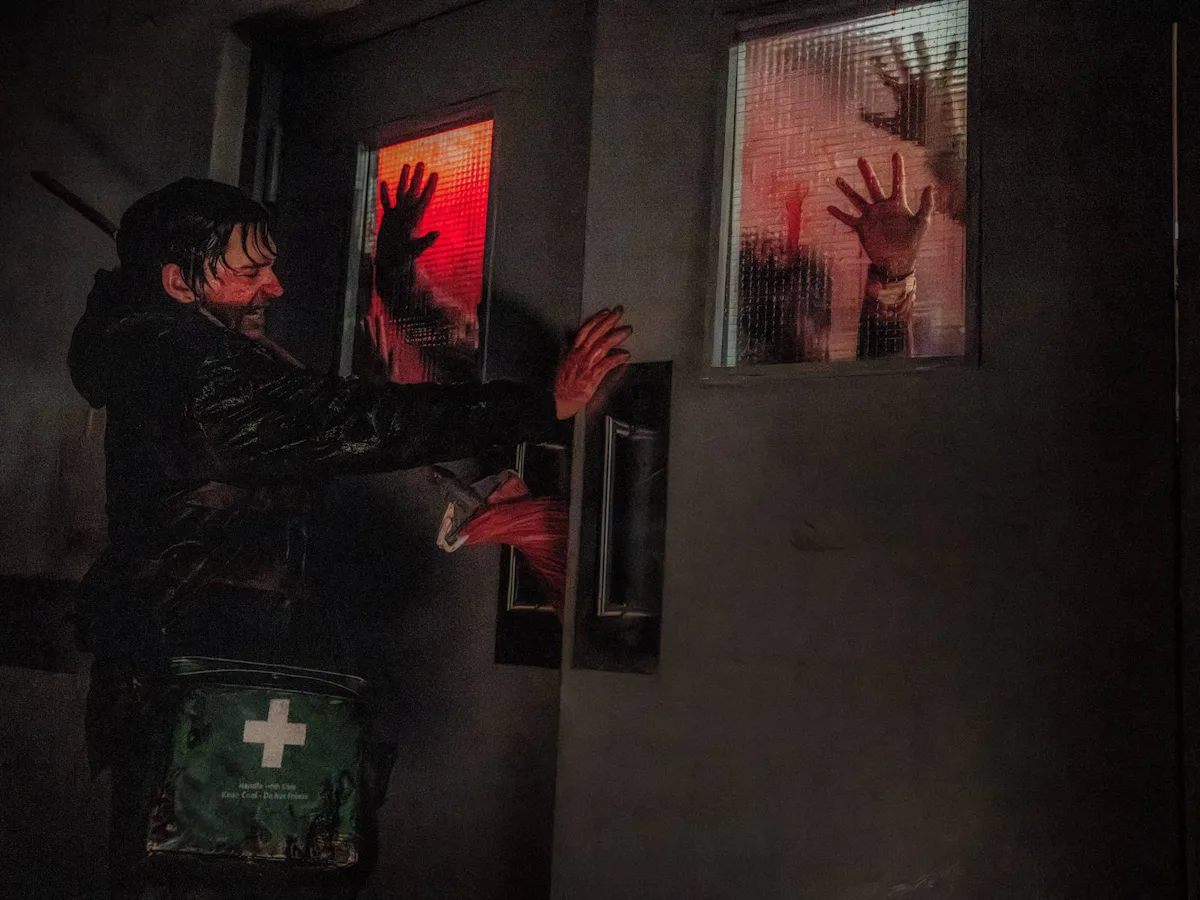
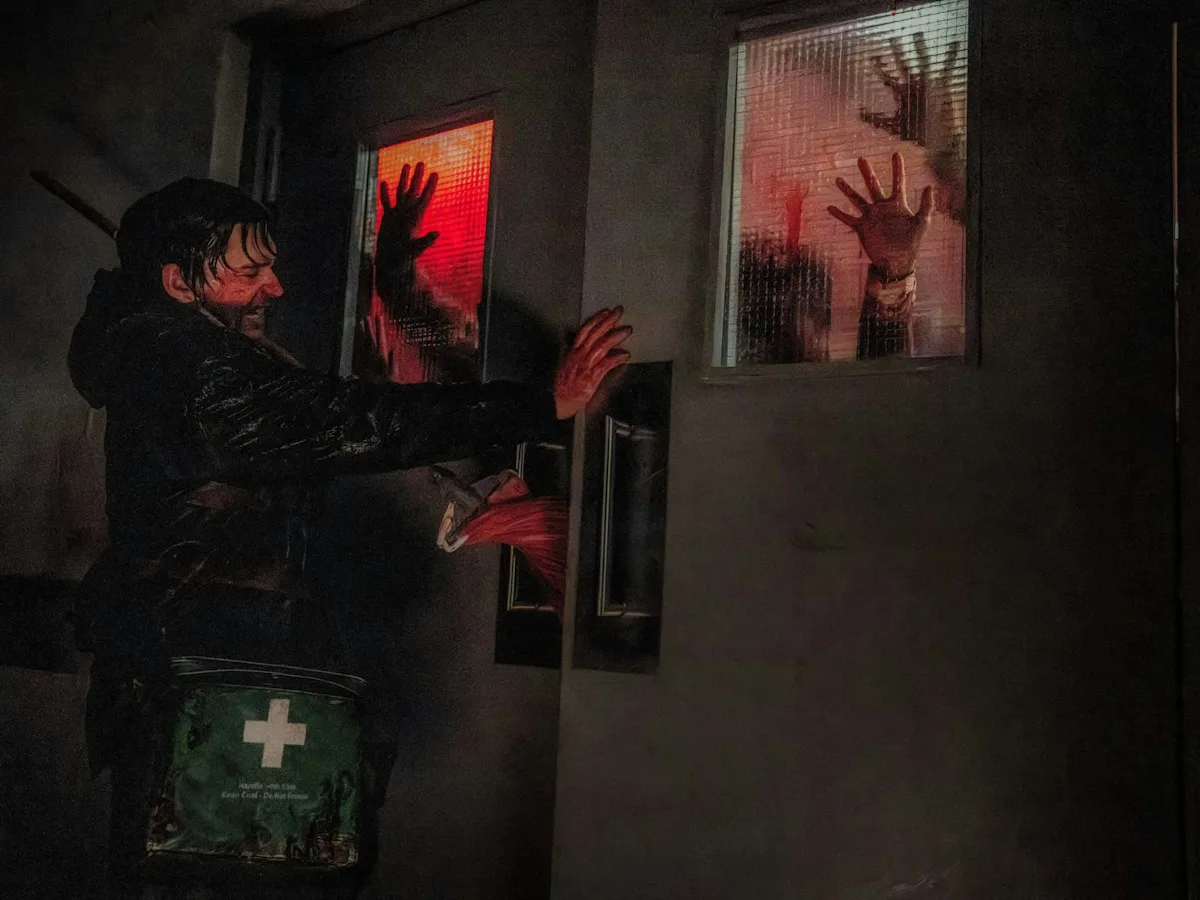
Despite being a franchise that has always made players stop and reassess a course of action out of sheer terror, the first six Resident Evil games reliably drop you in the shoes of a cop or special forces agent — someone who is at least somewhat equipped to handle hordes of zombies and bio-organic weapons. Meanwhile, Cregger’s Resident Evil strips even that miniscule power fantasy away, skewing closer to the unprepared aloofness of Resident Evil 7’s everyman main character. Our audience POV is Bryan (Austin Abrams), a medical courier and, more importantly, Some Random Guy who has the misfortune of being tasked with delivering an incredibly important package to Raccoon City General Hospital. We, of course, know what’s in store for Bryan when he arrives at one of the most infamous locations in gaming (spoiler alert: nothing good!), but he certainly does not, and watching him come to grips with the unreal nightmare of his situation is so engaging partly because he’s so much more relatable to the average audience member than someone who can parry a rocket with a hatchet.
Three movies in and Cregger has already developed an idiosyncratic tonal sensibility, and the blend of comedy and horror here might be his sharpest yet, reveling in a fraught, “I cannot believe this is happening” slapstick energy that feels so indebted to Evil Dead 2 (a movie Cregger explicitly stated he was evoking). If Cregger is Sam Raimi here, then Austin Abrams is his Bruce Campbell — perhaps not as unhinged and physically erratic as Ash, but just as lovable in a moronic, out-of-his-depth kind of way.
He feels like a Resident Evil player dropped into a real biohazard outbreak (and we know he’s a gamer because of his frustration that guns don’t work the same way they do on a controller), but Cregger also wrenches a little necessary and relatable depth out of him: Before he ends up stranded in Raccoon City, he’s in an argument with his girlfriend over whether or not to keep the baby whose existence they’ve just been surprised by. You get the feeling that he’s an adult stuck in kid mode who is finally confronting the advent of adulthood in a situation where his life could very well come to a sudden end.

Unlike other more uninspired and pandering video game adaptations, Resident Evil isn’t trying to get you to point at the screen with references (even though there are quite a few), instead engaging with your familiarity of how this particular video game feels to play. The pacing is full-throttle from the first five minutes, and the simplicity of the point A to point B narrative structure intentionally resembles video game level design. The forward-momentum of it all is exacerbated by a sentient wall of limbs and flesh that constantly assimilates bodies in its pursuit of Bryan, a perverse miracle of creature design that would feel right at home in Re-Animator but serves the same purpose as the unstoppable Nemesis boss in Resident Evil 3.
Cregger excels at bringing to life the suffocating atmosphere of the source material — there are so many moments where we’re wracked with fear and scanning the frame as Bryan searches for ammunition or the key necessary to escape, the terror of exploration in the games brought to the big screen. Even the setpieces mimic character progression in a way that’s also great unspoken character development; Bryan goes from playing keep-away with a zombie in the snow while trying to figure out a handgun (a scene that feels remarkably like an opening tutorial) to landing a buzzer-beater marksman shot while running away from his mutated stalker, and it’s just as satisfying to watch on-screen as it is when you’ve finally mastered the mechanics of Capcom’s newest crucible.

Just like in the games, one of the best parts of Resident Evil is its tangible sense of place. The Spencer Mansion of the original is iconic because it’s an idiosyncratic, lived-in location, and every area of Cregger’s vision of Raccoon City feels unique and distinct unto itself, an example of how production design can transform a setting into a character itself. The sparsely inhabited forests surrounding the city, the abandoned highway tunnel, the streets, the sewers, the hospital — each location evokes the feeling of a new level in a game, with its own specific dangers and sequences that take full advantage of each area. It might not be the ‘90s and yes, the snow might not be canon to Resident Evil 2, but not a single other Resident Evil adaptation has made Raccoon City feel this sprawling and varied.
At a time when Hollywood is pushing full-speed ahead on video games as the new frontier for IP extraction, Resident Evil is a benchmark for the genre, a shining example of the fact that these films are better off when there’s a genuine creative vision as opposed to a lifeless recreation of something tailored to another medium. It’s unafraid of embracing the elements that make the Resident Evil games art unto themselves, but it never forgets how to be a crowd-pleasing thrill-ride of a movie first.
It’s the epitome of a roller-coaster film, one masterfully skilled at eliciting laughter and horror in an audience in equal measure. And in a perfect world, it would be a How To manual for studios seeking to cash in on a medium they now see as a gold mine.