40 Years Later, A Transgressive Horror Masterpiece Remains Wildly Influential
The mid-1980s were a boom time for special effects. Films like The Elephant Man and the quick-fire double of An American Werewolf in London and The Howling had convinced audiences of their power and draw, decades after the golden age of monster movies.
From that renewal emerged the Resonator. There’s nothing outrageous about the device at first glance. Yet, from its blinking lights — and the mind of Stuart Gordon — spew creatures that writhe just beyond our sight. The film, which turns 40 this month, is From Beyond. Though named for the 1920 H.P. Lovecraft story, as producer Brian Yuzna tells Inverse, “The short story was used up before we got to the opening credits!”
Mad scientists, out-of-control experiments, creatures dripping in otherworldly ichor: It’s a checklist ripped straight from the film’s immediate predecessor. “They’re all horror tropes,” Yuzna says, thrown into a melting pot and fashioned into, if not a spiritual successor to Re-Animator, part of a maximalist double feature. Only, says From Beyond’s special effects supervisor John Naulin, replace gallons of blood with “vast amounts of slime.”
Approaching the Beyond
That the team would explore Lovecraft again was inevitable after Re-Animator’s success. When filming began, on the same set just outside Rome on which Gordon had filmed Dolls immediately before, it was the independent market that dictated how soon.
“I had four kids and I was making low-budget movies,” Yuzna says. “You don’t get much of a fee; that means you’ve got to make a lot of movies.”
“It really fueled the rubber monster era.”
Relentlessness was part of the magic. With video booming — the rental industry reached $6 billion at its zenith — money was flowing. “It really fueled the rubber monster era,” says Mark Shostrom, another of the film’s effects supervisors. By his estimation, Los Angeles had gone from five makeup studios in 1980 to around 70 as From Beyond began filming. “We would be doing two, even three, films at a time,” he continues. “I literally worked for seven years without a break.”
That rapid growth bred a culture of experimentation. “That’s why the movies are so eclectic,” Yuzna says. “Companies were just hitting the ground running and trying stuff out.” It was the perfect stage for Gordon, who had made his name with transgressive theater. His ability to wring radical audience experiences from Lovecraft’s sparse prose made him “one of the best interpreters of Lovecraft,” horror buff Patton Oswalt tells Inverse via email. The “bonkers, gut-wrenching” From Beyond is further testament to that.
“He had the ability to pierce the ‘willing suspension of disbelief’ required to make that hidden world very real,” Naulin adds.
Grasping the Beyond
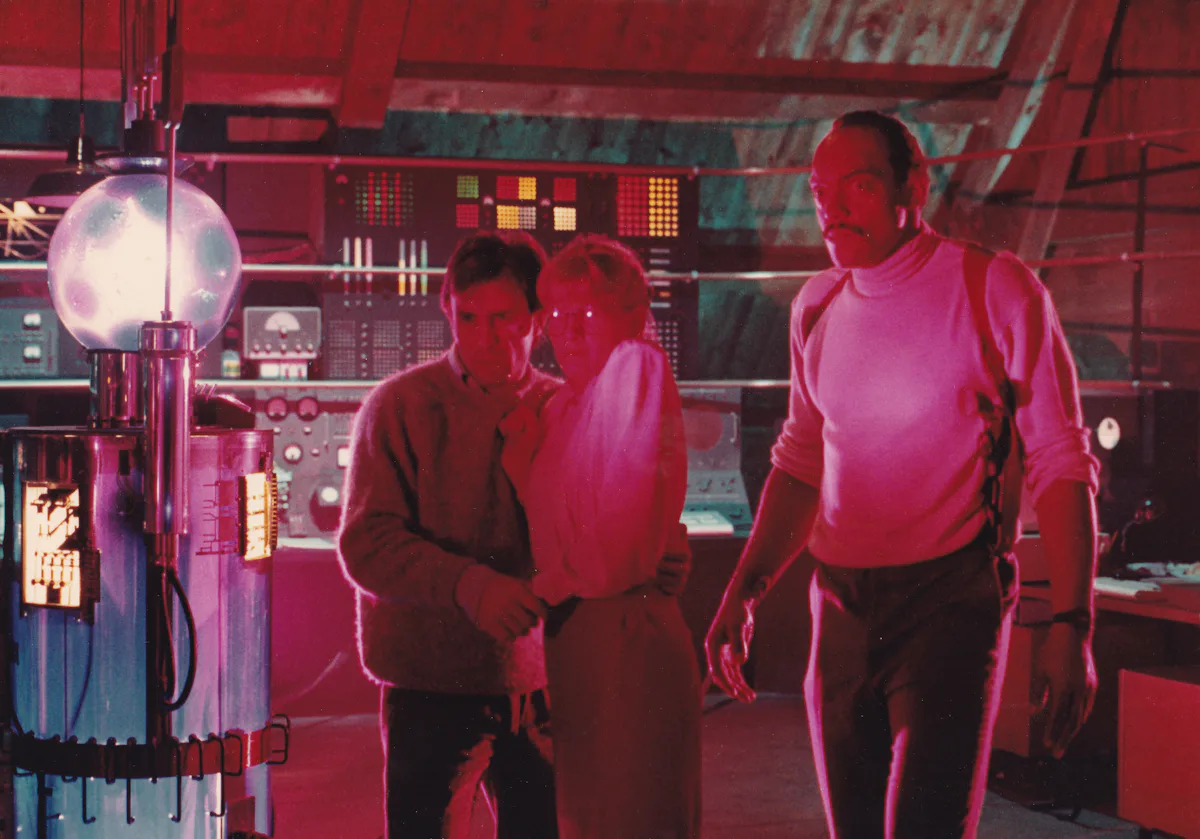
In From Beyond, the script expands Crawford Tillinghast (Jeffrey Combs) from credulous madman to the submissive assistant to the Resonator’s creator, Dr. Edward Pretorius (Ted Sorel). “We went with From Beyond because it had the metal [of] the machine,” Yuzna says. “It went into sci-fi, and that made it seem more commercial.” The machine stimulates the pineal gland to offer a glimpse beyond the walls that separate us from worlds elsewhere. Though all that awaits, says film scholar Dr. Lindsay Hallam, is “horror, as we realize that seeing ‘beyond’ only highlights our insignificance on a grander, cosmic scale.”
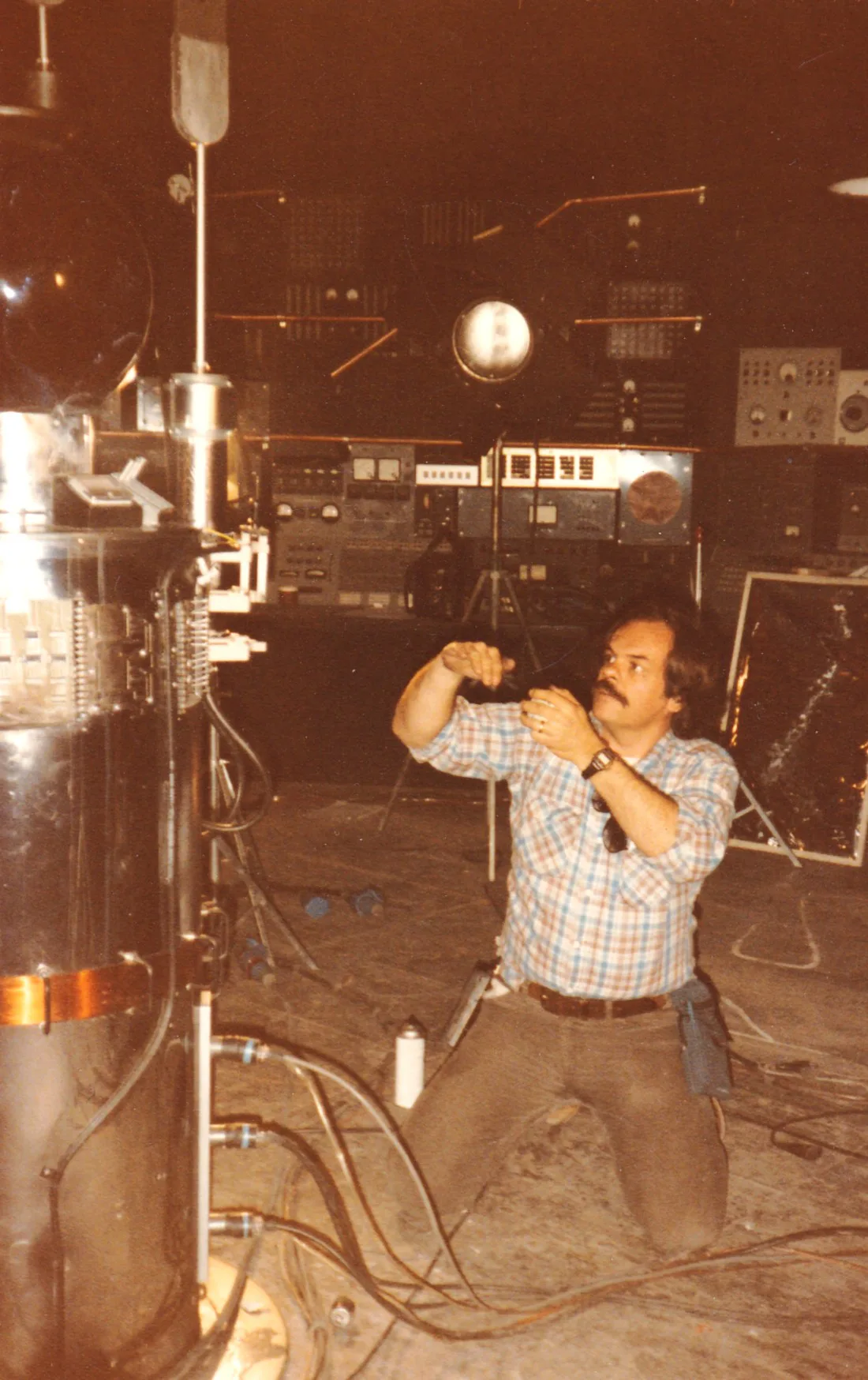
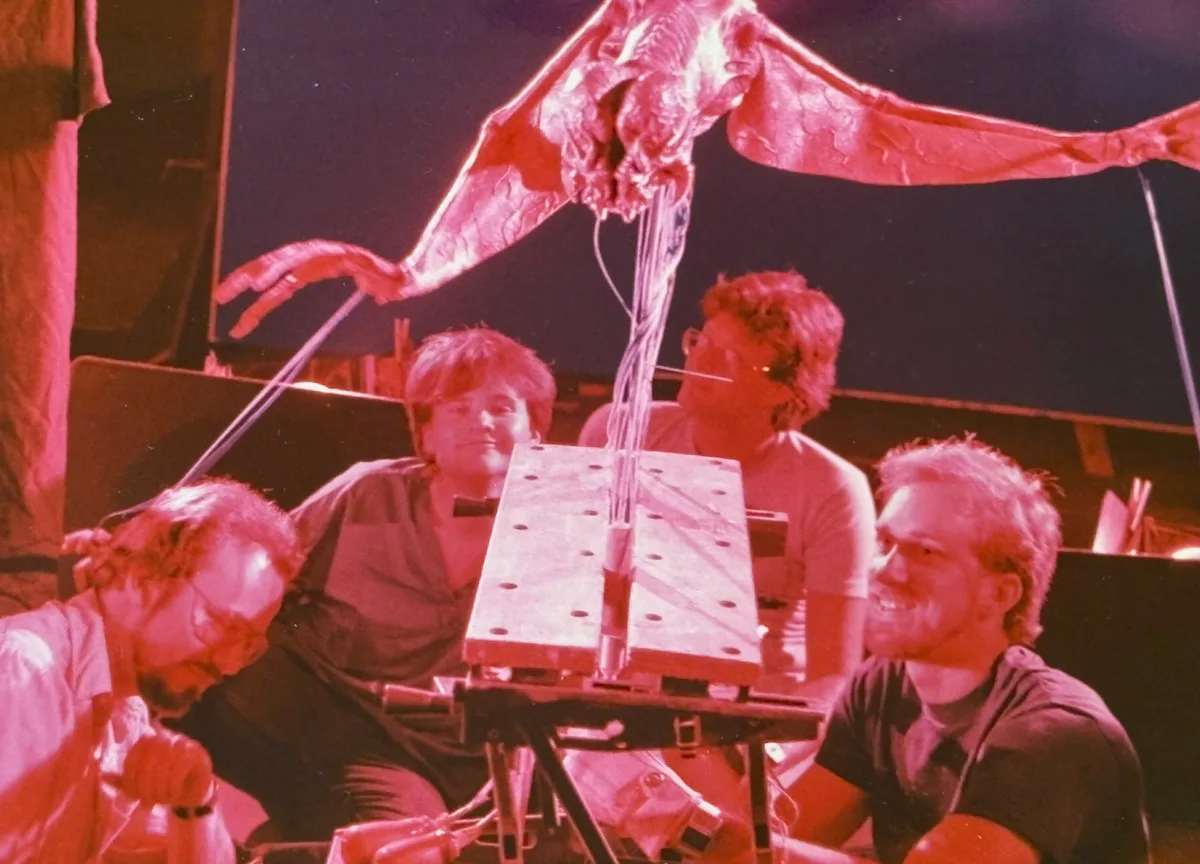
Clues start small: eels that swim in the air around the Resonator. Cast in hot-melt vinyl from Naulin’s sculpts, each had an armature to make them “swim.” Fellow effects supervisor Anthony Doublin lit and shot them for compositing onto the Resonator shots.
“It was a really ambitious film,” says Shostrom. “One thing that became clear early on was that there were too many effects for one makeup shop to handle.” Along with the late John Buechler, they formed a quadrumvirate of workshops that Yuzna hired to handle From Beyond’s effects. All but Shostrom had worked on Re-Animator. Though, he was familiar. Wandering onto an adjacent lot during pickups for The Supernaturals, he discovered a headless man leaning against a wall with intestines spilling from his body. When he learned that the team responsible would be making From Beyond, he ferried dummies he’d made for A Nightmare on Elm Street 2 across LA and into Gordon and Yuzna’s office, saying, “This is what I can do and I’m your guy.”
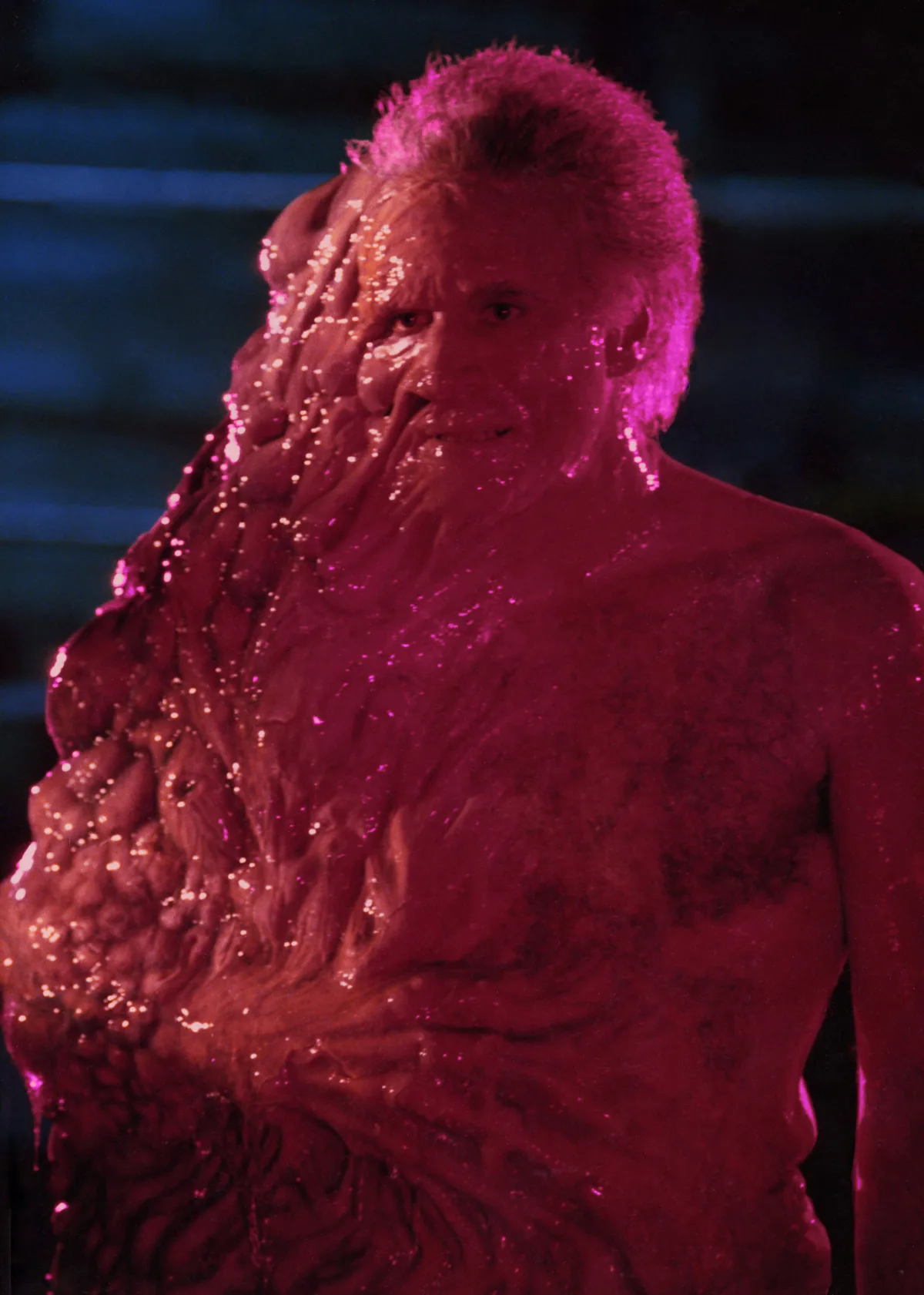
Doublin spent much of preproduction traveling from shop to shop to coordinate, while faxes and calls flowed back and forth between the shops and Italy. Shostrom took on the transformations Pretorius undergoes as he returns from beyond — Buechler handled his final forms — and seemingly from the dead, when an insensible Tillinghast is remanded to Dr. Katherine McMichaels (Barbara Crampton) and officer Bubba Brownlee (Ken Foree). They force him back to the house to prove his claims about the machine’s power, only to reveal what Pretorius has become.
Sadean Dreams
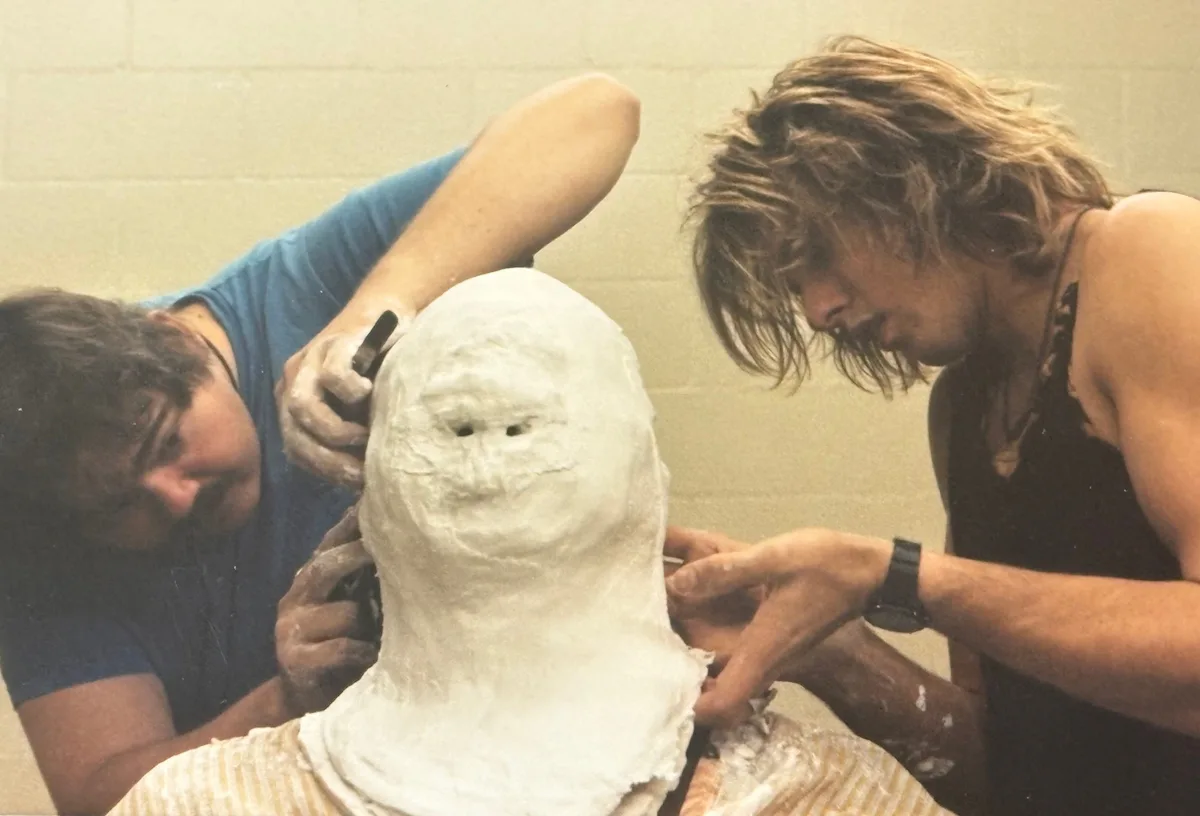
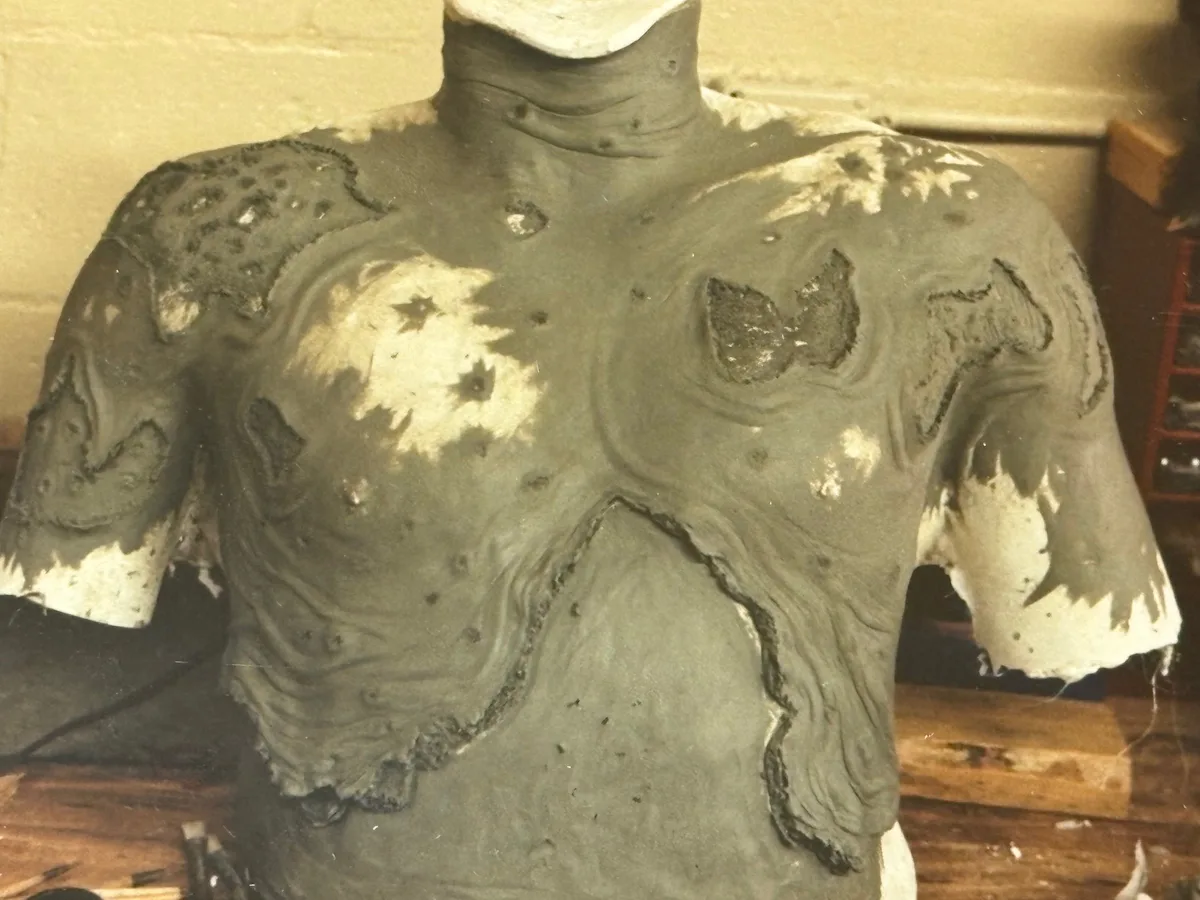
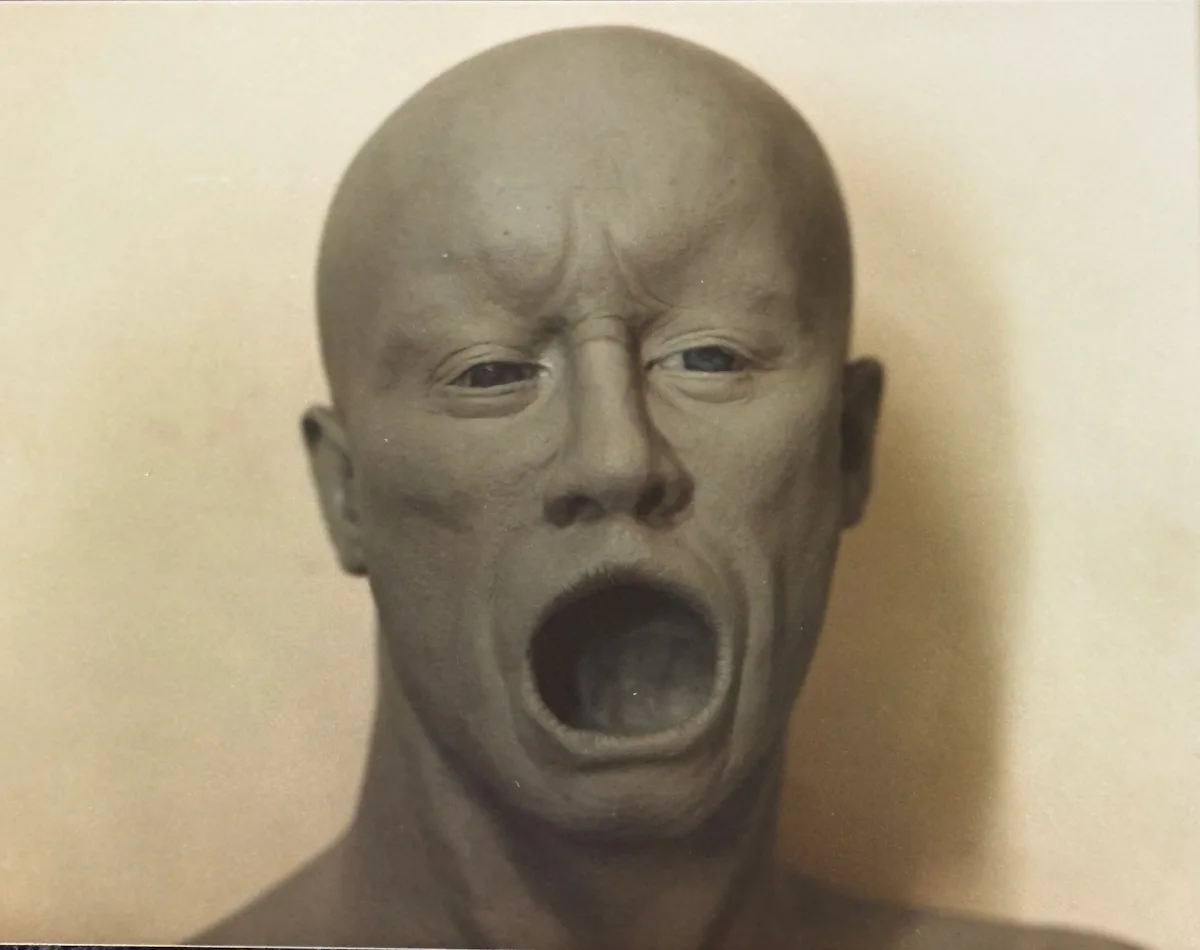
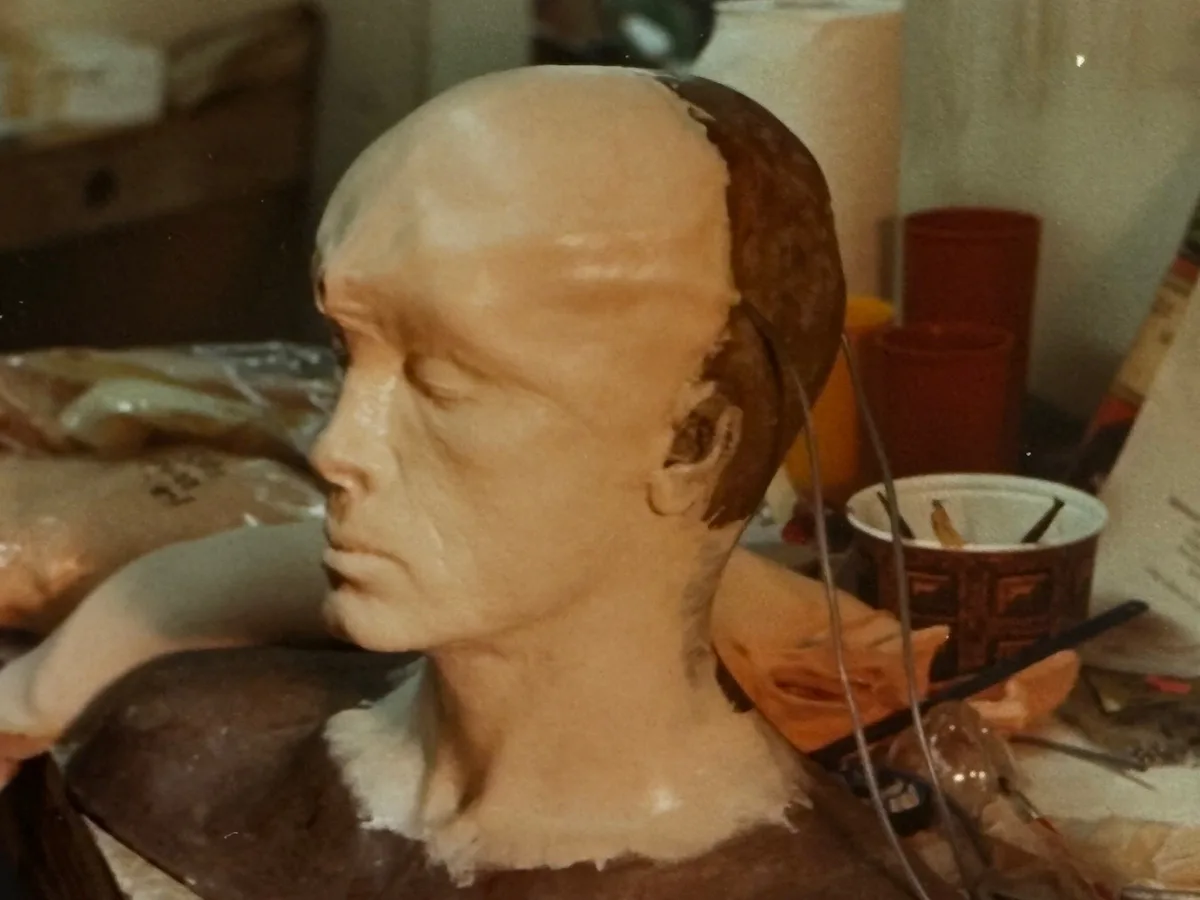
“We called that one Mr. Bubble,” Shostrom says. Boiling, grotesque, “it was about as unpleasant as you can get,” he adds about the heavy, rigid plastic foam strapped to Sorel’s torso to create the illusion of his body melting away. He had a willing subject, however, even when the first removal of the effect tore out Sorel’s chest hair. Nephew of Frankenstein and The Wolf Man makeup artist Jack Pierce, Sorel was thrilled to be involved in the same work. “He’s like, ‘It’s okay, it’s just my chest hair. Let’s do it!’” Shostrom says.
Pretorius’ return signals From Beyond’s shift to something more “Sadean,” says Hallam. He is unfazed by his transformation, interested instead in the beyond’s sensual pleasures. That’s his gimmick, Yuzna says, “because we’ve got to get the sex in it. And he’s not only a sensualist, he’s an S&M kinky kind of guy: not so nice.”
The focus of this transgressive energy falls on McMichaels. Like Re-Animator’s Megan Halsey (also Crampton), she lost her father to an asylum. Hallam suggests Halsey may have even grown into someone like McMichaels had her story continued. As McMichaels succumbs to the machine’s pull, however, From Beyond skews closer to films like The Howling and The Fly that “focused on professional women,” Hallam says. “They are impulsive, willing to do anything, to transgress boundaries of ethics and morality to achieve their ambitions — which is usually the domain of male protagonists.”
Waterworks
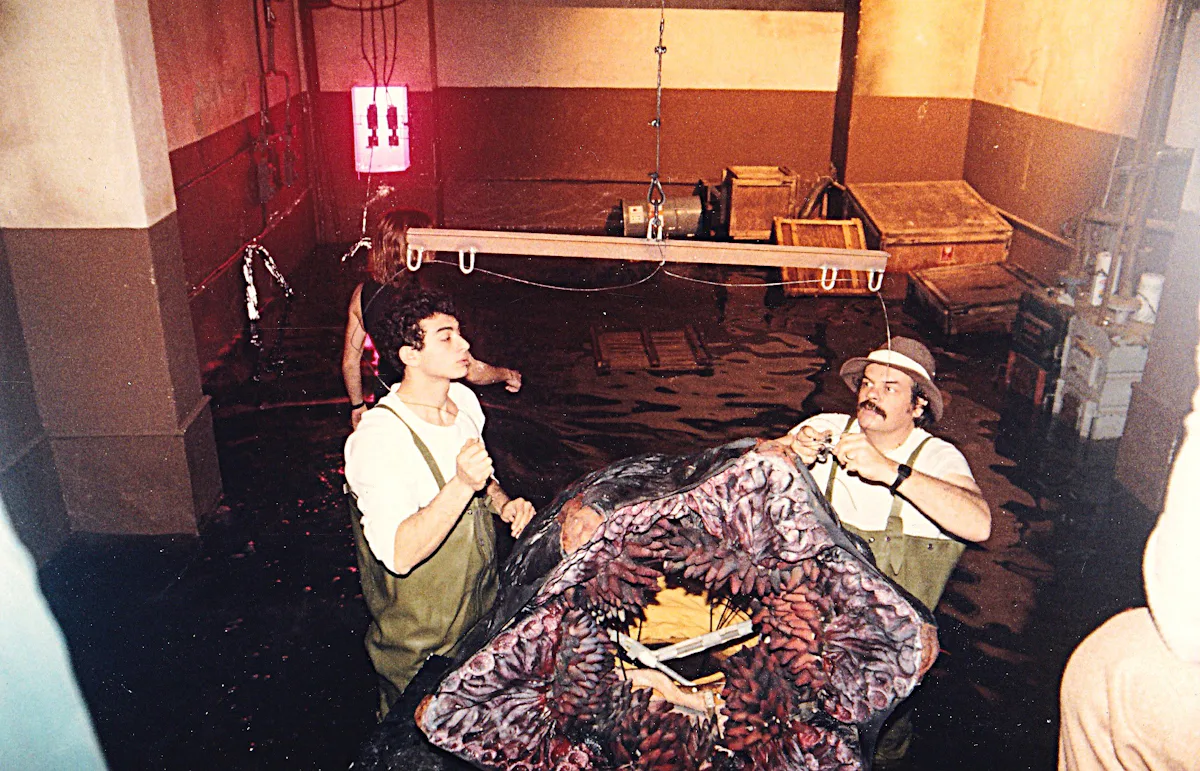
In response, Tillinghast rushes to the flooded basement to shut down the Resonator, only for an enormous eel to attack him from the water. “We couldn’t cheat that,” Yuzna says. “That’s how big it was!”
To create the effect, Naulin drew from discussions with David Lynch while he was working on Dune’s stillsuits, concerning the fabrication of the sandworm. Later, he says, he saw Swiss mime group Mummenschanz use ventilation ducting to simulate “inchworms and segments of giant creatures, which worked very well!”
Sourcing 30 feet of ducting, Naulin created a mold of the outer detail of a section, and his team sculpted skin over the casting. With a mold of that, they painted layers of latex to create curved sheets of skin to layer over the full tube. “[Doublin rigged] a counterweighted pulley to hold up much of the total weight while John Criswell [Naulin’s assistant] would bring to life the last six or so feet,” Naulin says. He operated a mouth, modified from Lynch’s sandworm concept by Criswell, via a lever.
“We couldn’t cheat that.”
Just before filming the scene, however, a soundstage door caught Naulin’s hand and severed two of his fingers. After an uncomfortable stay at a local hospital, he begged to leave and was back filming in the waterlogged basement the next day. The film’s production manager, Albert Band, arranged for Naulin to be rushed to Rome, where the Pope’s standby surgical team operated on him for five and a half hours.
“It was just a whirlwind,” Shostrom, who did not travel to Italy due to having to shift focus to Evil Dead II, says of production. Relentless, energetic, and taking place against the backdrop of the Challenger Disaster, the US bombing Libya, and multiple terrorist attacks — including in Rome and Vienna in late 1985, which made traveling to Italy nervy for some.
Intricacies of the Beyond
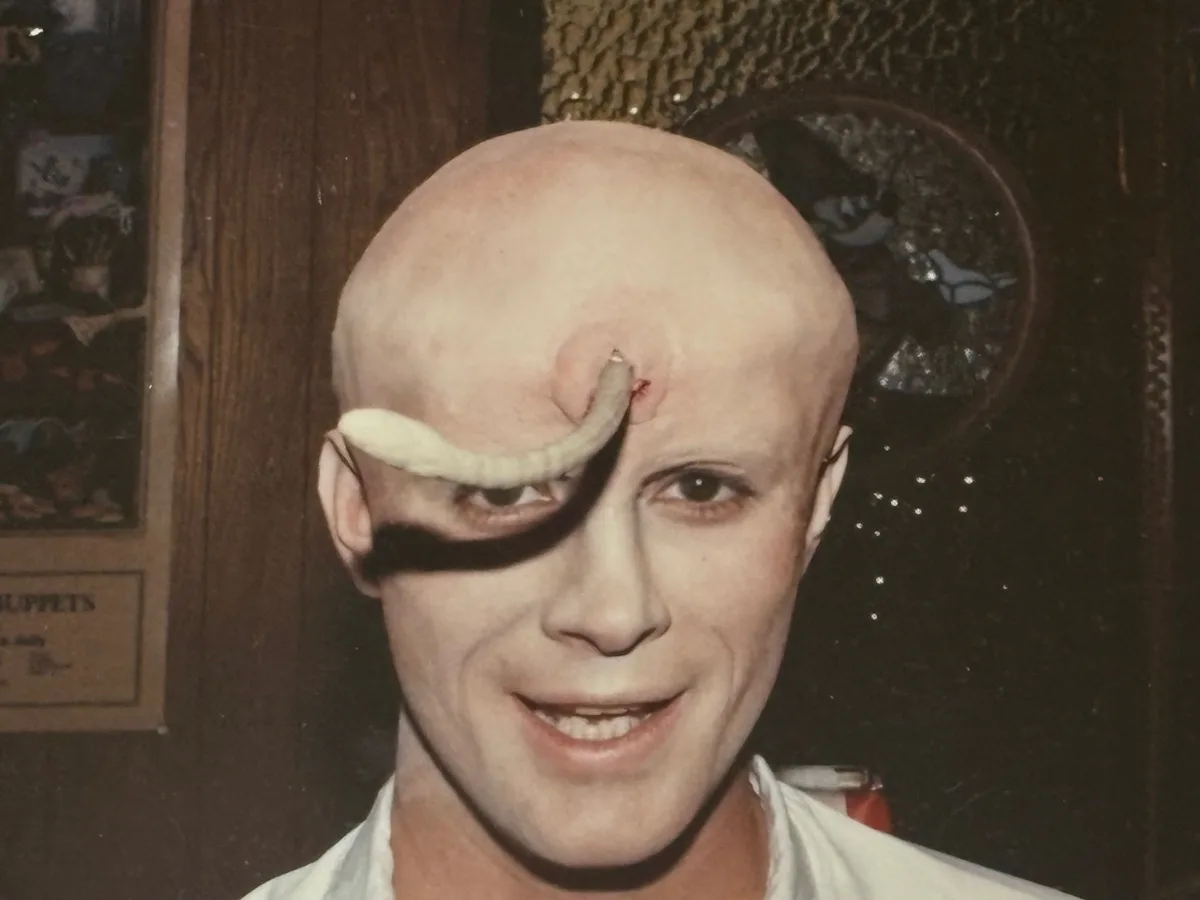
Tillinghast’s encounter with the eel leaves him unconscious and hairless. The Resonator agitates his pineal gland until it sprouts from his forehead — an effect Combs, according to Yuzna, called a “dog penis.” The shape worried the MPAA, too, until Naulin took an anatomy textbook to its offices to demonstrate that, outside the fiction of its stimulation, it was depicted accurately.
However, that length was only part of its actual extent. Naulin describes turning to an aerospace machinist for an armature small enough, “then to the thinnest yet strongest swaged cable used in neurosurgery to thread through the armature.” He threaded this through a Teflon tube to a toggle that Criswell — who would go on to supervise animatronics at Jim Henson’s Creature Shop — developed, all of which was applied via a rigid track system over Combs’ bald cap and beneath a second head prosthetic.
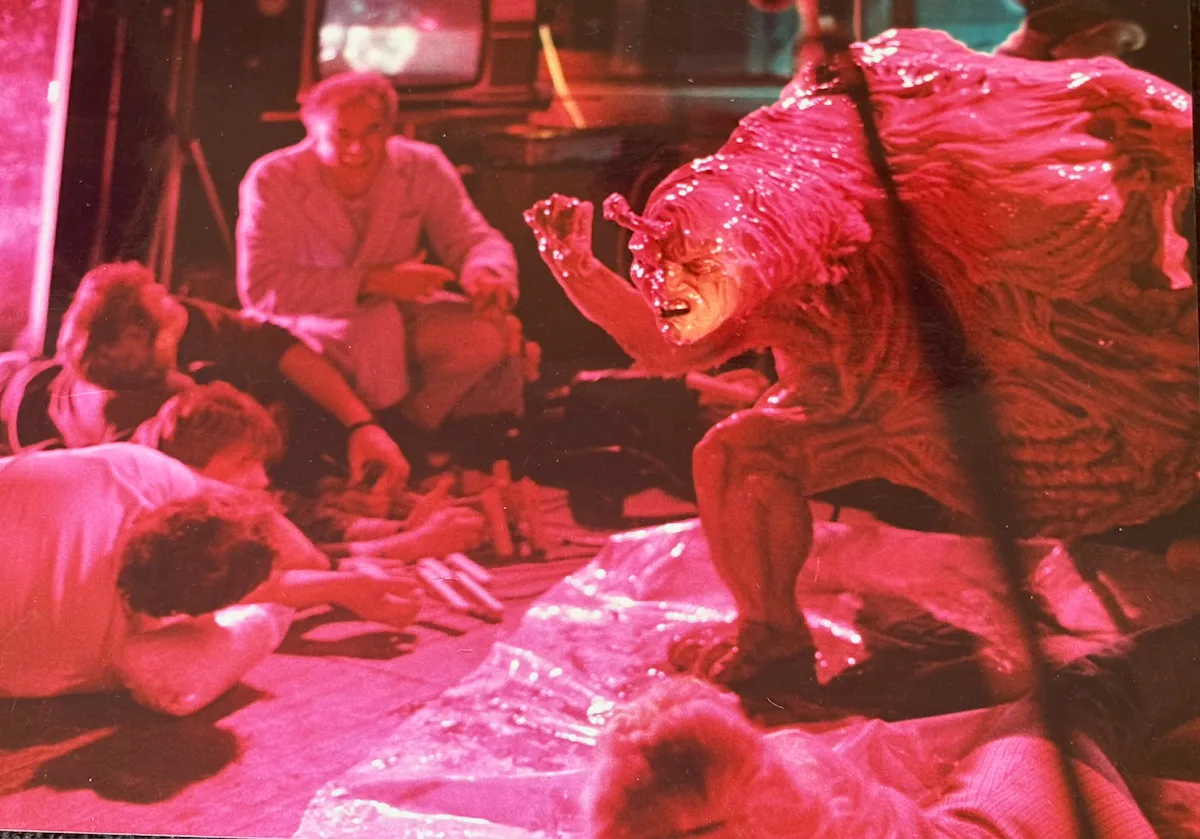
The process to create Pretorius’ final human-adjacent form was just as intricate, if larger in scale. The design was only approved the night before Gordon left for Italy. Having gone through several iterations with the director, Shostrom showed him a sculpture of “this little pretzel-like twisted form: about six or seven inches tall with a twisted long neck and different-sized arms,” he says. “It was all twisted flesh all over the body, like a bubble gum pretzel.”
It’s an evocative description of how the creature appears on film. The final construction, Shostrom continues, was 2,000 pounds of clay that, due to the size of the creature, had to be fabricated in a multipiece mold. Those molds needed to be light, so Shostrom hired Steve Patino — who worked under Naulin on Re-Animator — to fabricate them in fiberglass. Despite a visit from the fire department about the noxious fumes the process gave off, Patino managed to ready them for Shostrom to bring one of Stan Winston’s crew to rig them for foam injection.
Dave Kinlan, whom Shostrom dispatched to Italy with Robert Kurtzman to oversee the effect, then rigged the mechanical insides that allowed Pretorius’ head and neck to articulate. “Today, you do that with a computer,” Shostrom says. “Back then, it took a roomful of people sculpting 2,000 pounds of clay, making fiberglass molds, and using special injection processes, and then making the mechanical parts with a mail and lathe and a drill press.”
Beyond the Effects
One can have mixed reactions to these effects in 2026: impressive, ambitious, occasionally goofy. But, as Yuzna notes, “if it was sure to work, it wouldn’t be called special effects.” It did work, and the result of the talent and improvisation was a propulsive and, thanks to its effects, visceral film.
“Seminal,” Yuzna calls it, pointing specifically to the film’s uncanny hue: a neon pink notoriously difficult to capture on film stock to the point of feeling unnatural and which has become a hallmark of cosmic horror since. “That was the color palette Mac Ahlberg, the DP, chose,” he adds. “It really was perfect.” In recent years, it’s painted Mandy, Annihilation, and Stranger Things. “That’s kind of a From Beyond series,” Yuzna says.
“But I was there, and I got to make a whole bunch of movies.”
For those involved, looking back 40 years later is wistful, if anchored by intense memories. Naulin — who ultimately kept all 10 digits — remembers the shoot as exciting, challenging, and terrifying. “I am so glad it happened,” he says, “and I would work to alter my life going forward to make certain it never happened again!”
“It was a good time because everything was happening,” Yuzna reflects. “I was in my 30s, making movies one after another and just flying. By the ’90s, everything started getting more complicated. It was so hard to make a movie back when I started; it was special if you did. Now it’s not at all.”
It’s a stark shift from the frantic boom that birthed From Beyond, but Yuzna harbors few regrets. “I thought I’d be much more successful than I was,” he admits. “I always thought I would like to be real successful. Well, I wasn’t. But I was there, and I got to make a whole bunch of movies.”