Madden 27 Has the Worst Monetization the Franchise Has Ever Seen, And It May Only Get Worse

The problems surrounding Madden NFL 27 are vast, beyond just the series’ decline from quality over the last few years. Although every new Madden game has some interesting innovations to the American football simulator formula, the most recent entry is also plagued by obtrusive systems related to paying real-world money. Even with refined gameplay, players have to deal with egregious microtransactions at almost every step, much like College Football 27 with its controversies earlier this year.
Developer Electronic Arts (EA) has already gotten into hot water regarding monetization, with severe backlash coming from player’s initial response to College Football 27, a game bundled with Madden 27 in most cases. There was even a big boycott driven by partnered content creators for College Football 27, forcing EA to reverse the paid progression features that were in the game initially. Although the payment practices of Madden 27 are less hidden than they were in College Football 27, they aren’t much better.
Despite Backlash, Madden 27 Ties Almost Every Aspect Of Progression To Microtransactions

Once again, Madden 27 implements monetization within all of its modes in some way, increasing the amount of ways players can spend money compared to Madden 26. In some ways, players can expect the same things they’ve seen in the last several Madden games, from pop-up ads for card packs to offerings of different game edition upgrades. However, the Ultimate Team of Madden 27 is by far the worst spot to find microtransactions, with payments almost acting as “necessary” grind skips for player progression.
Ultimate Team is littered with pack promotions for various random drops of different players, mirroring gacha games and other mobile titles that are incredibly aggressive with their monetization. Multiple types of currency also make the spending feel forced, with premium currency being in rarer supply than ever through natural in-game actions. Although Madden 27 isn’t a live service title, it might as well be with how many gambling and item costs are shoved into players’ faces from the moment they log in.
Rewards in Ultimate Team feel fewer than ever too, which is a shame due to the gameplay improvements that make Madden 27 enjoyable to play. Yet, the multiplayer experience can be unbearable if you don’t want to spend money, as the game will do everything in its power to convince you to buy something to make the experience easier. Players looking to be competitive online will have to spend money regardless of whether they want to or not, or spend hundreds of hours scrapping by for players or bonuses they’ll only get rarely.
Single-Player Content Is Restricted Through Baffling Monetization Practices Fans Hate
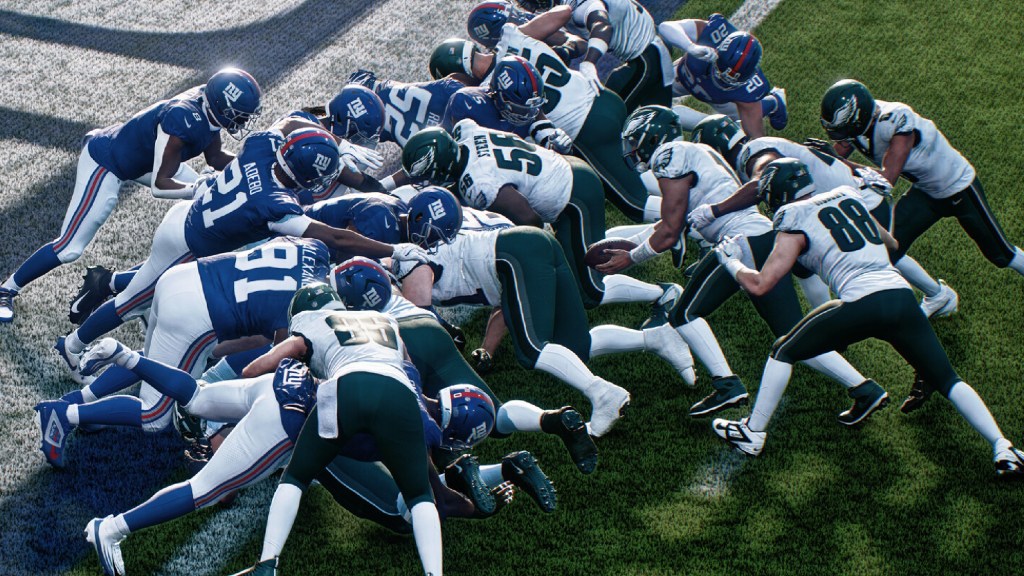
Unfortunately, the unsurprising nature of Madden 27‘s Ultimate Team is something players will have expected going into the game. What really stinks is how the practices from that mode have carried over into other aspects of Madden 27, specifically within the single-player Superstar mode. There are multiple pay-to-progress features in Superstar, such as barriers forcing players to spend money to gain premium XP for quicker career progress as they play. On the surface, these are completely optional, but the grind of Superstar mode has been slowed to a crawl compared to past games to make the monetization feel more enticing.
These features mimic the systems that enticed fan backlash in College Football 27, where faster XP progression was locked behind tiers of in-game payments. Free-to-play fans are bombarded by monetization everywhere they look, even if they want to reinvent Superstar playthroughs at faster rates on their own time. Once again, this prevents players from experiencing Madden 27 the way they want. With progression and competition seemingly regulated by how big your wallet is, it’s worth asking an important question — why does the monetization feel more oppressive than it ever has before?
Numerous New Features Don’t Make Up For Strange Money Making Features Implemented After EA’s Buyout

Back in September 2025, around one year ago, EA was bought out by a consortium of investors from Saudi Arabia’s Public Investment Fund (PIF) group, for a record-breaking $55 billion. Completion of this deal took place recently in August 2026, but development of games and other projects likely continued with this assumption ever since the deal was proposed. As a result, any of EA’s games over the last year were likely influenced by the buyout, with a newfound priority of making back the money put into the company’s investment.
Similar in scope to Microsoft’s acquisition of Activision Blizzard in 2023, EA now has an expectation for their games to make millions upon millions of dollars annually to recover the costs it took for PIF to purchase them. At the same time, Saudi Arabia has been heavily criticized for buying out game studios and other entertainment groups to diversify their country’s economy and public image. This is especially true in Esports spaces, including Madden competitions at professional levels now that the deal has been completed.
In all likelihood, EA’s aggressive monetization practices could be a result of their new ownership, who desire profit margins and exponential business growth more than game quality. Targeting the highest spenders in the Madden series by making microtransactions less avoidable is but one step forward in that mentality, with likely more controversial decisions coming in the next entries for the franchise. The worst part about Madden NFL 27 is that the monetization experiments it’s setting are likely just the beginning, heralding a tumultuous future for upcoming yearly games.