The Greatest Quote In A Song Of Ice & Fire History Was Cut From Game Of Thrones

A Song of Ice & Fire and Game of Thrones are both full of memorable quotes, from sharp one-liners to epic speeches and monologues. Many of the very best from the book became some of the very best in the show, from Cersei Lannister's "When you play the Game of Thrones, you win or you die" warning to Ned Stark, to Tyrion Lannister's sage advice to Jon Snow about never forgetting what you are.
The dialogue that George R.R. Martin writes is one of the many reasons that the books and, subsequently, the show, have become so popular. It can be powerful, stirring stuff, shocking, devastating, witty, or some combination of all of those, and he has an incredible grasp on how each of his many characters should talk. This was brilliantly carried over to the TV series, and some of Game of Thrones' best quotes are now among the most memorable in TV history.
Still, the show was never a perfect adaptation, and a lot was left out in the translation from page to screen. That includes entire characters and storylines, but also a speech about "Broken Men" from someone called Septon Meribald (who also didn't make it to TV) that might be the greatest thing Martin has ever written, and is certainly the best dialogue in the entirety of A Song of Ice and Fire.
The "Broken Men" Speech In A Song Of Ice & Fire Explained

The text in question comes from A Feast for Crows, the fourth of Martin's ASOIAF books, during a chapter told from the point of view of Brienne of Tarth. At this point in the story, she and Podrick Payne are traveling around the riverlands, where they're aided by a wandering septon named Meribald, who mentions to them that there are "broken men" on the roads. Another of their traveling companions warns of the danger of these people, prompting Podrick to ask if it's the same as an outlaw. Brienne responds, "more or less," but Meribald disagrees.
He goes into a monologue that talks about how men become "broken." He speaks of young men marching off to war, dreaming of the kind of glory and rewards that they've heard about in song and legend. They go off willingly, eager, until they discover what war is truly like. And when that happens, they break. But for so many, there is no turning back: they're sent from one fight to the next, for lords they no longer even know, for reasons they don't understand. The full text of the speech, if you wish to read (or re-read) it, is below:
“More less than more. There are many sorts of outlaws, just as there are many sorts of birds. A sandpiper and a sea eagle both have wings, but they are not the same. The singers love to sing of good men forced to go outside the law to fight some wicked lord, but most outlaws are more like this ravening Hound than they are the lightning lord. They are evil men, driven by greed, soured by malice, despising the gods and caring only for themselves.
"Broken men are more deserving of our pity, though they may be just as dangerous. Almost all are common-born, simple folk who had never been more than a mile from the house where they were born until the day some lord came round to take them off to war. Poorly shod and poorly clad, they march away beneath his banners, ofttimes with no better arms than a sickle or a sharpened hoe, or a maul they made themselves by lashing a stone to a stick with strips of hide. Brothers march with brothers, sons with fathers, friends with friends. They’ve heard the songs and stories, so they go off with eager hearts, dreaming of the wonders they will see, of the wealth and glory they will win. War seems a fine adventure, the greatest most of them will ever know.
“Then they get a taste of battle.
“For some, that one taste is enough to break them. Others go on for years, until they lose count of all the battles they have fought in, but even a man who has survived a hundred fights can break in his hundred-and-first. Brothers watch their brothers die, fathers lose their sons, friends see their friends trying to hold their entrails in after they’ve been gutted by an axe.
“They see the lord who led them there cut down, and some other lord shouts that they are his now. They take a wound, and when that’s still half-healed they take another. There is never enough to eat, their shoes fall to pieces from the marching, their clothes are torn and rotting, and half of them are shitting in their breeches from drinking bad water.
“If they want new boots or a warmer cloak or maybe a rusted iron halfhelm, they need to take them from a corpse, and before long they are stealing from the living too, from the smallfolk whose lands they’re fighting in, men very like the men they used to be. They slaughter their sheep and steal their chickens, and from there it’s just a short step to carrying off their daughters too. And one day they look around and realize all their friends and kin are gone, that they are fighting beside strangers beneath a banner that they hardly recognize. They don’t know where they are or how to get back home and the lord they’re fighting for does not know their names, yet here he comes, shouting for them to form up, to make a line with their spears and scythes and sharpened hoes, to stand their ground. And the knights come down on them, faceless men clad all in steel, and the iron thunder of their charge seems to fill the world...
“And the man breaks.
“He turns and runs, or crawls off afterward over the corpses of the slain, or steals away in the black of night, and he finds someplace to hide. All thought of home is gone by then, and kings and lords and gods mean less to him than a haunch of spoiled meat that will let him live another day, or a skin of bad wine that might drown his fear for a few hours. The broken man lives from day to day, from meal to meal, more beast than man. Lady Brienne is not wrong. In times like these, the traveler must beware of broken men, and fear them... but he should pity them as well.”
The "Broken Men" Speech A Song Of Ice & Fire At Its Very Best

A Feast for Crows is not necessarily the best A Song of Ice and Fire book (a debate for another time), but it is among the most interesting: it doesn't have a lot of the biggest characters (the likes of Jon Snow, Daenerys Targaryen, and Tyrion Lannister are all absent), but it's also arguably the most thematically rich of the bunch, and is where Martin underscores one of the crucial points of the entire saga: that this is an anti-war story. And nowhere is that more apparent than in Meribald's speech.
The greatest part of the monologue, and one of my favorite lines Martin has written, comes right at the very end, when Meribald has mentioned his own experiences of marching off far too young, to a war his brothers were joining, and he would not be left behind.
“The War of the Ninepenny Kings?” asked Hyle Hunt.
“So they called it, though I never saw a king, nor earned a penny. It was a war, though. That it was.”
A Song of Ice and Fire is typically told from the perspective of nobility. Whether you consider them good, bad, or somewhere in between, it often means we are presented with a glorified version of war that is disconnected from reality and has no understanding of what it's like for the soldiers fighting in these wars who don't have some great title, name, or wealth. Meribald carves through that like a Valyrian steel blade through butter, quickly destroying the romanticism that is built up around the battles.
His final words, in particular, cut deep. Kings take the victory. Maesters write the histories. Singers sing the songs. Lords and knights are celebrated with honor. For them, that is the glory. But the men Meribald speaks of see none of that. They see dead boys, shattered bodies, their friends and family members killed by their side. They are under-trained and unprepared, fighting without great armor or weaponry, left behind in the wreckage with either physical or psychological damage (or both). This is a central thesis of A Song of Ice and Fire, and Meribald conveys it in harrowing fashion.
Game Of Thrones Changed The Broken Men Speech
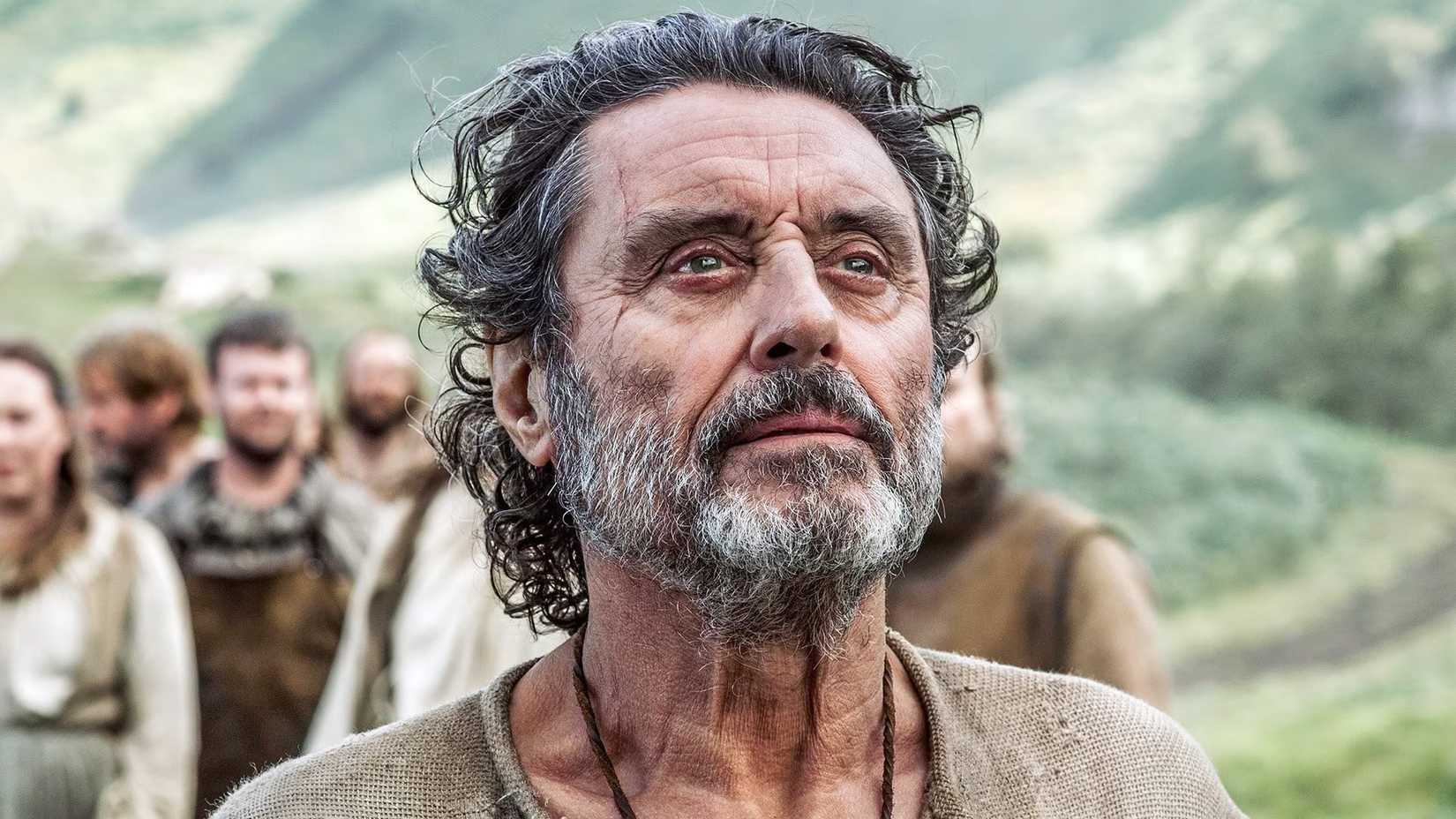
Meribald did not directly make it into Game of Thrones, but instead was amalgamated with another character, the Elder Brother, to become Brother Ray. He was played by Ian McShane in season 6, episode 7, "The Broken Man." The installment takes its name and some of its core ideas from the monologue, but, while McShane is as good as you'd expect in the role, the speech is replaced with a different version written for the show.
Brother Ray gets to tell his own story of war, of fighting, stealing, and killing in the service of someone else, and it is well done. But it's much more limited in scope - it's directed towards Sandor Clegane, and his own ability to come back from the horrors he's done - and doesn't pack anywhere near the same emotional punch nor carry the same thematic weight as the speech from the book. McShane did tell EW in 2016 that a "two-page speech... a big soliloquy" had been written, but it's unclear if there was originally more of the book's dialogue in there.
Ultimately, Game of Thrones offered up a very streamlined version. To a degree, that's understandable. There's a much greater need for plot and character expediency on screen, and this was about revealing that the Hound wasn't dead after all, and how he can come back after a life consumed by vengeance and violence.
It might've been that pausing for such a monologue might not have worked but, given how incredible the prose is (and how good McShane is), I wish we'd got a chance to have it delivered. Alas, it'll just have to make do with being one of the best parts of A Song of Ice and Fire instead.