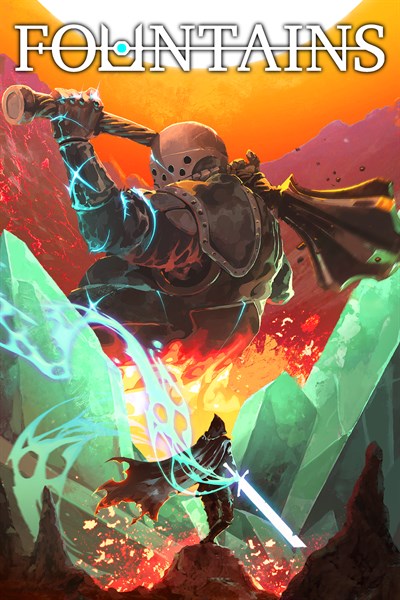
Five Years of Solo Development – Interview with Fountains Creator John Pywell
Summary
- Launching today on XBOX.
- John’s game design and creation process.
- Sources of inspiration and teamwork during development.
Fountains is a solo-developed Metroidvania inspired by Dark Souls and Hollow Knight, built over five years by creator John Pywell. With the game now launching on XBOX, we spoke with Pywell about its development, influences, and unexpected international success.
Sam: So firstly, tell us a bit about yourself – a brief introduction of anything you’d like to say or not say.
John: I’m John Pywell, a computer science graduate from Canada. Halfway through high school, I took my first computer programming course, and when I realized I was good at it, I never stopped. I work full time in the field, plus a ton of my free time as you can see.
Sam: What was your earliest memory of video games?
John: I think my earliest memory of video games was seeing my older brother play a racing game on our Windows XP desktop. The first video game I remember owning is Wii Sports, around 2006. I was around six years old, and my parents brought me to some kind of technology exhibition at our local university. There was a display of the newly-released Wii, which I remember being fascinated with. A few months later, we had one of our own, and Wii Sports is the game that comes with the system.
Sam: Could you tell us some of your favourite games? Do you see anything of those games in Fountains?
John: Well, it might be obvious from the content of Fountains, but Dark Souls 1 is my favourite single-player game of all time. The twisting, interlocking world design of the first game in the series is so mysterious to me. After playing it, I wished there were more games with world designs like that, and unfortunately the sequels are more linear. That’s one of the main reasons I made Fountains. Another favourite game of mine is Satisfactory. If you don’t know of it, it’s a first-person factory-building game. It’s obviously nothing like Fountains, but I love optimizing and solving problems, so I think it appeals to the programmer part of my brain.
Sam: What was your main motivation for making Fountains? Seeing a video game through to the end is not an easy task.
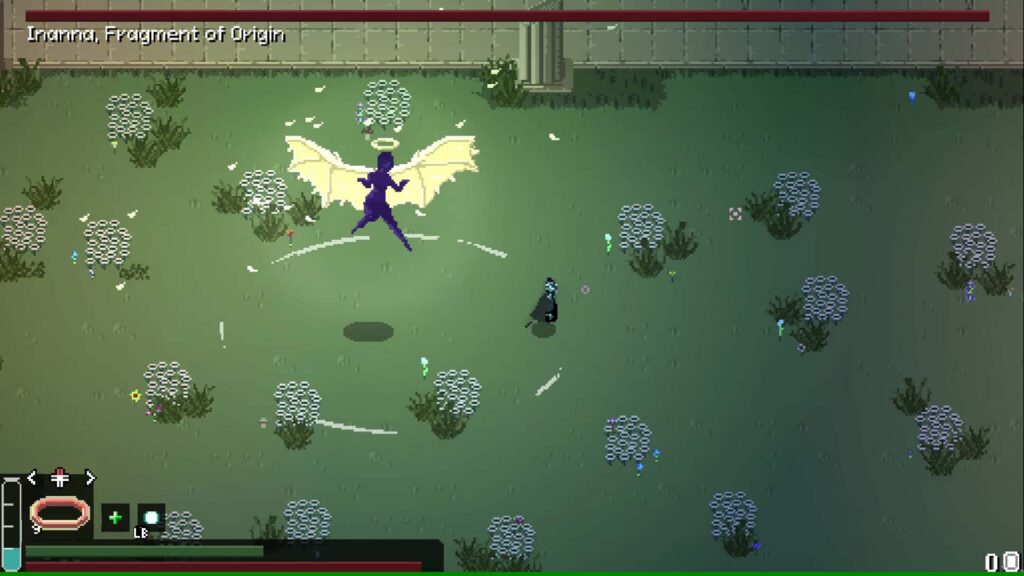
John: Like I touched on earlier, I love when games are mysterious. When you find a secret in an RPG, it sometimes feels like you’re the first person to ever see that part of the game. My goal in making Fountains was to create a world with a real feeling of mystery. If you play the game, you’ll notice this; there is practically nothing telling you what your goal is or where to go. Your only option is to explore the world and uncover the story for yourself.
Sam: How did you choose the mechanisms for battle and exploration in the game?
John: The mechanisms for exploration are very inspired by the Metroidvania genre. The main idea is that the entire world is technically open to you at all times, but there are certain tools and skills you need to acquire to progress. This creates a satisfying loop where players encounter a barrier, make a mental note of it, and later return with the right skill or item to push forward. It’s about rewarding curiosity and giving players those “aha!” moments as they gradually learn the world’s layout and secrets. The main battle mechanic of hitting enemies to regain your magic resource was shamelessly stolen from Hollow Knight, although I’m not sure who first invented it. Hollow Knight is my favourite game in the Metroidvania genre, so it was also a big inspiration for the exploration-focused gameplay in Fountains.
Sam: What was the most challenging thing about creating the game? Or which part took the longest to get right?
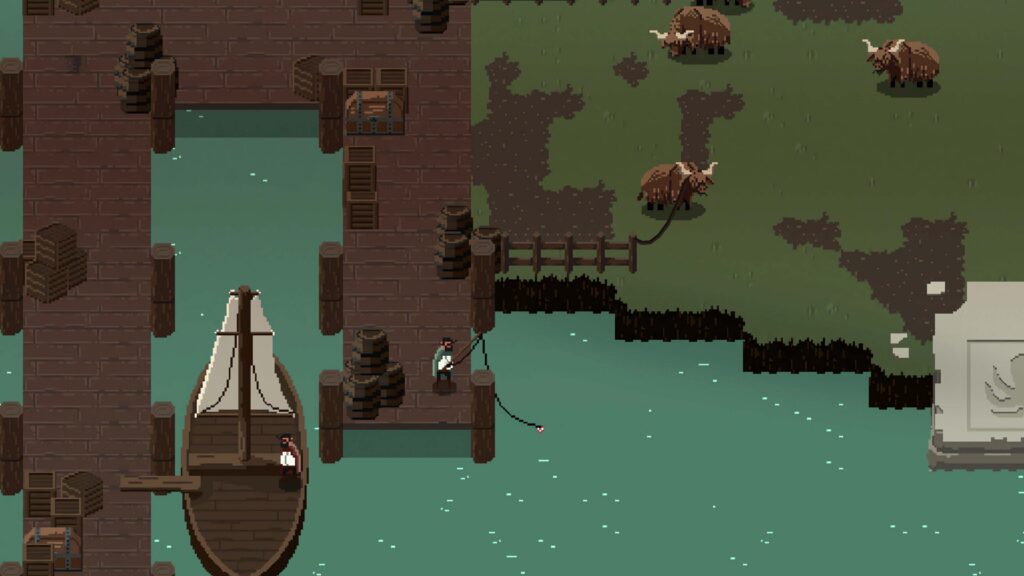
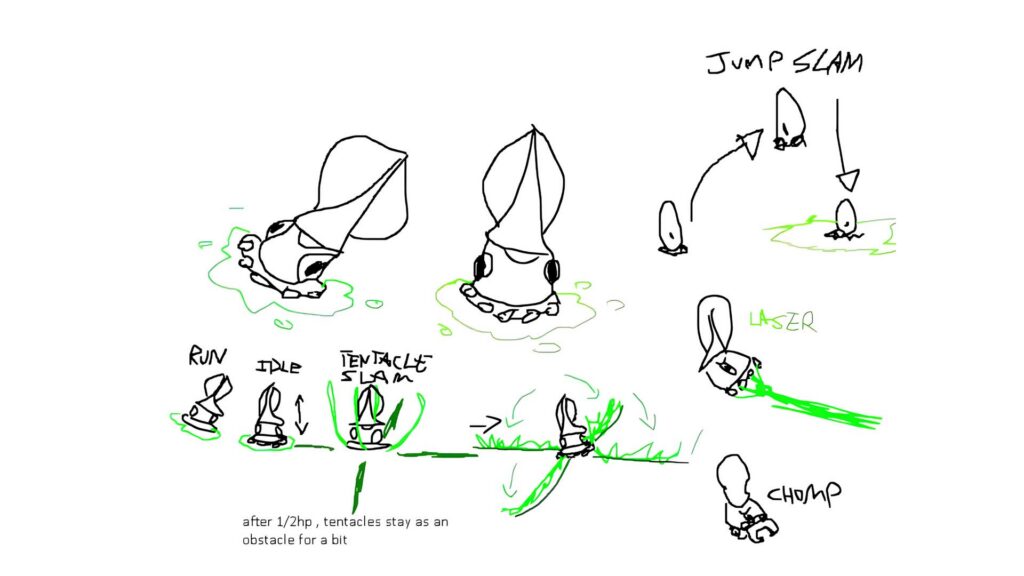
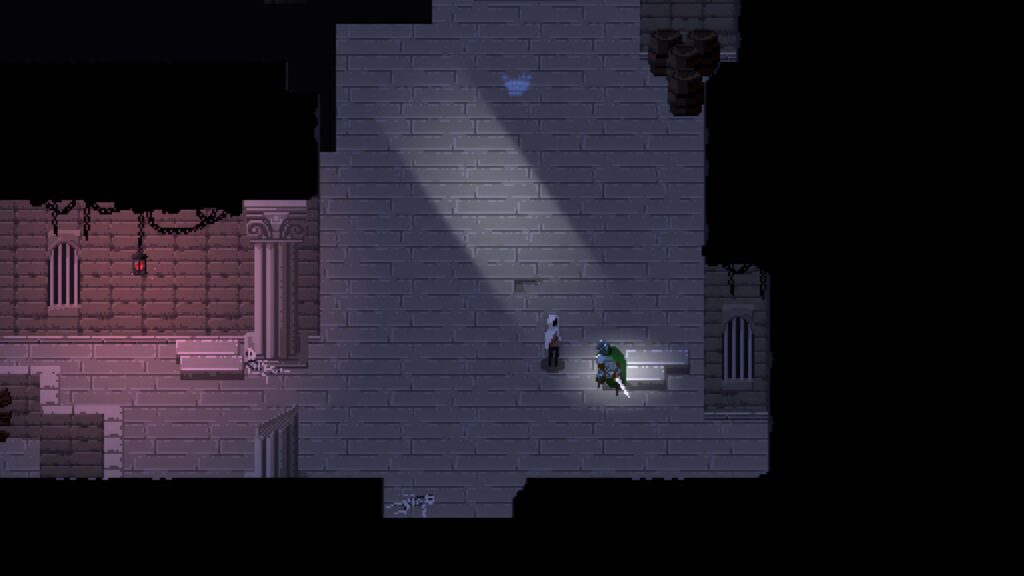
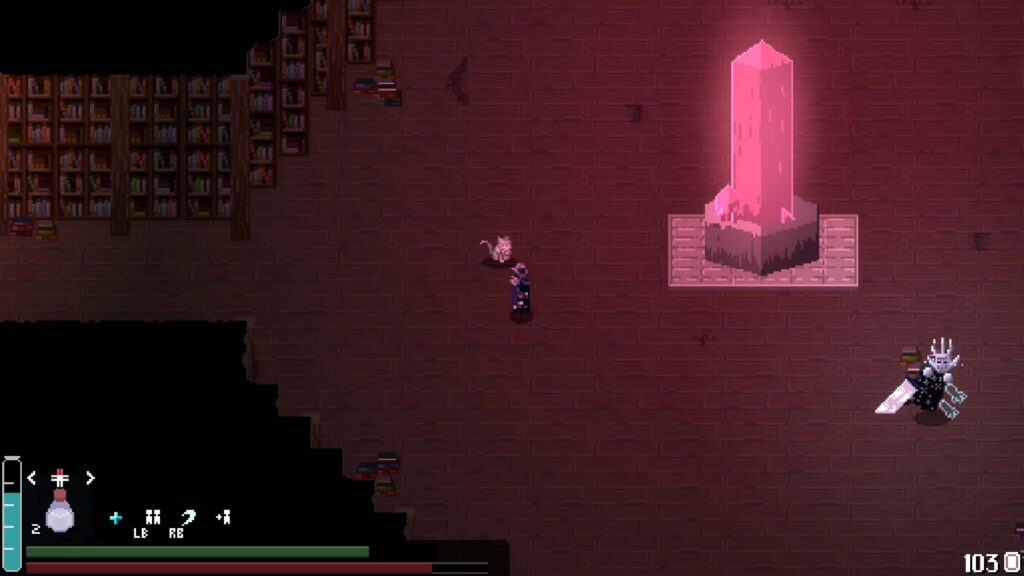
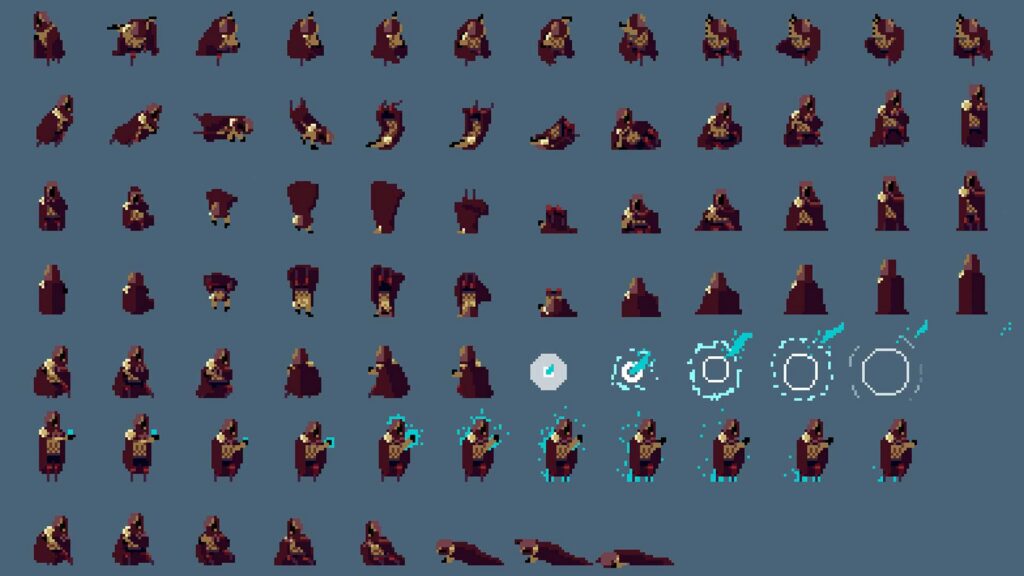
John: Since I already had a background in programming, the most difficult part for me was learning to create pixel art. If you look at early builds of the game, the art was a lot more rudimentary and had a “MS Paint” vibe. As my skills improved over the approximately five years of development, I went back and replaced my terrible early art with slightly less terrible art. You might also notice that the later you progress into the game, the characters and enemies are progressively more well-animated. At the start of development, I wasn’t using the proper software to have a good preview of what character animations would look like before fully adding them to the game. So, lots of the early animations are still there, and look a bit more “stiff”.
Sam: Did you feel any restrictions when making the game, or was it a smooth process? Is there something you’d like to explore in the future that you would have liked to explore in Fountains but didn’t get the chance?
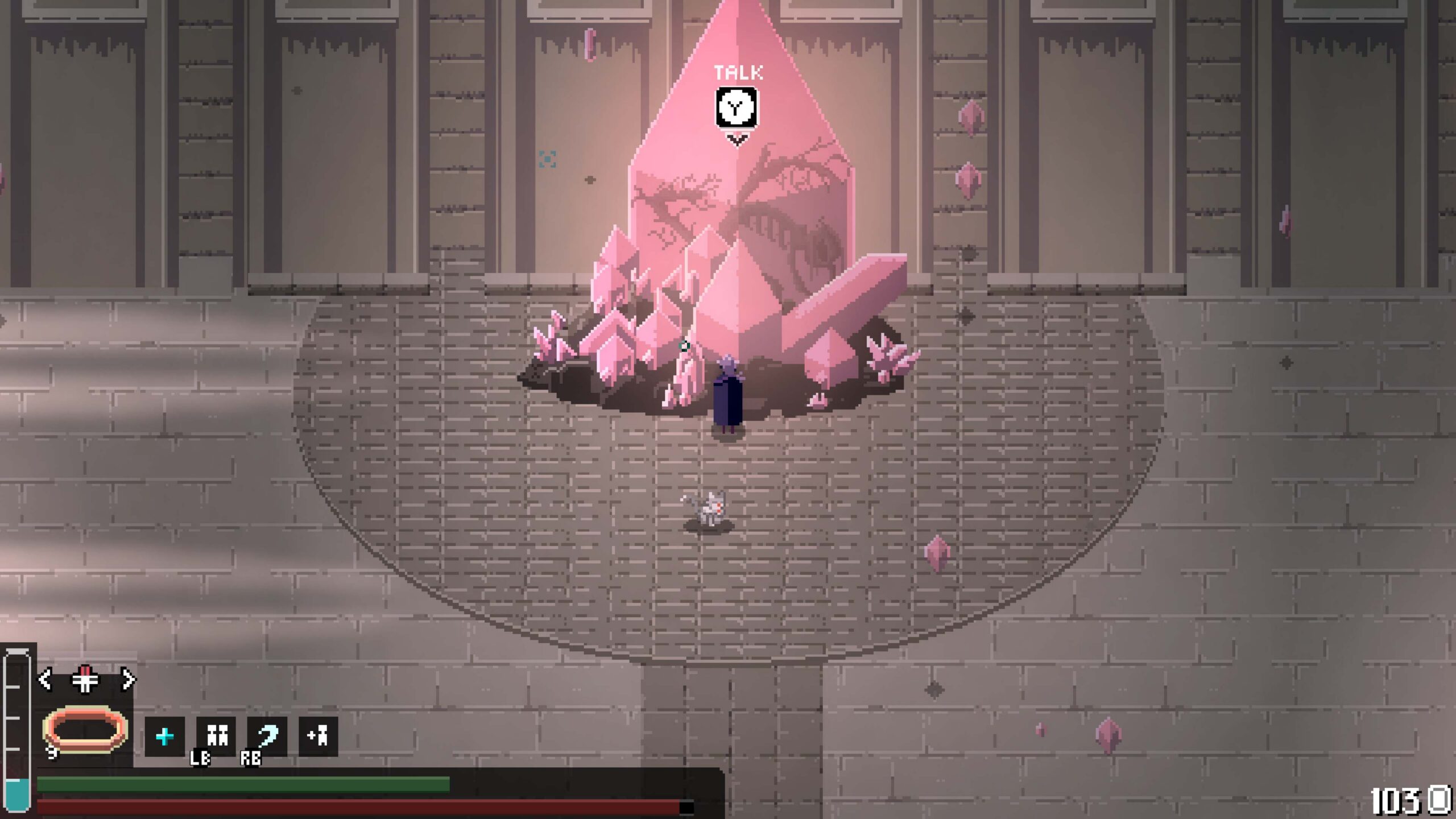
John: The release version of Fountains is the final product I always imagined when I started work on it. It’s also a considerably longer game than I thought I was capable of making myself. However, I do wish I had more time to include a few more *really* secret bosses. There are secret bosses, of course, but if there were one that only one percent of players could find, I think that would be really cool. Unfortunately, spending that much time on something so few people would see wasn’t in the cards, since the last boss in the final game was added only a few months before release.
Sam: How did you approach the programming and systems of the game?
John: The game is written in Godot engine. I chose this engine because it’s a free and open source project, and (in my opinion) the best engine all-around for 2D games. If anyone is reading this and is interested in game development, I recommend they start with Godot. Of course, the engine isn’t quite ready for AAA graphics, but solo devs don’t need to worry about that.
Sam: How did you approach the music of the game?
John: The music for the game was entirely composed by Travis Moberg, and honestly, he absolutely nailed it. I’d explain the atmosphere I was going for – whether it was eerie, tense, or calm, and somehow he’d come back with a track that perfectly captured that mood. His ability to translate vague descriptions into music that feels spot-on is kind of unreal. The soundtrack really helps set the tone throughout the game, and his work brought a whole new layer of depth to the experience.
Sam: Other than games, what kind of media influenced this game? Be it music or films… etc.
John: The 1986 fantasy movie “Labyrinth” gives off really similar vibes to what I was going for in Fountains. It’s a bit corny, but it has similar themes: exploring a strange world, characters speaking in riddles, and a sense of mystery throughout.
Sam: Could you speak about the 3D modelling in the game, how did you achieve them?
John: There’s actually no 3D modelling in Fountains at all. It may seem that way in some parts, but everything is made of flat 2D sprites. There’s some forced perspective to make it seem like they have depth, but in reality everything’s 2D. The only time I used 3D modelling in development was to help me visualize the perspective of one of the “spiral staircase” sprites I drew. However, the original prototype I made for Fountains was a top-down 3D game, as opposed to the fully 2D game that was released.
If anyone’s interested in this, there’s a short video showing the original 3D prototype on the Fountains YouTube channel.
Sam: Your game got a lot of attention, could you speak about your feelings towards doing so well in your first commercial endeavour?
John: When I started this project, I imagined only my friends would play it. I had no idea it would become popular, no less that people would be playing it all the way over in Japan. If I could, I would personally thank anyone who played the game.
Want to see Fountains in action for yourself? The game and DLC are available now!