5 Years Ago, Apple Debuted Its Most Important Sci-Fi Epic
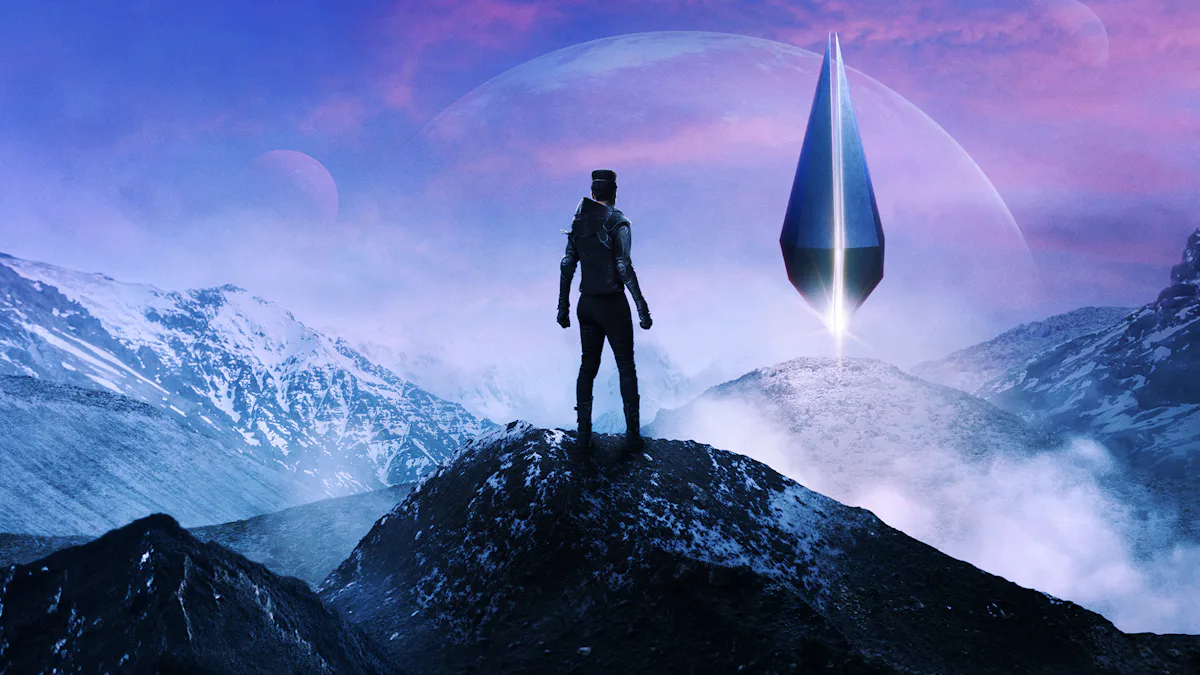
Like the television channels that preceded them, today’s streaming platforms have earned reputations based on the content they host and create. Disney+ is for Marvel and Star Wars fans, HBO is Thrones-town, and Paramount+ is where you go if you need to watch Star Trek and Taylor Sheridan shows for the rest of your life. And if you like sci-fi but are too hip for Jedi and Klingons, then Apple TV is probably your best bet.
That Apple is soon releasing a big-budget adaptation of Neuromancer, William Gibson’s seminal 1984 cyberpunk novel, feels like the culmination of an effort that began when the platform launched in 2019 with For All Mankind. Say what you will about having our lives controlled by mega-corporations that would fit right at home in Gibson’s story, but Apple has never been afraid to make television at a loss for the sake of prestige, which is a better use of our money than whatever Microsoft is doing with its Xbox division.
While For All Mankind was Apple’s first sci-fi series, and Severance and Pluribus can each make a claim to the title of buzziest, it was Foundation, which debuted five years ago today, that felt like Apple’s statement of intent. Loosely based on Isaac Asimov’s novels and short stories, the first of which was published in 1942, Foundation is set tens of thousands of years into a future where humanity spans the galaxy but lives under the thumb of an autocratic empire that’s starting to unravel at the seams.
If Neuromancer can feel dated to modern readers, the so-called Golden Age of Science Fiction can be positively Paleolithic. It’s not that Asimov, Clarke, Heinlein, and all the rest aren’t still entertaining, but you need an appreciation for the context in which they were published. Putting aside the pulp era’s frequently workmanlike prose, all the whiffed technological predictions, and the sometimes dated racial and gender tropes, the sci-fi of the ‘40s and ‘50s often focused on big ideas at the expense of compelling characters. There were a lot of space empires and sociology lectures, but not a lot of Captain Kirks and Han Solos.
We’re not ragging on Asimov, only pointing out that Apple TV gave itself a tall task. If For All Mankind was the straightforward, easy-to-grasp crowdpleaser that launched the platform, Foundation was the dense, talky series meant to win over hardcore fans; the Andor rather than The Mandalorian.
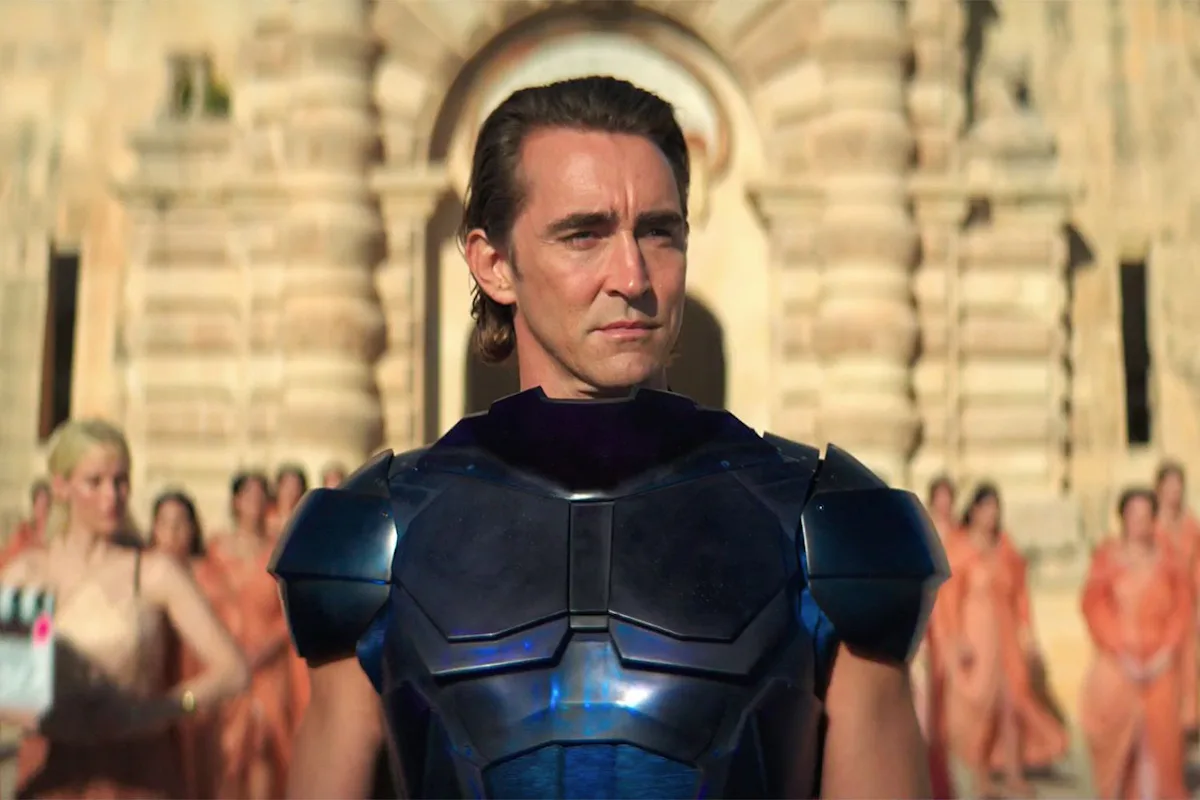
A plot summary makes the problem clear: The Empire is ruled by Brother Day (Lee Pace), a clone of a past emperor. Day trains a younger clone in statecraft while being advised by an older one, creating a replicable line of succession that’s held strong for over four centuries. But mathematician Hari Seldon (Jared Harris) comes to Day with a warning: psychohistory, a predictive math-history blend of Seldon’s invention, has concluded the Empire will collapse in roughly 500 years, ushering in a barbarous galactic dark age. To soften the blow, Seldon wants to create the Foundation, a supercharged library that will allow humanity to re-emerge much faster. Initially dismissed as heretical, Seldon and his protege, Gaal Dornick (Lou Llobell), are spared from execution only after a terrorist attack kills millions and convinces Day to let them build their Foundation in exile at the galaxy’s edge.
It’s a lot to take in, especially once the series starts introducing rapid time jumps, flashbacks, and a host of questions that threaten to veer into mystery box nonsense. Thanks to a combination of cloning and cryosleep, Season 1 ends over a century after it begins, and Seasons 2 and 3 only get more complicated from there. The palace intrigue of the far future is the most interesting stuff — Pace is a compelling tyrant, while the Foundation side of things becomes an exhausting series of plots within plots, a problem compounded by the fact that psychohistory is essentially treated as magic. As freshman seasons go, it was intriguing but a bit shaky.
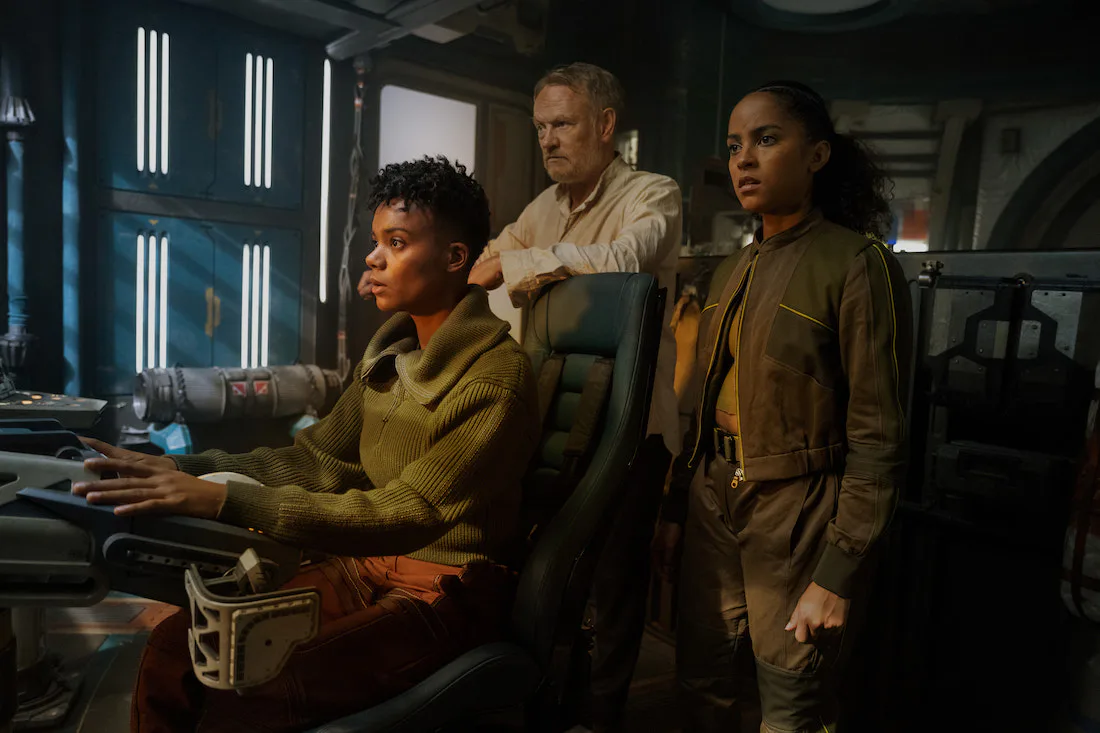
Subsequent seasons are generally considered stronger, but the particulars are less important than the remarkable fact that Foundation exists at all. Asimov’s series was long considered unfilmable, but Apple threw millions of dollars at the problem until it produced a lush vision of the far future, one that’s as pulpy as the past that produced it, yet credible to the modern viewer. It’s unlikely our future will resemble Foundation’s operatic intrigue, but the fact we can watch such a big-budget enterprise on demand certainly feels like an image from Astounding Stories.
A fourth season of Foundation is coming, but the series’ legacy can already be seen in all the other sci-fi on Apple TV: Silo, Dark Matter, Monarch. Foundation may not be quite what hardcore Asimov fans wanted — text and screen are dissimilar beyond a few core ideas — but its success demonstrated that streaming audiences have an appetite for all sorts of high-concept sci-fi, and that, at least for now, Apple is happy to keep making it. Enjoy it while it lasts, because as Seldon warns us, no empire survives forever.
Foundation is streaming on Apple TV.