Every Improvement Coming to Zelda: Ocarina of Time Remake to Modernize Its Gameplay
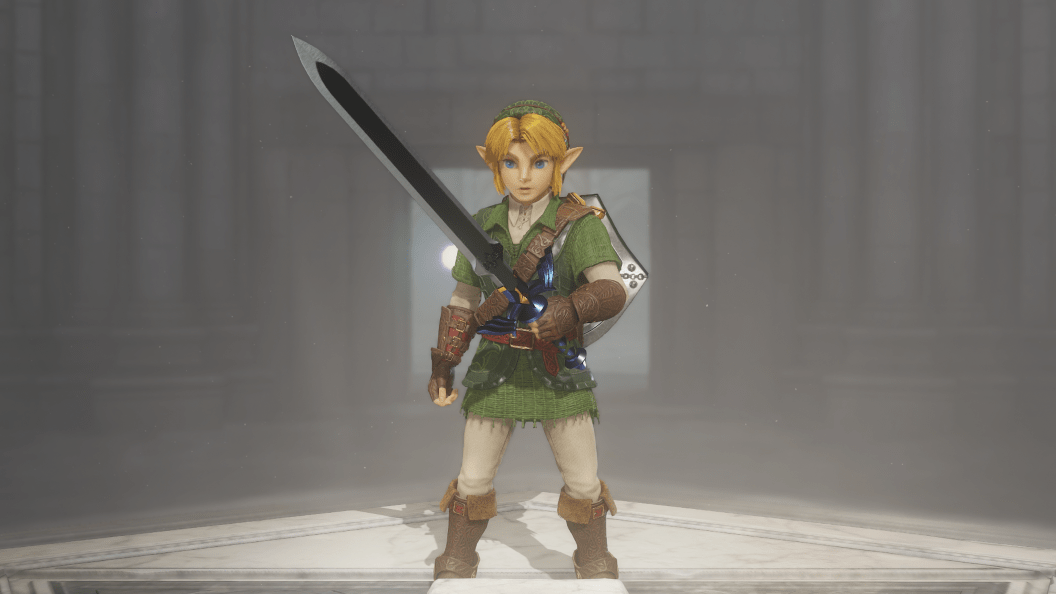
Last week’s The Legend of Zelda: 40th Anniversary Nintendo Direct did much more than whip fans into a frenzy over securing a new special edition Switch 2 console. The broadcast also offered a deep dive into the highly anticipated The Legend of Zelda: Ocarina of Time remake, complete with a November 5th release date reveal and a lengthy gameplay demo.
The latter was especially notable, as it wasn’t merely an extended peek at a much prettier version of the beloved Nintendo 64 classic, but a detail-packed presentation filled with intel on tweaks, updates, and entirely fresh features. But if you weren’t paying close attention – or were maybe too distracted by the shiny new visuals – you may have missed some of these inclusions. With that in mind, let’s break down all the changes fans can look forward to when they return to Hyrule this fall.
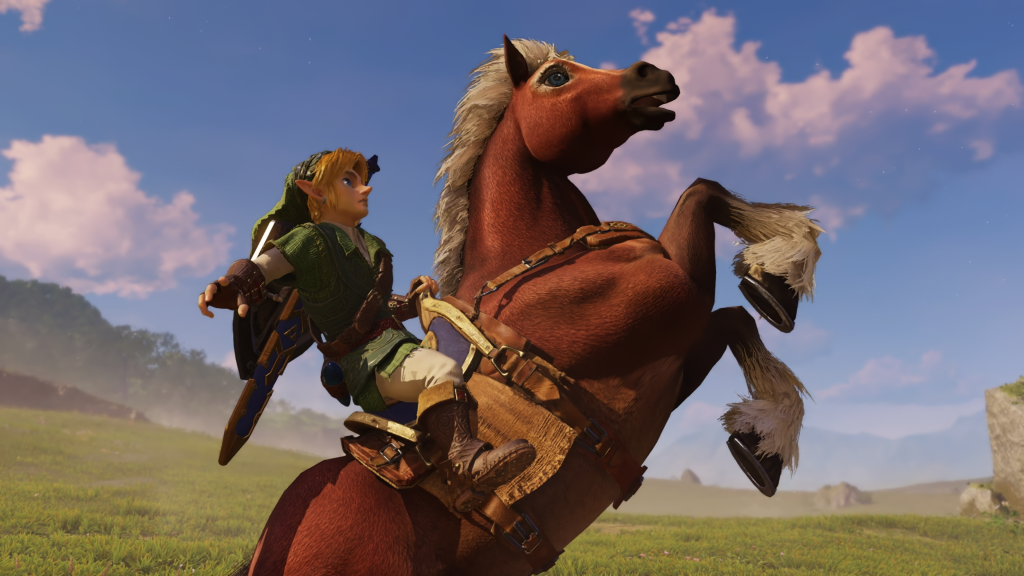
First and foremost, it is indeed Ocarina‘s overhauled visuals that immediately catch your attention. Like most remakes, this one’s jumping ahead several console generations to craft a built-from-the-ground-up graphical experience that looks leaps and bounds better than even the Nintendo 3DS remaster released in 2011.
Leveraging more realism without losing the original’s stylized charm, it’s endlessly easy on the eyes. But while the rebuilt presentation is as striking as a rare rupee, the remake’s doing just as much under the hood to deliver a modernized experience. Peppier, smoother performance, fewer load screens – and reduced load times – all combine to offer a faster, more fluid and satisfying experience on par with contemporary titles.
That overall snappier feel will also translate more literally to the actual gameplay. For starters, the remake loses the original’s mostly fixed camera in favor of a fully controllable one. Players will be able to fully appreciate the stunning new visuals with freedom to swing the camera wherever they like, including around fan-favorite areas, like Castle Town, that previously felt restricted by their fixed perspectives.
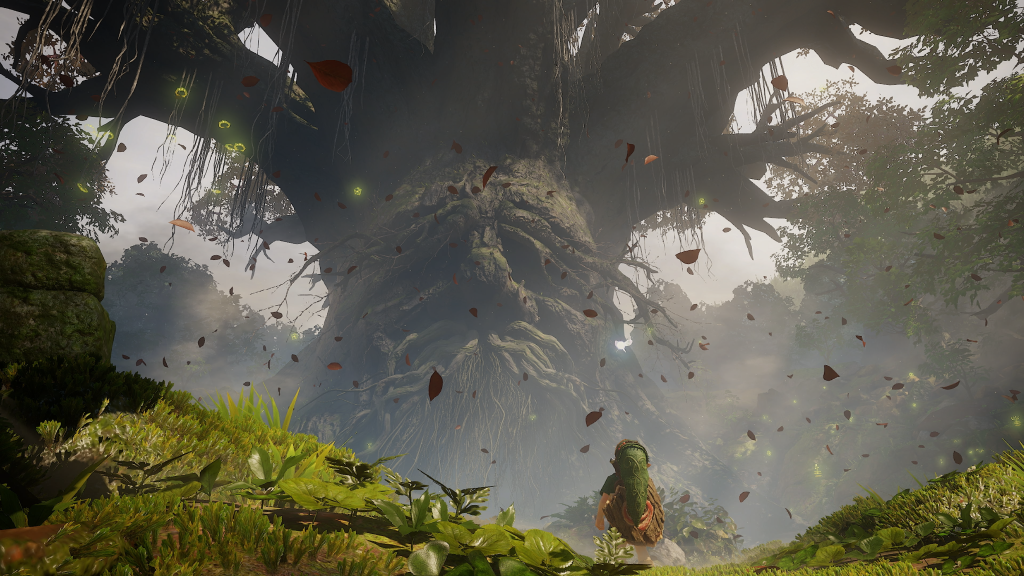
Even more freedom comes courtesy of brand new traversal moves for Link. While jumping was done automatically at very specific spots in the 1998 game, the new version includes a dedicated button for the action, allowing players to leap whenever they like. A new roll and dash maneuver injects more agility, letting Link cover the game’s bigger open-world stretches with a bit more urgency.
Regardless of whether you’re jumping, rolling, or riding atop Link’s loyal steed Epona, you’ll now be doing so beneath a sun that rises and sets more realistically. The remake’s dynamic day/night cycle will feature a natural, continuous progression of time, so – unlike in the original – the clock won’t stop when you’re in Castle Town.
Speaking of the beloved, bustling village, Castle Town, as well as other hub-like hot spots, will feel even more like living, breathing spaces filled with colorful characters. Much like the drastic visual overhaul, Ocarina‘s audio – from its score and subtler ambient sounds to its NPC dialogue – has been entirely redone.
In addition to a richer, more immersive soundscape – complete with symphonic orchestral music – players can also look forward to new audio cues and dialog during character interactions, as well as fully voiced characters in cutscenes. Save for Link, of course, who’ll remain a mostly silent protagonist.
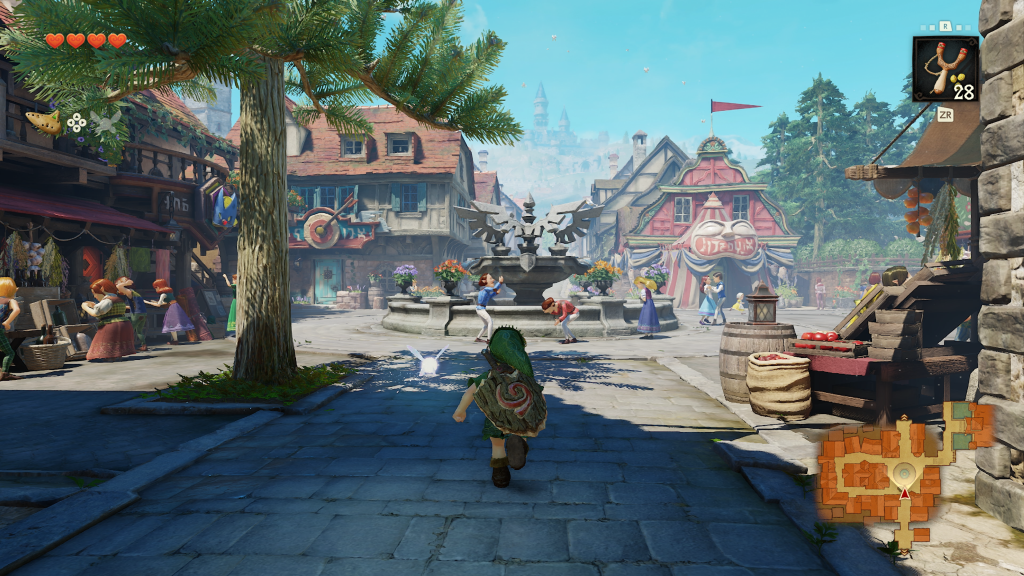
Your exchanges with townsfolk will also benefit from completely new, detailed, explorable environments. Areas that were previously just rendered backdrops on the N64 will now be actual spaces fully detailed and built out to expand these hubs’ real estate and opportunities for interaction. When combined with other aforementioned updates – like eliminating load screens that would previously appear when entering a village vendor – these changes promise a new level of immersion even while simply strolling through towns.
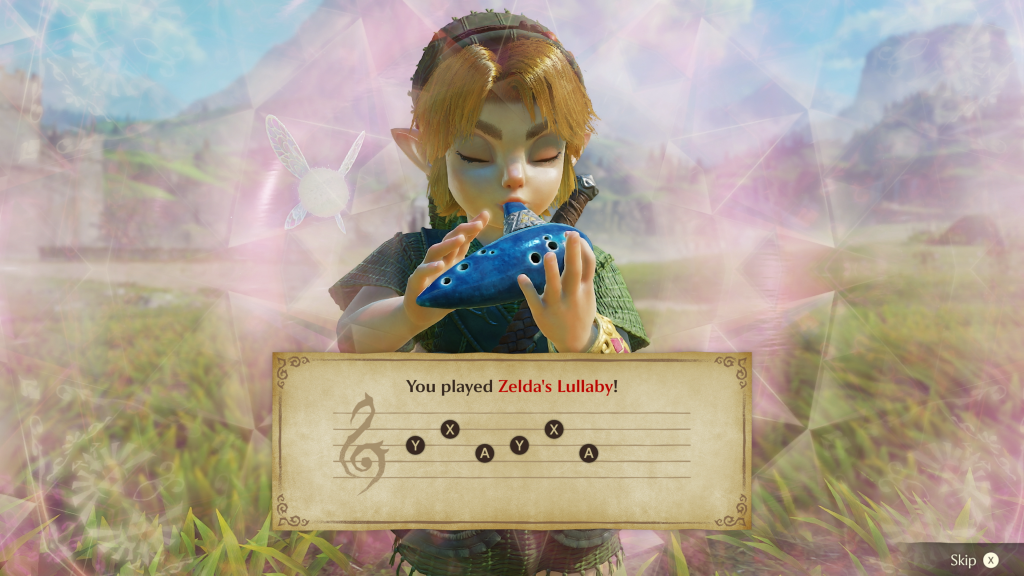
Those craving some system-specific changes can leverage their Switch 2‘s unique motion control features to aim weapons, like Link’s trusty slingshot. The titular musical instrument can also be played by humming into the console’s microphone. A physical, working Ocarina replica will also be sold separately, allowing serious fans to actually play the instrument into the mic.
Finally, one of Ocarina‘s cooler inclusions, especially for those wielding the Master Sword for the first time, is a fresh user interface dubbed the “Threads of Time.” Serving as a sort of quest log, the menu-accessed UI will track objectives, story progress, and other integral information throughout your Ganon-vanquishing adventure. But more than a mere text-based journal, the Threads of Time includes a gorgeous, artful tapestry that expands as your journey progresses.
With less than two months from release, it’s unclear if the game will surprise us with more secrets it might have tucked into its green tunic. Based on the welcome changes and updates so far revealed, however, we’re already looking forward to being re-awakened by Navi when the game lands, like a strike from Biggoron’s Sword, on November 5th.