33 Years Later, One Risky Batman Story Has Finally Come To Life
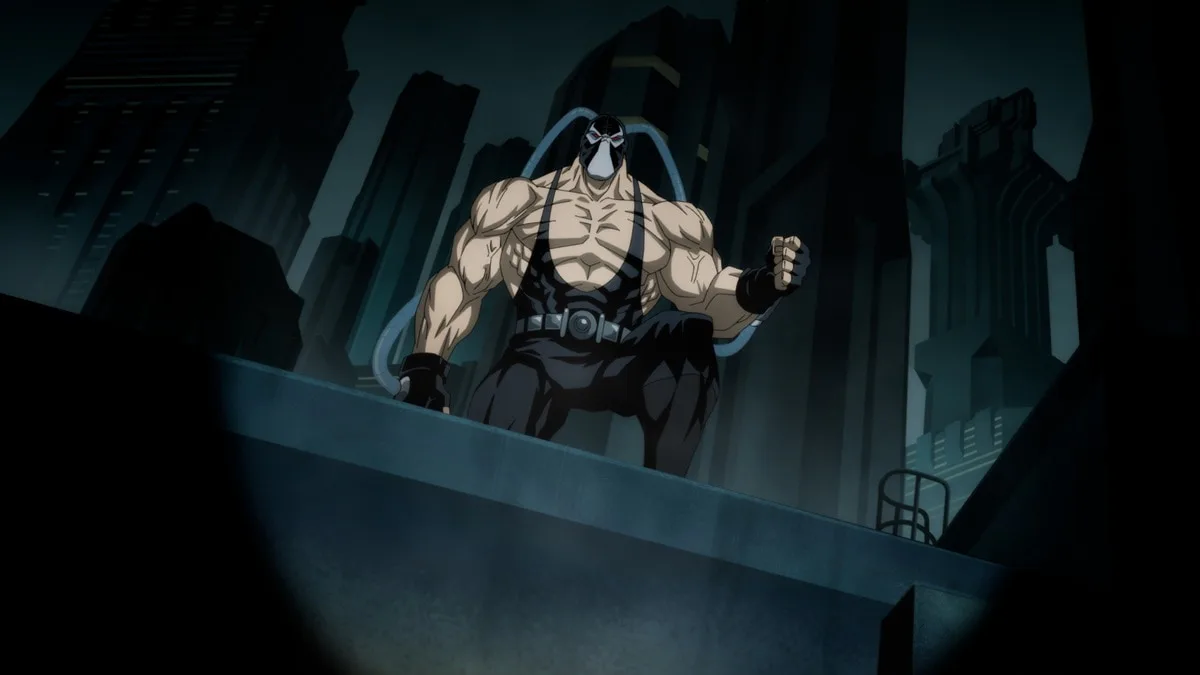
Without a doubt, the 1990s were a period of extreme transformation and experimentation for the comic book industry. And depending on who you ask, it wasn’t exactly a great one. The era was dominated by gimmicks like foil and glow-in-the-dark covers, murderous edgelord antiheroes with big guns, hundreds of pockets, and odd things strapped to their legs. This was also the era in which both DC and Marvel became increasingly aware of the spectator market of comic book purchases. DC’s 1992 stunt, The Death of Superman, was designed to sell a special edition comic book, just as much as it was designed to shake up internal narrative continuity. Similarly, in 1994, Hal Jordan went mad with grief after the destruction of his entire city and became the villain Parallax, slaughtering most of the Green Lantern Corps in the Emerald Twilight storyline.
And yet neither event was as daring and complex as the most iconic destruction of one hero from that decade: the breaking of the Bat in Knightfall, a trilogy of storylines that played out over the course of 1993 and 1994 and across no less than seven distinct DC titles. Now, 33 years after Knightfall began, and 14 years after the live-action film The Dark Knight Rises adapted aspects of the storyline, an animated DC film trilogy is faithfully bringing Knightfall to life.
As the first part of the animated film trilogy was released on digital, Inverse caught up with producers Jim Krieg and Rick Morales to learn exactly how this film was made, and what’s coming next. Mild spoilers ahead.
Not only did Knightfall introduce the world to Bane, but it made clear the ways in which Batman’s greatest strength – his unshakeable dedication – was also his greatest weakness.
That flaw is front-and-center in Batman: Knightfall – Part 1, and in conversation with Jim Krieg and Rick Morales, it’s clear they understand that central dichotomy. “Batman is so single-minded that he’s going to push himself beyond what any of us could do,” Krieg tells Inverse. “The bad part is he’s going to push himself beyond what any of us can do and also probably beyond what he can do.”
It’s impossible to understate just how shocking Knightfall was at the time of release and also how much it permeates Batman media. It’s referenced in the Arkham games and, again, is the partial basis for 2012’s The Dark Knight Rises.
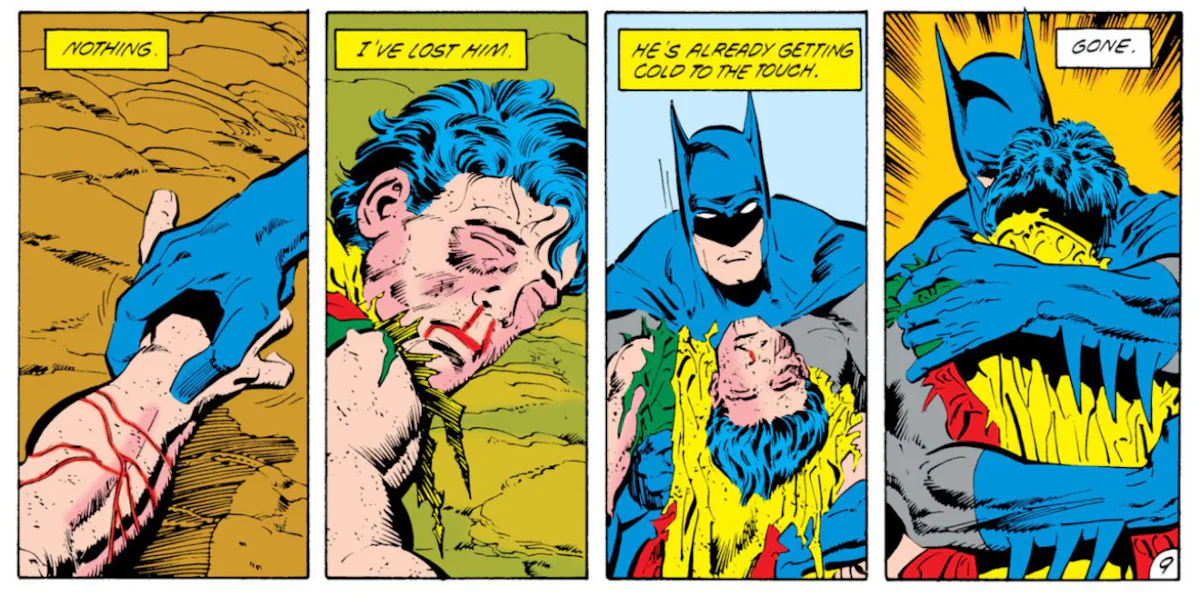
Krieg remembers working across the street from New York’s Forbidden Planet Comics, going in so broke that he’d “just read the comics from the stands.” Morales, somebody who “grew up with the story and was a fan as it was happening,” describes his reaction to joining the project as one of “amazement.” Knightfall was a turning point for the industry as much as it was a turning point for the character of Batman himself – it depicted a vision of the character on the verge of extreme burnout and exhaustion, working beyond his limits while ignoring the lingering trauma of Jason Todd’s murder and Superman’s death.
Vengeance of Bane
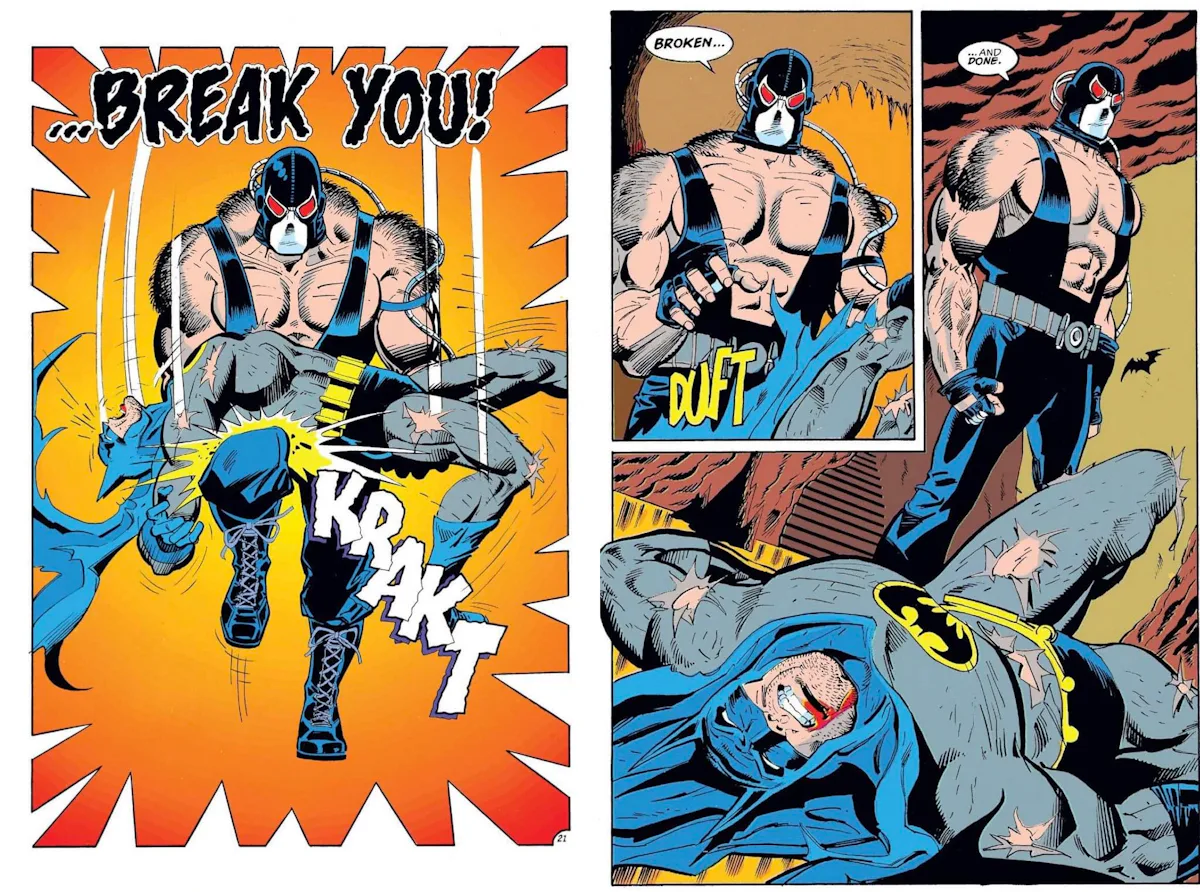
One of the obvious reasons why Knightfall is so beloved is because it’s the quintessential and introductory Bane story, the luchador-inspired conqueror who uses his wits and an experimental drug named Venom to break Batman’s back in 1993’s Batman #497. Batman adaptations have a tendency to portray Bane as a hulking dullard whose addiction to Venom stunts him mentally, and Christopher Nolan’s version stripped the hyper-steroid from the story entirely, but both approaches are a far cry from the tactical mastermind who destroyed Arkham Asylum at the start of the story to wear down his prey.
“I think that the visual aesthetic of Bane is so strong and overpowering that people look at him and think he’s a mass of muscles and violence and physical strength,” Krieg tells Inverse, “which is all true. But the important thing about Bane is that he’s cunning and he’s got a point of view and that he’s got a reason for doing what he’s doing. He’s not beating Batman with his muscles. He’s not even beating him with the Venom. He’s beating him with his mind.”
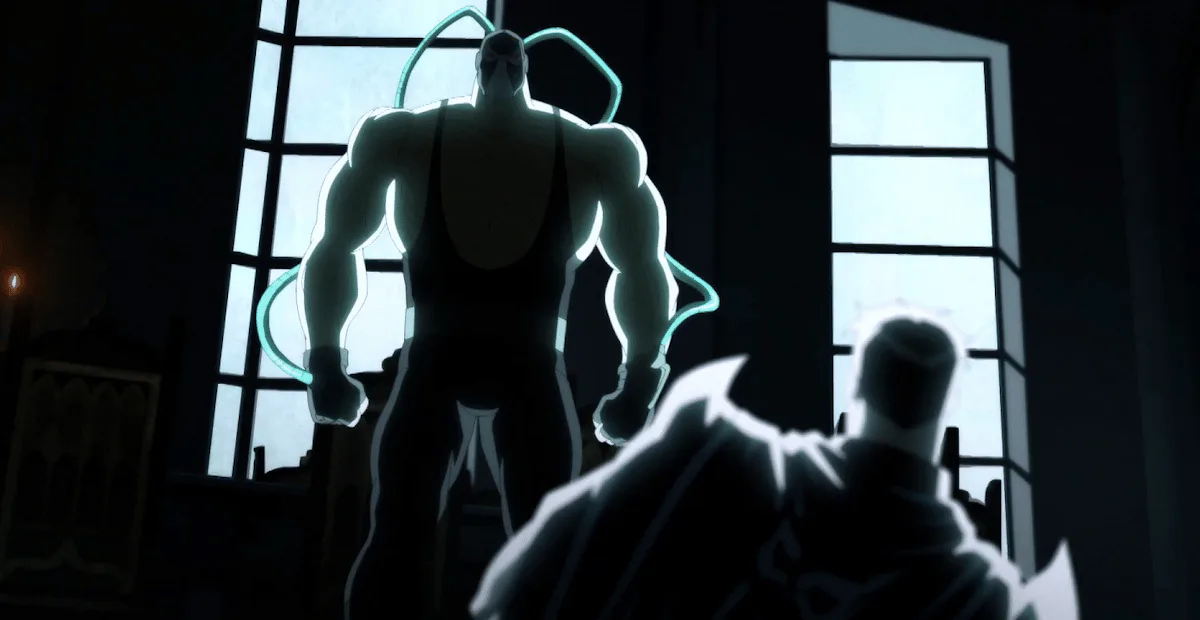
Batman: Knightfall – Part One is the most straightforward and faithful depiction of Bane’s debut in an adaptation, and according to producer Rick Morales, it provided the perfect structure for the trilogy.
“We’ve got three movies here, and in my mind we’ve got three main characters: it’s Bane, it’s Batman obviously, and it’s Jean-Paul Valley. From my perspective, this is Bane’s movie essentially. It was really important for me to try and put a faithful comic version of Bane on-screen, because otherwise why make this movie if we’re just gonna change him again?”
The film charts his dismal beginnings as a child inheriting his father’s prison sentence on the fictional Caribbean island of Santa Prisca, his day-to-day fight for survival and the Venom experiment performed on him by the prison’s scientists, and the birth of his obsession with conquering Gotham City – and Michael Mando’s voice acting carries all of that conviction in every line, a very different approach from Tom Hardy’s infamous dialect. “It was very satisfying to have clear diction from Michael Mando, who was so great in this,” says Jim Krieg. “It’s more than just having a deep voice; it’s having a voice that comes from a dark part of his soul.”
Bringing Knightfall To Life Faithfully
Obviously, the breaking of the Bat is the most well-known part of Knightfall, but there’s so much material before and after that which never gets acknowledged – from Batman working himself to his breaking point re-capturing the escapees from Bane’s destruction of Gotham to Bruce’s international healing journey before reclaiming the cape and cowl. Even with three films, not all of it is going to make it in. “Rather than saying we have to adapt everything we can from these stories,” Morales tells Inverse, “we looked at it sort of broadly and said, ‘what’s the main thrust of this first film?’ It’s establishing Bane and showing Batman’s breakdown.”
Even with those concessions, Batman: Knightfall – Part 1 is still extremely accurate and retains a key part of the original storyline overlooked by most adaptations: Jean-Paul Valley, the replacement Batman who gets a high-tech Batsuit as an upgrade but degenerates into a savage, vicious killer in the mantle. The character debuted two years before Knightfall as an unassuming college graduate, unwittingly raised since birth by the mysterious Order of St. Dumas to become the assassin Azrael. While Bane is the villain with all the pop culture recognition, Azrael was always intended to be the storyline’s final antagonist, an ideological battle between Batman’s strict moral code and the amoral ruthlessness of the antiheroes like Spawn and Cable popular in the 90s – and the movie sets up that conflict firmly by making Jean-Paul the saga’s third main character.
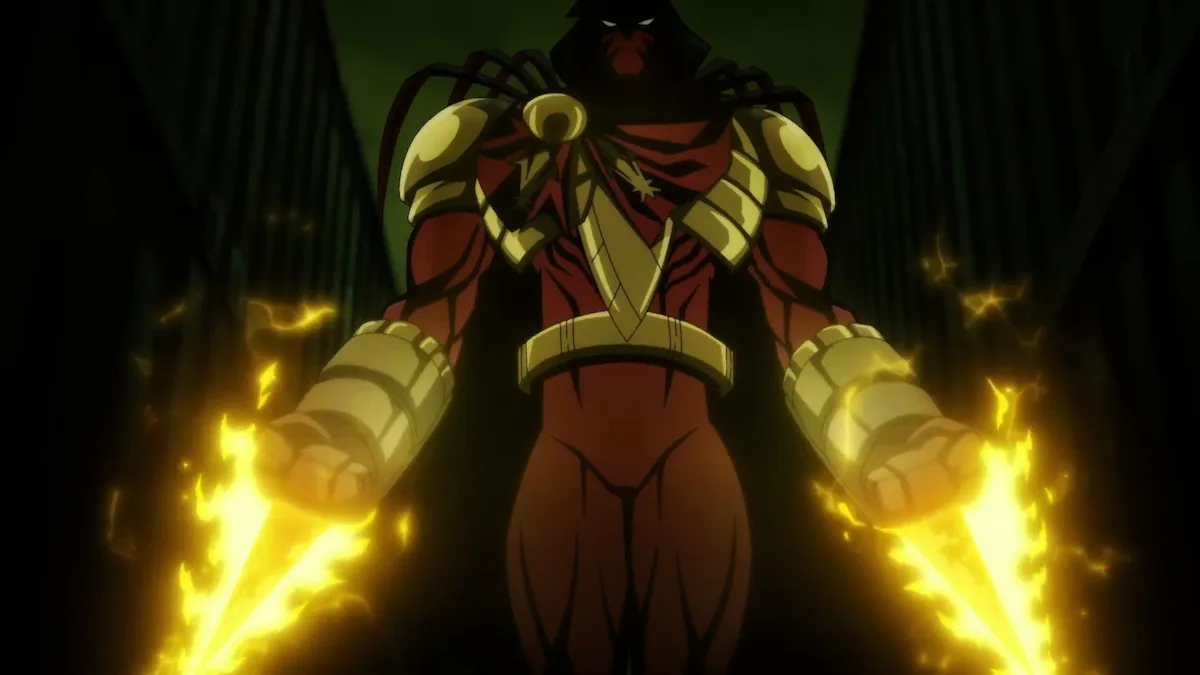
Azrael is introduced in a brutal cold open where Batman catches him in the middle of murdering a gang of criminals and offers him psychological help when he realizes his troubles. According to Morales, that opening “gives you a sense of Azrael and how violent he can be, how he’s not Batman but a darker version that kills. Then it shows you Batman in his peak form before we start to take him down later. I thought it was valuable to establish that this is how good Batman is, and this is how good Azrael is.”
While Knightfall is noteworthy as a deconstruction tearing Batman down to his lowest, it’s also a reconstructive underdog story about redemption and revival and second chances – and the film pulls on one of the greatest underdog stories in cinema.
“I think there’s something primal within people,” says Morales, “the storytelling of it, where you wanna see your hero torn down but then built back up. It’s why movies like Rocky are so beloved, and that’s one we went to a lot. It’s like Rocky III.”