16 Years Ago, One of Gaming’s Best Movie Tie-Ins Released and Remains Excellent to This Day

Movie tie-in games should be an excellent way for fans to double dip, but history has shown that these games are some of the least exciting and interesting games. For decades, publishers rush licensed games just to launch alongside films, hoping to capitalize on the popularity of these projects. There are exceptions of course, and sometimes we see the tie-in video game being greater than the movie it is based on. And very rarely we see both the film and tie-in game be excellent. This was exactly the case 16 years ago, with both the movie and game being widely regarded as among the best.
When Scott Pilgrim vs. The World: The Game released on August 10th it did the impossible: both the movie and the video were excellent adaptation of the graphic novels, creating a perfect trinity of media. Rather than simply recreating the movie’s story, Ubisoft built an experience that drew from classic arcade games while embracing the characters, humor, music, and visual style of the source material. I myself played the game before watching the movie, and immediately had to rectify that. After, I was convinced that Scott Pilgrim vs. The World: The Game is easily among the best tie-games of all time.
Scott Pilgrim Was a Great Beat-‘Em-Up on Its Own

At its core, Scott Pilgrim vs. The World: The Game shined because it was built as a side-scrolling beat-’em-up on the classic formula rather than relying on its movie and graphic novel inspirations. It followed the familiar story of fighting through Toronto to get to the League of Ramona’s Evil Exes. Scott, Ramona, Kim, and Stephen Stills each provide different ways to approach the action, while character progression gives players incentives to keep fighting and improving their characters. The game also supports cooperative play, making its combat especially suited to groups.
What made the game stand out was how confidently it borrowed from older games. Its design was heavily influenced by beat-’em-ups such as River City Ransom and Final Fight, while its presentation included numerous references to classic gaming. These influences were not simply cosmetic. The developers used them to build a game that understood the appeal of arcade beat-’em-ups, complete with straightforward combat, enemies filling the screen, exaggerated attacks, and plenty of secrets.
The presentation completed the package. Paul Robertson’s pixel art gave the game an instantly recognizable appearance, while Anamanaguchi’s chiptune soundtrack perfectly complemented the frantic action. The game could be completed relatively quickly, but replayability, character progression, multiplayer, and additional modes gave players reasons to return. Whether playing solo or with friends, I had to go through and try out each character because the game was that fun.
It Captured the Movie by Thinking Like a Video Game
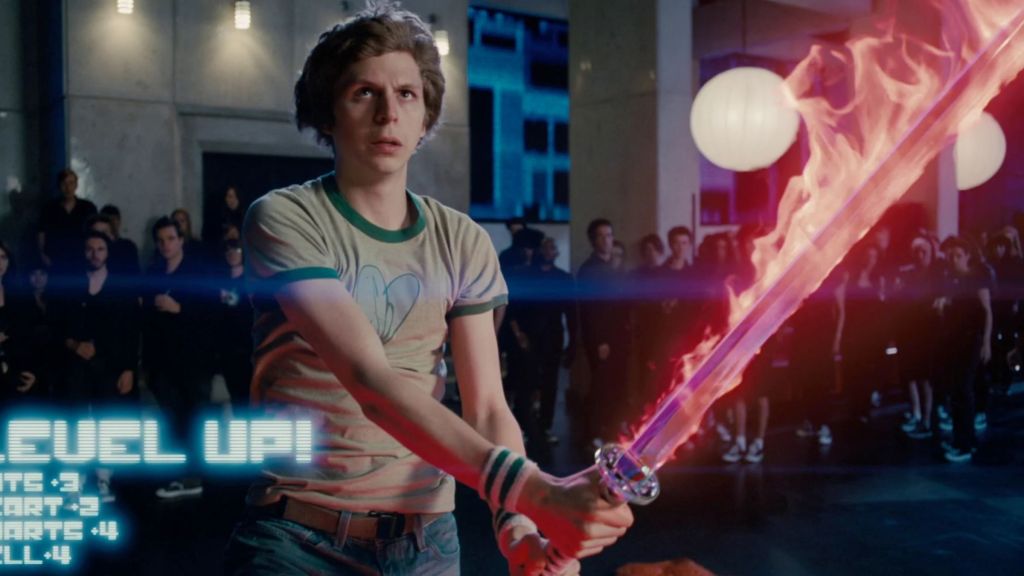
The smartest decision was avoiding a straightforward recreation of the movie. Instead of forcing players through a sequence of scenes they had already watched, the game took the central premise and transformed it into something interactive. Scott’s quest to defeat Ramona’s seven evil exes naturally became a series of increasingly strange battles, allowing the game’s mechanics to exaggerate the ridiculousness already present in the story.
This made the experience feel more authentic rather than a simple tie-in to make an extra buck. The movie itself was heavily influenced by video game culture, so translating its characters into pixel art and surrounding them with arcade-inspired mechanics felt completely appropriate. Ultimately this is the decision that led to its success, as the environments, enemies, animations, and visual jokes all contribute to the same idea. Rather than treating the gaming references as decoration, the developers made them the foundation of the experience.
But its greatest strength was its multiplayer, especially after The Complete Edition was released. The emphasis on four-player cooperation made it feel like you were truly part of the band, and every character just fit together, both in style and gameplay. Scott Pilgrim vs. The World: The Game felt great in solo play, but fighting through stages with friends captures the same exaggerated, chaotic energy that made the movie such an unusual adaptation in the first place.
It Outlasted Most Movie Tie-Ins for a Reason
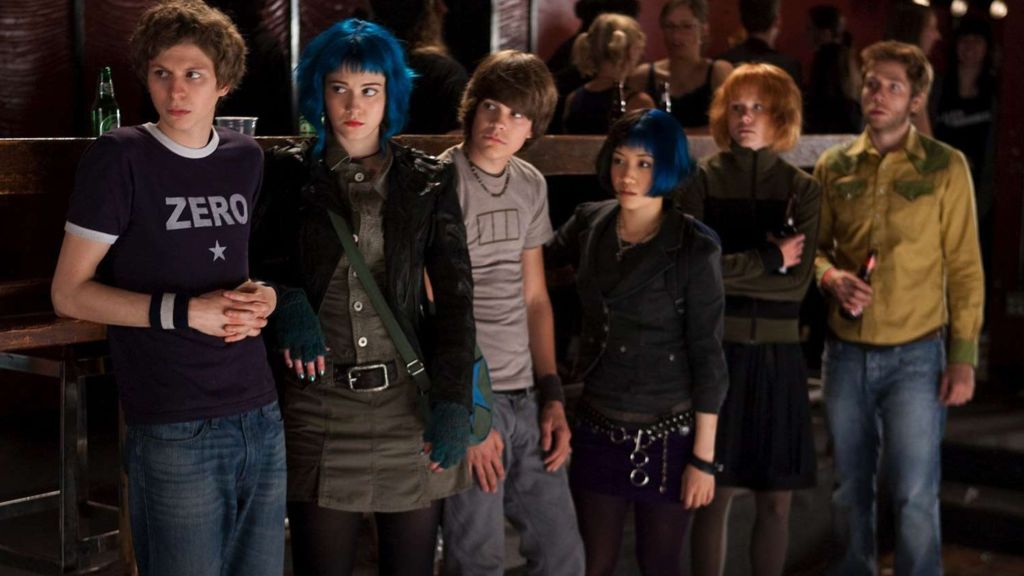
The biggest difference between this game and countless forgettable movie tie-ins is that its quality does not depend entirely on the license. Even without the appeal of Scott Pilgrim vs. The World it would stand on its own. The beat-’em-up foundation is so strong that Ubisoft could have slapped any other IP, or created its own, and it still would have been a great game. The combat is easy to understand while leaving room for character progression, the pixel art remains distinctive, and the soundtrack gives every stage an energetic personality.
That said, its history is quite interesting. The original release was delisted in 2014, leaving fans unable to play the game for several years. It wasn’t until Scott Pilgrim vs. The World: The Game – Complete Edition was released in 2021 that it could be revisited. By then, I would have thought the game outdated, but I was completely wrong. It was just as good, if not better, thanks to the included of including all the content in one cohesive package.
16 years later, Scott Pilgrim vs. The World: The Game remains one of the best examples of making a tie-in video game work. It didn’t just settle for reproducing the movie or relying on recognizable characters, but rather understood the source material and brought it to life in a brand new way designed exclusively for gaming. That is why Scott Pilgrim vs. The World: The Game still stands above so many licensed games from its era. It was not merely a good movie tie-in. It was a genuinely good game that happened to be based on a movie.