Zeverland merges deep survival systems with cosy game aesthetics to create a refreshingly optimistic take on the zombie apocalypse
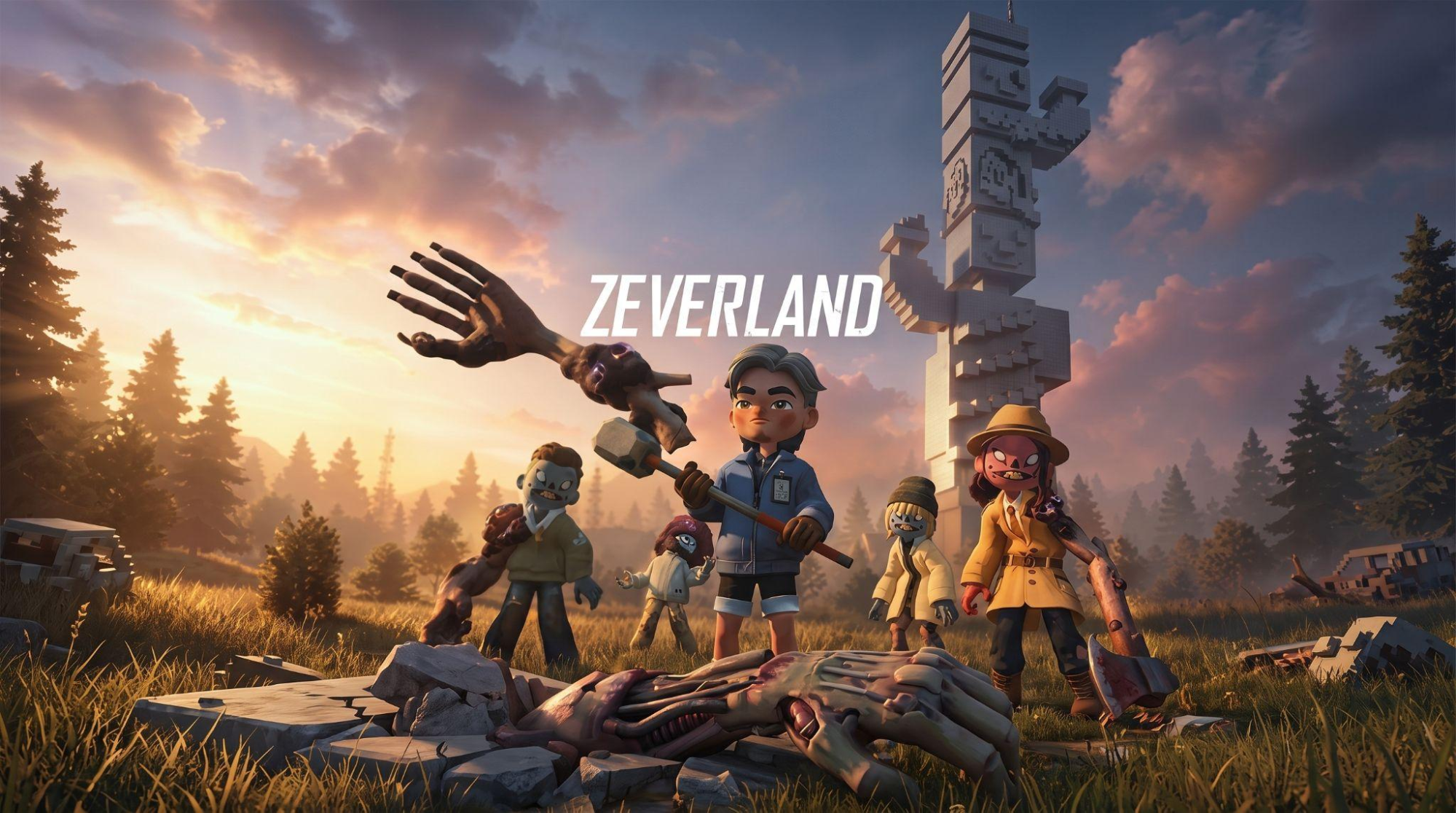
When it comes to beloved settings in videogames, the zombie apocalypse is right up there. From DayZ to The Walking Dead, roaming a barren wasteland filled with the undead is familiar territory for gamers. Its unique marriage of player autonomy and challenging systems becomes a fertile ground for emergent storytelling.
What would happen then, if these captivating core components were channelled into an accessible and free-form cooperative world? Enter Zeverland, a charming and ambitious survival-crafting adventure that injects the typically po-faced genre with a refreshing sense of optimism.
Originally starting life as a free MMO, the project changed course after its second playtest saw players stop questing and attempt to rebuild this fallen world instead. Injecting their intriguing world with immersive, hardcore survival systems - and compelling crafting options - Zeverland re-emerged as a buy-to-play survival-crafting game - a colorful creation that emphasizes a sense of creativity and community over combat.
Much like its cutesy aesthetic, Zeverland’s gameplay is refreshingly accessible. Where survival games can often feel overwhelming, Zeverland wisely offers players a smaller scale apocalyptic adventure to get them started. In a nice touch, new players can take to private servers and play by themselves or a few friends, while those interested in founding a new town with strangers can brave the official servers, hosted on a sprawling map that’s over 80 times larger than the private server.
Combining the depth of a crafting survival sim with thriving player communities, Zeverland melds its disparate influences into a rich, systems-driven world that immediately immerses you with its charming character designs.
After rescuing survivors, combining odd ball weapons and experiencing some delightfully Animal Crossing-esque life sim elements, I came away intrigued about this deceptively deep world.
In a bid to find out more about this enjoyably-unique take on the end of the world, I sat down with Cecilia Pan(Game lead designer), who reveals how Quantum Quirks combined the cute with the deadly, and how they hope their players will band together and build a brighter world.
Q: For people who haven't seen the game yet, how would you describe Zeverland?
Cecilia Pan: We describe Zeverland as a high-freedom survival game where you act on your natural instincts. We want players to be able to do everything they can do in real life, and to do it intuitively within the game. Ultimately, we wanted an immersive survival game that also feels cute and cosy.
Q: It's a really unique idea—combining cozy base-building mechanics with a macabre zombie setting. When did that concept first come about, and what inspired it?
Cecilia Pan: Most of our development team are huge survival game fans, and we really wanted to make one ourselves. We want everything to feel natural and grounded, so we set the story in the 2 months after the initial outbreak. You don't need to study anything to survive here; real-world common sense is enough. Anything you can see can be taken apart, carried off, or pieced together: one player strapped a camera to a baseball bat as a weapon, another hauled a gas station toilet into their RV. In those moments, cute and hardcore exist side by side. It's a friendly contrast anyone can understand at a glance, and we hope it invites in people who have never touched a survival game, so family and friends can jump in and play alongside longtime survival-crafting fans.
Q: MMOs naturally rely heavily on teamwork with guilds and group play. What inspired this focus on cooperative play, which isn't always common in survival craft games?
Cecilia Pan: We don't define our game as a traditional MMO; it's a multiplayer co-op sandbox. Traditional MMOs structurally force cooperation through mechanics like raid bosses. In a sandbox game like ours, cooperation isn't strictly mandatory. For instance, if you see a stranded player on the road who is out of gas, you can choose to share your gas or just walk away. We want to build scenarios that offer those choices and see how players naturally react.
Some player choices leave lasting marks on the world for others to discover: you might plant a special tree that cures the zombie outbreak, or set up ziplines across the map. Other players can then use the trees you planted or the ziplines you built. What you do in the world directly impacts other players.
Q: Another unique aspect is the inclusion of some story-led quests, which isn't typically a main focus in survival games. Can you tell me more about the narrative and how that fusion came together?
Cecilia Pan: Our story begins right at the sudden onset of the zombie outbreak, so everyone in the world is caught off guard. You and your companions start with zero information, much like the early seasons of The Walking Dead, piecing together what happened through newspapers and readable lore items.
On the seasonal servers coming after Early Access, as the story progresses you encounter various factions with differing beliefs and goals. One faction might aim to cure the outbreak, while another wants to build a spacecraft to leave the island entirely. As these organizations grow, their motives surface. Ultimately, player choices across the server determine the final outcome—if most players support the cure, the world gets cured; if most support fleeing, everyone abandons the island.
Q: Zombie games are normally quite brutal, but your game seems to focus on collaboration, kindness, and making friends rather than just killing other players. What inspired that gentler approach to a zombie apocalypse?
Cecilia Pan: The original idea can be summed up pretty simply. Early in Zeverland’s development, someone on the team said: “What if we made a game where players could work together to reshape the world?” Everyone immediately thought that sounded really cool. Imagine building a home with friends or complete strangers, turning an RV into a mobile base, building huge landmarks, repairing roads and bridges, setting up oxygen supply stations, and gradually changing the whole world together. We wanted every player to have the chance to become a great collaborator.
Q: In a nice contrast to its cutesy aesthetic, I was impressed by the realistic, hardcore survival systems. Could you talk more about how you built those mechanics and what kinds of realistic systems players can expect?
Cecilia Pan: We want everything to feel intuitive, which is how we approach our survival mechanics. When designing systems, we ask ourselves basic real-world questions: If you're thirsty, what do you do? If you're hungry, what do you do? If you're in a bad mood, how does that affect you? Because of that logic, if your character is unhappy in the game, you craft slower, heal slower, and have a lower recovery rate—just like in real life.
Instead of pre-programming strict, rigid interactions with objects, we want to offer complete freedom. We designed a massive number of object interactions around a simple concept: players shouldn't just follow a set path created by designers. Instead, they operate within a defined set of world rules that they intuitively understand, giving them the freedom to play however they want.
Q: I was really impressed by the flexibility in combining items—especially the weapon combination system. How does that work from a design perspective?
Cecilia Pan: We put a lot of thought into object geometry and logical fit. For example, if you hold a long stick, you can attach something to the end to extend your reach—like attaching a zombie head. But if you have a plunger, attaching a zombie head wouldn't make physical sense.
We also let players turn non-weapon items into tools. A camera isn't a traditional weapon, but if you attach it to the end of a stick, its electrical component can shock enemies. Similarly, you can attach a gasoline bottle to a stick to create a torch—though if it’s raining, it won't light up. Everything comes back to natural real-world logic.
Q: It sounds like there are plenty of fun, non-combat activities to do in the world. Apart from playing instruments, what other kinds of relaxed activities can players dive into?
Cecilia Pan: We've added extensive clothing customization with vibrant colors, and our developers have brought their personal outdoor hobbies into the design. We are planning activities like diving, boating, kayaking, and hiking.
We want to build a world that is realistic, wonderful, and beautiful. Rather than relying solely on quest markers telling you to fight, we want players to be driven by a genuine appreciation for the world's beauty, inspiring them to reclaim it from the zombies.
Q: You mentioned there are different maps available. How will the maps function and differ across server types?
Cecilia Pan: The smaller map from our earlier playtests was based on a California environment, and was initially designed for private servers, whereas the larger map we are currently developing is inspired by the Pacific Northwest—specifically northern Oregon, featuring mountain views and large lakes.
As Oregon is designed for large numbers of players, it features larger Points of Interest (like major prisons and military bases) and large-scale community challenges. Public server players will need to band together to defend against massive zombie hordes or supply timber to survive harsh winters.
There's one more map design point I'd like to share. With a map this big, we wrestled with whether to add fast travel and server-wide chat. In the end we gave those familiar features up, to reinforce the sense that helping others matters. Teleportation compresses a long journey into a single button press, and in doing so it quietly erases convoys, supply runs, getting lost, roadside encounters, and rescues that arrive just a little too late.
Q: You're giving players a tremendous amount of freedom in how they interact with the world and each other. What are your ultimate hopes for how players will engage with Zeverland and shape its future?
Cecilia Pan: We want players to shape the world's outcome and express themselves through building. By the time a seasonal server reaches its end-state, the map will be filled with player-built houses, bridges over rivers, and ziplines connecting skyscrapers and downtown areas. Every server's map will look completely distinct based on what its community built. We provide the canvas, and the players create the artwork.
Whether you're looking for a fellow base builder or someone to go looting with, the game gives you natural opportunities to connect. We hope Zeverland helps players make friends more easily.