12 Funniest Characters From '90s Sitcoms
Television comedy needs flawed characters, and sitcoms in the '90s increasingly turned selfishness, neuroses, insecurity, and downright terrible behavior into jokes. Characters could behave badly without learning a tidy lesson by the end of every episode, while even more sympathetic roles were often funniest when their insecurities took over.
The most iconic '90s TV characters were also inseparable from the performers who played them. The best sitcom characters of the '90s weren't simply given the funniest lines; great performers created specific comic personalities that nobody else could have played in quite the same way.
Almost any member of The Golden Girls or Will & Grace main casts could have made this list on comedic merit alone. However, The Golden Girls is more firmly rooted in the 1980s, having premiered in 1985, while Will & Grace only arrived in 1998 and became more representative of 2000s TV sitcoms.
With so many great TV shows in the '90s, there had to be some tough cuts. Daria Morgendorffer, Murphy Brown, and Artie from The Larry Sanders Show didn’t make the final list because other performances generated bigger laughs more consistently. Daria and Murphy relied more on dry wit than laugh-out-loud comedy, while Artie was hilarious but appeared more selectively.
The final ranking considers the characters' comedic range, their importance to their show’s humor, and how distinctly they represent the decade's sitcoms. These 12 characters represent the 1990s at their funniest, from razor-sharp sarcasm and neurotic meltdowns to broad physical comedy and unapologetically larger-than-life personalities.
Robert Barone (Everybody Loves Raymond)
Brad Garrett

Brad Garrett started in stand-up comedy, and his impeccable timing helped Robert Barone stand out even in Everybody Loves Raymond's exceptionally strong ensemble cast. Garrett could get a laugh from a pause, a defeated expression, or Robert's booming monotone alone.
The sophisticated suburban sitcom also frequently used Garrett's 6’8” height for physical comedy, particularly when contrasting Robert with his relatively shorter brother, Ray. Robert had plenty of memorable quirks, most famously his "Crazy Chin" habit of touching food to his chin before eating it.
His perpetually wounded insecurity also produced the perfect catchphrase: "Is this about me?" Garrett has worked steadily since, but Robert remains his most iconic role.
Jackie Harris (Roseanne)
Laurie Metcalf

Jackie Harris was Roseanne's younger sister, an intelligent, warm, highly sensitive underachiever whose chronic low self-esteem fueled some of Roseanne's biggest laughs. Laurie Metcalf's theater background gave her remarkable control over Jackie's escalating neuroses, and she frequently stole scenes.
Jackie could be frantic and insecure, but she was also a loving sister and devoted aunt, keeping her eccentricities grounded in genuine affection for the Conners. Metcalf won three consecutive Emmys for the role, which remains one of her defining performances.
Jackie also feels distinctly '90s: complicated, imperfect women were increasingly allowed to be funny without being glamorous or composed. She ranks lower only because Roseanne and Jackie debuted back in 1988.
Sally Solomon (3rd Rock From The Sun)
Kristen Johnston

Sally Solomon had one of the funniest premises of any '90s sitcom character: she was an alien combat specialist randomly assigned to a female body and initially horrified by the arrangement. Kristen Johnston mined that disconnect for everything it was worth, making Sally simultaneously aggressive, glamorous, confused, and surprisingly vulnerable.
Even among 3rd Rock From the Sun's deliberately bizarre ensemble, Johnston's fearless physical comedy made Sally stand out, earning her two Emmys for the role. ‘90s sitcoms increasingly played with traditional gender roles, and Sally took that idea to an absurd extreme, discovering femininity from the perspective of someone who considered gender completely arbitrary in this underrated '90s sci-fi sitcom gem.
Al Bundy (Married… With Children)
Ed O’Neill

Al Bundy was the anti-sitcom father, a misanthropic, working-class shoe salesman who viewed marriage, parenthood, and adulthood itself as one long disappointment. Ed O'Neill made Al a tragicomic figure, endlessly lamenting his miserable lot in life while still displaying wit, resilience, and even self-sacrifice whenever his family genuinely needed him.
That contradiction kept Al from becoming completely unbearable and helped Married… with Children turn the traditional family sitcom upside down. Al epitomizes how the ‘90s embraced increasingly dysfunctional families and cynical humor. Al would normally be the defining role of an actor's career, but O'Neill remarkably found another iconic sitcom patriarch decades after Married... with Children as Jay Pritchett on Modern Family.
Fran Fine (The Nanny)
Fran Drescher

Fran Fine is one of the most instantly recognizable sitcom characters of all time, leading the cast of The Nanny and identifiable from Fran Drescher's distinctive voice alone. Her comedy came from an unapologetic culture clash: a brash Jewish fashionista from Queens suddenly becoming nanny to the children of a wealthy, reserved WASP Broadway producer, like a modern I Love Lucy meets The Sound of Music.
Drescher created and produced The Nanny with her then-husband Peter Marc Jacobson, drawing elements of Fran from her own life and personality. That specificity made the character even funnier, particularly as Fran confidently disrupted the Sheffield household without ever changing herself to fit in.
Fran is also unmistakably '90s, from her spectacularly loud designer wardrobe to her larger-than-life attitude. Rather than smoothing out her differences, The Nanny made them the entire point.
Carlton Banks (Fresh Prince Of Bel-Air)
Alfonso Ribeiro
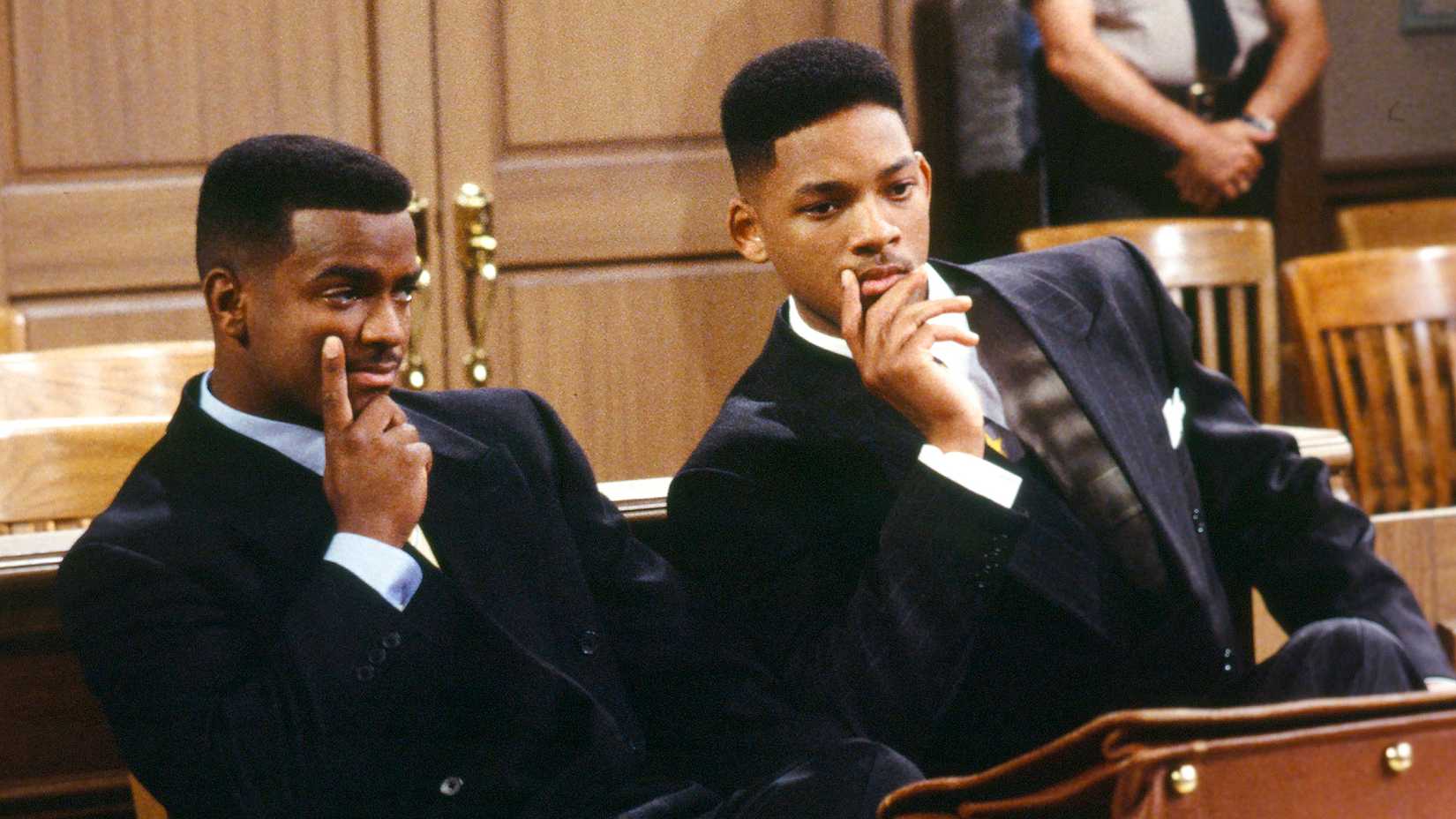
Will Smith was the heart of The Fresh Prince of Bel-Air, but Carlton Banks was often its purest source of comedy. Alfonso Ribeiro built Carlton around contrasts: he was wealthy, preppy, sheltered, and hopelessly square, making him the perfect foil for his effortlessly cool cousin Will.
Ribeiro committed completely to Carlton's confidence, especially when the character had absolutely no reason to possess it. Nothing captured that better than Carlton's titular signature dance move, which was inspired by Courteney Cox.
Carlton was also a distinctly '90s preppy counterpoint to Will's hip-hop-influenced style and attitude. Still, Ribeiro gave Carlton enough sincerity and vulnerability that he became much more than the uptight rich kid Will loved to tease, even if it made Ribeiro synonymous with Carlton himself.
Homer Simpson (The Simpsons)
Dan Castellaneta

Homer Simpson turned the traditional sitcom father into an impulsive, gluttonous, spectacularly incompetent agent of chaos. Dan Castellaneta's vocal performance made Homer's stupidity endlessly versatile, whether he was misunderstanding something obvious, pursuing a ridiculous obsession, or reacting to disaster with his signature “D'oh!"
Homer genuinely loved Marge and his children, even when his selfishness created most of their problems. The Simpsons has continued for decades beyond the '90s, but Homer is particularly associated with the decade because The Simpsons' celebrated golden age occurred largely within it. At his peak, Homer helped redefine both the animated sitcom and what a sitcom father could be.
Jimmy James (NewsRadio)
Stephen Root

Jimmy James was NewsRadio's eccentric billionaire station owner, but Stephen Root made him far stranger than the standard sitcom boss. Jimmy treated the cast of NewsRadio like an extended family, dispensing life lessons that were delivered with complete confidence even when they were utterly useless.
His comedy came from unpredictability. Jimmy might be searching impulsively for a wife, pursuing Dave's mother, feuding with another billionaire, failing spectacularly at lying, or casually revealing suspicious knowledge of government conspiracies.
Root's wonderfully odd delivery allowed Jimmy to stand out even in the exceptionally talented ensemble cast of NewsRadio, packed with distinctive comic performers. He also feels particularly '90s: before sitcom billionaires became tech moguls, Jimmy embodied the decade's eccentric, old-school corporate tycoon, powerful enough to do practically anything and weird enough that nobody could predict what would come next.
Patsy Stone (Absolutely Fabulous)
Joanna Lumley

Edina was the center of Absolutely Fabulous, but Joanna Lumley's Patsy Stone often got the show's biggest individual laughs. A perpetually intoxicated fashion editor, Patsy was gloriously vain, selfish, promiscuous, and almost completely detached from normal human behavior.
She was all about excess: no amount of alcohol, cigarettes, partying, or casual cruelty was ever enough, yet Lumley played her outrageous behavior with impeccable sophistication and deadpan timing. Patsy also provided the perfect partner for Edina, enthusiastically encouraging every terrible impulse while treating Edina's sensible daughter Saffron with inexplicable contempt.
Few characters better captured the excesses of the '90s. Patsy's fashion industry lifestyle, celebrity obsession, substance-fueled hedonism, and Cool Britannia decadence made her both a product and a ruthless parody of the decade.
Chandler Bing (Friends)
Matthew Perry

Chandler Bing stood out even within Friends' perfectly balanced ensemble as its sarcastic, self-deprecating, and arguably most relatable member. Chandler used humor as a defense mechanism, turning uncomfortable situations, romantic failures, and his own insecurities into punchlines before anyone else could.
Matthew Perry's delivery was essential, particularly his habit of placing heavy emphasis on unexpected words to transform ordinary sentences into jokes. That distinctive rhythm became so influential that versions of Chandler's speech pattern are still imitated today.
Chandler was also quintessentially '90s, embodying the decade's increasingly ironic, self-aware style of comedy while remaining emotionally sincere underneath it. The role ultimately defined Perry's career, with his distinctive timing making Chandler impossible to separate from the actor who played him.