Star Trek's 6 Greatest Borg Moment of All Time
Since their introduction in 1989, the Borg have become one of Star Trek’s most popular alien races, and arguably the franchise’s most terrifying villains. Hailing from the Delta Quadrant, the Borg have one goal: to add all organic life to their collective. In the process, the Borg turn those they conquer into drones. To lose to the Borg is to lose one’s humanity.
Star Trek has shied away from giving the Borg anything resembling an origin, and the species came roaring onto the scene in “Q Who?” from Star Trek: The Next Generation’s second season. According to legend, the Borg were created when the Ferengi failed to play as The Next Generation’s primary villains. If so, then the producers succeeded beyond their wildest expectations. There had never been another Star Trek species like the Borg. There was no reasoning with the Borg and there was no negotiating with them, a stark contrast to the Klingons or the Romulans.
The Borg have made many appearances across the Star Trek franchise, menacing nearly every captain and crew. Some of these episodes and movies are stone-cold classics, helping develop the Borg further, while others are completely forgettable. What follows are the six best Borg moments in the Star Trek franchise:
The Federation Would Have Been Caught Off Guard, If Not For Q
The Borg received one of the best debuts in Star Trek history. By the 24th century, when The Next Generation took place, the Federation had grown complacent, confident it could handle any threat that came its way. The Klingons, who had long been the Federation’s primary adversary, were now allies, and the Ferengi, who were long feared and shrouded in mystery, proved to be a big pile of nothing. Everything was going great for Starfleet and the Federation.
Into this mix came Q. After Picard boasted to the trickster about humanity’s ability to tackle any problem, Q decided to teach him a lesson, hurling the Enterprise to the Delta Quadrant, and initiated first contact between the Federation and the Borg. It was a complete disaster, resulting in the death of crewmembers and harm to the ship. Only Picard humbling himself before Q kept the Enterprise and its crew from being assimilated. However, the damage was done, and now the Borg were on their way.
Furthermore, most of the weapons developed to fight the Borg proved to be useful when the Federation went to war with the Dominion a few years later.
Yet Q’s actions, while undeniably harsh, had benefits. The franchise hinted that the Borg had already begun making incursions into Federation space before formal first contact. Fans have speculated that if Q had not done what he did, then the Borg may have truly caught the Federation with its guard down, resulting in total conquest. Furthermore, most of the weapons developed to fight the Borg proved to be useful when the Federation went to war with the Dominion a few years later.
The Borg’s First Strike at The Federation Was Almost Successful
The Battle of Wolf 359 Will Always be a Dark Hour for the Federation
After Q introduced the Federation to the Borg, Star Trek fans began playing a waiting game, wondering how long it would be until the collective tried to invade. The answer proved to be: not long. Roughly a year after formal first contact, the Borg began an invasion of the Federation in earnest. They began by attacking the New Providence Colony before picking off random starships. Then, the Borg intercept the Enterprise, kidnapping Captain Picard.
The cliffhanger ending to "The Best of Both Worlds, Part One" is regarded as the best in Star Trek history.
What followed was the stuff of Star Trek legends. Picard was assimilated into the Borg collective, the first time fans saw this happen. While it may seem hard to believe, the concept of assimilation was not present in the original concept for the Borg, but was added for dramatic effect, and it worked beautifully. The Borg now had access to Picard’s knowledge and experience, and they used it against the Enterprise and Starfleet. Only some brilliant, out-of-the-box thinking from Commander Riker saved the day, and freed Picard from the clutches of the Borg.
While a captive of the Borg, Picard was forced to commit unspeakable atrocities, namely leading the collective to a crushing victory over Starfleet. 40 starships converged on Wolf 359 to stop the Borg, and all but one survived. Loss of life from the Battle of Wolf 359 was estimated to be in the tens of thousands, making it one of the biggest defeats in Federation history.
Controversial at First, the Borg Queen Became One of Star Trek’s Best Villains

Released in 1996 to coincide with the franchise’s 30th anniversary, Star Trek: First Contact took fans back to where it all began, namely humanity’s first contact with extraterrestrial life. Unfortunately, the Borg traveled back in time to try and keep it from happening, and they would have been successful if not for Picard and the Enterprise’s intervention. The crew went back and repaired the damage caused by the Borg, and became instrumental in first contact themselves.
In addition to giving a fascinating glimpse into the history of the Star Trek universe, First Contact also upped the scariness factor for the Borg. With a larger budget, the production team overhauled the Borg, giving them a more corpse-like appearance. The Borg have always been at the fringes of the “body horror” movement, and First Contact leaned into this aspect with its unsettling designs for drones. It also showed the Borg were capable of time travel, raising the question of what else the Collective could do.
Finally, Star Trek: First Contact gave the franchise one of its best villains: the Borg Queen.
Finally, Star Trek: First Contact gave the franchise one of its best villains: the Borg Queen. Just as assimilation was introduced for dramatic purposes, so was the reasoning for the creation of the Borg Queen. The production team felt moviegoers needed a particular villain to hate, as opposed to a faceless collective. Hence, the Borg Queen was born. While initially controversial, performances by Alice Krige, Susanna Thompson and Annie Wirsching made the skeptics into believers.
The Borg Even Attacked Jonathan Archer in the 22nd Century
Far From Being a Gimmick, the Borg’s Appearance on Star Trek: Enterprise Made Sense
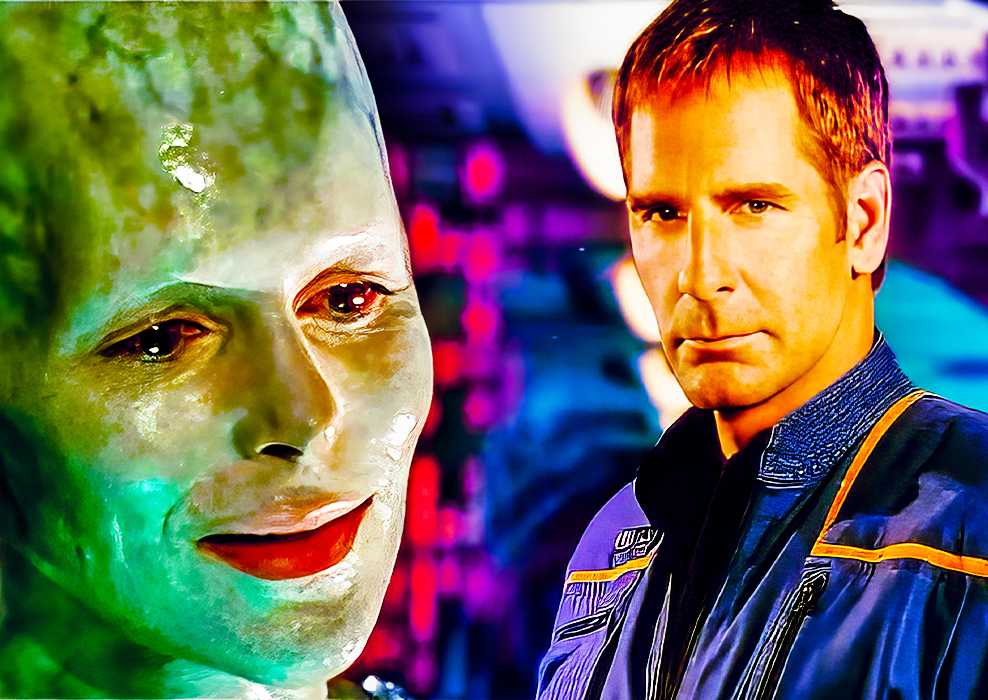
When it was announced the Borg would appear in a second season episode of Star Trek: Enterprise, fans rolled their eyes. In addition to charges of violating continuity, fans felt the Borg had run their course as Star Trek’s “big bads.” Numerous appearances on Voyager had reduced the Borg, in the eyes of some, to simple villains of the week, easily dispatched in 45 minutes. Star Trek fans contended, rightfully so, this deprived the Borg of what made them cool in the first place. The Enterprise is the best Starfleet has to offer, and they beat the Borg by the skin of their teeth.
When “Regeneration” aired, many fans were pleasantly surprised when it turned out to be a good, creepy episode that restored some of the menace to the Borg. A research team finds a gaggle of drones frozen in the ice, left over from First Contact. The drones thaw, and begin assimilating everything in their path. Unlike Picard and Janeway, Archer and company had no idea what they were facing or who they were up against. Fans knew Archer was overpowered, the trick would be seeing how he outfoxed them.
"Regeneration" revealed that Denobulans can temporarily resist assimilation, but this is never followed up on.
“Regeneration” ended on an ominous note: the 22nd century drones squeaked a homing signal out to their comrades in the Delta Quadrant. Archer and T’Pol reason it will take a while for the signal to reach its destination, and even more time for them to act on it. The episode did not violate continuity: it instead served it, by showing why the Borg were so obsessed with the Alpha Quadrant.
The Borg’s Attempt to Assimilate the Federation’s Youth Was Their Biggest Mistake
It Was a Final Lashout From a Cornered Animal
By the early 25th century, the Borg were in a spiral. A virus, designed by former drone Icheb and introduced to the Collective by a future version of Janeway, had left the Borg in shambles. The Queen then hatches a last-ditch effort to conquer the Federation by assimilating the youth of the Federation in the final season of Star Trek: Picard. Fans watched in horror as the children of icons such as Geordi La Forge and Picard himself were turned into Borg drones.
The Borg were nearly successful in this scheme. The collective managed to inflict a great deal of damage, both physical and psychological, on the Federation. The Borg opted to strike on “Frontier Day,” a Federation holiday which only maximized the casualties. Among them included Admiral Shelby, who led the anti-Borg task force decades earlier, as well as Ro Laren. The Borg then attempted to make Jack, the son of Picard and Beverly Crusher, a “Borg King,” but the love of his father brought him back.
The Borg Queen appeared sick and hollowed out in Picard’s final season, indicating the Collective was in free-fall.
The Borg’s “Hail Mary” plan failed miserably, and led to their ultimate downfall. The Borg Queen appeared sick and hollowed out in Picard’s final season, indicating the Collective was in free-fall. When the Federation youth were freed from the Borg’s clutches, it was the nail in the coffin for them, and ensured future generations would never know the threat of assimilation.
In the Future, a Renegade Borg Faction Revives Captain Kirk
Even the Borg Were Affected by the Burn
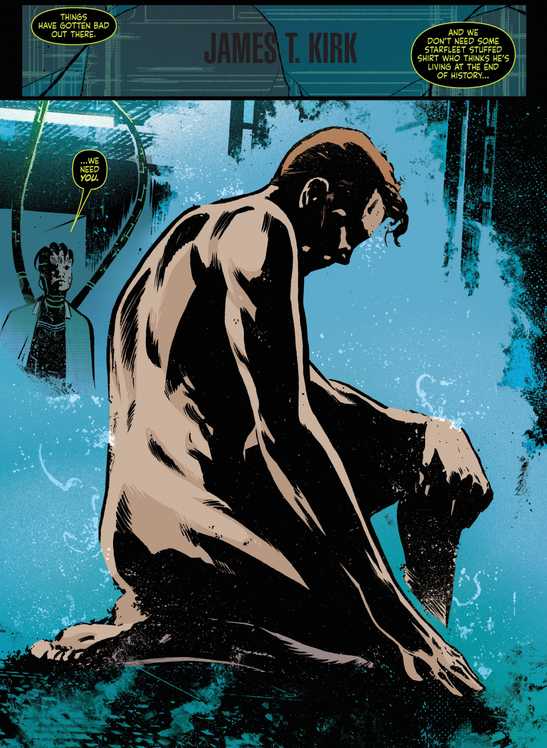
Star Trek: Picard left a number of plot lines dangling, including the establishment of a renegade faction of the Borg. Created by the fusion of the essence of a Borg Queen and Doctor Agnes Jurati, this version was far more benign. Rather than refer to themselves as a “Collective,” they used the term “Cooperative.” After reassuring every one of their good intentions, the Borg Cooperative storyline was abandoned, another victim of the uneven writing that plagued the show.
Thankfully, IDW Publishing, who produces Star Trek comics, picked this thread up in the 12-issue maxi series The Last Starship. Set in the 30th century, after the galaxy was ravaged by “the Burn,” the Borg Cooperative return with a most curious plan: to revive Captain Kirk and use him as a rallying symbol for a broken galaxy. However, Kirk, now a man out of time, has other plans. One of The Last Starship’s central mysteries was why the Cooperative brought Kirk back to the land of the living.
While Kirk’s 30th century odyssey is still playing out in the pages of The Last Starship, it has become apparent that not even the Borg were spared the ravages of the Burn. The Borg, now hurting as much as humans or Vulcans or Cardassians, are desperate, and Kirk is part of their plan. While the Borg may seem to be the all-powerful villains of the Star Trek universe, The Last Starship is proof there are forces even beyond their scope.