Phantom Blade Zero's story succeeds where Black Myth Wukong failed, and here's why
Phantom Blade Zero’s story is by no means the strongest part of the game, but it’s not an aspect to be ignored either.
After previewing Phantom Blade Zero several times and reviewing it for GAMINGbible, I’ve been thinking a lot about the many ways in which the game’s story works, and the ways it doesn’t.
While the game is primarily a linear experience, its story is made up of several threads that crossover with little rhyme or reason. There are a lot of flashbacks, foreshadowing and typically more questions than answers, but despite this, I’d still say it’s solid on a fundamental level.
It’s also been interesting to see the game so heavily compared to Black Myth Wukong, and in terms of story, it’s very obvious to see how S-Game’s work surpasses that of Game Science.
Why Phantom Blade Zero’s story, while flawed, works better than Black Myth Wukong
When previewing the game in China the developers at S-Game spoke regularly about the core ideas and themes of Phantom Blade Zero’s story.
It has been regularly described as a ‘kungfupunk’ revenge story similar to that of John Wick. The game’s protagonist Soul is betrayed by his order, hunted as a criminal and, ultimately, crosses paths with those he once called allies.
Despite being a little hard to follow in terms of pacing, the general idea is very straightforward and something all players can understand. This was all part of S-Game’s design as it’s where Black Myth Wukong lost a lot of people.
Black Myth Wukong is basically an extension of the famed Journey to the West story, popular in China and other Eastern parts of the world.
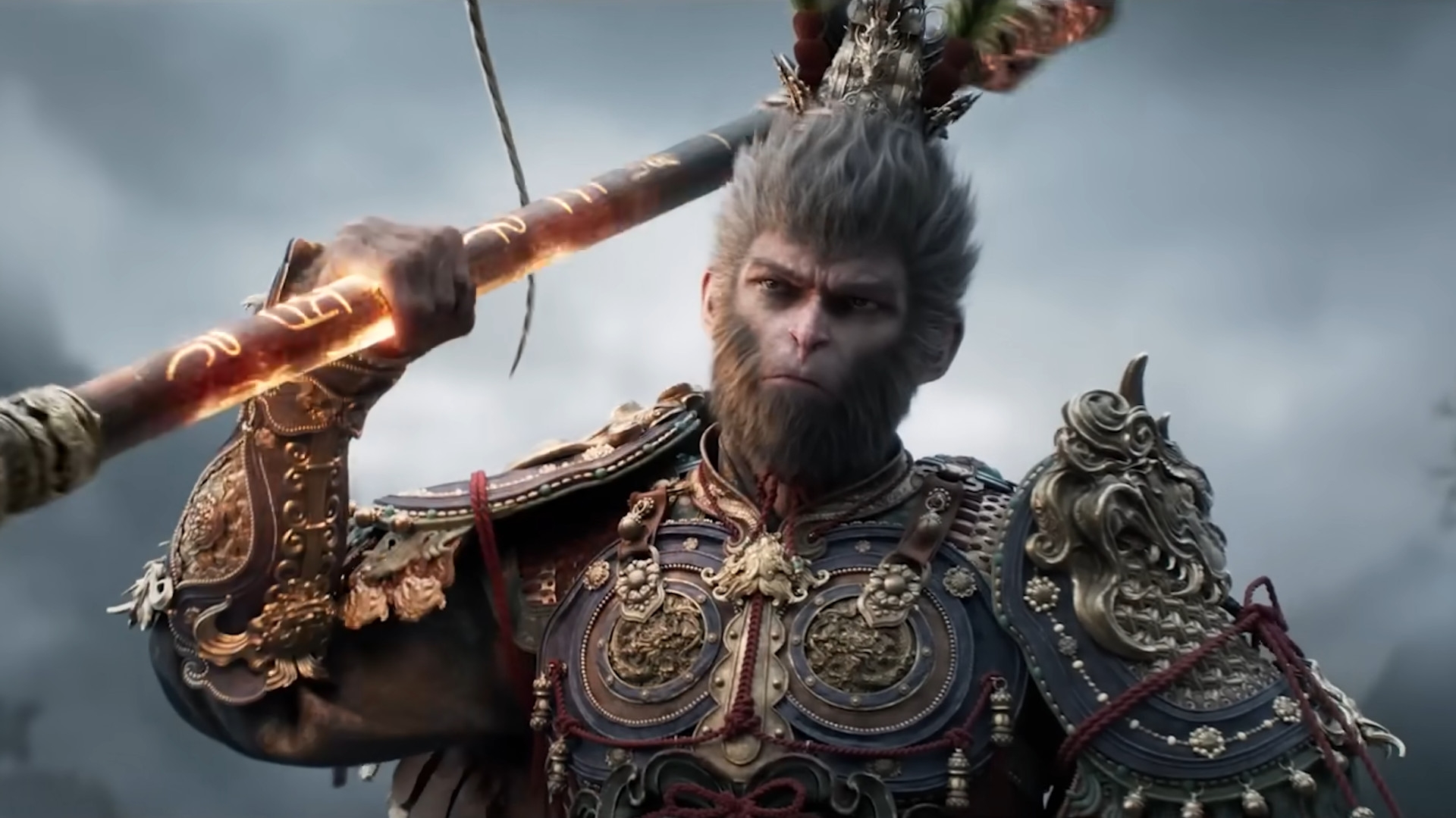
It follows Sun Wukong, a legendary warrior whose exploits inspired the likes of Dragon Ball and other popular media.
The events of Black Myth Wukong are set in the years that followed that story, and while it was well-received in the East, the same couldn’t be said for the West. That’s not to say vague storytelling can’t work, of course. FromSoftware games hardly tell you anything, but like Phantom Blade Zero, they at least follow concepts that all audiences can understand.
Black Myth Wukong, however, felt so reliant on the Journey to the West story that it actually alienated part of its audience, rather than joining them together. It’s still a great game, but compared to Phantom Blade Zero, it feels much less approachable.
Another great example is Lies of P. It takes inspiration from Carlo Collodi’s Pinocchio, a story most people will be familiar with due to the animated Disney film.
Like Phantom Blade Zero, it’s a very simple concept: a puppet who wants to be a real boy and is punished for lying. Lies of P took this idea and turned it into one of the best soulslikes I’ve ever played, and it did so whilst keeping its story accessible for those not as familiar with the source material, but rewarding for those who are.
The same can be said for Phantom Blade Zero. You don’t need to be an expert in Chinese culture or mythology, but the experience will be enhanced if you are. The same can’t really be said for Black Myth Wukong as it’s fully-submerged in the world of Journey to the West.
Phantom Blade Zero’s story is far from my favourite part of the game. My bread and butter will always be the combat and that’s something the game excels at.
However, the intention behind S-Game’s new story must be commended. It does a good job of telling a tale every player can get behind, whilst being a delightful representation of Chinese culture.
Should the team make a sequel, I’d prefer the bulk of development to go into further improvements to the combat, but I’m excited to see where the story could go from here.