15 Greatest American Novels Of All Time
The "Great American Novel." It's not just an aspirational title every writer wants their books to claim. It is an entire genre in its own right. Yes, America literary fiction is defined by these three words, and the masterpieces listed here each qualify in some way or another for the crown.
It's a difficult list to put together. America, especially in the 20th and 21st-centuries, has a prolific literary output. Novels like Slaughterhouse-Five, The Bell Jar, Gravity's Rainbow, Stephen King's great works like The Shining and IT, and John Grisham's best novels, and Tom Clancy's, all have arguments of their own for "Great American Novel" (or GAN) status. So do Jaws and The Godfather. But in this case, they didn't make the cut.
Read on to find out who did. It it a mix of no-brainer classics, astounding literary achievements that American readers can't afford to forget, and a few modern classics that will surely stand the test of time.
The Great Gatsby
Written By F. Scott Fitzgerald; Published In 1925

"So we beat on, boats against the current, born back ceaselessly into the past." So goes the final line of The Great Gatsby, F. Scott Fitzgerald's Modernist masterpiece about the cost of opulence and the price of obsession. Gatsby is arguably the first contemporary American novel, and still one of the greatest.
Fitzgerald's novel captured the changing nature of the "American dream," as it became less about freedom and more about possession. That alone makes it non-negotiable when it comes to the definitive works of American fiction about America itself.
The Great Gatsby's reputation today isn't what it used to be, ironically, in part, because of its ubiquity on high school English curriculums. Still, the novel's airtight prose, perennial themes, and prescient view of modernity all keep it firmly in GOAT-territory.
Absalom, Absalom!
Written By William Faulkner; Published In 1936

Like all of William Faulkner's work, Absalom, Absalom! is a challenging novel, but extremely rewarding for readers who sit with it. Faulkner was the first true American master of interiority in fiction, and a pioneer of the stream-of-consciousness prose style. In Absalom, the author marries these techniques to post-truth themes that were way ahead of their time.
The novel is the story of an ambitious and imperious plantation owner, Thomas Sutpen, told in retrospect by multiple different POV characters. That fragments the "truth" of the tale, highlighting the highly subjective nature of history. Like Gabriel Garcia Marquez would later do for the history of Colombia in One Hundred Years of Solitude, William Faulkner interpreted the history of the American South through a fictional lens.
For a while, Absalom, Absalom! held the record for the longest English-language sentence in fiction.
The prose and the ideas packed onto each page of Faulkner's novel are equally dense. But for modern readers, that just makes his work a test of their patience, a reason to slow down and savor every word.
Their Eyes Were Watching God
Written By Zora Neal Hurston; Published In 1937

Zora Neal Hurston's Their Eyes Were Watching God is a remarkable novel. Released in the 1930s, it was a pioneering work of black fiction and also women's fiction, featuring a middle-aged African-American woman as its protagonist. Hurston's book deftly weaves together reality and fiction, and in the end, it becomes a prototypical courtroom drama.
Their Eyes Were Watching God was groundbreaking for an American novel in multiple senses, and it remains a core text of American school literary curriculums for all the right reasons.
Hurston's novel is a must-read for aspiring authors, readers interested in vivid prose portraits of 20th-century life, and anyone who wants to have a well-rounded understanding of black literary history and its role in American cultural history.
Native Son
Written By Richard Wright; Published In 1940

Richard Wright's novel Native Son is a modernist, realist horror story, and one of the most consequential works of American fiction ever produced. Native Son is about Bigger Thomas, a black man who kills a white woman and becomes a fugitive. Wright's novel hinges on the idea that a person's agency, especially a black person in America's agency, can evaporate in a single instant.
Bigger commits a horrible crime, and the point of Native Son is to question the point at which a crime becomes unforgivable, or a criminal becomes unrehabilitatable, and how that line is drawn differently for white and black criminals.
Wright's prose is intense and Native Son's violence makes it challenging, but the novel's ideas and execution together have secured it a spot on this list perpetuity.
Strangers On A Train
Written By Patricia Highsmith; Published In 1950

Patricia Highsmith's Strangers on a Train shouldn't be short-sightedly considered just the source material for an Alfred Hitchcock movie. Strangers is a GOAT thriller novel, operating from a magnificent premise: the eponymous strangers agree to commit a murder on behalf of the other, with their lack of personal connections theoretically leading police investigators to dead ends.
Of course, things go awry from the jump, and the plot of Highsmith's novel spirals out of its protagonist's control from there. That it all starts on the train is what makes Strangers an essential text of early modernity. The 20th-century connected multitudes people in previously impossible ways, normalizing chance encounters like the one that sets off the plot.
And yet the novel also hinges on a moment in time before the proliferation of surveillance technology. In that way, it is also a cultural artifact, in addition to being a "can't-put-down" pageturner.
Giovanni's Room
Written By James Baldwin; Published In 1956

James Baldwin is one of America's most legendary writers, especially for other writers. Baldwin is revered, and rightfully so, but today he's often more associated with his short stories and essays. Again, rightfully so, Baldwin was prolific and brilliant on both fronts. However, his six novels shouldn't be overlooked.
His second, Giovanni's Room, in particular, is boundary-pushing in terms of content and mesmerizing at the sentence level. Giovanni's Room is the story of David, a white American man, who starts a sexual relationship with the titular Giovanni, an Italian man. Through these characters, Baldwin, a black author, deftly explored questions of sexuality and race few other authors of his era could match.
Giovanni's Room is pioneering queer fiction, one of the progenital texts that helped open the door to the genre as it is known today, and it is still an evocative and intense read 70 years after its publication.
On The Road
Written By Jack Kerouac; Published In 1957

On the Road is Jack Kerouac's pioneering work of autofiction. Part journal, part treatise on mid-20th-century American life, all in a rambling stream-of-consciousness style proprietary to Kerouac, one that has had many imitators in the 69 years since On the Road was published, but which has never been fully replicated.
Maybe perfected, sure, but never replicated. There's a certain mournful but curious soul to Kerouac's writing that only he could pull off. And maybe there are better Beat Generation novels, but it was On the Road that captivated a generation of readers and made the Beats an unforgettable chapter in American literary history, rather than a footnote.
On the Road still has the same magical pull generations later. To this day, no other novel has the power to instigate a road trip the way Kerouac's seminal work does.
Sula
Written By Toni Morrison; Published In 1973

Toni Morrison is one of America's greatest achievements, period. Her work is monumental in the history of literature. Practically all of her novels warrant inclusion on this list. Sula in particular is a flawless choice. It is Morrison's second novel, chronicling life in "the Bottom," a black neighborhood in Ohio, which is facing destruction so that a golf course can be built.
Sula is a work of unbridled literary vision. Morrison's prose would become more dialed in over time, but Sula is the work of a still maturing author, which is exactly what makes it such a joy to read and such a totemic work of American fiction.
Sula is a realist portrait of early 20th-century African-American life, but with the magical realism of later Toni Morrison novels like Beloved bubbling under the surface. Notably, Sula is a great work of literature that is still waiting for its great cinematic adaptation, which has remained in development hell for decades.
Kindred
Written By Octavia Butler; Published In 1979
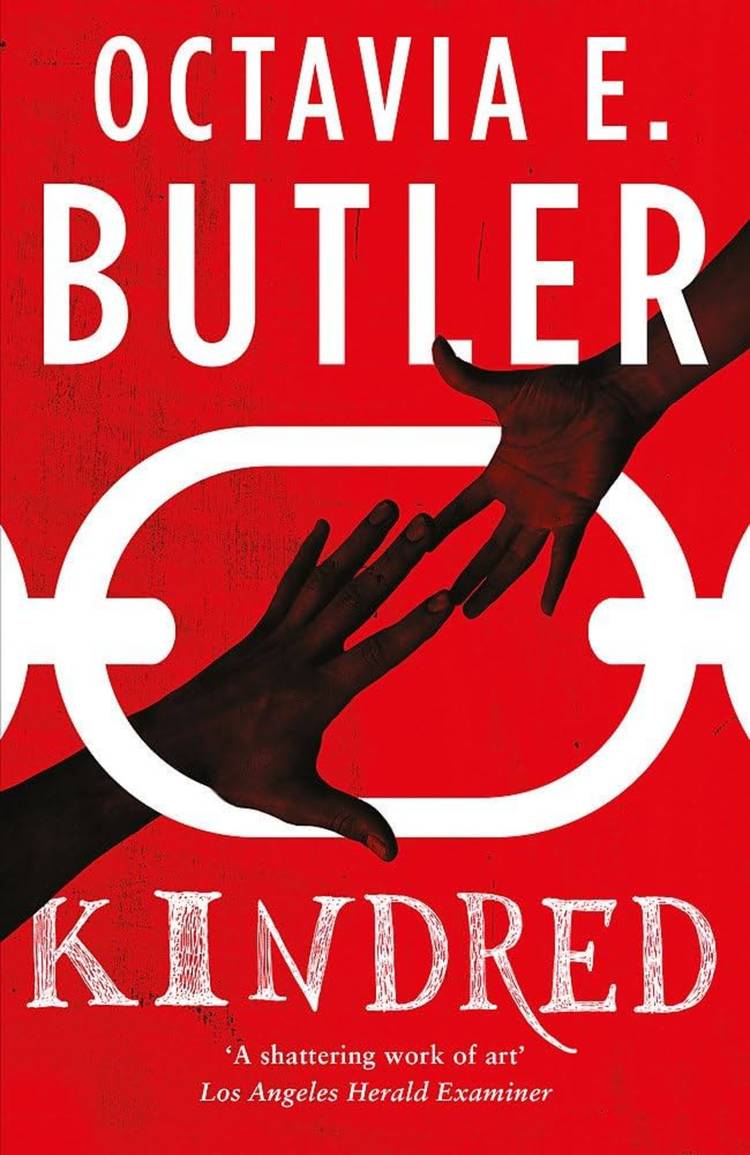
Kindred is a pioneering work of literary science fiction, as well as black sci-fi, feminist literature, and more. However it is classified, Octavia's Butler is transformative and transpositive writing of the highest order.
In Kindred, Butler interrogates America's slaveholding history through a time travel, alternate universe story unlike any that had been published before. Kindred is as influential on the time travel tale as the works of Phillip K. Dick and H.G. Wells; many of the genre's tropes trace back to Butler, but her work is the opposite of rote or derivative.
No, Kindred is enthralling and exciting. At 264 pages, it is just short enough to read in a day, but it is intellectually dense and evocative enough to labor over for weeks or months at a time, pouring over every detail.
Blood Meridian
Written By Cormac McCarthy; Published In 1985
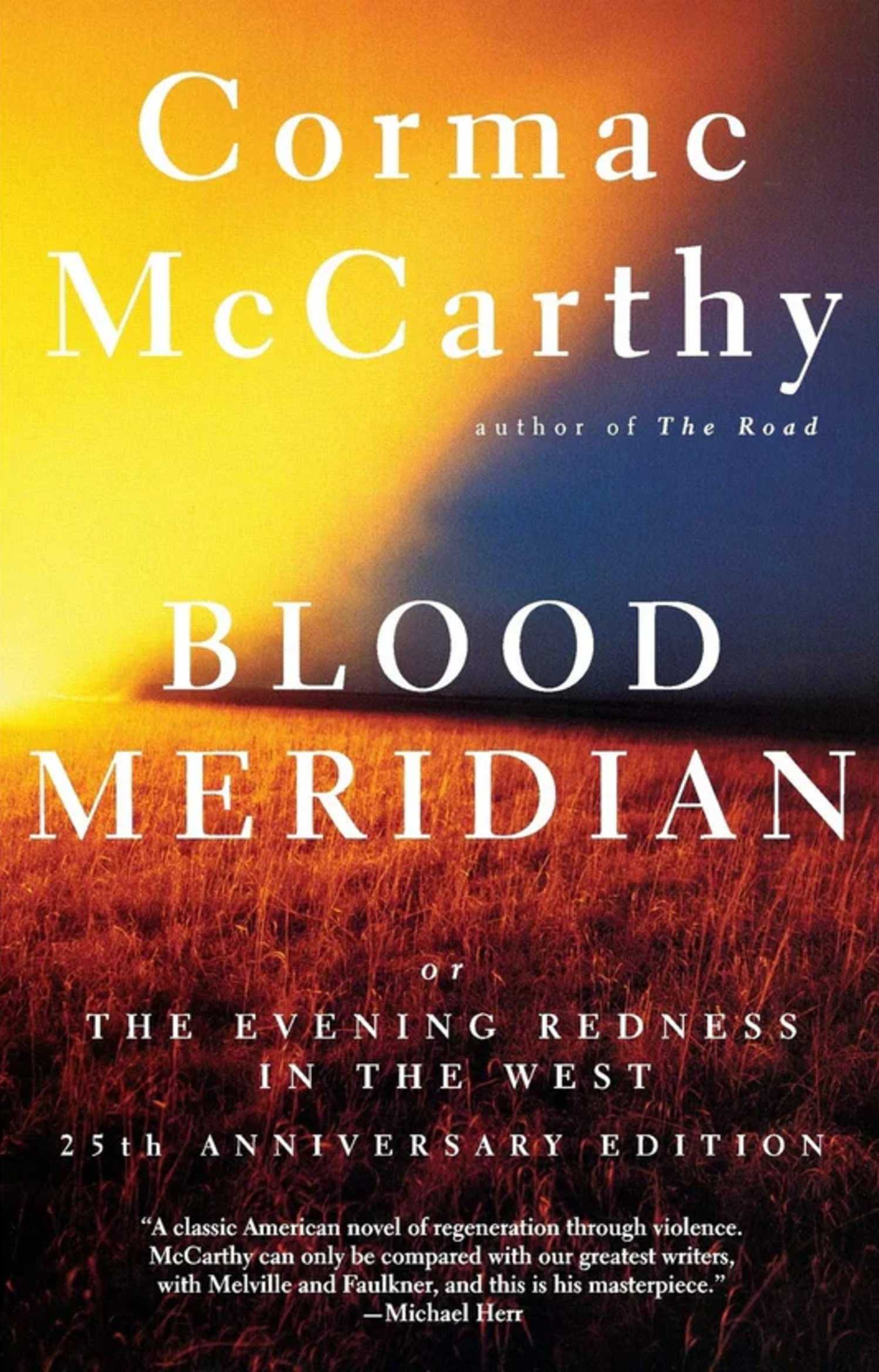
Blood Meridian is as stunningly poetic as it is egregiously violent. For author Cormac McCarthy, that clash of beauty and ugliness, really horror, was the essence of the American condition. McCarthy spent most of his career trying to interpret and reinterpret this idea on the page, but Blood Meridian was the apotheosis of it.
Blood Meridian's story of 'the kid' and his time with the violent Glanton gang is highlighted by his encounters with the devilish Judge Holden, one of the most enigmatic but sinister characters in American literature.
McCarthy's prose in Blood Meridian is hard, but haunting. Lines will stick with readers the way song lyrics do, popping into their heads when they're trying to get to sleep late at night, even if they haven't touched the book in years.