With One Character, Star Wars Is Quietly Changing Jedi Canon In an Extremely Overdue Way
There is no try, only do
Star Wars is redefining what it means to be a Jedi
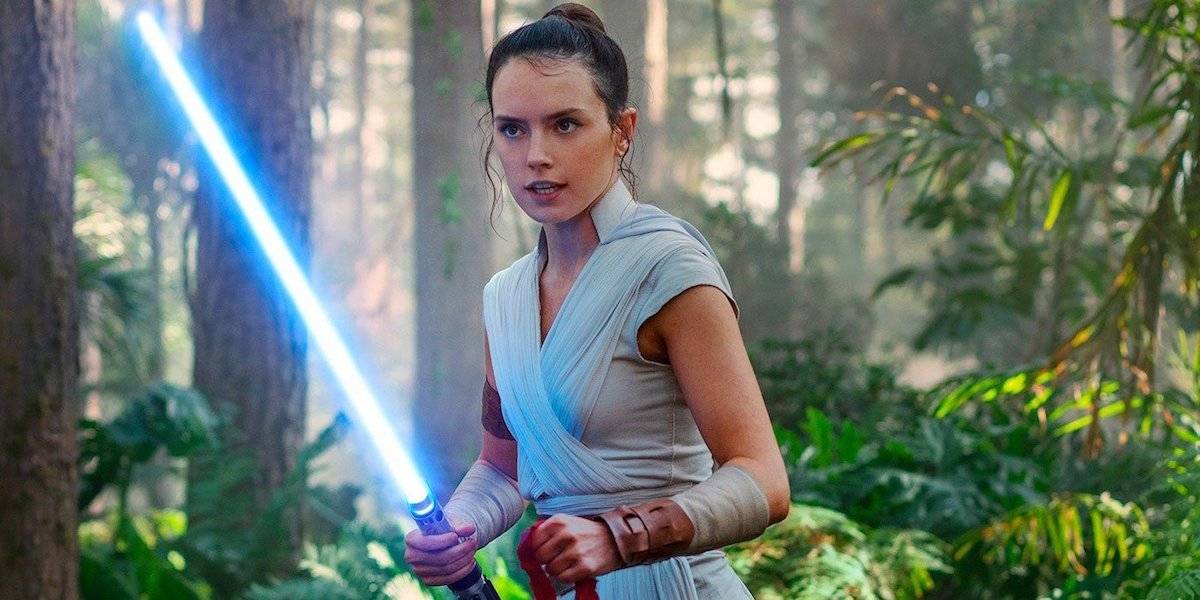
Put a group of Star Wars fans in a room and ask them to explain the Force and you’re almost guaranteed to get multiple, conflicting answers. Throughout the franchise’s 50-year history, creators and fans alike have tried to explain how this mysterious power, wielded by both the Jedi and the Sith, actually works.
Yet, regardless of your own definition of what the Force is, there is one thing most Star Wars fans seem to agree with. To be a Jedi, you must adhere to the Light Side's teachings, value peace, and have some level of ability, understanding, and control of the Force. Otherwise, you’re just some schmuck who happens to be wielding a lightsaber. There's nothing wrong with that, but a Jedi you are not.
At least, I assumed that was the case, until I watched The Ninth Jedi.
Warning: This article will contain spoilers for The Ninth Jedi’s finale.
The Ninth Jedi follows Lah Kara, a determined Padawan under the tutelage of Margrave Juro living in a distant Star Wars future where the Jedi and Sith are nearly forgotten. Alongside fellow Jedi such as Homen and Ethan, as well as the cantankerous droid Granny, Kara travels from system to system in search of her father, Lah Zhima, and of allies to oppose General Nawaam, whose tyrannical army strikes fear into the hearts of communities across the galaxy. The team is also searching for individuals who may be a good fit for the new Jedi Order that Kara and Juro plan to build.
However, what makes a Jedi in The Ninth Jedi goes beyond the use of the Force — it’s all about a person’s heart. Do they believe in good over evil and in protecting the innocent? Then they’re a Jedi. That’s why, outside a select few like Dunbai of Makamo Ko (an ex-Jedi turned political leader), the majority of the Jedi who make up Kara’s new order by the time the final episode rolls around either have no ability with the Force or very little.

We see the difference between these Jedi in The Ninth Jedi’s finale. Kwana and Tafflah of Bibin both express that they do not have a very strong connection to the Force at all, whereas Bee-Toh, despite being a Jedi hunter, doesn’t seem to have a connection at all. While we never see Tafflah in battle, Kwana and Bee-Toh rely on their martial skills and saber prowess, rather than the Force. Despite this, all three of them wield lightsabers and swear to be part of Kara’s new Jedi Order.
It’s an iteration of the Jedi that might leave a few Star Wars fans feeling conflicted. Star Wars: The Phantom Menace made it clear that Anakin Skywalker was so strong in the Force because of the sheer number of midi-chlorians swimming in his bloodstream. If Tafflah, Kwana, and Bee-Toh aren’t able to tap into the Force for whatever reason, how could they possibly be considered Jedi?
However, this isn’t the first time Star Wars has suggested you can learn the ways of the Jedi without having innate Force powers. Dave Filoni, Lucasfilm's chief creative officer/executive and now president, live-action series Ahsoka revealed that Rebels hero Sabine Wren has been under the tutelage of Ahsoka Tano in learning the ways of the Jedi. However, their relationship turned sour, and Sabine never got to finish her training.
One of the key aspects of Sabine’s tutelage is that she’s not particularly adept at being a Jedi. Unlike her fellow rebel, Ezra Bridger, who can tap into the Force with ease, Sabine struggles to connect. This was touched on in the Rebels episode "Trials of the Darksaber," where Kanan Jarrus notes that while everyone is linked to the Force to varying degrees, Sabine’s difficulty in tapping into it stems from a "block" — likely formed by her Mandalorian upbringing, which is practically anti-Jedi down to its very roots. Because of that, Sabine is far from what you would consider a typical Jedi. Huyang, a droid who has worked with Jedi building their lightsaber for years, puts it best: “I have known many Padawans over the centuries. And I can safely say that your aptitude in the Force would fall short of them all."

Yet, by the time Ahsoka season 1 comes to an end, Sabine learns to tap into the Force to some extent and even uses her newfound Jedi powers to push Ezra to safety on Peridea. Even before Ahsoka, however, Sabine has expressed some level of Force sensitivity. She’s been able to sense Ezra in The World Between Worlds, for example, and she’s great with a blaster in a way that makes her stand out among her peers.
Regardless of how you feel about Sabine’s arc in Ahsoka, she’s the perfect example of what The Ninth Jedi is seemingly all about. Even though Kwana, Tafflah, and Bee-Toh are not as adept in the Force as Kara, it’s their desire to protect the innocent even at the cost of their own lives that makes them prime Jedi material — not their ability to wield the Force.
And if you still have doubts about the Force, we’ll just let this conference transcript from George Lucas in 1981 do the talking: “Yes, everybody can do [The Force]. [...] It’s like yoga. If you want to take the time to do it, you can do it.”