Castlevania Is 40, and Its Greatest Legacy Isn’t Dracula or the Belmonts

The 1980s was a remarkable decade that still manages to hold sway of our collective trajectory to this day. In particular, 1986 rocked the world with many wild developments. Halley’s Comet made its closest modern approach to Earth. The Chernobyl calamity shook Soviet Ukraine with the world’s worst nuclear disaster, and Mike Tyson became the youngest heavyweight boxing champion in history. In the video game world, a seed was planted that would sprout into an incredibly megalithic tree bearing fruit 40 years later. That seed was a little game we know as Castlevania.
The original hero, Simon Belmont, thrust gaming fans into a gothic horror world rife with monsters and religious iconography. The big bad? Dracula, himself. For 1986, settling a blood feud between a Belmont and the dark lord himself was the very definition of epic. We’d later learn that the Belmont clan, a family with a rich legacy and family tree, are born and bred vampire hunters destined to clash with the Count. In gaming, it’s a cyclical and generational rivalry just as iconic as Link and Ganondorf would grow to be in The Legend of Zelda series.
The original 1986 title simply required players to traverse Dracula’s bleak castle across six groupings of 3 stages each, totaling 18 side-scrolling levels of monster-slaying action. Simon Belmont could use his iconic whip coupled with throwing knives, axes, crosses, and holy water to combat the wily creatures of the night in an action and platforming style of play. Over time, each succeeding Castlevania entry would catalog an evolution in the series as mechanics developed, setting Castlevania on an unmistakable path toward changing gaming as a whole forever.
Castlevania Became More Than a Refresh of a Centuries-Old Conflict With Dracula
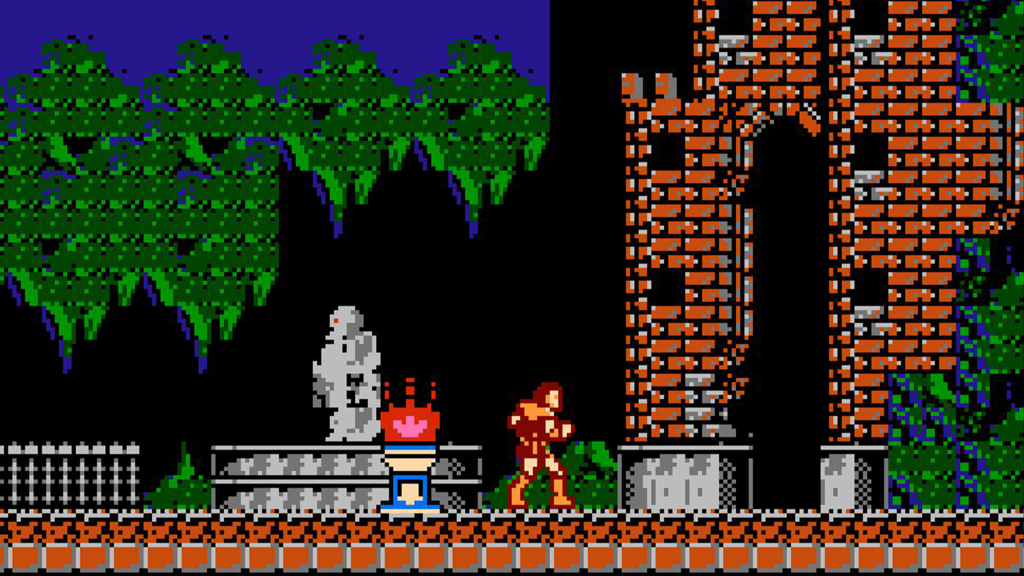
In 1987, Castlevania II: Simon’s Quest took the first step toward becoming the Castlevania we know and love today. In this sequel, the standard stage progression is gone. The game introduced non-linear gameplay alongside role-playing elements. Simon returns in this sequel and can speak to NPCs and purchase items from merchants. His famous whip can be upgraded with new whips throughout the game. Furthermore, Simon’s stats, namely his health and power, can increase by defeating enemies. Castlevania had truly started to become an action RPG.
Despite Simon’s Quest being a tad controversial among fans, its influence on the future of the franchise is unmistakable. Later entries would further experiment with mechanics that would eventually define the series. Castlevania’s ultimate contribution to gaming would eventually be made complete with the release of Castlevania: Symphony of the Night.
Symphony of the Night Changed Everything

Nearly 11 years after the release of the first Castlevania game came, perhaps, the most renowned entry in the entire series: Symphony of the Night. This classic was released on the PlayStation and Sega Saturn in 1997, and there are multiple reasons the game put the series as a whole on the map. Symphony of the Night saw the return of Alucard, Dracula’s son, following his first appearance in 1989’s Castlevania III: Dracula’s Curse, where he aided Trevor Belmont in his quest to defeat Dracula. Alucard awakens 300 years after the events of Dracula’s Curse in an effort to destroy his father’s castle on the horizon. The game is considered the first true product of the Metroidvania subgenre: video games that combine both the interconnected side-scrolling worlds of Metroid and Castlevania as well as the RPG elements introduced later in the series.
Symphony of the Night presented players with a sprawling maze of a castle that would lock certain locations or branches within the world until players obtained specific items needed to unlock barriers for progression. It’s a title that encouraged exploration and rewarded players for it. RPG progression through attribute stats was a necessity. Collecting weapons and equipment added to the thrill of the game’s reward mechanics. All of these elements coalesced into what fans have fondly referred to as the Metroidvania.
Believe it or not, Symphony of the Night wasn’t nearly as beloved upon release as it is today. In fact, it performed poorly commercially. It was only over time, through discovery and excitement among fans, that the title garnered a cult following. That fanbase steadily grew until the game practically became the most popular title in the entire series. It was the very definition of a sleeper hit.
Castlevania’s DNA is Everywhere in Modern Gaming

Since the popularity of the subgenre has reached a significant fanbase, Metroidvanias have proliferated in the modern age. Titles like Ori and the Will of the Wisps, Hollow Knight, and the vibrant and comedic luchadores romp, Guacamelee!, have all embodied what it means to be a Metroidvania. These games contain vast interconnected, 2D worlds that feature RPG progression elements, backtracking, and equipment gathering. Many other titles fall into the Metroidvania category and there will be many more to come in the future, no doubt.
But the relationship Castlevania has with the entire gaming landscape doesn’t just stop at Metroidvanias. Many big blockbuster titles like the God of War series are heavily inspired by Castlevania. Kratos’ Blades of Chaos clearly recall the iconic whip wielded by generations of Belmonts. God of War worlds are designed to be revisited after character progression and obtaining items or abilities that unlock new barriers in an interconnected world. Just because the game exists on a 3D plane doesn’t mean it has zero ties to Castlevania. The series is huge, and 40 years have proven just how much Castlevania has meant to the gaming industry. We’re about to celebrate this four-decade anniversary with the release of Castlevania: Belmont’s Curse in October. It’s a big milestone, but it’s one that Konami and anyone who has ever had a hand in the Castlevania legacy should be proud of.