5 Must-Play Superhero Games That Aren’t Related to Marvel or DC
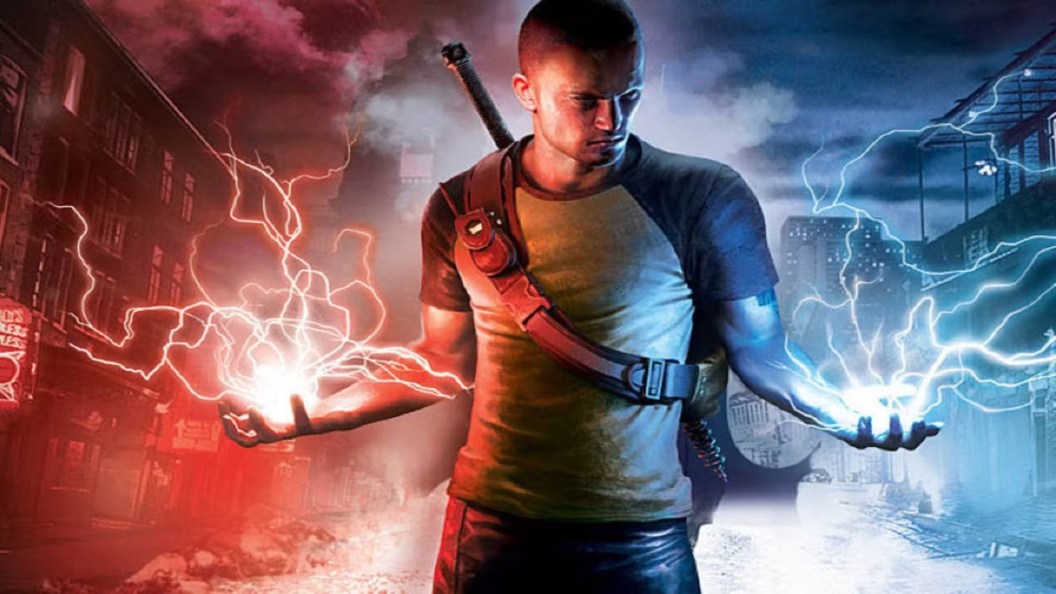
When it comes to games with superpowers and heroes with extraordinary abilities, most people imagine Marvel or DC characters at the forefront of those experiences. However, there are plenty of games without figures from either of those IPs that still manage to capture the same feel of those properties. Plenty of super-themed adventures exist in other games, sometimes borrowing similar tropes from mainline comics, or twisting what players expect into brand-new journeys meant to flip the script on what superhero stories can be.
Recently, big AAA games have tried to craft all-encompassing superhero games, such as Marvel’s Wolverine in September 2026. Yet, games like Marvel’s Wolverine have come out to mixed reviews, mainly for how generic it can feel compared to other games that push the boundaries of what superhero stories are, in both gameplay and narrative. With many Marvel and DC games like The Avengers (2020), Marvel’s Spider-Man 2, Suicide Squad: Kill the Justice League, and DC K.O. releasing to mixed or negative reviews, players might want to try superhero games outside either property.
5. Freedom Force
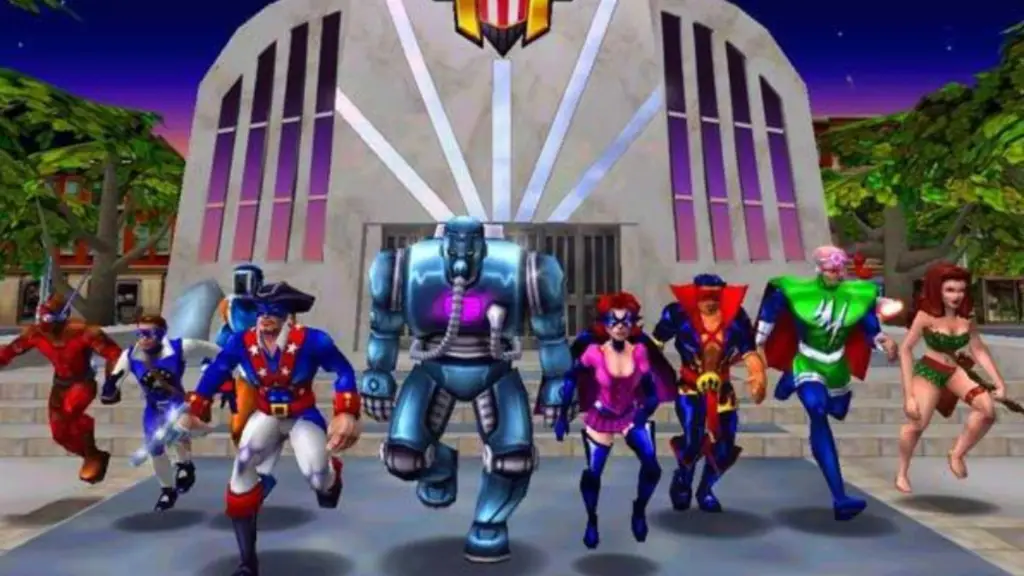
The premise of Freedom Force isn’t complicated as a 2002 superhero game, as its plot revolves around a team of super powered characters fighting off an alien invasion. The gameplay of this title is focused on hack-and-slash action similar in execution to Marvel Ultimate Alliance, where four players can team up with one another to take on a variety of threats. As the invading aliens unleash a contagion called Energy X to imbue people all over the world with superpowers, both heroes and villains will appear with a variety of abilities.
The world of Freedom Force is very interactive, but the main draw of this game is how you can create and customize your own superhero. Unlike a Marvel or DC game, where you play as established characters, you get the chance to invent your own character here. Over a dozen heroes act as presets in Freedom Force, but crafting a personalized hero is just as valid of a way to play. Players are able to adjust individual stats like their character’s Strength, Speed, Agility, and Endurance, much like a tabletop RPG. From those points, your character can gain attributes that give them their powers.
Having some stats fulfills requirements for specialized powers, with attributes including some options like Wall Climbing, Radioactive, Cybernetic Brain, and more. There is a wealth of options for you to try, with both active and passive abilities to mix and match at your leisure. The visual effects of Freedom Force look straight out of a comic book too, with pop-up hit effects and a campy art style capturing the appeal of classic stories. Although its plot is paper thin, Freedom Force‘s character building system makes it unique in the superhero game space.
4. Control/Control Resonant
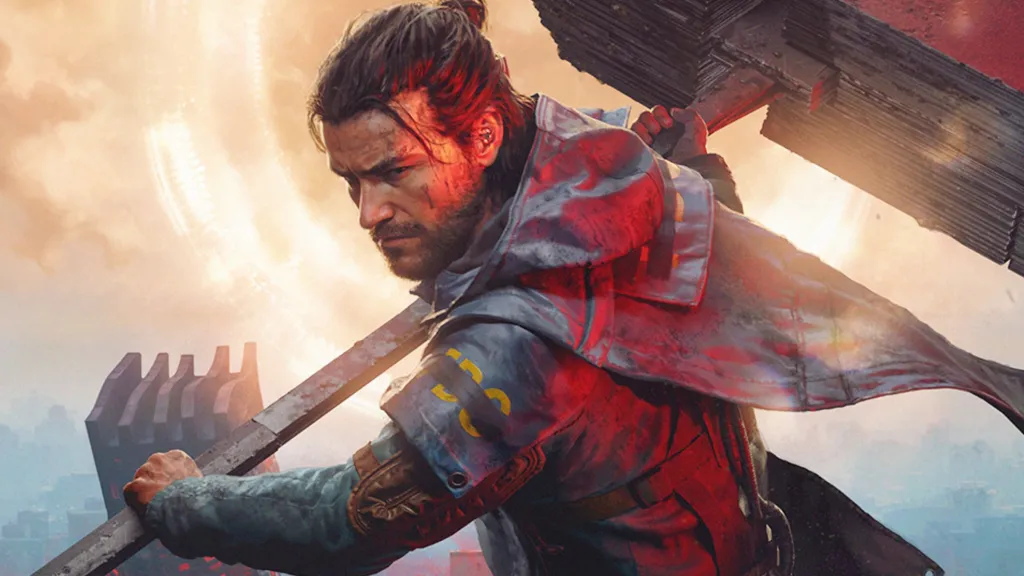
Control and its sequel, Control Resonant, are not exactly “superhero” games, they grant players so many super power adjacent abilities that it might as well be one. These games are almost paranormal or supernatural horror in some ways, with psychedelic level design where players can unleash a variety of powers within a fascinating combat sandbox. In the first Control, players had supernatural abilities in addition to third-person shooting, but Control Resonant doubles down on melee combat that is presented through a different camera perspective.
Control Resonant is more open-ended, allowing greater player exploration around a city with side quests and other objectives to complete. That being said, both games follow an action RPG formula where players can unlock powers by gaining ability points to spend on various skills. In Control, your powers over gravity can help you gain limited telekinesis, throwing objects, items, explosives, and eventually, people. Energy shields and some psychic abilities add to the supernatural elements of Control, with your main character levitating from the ground to add to the power fantasy.
Meanwhile, Control Resonant‘s powers revolve around a shape-shifting weapon called the Aberrant, which can take a variety of forms to make melee combat varied. In addition to this tool, your character has the mind-bending powers of the first Control, both for combat and exploration. As you progress through either game, the scope of your abilities only increases, only adding to the super powered experience rather than remaining static like some Marvel or DC games tend to do.
3. inFamous
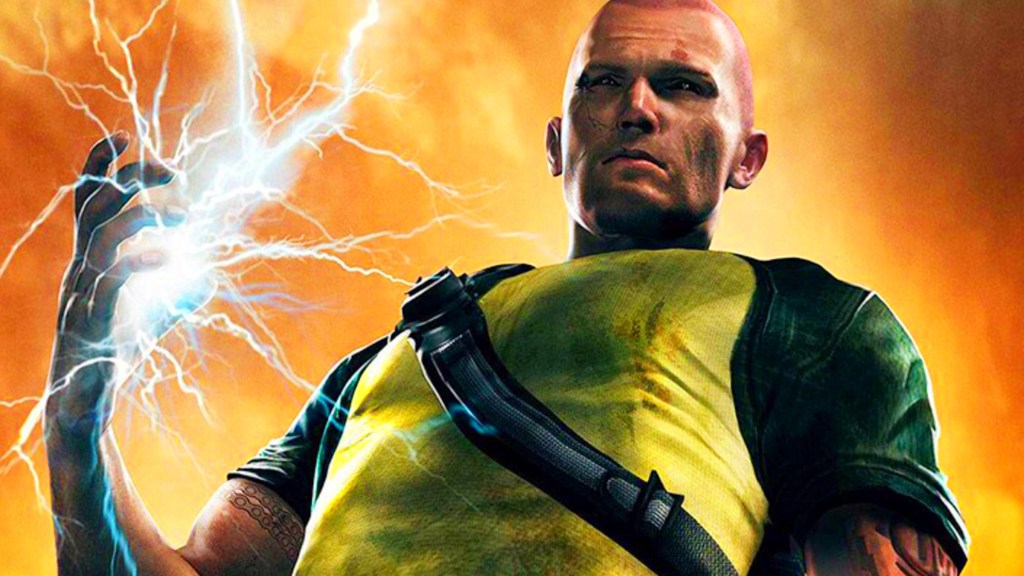
The inFamous games are incredibly detailed superhero experiences, where players can acquire a variety of powers and shape their adventure based on how you use them. Depending on your choices, your journey could end in heroic or villainous ways, reflecting your abuse or restraint with the powers you wield. These action-adventure titles were ahead of their time when released, and still hold up today as fantastic open-world, third-person games with amazing sandboxes to explore.
Exploration in the inFamous games is tied heavily to your powers, which mainly consist of electromagnetic abilities in the first title. That being said, inFamous: Second Son expands your power set beyond just electricity, giving you move sets based on the following categories:
- Smoke – Close quarters combat, crowed control, industrial destruction, mobility
- Neon – High speeds, moving up vertical surfaces, weak-point targeting projectiles, long-ranged laser combat
- Video – Stealth gained from satellite dishes and TVs, digital wings for aerial mobility, summoning digital demon allies
- Concrete – Heavy armor power-ups, hovering descents, maximum defense, heavy mid-range rock barrages
The combat applications of some powers are almost endless, turning inFamous into a deep action experience rather than just a game where your powers are limited to static skill trees. Taking out various enemies and traveling through the open worlds of either inFamous is almost always satisfying, with the game presented unique challenges to overcome through how you combine your powers together. You essentially get to build your own combat style throughout the game, picking a play style based on the powers you want to use the most.
2. City of Heroes

City of Heroes is a game with a lot of history, having originally released in 2004 and now only existing on a number of private servers many years later. However, despite its nearly forgotten status, this game represents a level of understanding of the superhero genre that many other projects fail to do. City of Heroes exists as a massively multiplayer online title, or an MMO, with plenty of RPG elements tied into creating your own super powered character. Although there are similarities to DC Universe Online in terms of gameplay, City of Heroes isn’t bogged down by having to exist within an established comic universe.
This game has all the pieces you’d expect from a good MMO like World of Warcraft or Final Fantasy 14, with robust tutorial areas and deep character customization to create the perfect super powered character. Players can increase their character’s Level by completing missions and exploring zones, gaining more powers for themselves in the process. Powers have a greater amount of flexibility than you’d expect, with Enhancements for every power allowing them to grow and change based on player preferences.
Depending on whether players chose the Hero or Villain factions, your adventure would look different, with unique hub worlds for each side and missions reflecting your choice. The game has a variety of super hero tropes presented well, from mad scientist villains to super powered speedsters, people with super strength, characters that can fly, and much more. Unlockable costumes and other cosmetics rewards were great too, with plenty of references and stand-out items within the game’s own setting.
That being said, City of Heroes might be best known for its Supergroup clans. These player-created squads reflect super hero groups like The Avengers or Justice League, yet entirely made up of players who make bases, pursue goals, and collaborate in raids together for a true superhero team experience. Having massive Coalition team-ups between multiple Supergroups was a major highlight of the game, with Sidekick features also promoting co-op play by letting high and low level characters work together equally.
1. Prototype

Much like inFamous, the Prototype games are action-adventure and open-world experiences where players control a character with strange, evolving super powers. Unlike inFamous, though, Prototype‘s powers are far more destructive, with players gaining shape-shifting abilities to become the ultimate weapon. Both Prototype and Prototype 2 are games that aren’t exactly deep, but have incredibly fun combat built around player creativity and relentlessness. It would be impossible to list off everything you can do with your powers in both games, as you get access to arm blades, projectiles, AoE attacks, and far more as you progress.
Choosing Mutation perks to expand your arsenal is part of the excitement of the Prototype games, which take on a more mature tone than most superhero adventures. In many ways, you are acting more like an anti-hero in most scenarios, by hunting and killing enemies in over-the-top action. Traveling through different zones of these games worlds is made easier through specific abilities, making you interact with your powers at every step of your journey. From the dystopian New York Zero, or NYZ, of Prototype 2 or the original adventure of the first Prototype, the choice is yours of where, how, and when your powers are used.
While the plot of the Prototype games aren’t exactly the most powerful part of either experience, the inventiveness of the sandboxes and combat certainly are. The graphics and visuals of these titles still hold up today, reflecting a distinct visual style for your powers that sometimes lean into body horror in different situations. For a superhero game that isn’t Marvel or DC, Prototype gets away with a lot more violence than those properties typically allow, crafting an experience separate from those groups.