The Greatest Opening Line In Dystopian Sci-Fi TV History Hits Harder Than Ever
The greatest opening line in the history of dystopian sci-fi is a reflection on how even the most mundane objects and the most bare necessities can be turned into harrowing symbols of oppression and control. Throughout its six-season runtime, The Handmaid's Tale is packed with some of the most minimalistic yet hard-hitting lines that capture the extent of Gilead's control.
One of the best among these appears in the show's season 1, episode 1, when June says: "I don't need oranges. I just need to scream." By drawing a sharp contrast between a simple physical want and an overwhelming emotional need, the line captures how Gilead's oppression has stripped June of even the most basic sense of freedom.
Even Aunt Lydia's pondering about how our definition of the ordinary keeps evolving the more we experience hardship is a haunting reminder of how easily people can become accustomed to circumstances they once would have considered unimaginable.
Before delivering these iconic quotes, though, the show begins with a chilling monologue from Offred that establishes the nature of her suffering and existence in Gilead:
"A chair. A table. A lamp. There's a window with white curtains. The glass is shatterproof. But it isn't running they're afraid of. A Handmaid wouldn't get far. It's those other escapes... the ones you can open yourself, given a cutting edge or a twisted sheet and a chandelier."
The Handmaid Tale’s Opening Passage Makes A Viewer Question The Illusion Of Safety

In the opening scene, Elizabeth Moss' Offred in The Handmaid's Tale sits by the window of a seemingly ordinary room and recites the everyday objects that surround her. Natural light gleams into the room, which initially gives the illusion that Offred is an ordinary setting.
However, the more she talks about her surroundings and the more the washed greys and cold blues of the room become evident, it becomes clear the room's simplicity is a visual reflection of the restrictive world she inhabits.
"A chair," "a table," and "a lamp" are the bare necessities given to her to survive in her prison-like environment. The room has been stripped of everything else. Even the most mundane and seemingly harmless day-to-day objects like chandeliers and regular glass have been replaced with plaster and shatterproof windows and frames.
This has been done because, beyond physically escaping their settings, a Handmaid can find other paths to freedom though death.
With this, Offred ends the opening monologue by highlighting how even the act of thinking is forbidden. Something as basic as her name, too, has been taken away from her. Almost everything has become forbidden.
"A chair. A table. A lamp. There's a window with white curtains. The glass is shatterproof. But it isn't running they're afraid of. A Handmaid wouldn't get far. It's those other escapes... the ones you can open yourself, given a cutting edge or a twisted sheet and a chandelier. I try not to think about those escapes. It's harder on ceremony days, but thinking can hurt your chances. My name is Offred. I had another name, but it's forbidden now. So many things are forbidden now."
The Opening Quote Perfectly Honors Margaret Atwood’s Writing Style
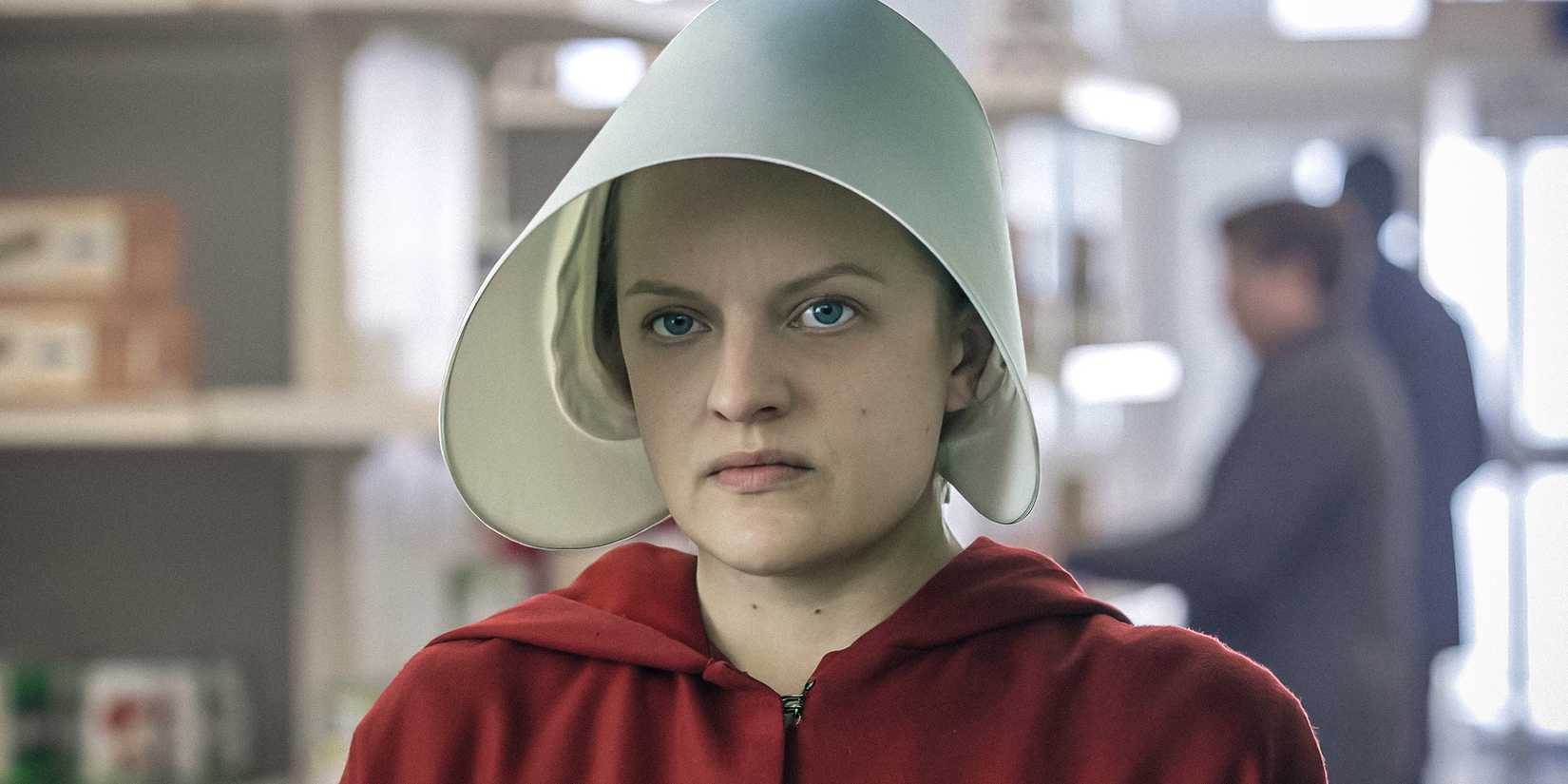
In Margaret Atwood's original novel, the same quote is far more explicit and harrowing in the sense that Offred directly acknowledges that the room has been stripped of anything she could use to escape, harm herself, or reclaim even the smallest measure of control over her life:
“A chair, a table, a lamp. Above, on the white ceiling, a relief ornament in the shape of a wreath, and in the center of it a blank space, plastered over, like the place in a face where the eye has been taken out. There must have been a chandelier, once. They’ve removed anything you could tie a rope to.”
The show carefully borrows the right ingredients from the original passage and perfectly delivers it with the same cadence. Just like Atwood uses abrupt, single-noun sentences to capture Offred's clipped and claustrophobic setting, the show, too, delivers the fragments of reality Offred finds herself in after being stripped of all free will.
Atwood brilliantly uses calm, observational prose to describe unspeakable brutality. The dystopian sci-fi show does something similar by initially featuring a room illuminated by warm sunlight. However, instead of looking pleasant, the room clearly looks like a prison cell that one cannot even escape through the mind.
The Handmaid’s Tale Perfectly Pays Off Its Opening Passage In Season 6
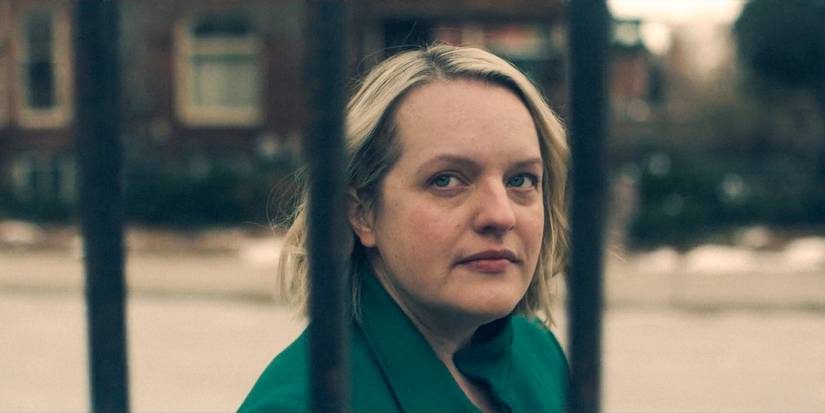
In The Handmaid Tale's season 6, June returns to Waterford home where she sits by the windowsill again and recites the same opening words as she starts writing her own story. “A chair. A table. A lamp,” she recounts, but this time, the words carry an entirely different meaning as she reclaims the narrative that was once imposed upon her.
The series finale recreates the same imagery when Serena finds herself at a refuge camp. She, too, gets nothing but "a chair," "a table," and "a chair," reminding her of the setting she and her husband once used to exert control over June and the other Handmaids.
With this, The Handmaid's Tale brings a "full circle" closure to its story, where the opening imagery goes from being a symbol of June's confinement to the gradual downfall of Gilead's power.