8 Lord Of The Rings Creatures More Terrifying Than The Balrog
Few creatures in fantasy are as terrifying as the Lord of the Rings’ Balrog. When the Fellowship enters the Mines of Moria in The Lord of the Rings: The Fellowship of the Ring, they encounter Durin's Bane, a towering demon of shadow and flame whose arrival instantly transforms an already dangerous situation into a nightmare. Armed with a fiery whip and immense strength, the Balrog is powerful enough to force Gandalf into one of the most famous battles in fantasy literature.
Yet as terrifying as the Balrog is, it is far from the most frightening being in J.R.R. Tolkien's mythology. Tolkien's wider legendarium, particularly The Silmarillion, is filled with horrors that make Durin's Bane look almost modest by comparison. There are giant monsters capable of destroying entire armies, and supernatural creatures that corrupt minds, drain hope, or spread terror without ever lifting a weapon.
Many of these existed during the First Age, when Middle-earth was far more dangerous than it appears throughout The Lord of the Rings. Dragons were larger, dark powers were stronger, and ancient evils roamed lands that would later become legends. From gigantic winged dragons to entities so mysterious that even Gandalf avoided discussing them, these creatures surpass the Balrog in sheer terror.
The Nâzgul

The Nazgûl are among the most effective horror creations Tolkien ever devised. Unlike the Balrog, which relies largely on overwhelming physical power, the Ringwraiths attack both the body and the mind.
Originally mortal kings, they were corrupted by the Rings of Power and gradually faded into the shadow world under Sauron's control. By the time of The Lord of the Rings, they exist as ghostly servants whose very presence inspires panic.
Their pursuit of Frodo across Middle-earth demonstrates how frightening they can be. The scene at Weathertop remains particularly memorable, with the Ringwraiths silently surrounding the hobbits before striking. Their chilling cries alone are enough to terrify experienced warriors.
The Witch-king of Angmar, their leader, even breaks Gandalf's staff during the Battle of Minas Tirith the movie version of the story. A Balrog may be stronger physically, but the Nazgûl spread fear on a scale few creatures can match.
Ungoliant The Spider

Shelob is terrifying enough, but her mother Ungoliant makes her seem almost tame. Ungoliant was an ancient spirit who took the form of a gigantic spider and became one of the most destructive creatures in Tolkien's mythology.
During the Years of the Trees, she allied with Morgoth and helped him carry out one of the greatest crimes in Middle-earth's history. After Morgoth struck the Two Trees of Valinor, Ungoliant drank their light until nothing remained.
She became so swollen with stolen power that even Morgoth began to fear her. In fact, she eventually turned on her ally and nearly killed him. Only the arrival of the Balrogs saved Morgoth from her wrath.
Unlike most villains, Ungoliant was driven by endless hunger. Nothing could satisfy her appetite. She consumed light, jewels, and eventually even herself according to some interpretations of Tolkien's writings. A creature capable of terrifying Morgoth is easily more frightening than a Balrog.
The Nameless Things

The Nameless Things are among the most mysterious horrors Tolkien ever created. Gandalf briefly mentions them after his battle with Durin's Bane. While pursuing the Balrog beneath Moria, he travelled through tunnels far below the deepest mines of the Dwarves.
There, he encountered ancient beings that existed beneath the world itself. The wizard refuses to elaborate, describing them only as older than Sauron and creatures that gnaw at the foundations of the earth. That lack of detail is precisely what makes them so terrifying.
Tolkien rarely leaves major monsters unexplained, yet the Nameless Things remain almost completely unknown. Their appearance, abilities, and origins are never revealed. Even Gandalf, who has seen dragons, Balrogs, and Dark Lords, seems uncomfortable discussing them.
The implication that vast, ancient entities lurk beneath Middle-earth, hidden even from most of its greatest powers, creates a sense of cosmic horror that few other creatures in Tolkien's legendarium can match.
Ancalagon The Titanic Winged Dragon

If sheer size is the measure of terror, Ancalagon the Black has few rivals. Created by Morgoth during the First Age, Ancalagon was the greatest dragon ever to exist. He appeared during the War of Wrath, the catastrophic conflict that ended Morgoth's reign.
Unlike Smaug, who could devastate a city, Ancalagon was a weapon designed for war on an almost unimaginable scale. He led an army of winged dragons against the hosts of the Valar and initially drove them back.
His eventual defeat required Eärendil, one of Middle-earth's greatest heroes, aided by the Eagles of Manwë. When Ancalagon finally fell, his enormous body crashed into the volcanic towers of Thangorodrim and destroyed them.
Considering these mountains were among the largest structures in Middle-earth, the implications for his size are staggering. Even a Balrog would seem insignificant standing beside the largest dragon Tolkien ever imagined.
Carcharoth The Werewolf
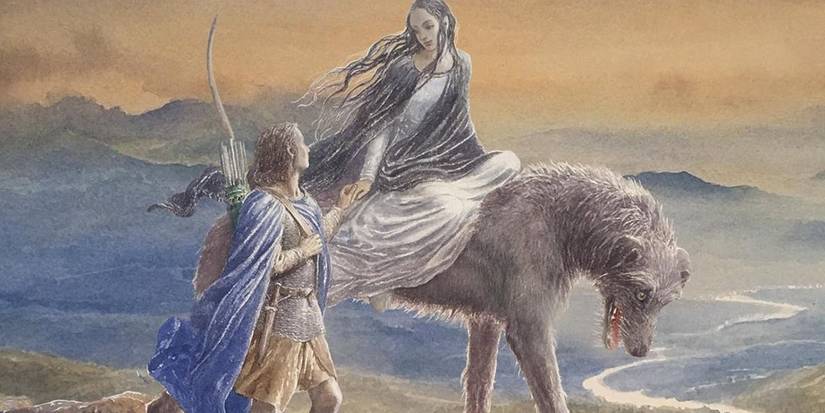
Carcharoth was the greatest werewolf ever bred by Morgoth and one of the deadliest creatures in the First Age. Originally a massive beast, Carcharoth became even more dangerous after biting off Beren's hand and swallowing a Silmaril.
The holy jewel burned him from within, driving him into a frenzy of pain and madness. He responded with one of the most destructive rampages in Tolkien's mythology.
Carcharoth tore through armies, slaughtered warriors, and spread chaos wherever he went. His strength became so overwhelming that some of the greatest heroes of the age were required to stop him. The hunt for Carcharoth ultimately resulted in the death of Huan, the legendary Hound of Valinor.
The fact that even Huan struggled against him demonstrates just how terrifying the beast had become. A Balrog is certainly more intelligent, but few creatures inspired as much immediate panic as Carcharoth.
Glaurung The Dragon

While Ancalagon was larger, Glaurung was arguably more frightening. Known as the Father of Dragons, Glaurung was Morgoth's first great dragon and one of the most cunning villains in Tolkien's works. Unlike many monsters that rely on brute force, Glaurung specialized in manipulation.
Glaurung’s greatest weapon was often his voice. He could place individuals under powerful enchantments, erase memories, and twist people's perceptions of reality. His encounter with Túrin Turambar is particularly devastating.
Through lies and psychological manipulation, Glaurung helps trigger one of the most tragic stories in Tolkien's legendarium. Of course, he was also more than capable of destroying cities.
During the fall of Nargothrond, he effortlessly shattered one of the greatest Elven kingdoms of the First Age. A Balrog may be terrifying in battle, but Glaurung could ruin lives long before anyone drew a sword.
Dark Lord Morgoth

Before Sauron became Middle-earth's greatest threat, he served a master far more terrifying. Morgoth was originally Melkor, one of the most powerful Ainur created before the world itself.
Unlike a Balrog, who was merely one of his servants, Morgoth was the source of much of the evil in Tolkien's mythology. He corrupted countless creatures, created armies of monsters, and spent ages attempting to dominate creation itself.
Dragons, Balrogs, werewolves, and numerous other horrors ultimately trace their origins back to him. At the height of his power, Morgoth fought entire hosts of divine beings. His influence was so vast that Tolkien describes him permanently corrupting the physical substance of Middle-earth itself.
Even after losing much of his strength, Morgoth remained the greatest enemy the world had ever faced. Compared to the original Dark Lord, Durin's Bane was essentially a very dangerous employee.
The Watcher In The Water

The Watcher in the Water appears briefly outside Moria, yet it leaves an unforgettable impression. The creature attacks the Fellowship just as they attempt to enter the mines, using long tentacles to drag victims into the dark lake surrounding the West-gate.
Tolkien never fully explains what it is, where it came from, or how powerful it might truly be. That mystery is part of its appeal.
Unlike dragons or Balrogs, the Watcher feels alien. It appears suddenly, demonstrates immense strength, and then vanishes from the story almost as quickly as it arrived. Gandalf himself seems unsure of its nature. Some readers have even speculated that it could be related to the Nameless Things lurking beneath Middle-earth.
The Watcher is particularly notable for how casually it blocks the Fellowship's escape route, forcing them into Moria and directly toward the Balrog. Without the Watcher, one of the most dangerous sections of the entire Lord of the Rings trilogy might never have happened.