44 Years Later, Gordie LaChance's Line Is Still The Best Stephen King Quote
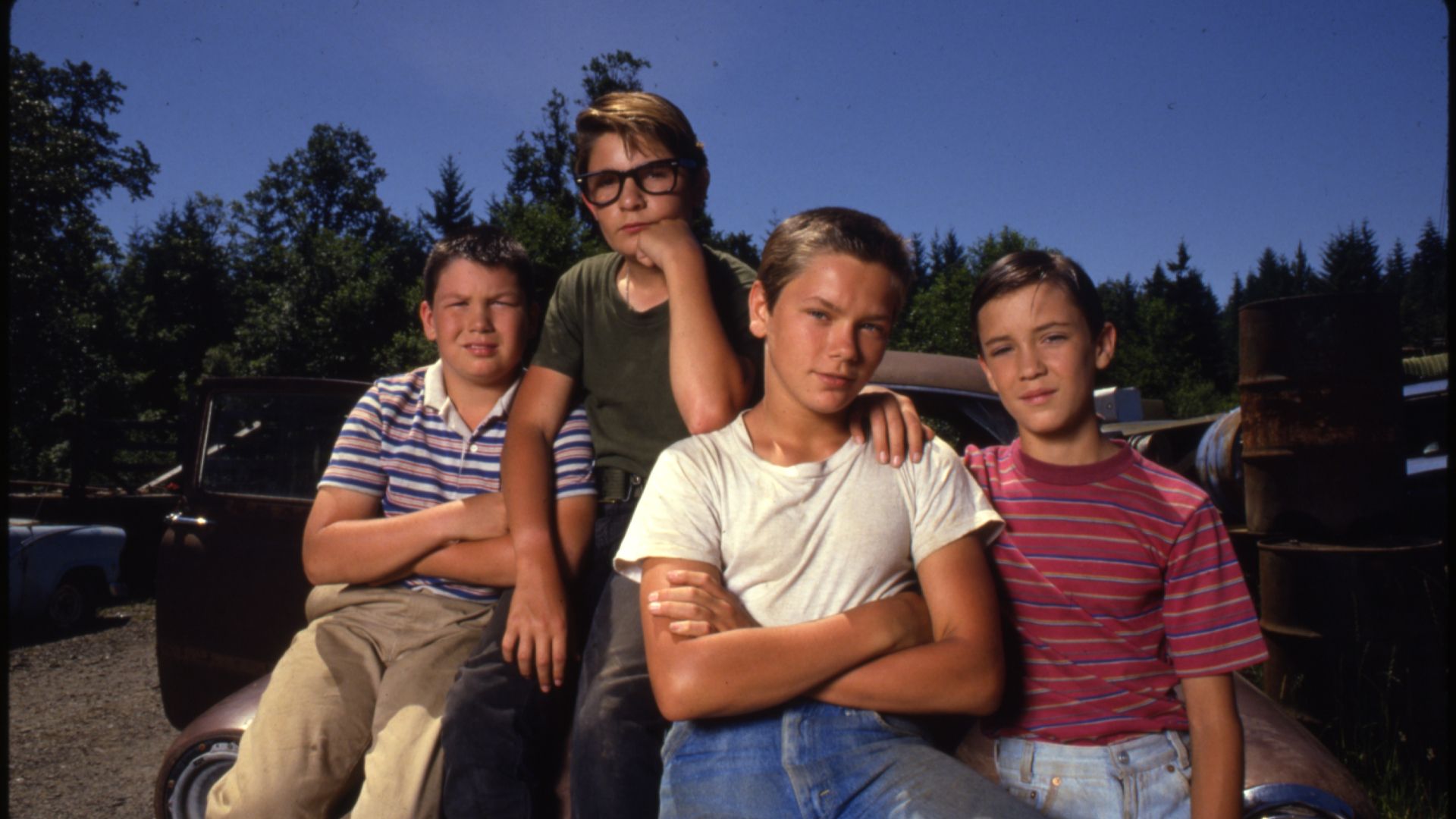
Stephen King’s writing has stood the test of time, and 44 years later, a Gordie LaChance line from The Body remains the author’s best quote. Since he published his first book in 1973, King has made a name for himself as not just the “King of Horror” but as a brilliant writer who can handle just about any genre. Additionally, he has so much to say about life and the human condition, which he weaves into his stories.
The best quotes from Stephen King books contribute to the story being told but also transcend the confines of the page, relaying an important message to the readers. Frankly, the author has put out so many novels, novellas, and short stories that over a dozen options could claim the title as the number one quote of all time. Because of the difficulty selecting one, multiple honorable mentions exist.
Draft 1 · Bangor, Maine How Well Do You Know Stephen King? “They all float down here.”
🎈ITYou'll float too
🪓ShiningAll work and no play
🔨MiseryI'm your number one fan
🏰Dark TowerThe gunslinger followed
⛓ShawshankGet busy living
01
King was a high school English teacher in Hampden, Maine, living in a trailer with no phone, when Doubleday paid him a $2,500 advance for his first hardcover novel in 1973. He'd thrown the opening pages in the trash; his wife Tabitha fished them out and told him to keep going. What was the book?
✓ Correct! Carrie. Doubleday paid a $2,500 hardcover advance in 1973, and the paperback rights sold to Signet for $400,000 — King's half ($200,000) let him quit teaching. He always credits Tabitha with saving the manuscript from the trash. Brian De Palma's 1976 film adaptation with Sissy Spacek and Piper Laurie earned two Oscar nominations and cemented King as a screen-adaptation goldmine from day one.
✗ Wrong page. The answer is Carrie, published April 5, 1974. 'Salem's Lot came next in 1975, The Shining in 1977, The Stand in 1978. Tabitha King rescued the Carrie opening from the trash, insisted he finish it, and the $400,000 Signet paperback deal that followed — split 50/50 with Doubleday — is what finally let him leave teaching.
02
In the late 1970s, publishers believed no author could release more than one book a year without saturating the market. So King invented a pseudonym and published five novels under it — including The Long Walk, The Running Man, and Thinner — before a Washington bookstore clerk outed him in 1985. What was the pen name?
✓ Correct! Richard Bachman. King took the first name from Richard Stark (Donald Westlake's pseudonym) and the last from Bachman-Turner Overdrive playing on the car stereo. Steve Brown, a Washington D.C. bookstore clerk, cross-checked copyright filings at the Library of Congress and phoned King. Rather than deny it, King wrote a mock obituary declaring Bachman had died of “cancer of the pseudonym.”
✗ Wrong byline. The answer is Richard Bachman — a pseudonym King used for Rage, The Long Walk, Roadwork, The Running Man and Thinner between 1977 and 1985. Peter Straub is a real author and King's co-writer on The Talisman and Black House. John Swithen was a one-off alias for a 1972 short story. Gordon Lachance is the narrator character in The Body (filmed as Stand By Me).
03
King wrote The Shining (1977) after a one-night stay at the then-closing Stanley Hotel in Estes Park, Colorado, in the fall of 1974. He and Tabitha were the only guests, and a dream about his son being chased down a corridor gave him the entire novel. The fictional haunted hotel is called...
✓ Correct! The Overlook Hotel. The Kings checked into room 217 on the last night of the Stanley's 1974 season; Tabitha fell asleep and Stephen dreamed about his three-year-old son Joe being pursued by a fire hose. He woke up with most of the novel in his head. The Stanley has been milking the connection ever since — and in 1997 King adapted his own novel for a TV miniseries filmed there, as a partial corrective to Kubrick's film.
✗ Wrong floor. The answer is The Overlook. The real-world Stanley Hotel in Estes Park inspired it — King stayed in room 217 on the last night of the 1974 season and had the fire-hose nightmare that became the book. The Dolphin is a later King hotel (1408). The Bates Motel is Psycho. The Stanley itself is the real place, not the fictional one, though it's leaned into the association ever since.
04
In IT (1986), the shape-shifting entity the Losers' Club calls Pennywise the Dancing Clown emerges from the sewers every 27 years to feed on children. The novel — and Andy Muschietti's 2017/2019 films — are set in a fictional Maine town that also shows up in Insomnia, Dreamcatcher, and 11/22/63. Name it.
✓ Correct! Derry. Loosely modeled on Bangor, Maine, where King lives. Derry recurs across IT, Insomnia, Dreamcatcher, 11/22/63 and parts of the Dark Tower series. Castle Rock is King's other signature Maine town (The Dead Zone, Cujo, Needful Things). Jerusalem's Lot is from 'Salem's Lot. Chester's Mill is the setting of Under the Dome.
✗ Wrong sewer. The answer is Derry — King's Bangor-coded fictional town, the setting of IT (1986), Insomnia (1994), Dreamcatcher (2001) and 11/22/63 (2011). Castle Rock is a different King town (Cujo, The Dead Zone, Needful Things) and Jerusalem's Lot is where the vampires show up. But Pennywise's home is always Derry.
05
The 1990 film of Misery, adapted by William Goldman and directed by Rob Reiner, won its lead actress the Best Actress Oscar for playing obsessed “number one fan” Annie Wilkes — still the only acting Oscar ever won for a Stephen King adaptation. Who was it?
✓ Correct! Kathy Bates — winning Best Actress at the March 1991 Oscars for Misery. Bates later came back for King adaptations Dolores Claiborne (1995) and The Stand (1994 miniseries). It remains the only Academy Award for acting in any screen adaptation of a Stephen King book; Sissy Spacek and Piper Laurie both got nominations for Carrie, but neither won.
✗ Wrong fan. The answer is Kathy Bates, who won Best Actress at the 1991 Academy Awards for Misery. Sissy Spacek and Piper Laurie were both nominated for Carrie in 1977 but lost. Jessica Lange has been nominated and won for other films, but not for any King adaptation. Bates's hobbling scene with the sledgehammer is still routinely voted one of the most terrifying moments in horror cinema.
06
The Shawshank Redemption (1994) — regularly voted the greatest film of all time on IMDb — is adapted from a King novella called “Rita Hayworth and Shawshank Redemption.” The same 1982 collection also contains the novellas that became Stand By Me and Apt Pupil. What is the collection called?
✓ Correct! Different Seasons (1982) — four novellas, three of them adapted into major films: Rita Hayworth and Shawshank Redemption became The Shawshank Redemption (1994), The Body became Stand By Me (1986), and Apt Pupil became the 1998 Bryan Singer film. The fourth, The Breathing Method, is the only one never filmed. Different Seasons is the most-adapted single King book in Hollywood history.
✗ Wrong shelf. The answer is Different Seasons (1982). Night Shift (1978) is an earlier horror-story collection. Skeleton Crew (1985) contains The Mist and The Jaunt. Four Past Midnight (1990) has The Langoliers and Secret Window. But three of the four novellas in Different Seasons — Shawshank, Stand By Me, Apt Pupil — all became celebrated films, making it arguably the single most cinematically influential King book.
07
King started writing his sprawling magnum opus in 1970 as a college student and finally published the eighth and final volume in 2012. The first line — “The man in black fled across the desert, and the gunslinger followed” — introduces a hero inspired by Clint Eastwood's Man with No Name. What's the gunslinger's name?
✓ Correct! Roland Deschain of Gilead, last of his line. The Dark Tower series — eight novels plus The Wind Through the Keyhole — is King's spine work, connecting dozens of his other books (The Stand, Salem's Lot, Insomnia, Hearts in Atlantis, IT) into one multiverse. Randall Flagg is the series' recurring villain, Jake Chambers is the boy Roland meets, and Ted Brautigan is a Low Men minor character.
✗ Wrong ka-tet. The answer is Roland Deschain. Randall Flagg is the recurring King villain who crosses from The Stand into the Dark Tower (he's the “man in black” fleeing across the desert in the famous opening). Jake Chambers is the young boy Roland picks up in The Gunslinger. Ted Brautigan is a minor Breaker in Hearts in Atlantis. Roland alone is the king of Gilead's son.
08
King has three children. His daughter Naomi is a Unitarian minister. His younger son Owen is a novelist. His older son is a bestselling horror writer in his own right — author of Heart-Shaped Box, Horns, NOS4A2, and The Fireman — and spent his early career using a pseudonym to hide the family connection. What name does he publish under?
✓ Correct! Joe Hill — a shortening of his real name, Joseph Hillström King. He used the pseudonym for a decade so his work would be judged on its own merits and not marketed as “son-of.” His 2004 short-story collection 20th Century Ghosts and 2007 debut novel Heart-Shaped Box made his reputation before the family connection became public. He and his father have also co-written a handful of novellas including In the Tall Grass.
✗ Wrong branch. The answer is Joe Hill — pen name of Joseph Hillström King. Paul Tremblay (A Head Full of Ghosts, The Cabin at the End of the World) is a separate contemporary horror novelist. Josh Malerman wrote Bird Box. Grady Hendrix wrote Horrorstor and My Best Friend's Exorcism. Joe Hill hid the King connection for about a decade so his career would stand on its own.
Final Draft · Put Down the Pen Your Constant Reader Status
✍
/ 8
Constant Reader — or still stuck in Derry?
The Stand, which has been brought to the screen twice with a third Stephen King adaptation on the way, features a powerful statement from Glen Bateman about how quickly a small group can go from creating society to creating warfare. “That wasn't any act of God. That was an act of pure human f*ckery” also feels particularly impactful in our increasingly chaotic world. The novella Rita Hayworth and Shawshank Redemption has the line, “Get busy livin' or get busy dyin'.” It feels like the perfect reminder that life isn’t going to wait around. The IT quote, “We lie best when we lie to ourselves,” also rings true.
Meanwhile, The Dark Tower series includes heavy hitters, like, “And would I tell you that they lived happily ever after? I would not. For no one ever really does. But they did live. And there was happiness.” It’s sad, but true. The quote “Go then, there are other worlds than these” has a beautiful second meaning about letting go of the past and moving forward. As a Stephen King fan, I truly struggled to pick a single line. However, the one that stands out 44 years later as Stephen King’s best comes from Gordie Lachance in The Body.
Stephen King’s novella The Body, which became the basis for the author-approved Stand By Me movie, was originally published as a long-form short story in Different Seasons. The bittersweet coming-of-age story is technically a work of fiction, but King has said, “‘The Body’ remains the only nakedly autobiographical story I’ve ever done” (via The New York Times). With that in mind, it’s no surprise that his writing in the novella has a vulnerable and intimate side. This starts with the profound opening.
The line gets shortened down to: “The most important things are the hardest things to say.” This isn’t necessarily inaccurate. It maintains the surface-level meaning of the whole quote. However, the full statement is so much more profound.
“The most important things are the hardest to say. They are the things you get ashamed of, because words diminish them—words shrink things that seemed limitless when they were in your head to no more than living size when they’re brought out. But it’s more than that, isn’t it? The most important things lie too close to wherever your secret heart is buried, like landmarks to a treasure your enemies would love to steal away. And you may make revelations that cost you dearly only to have people look at you in a funny way, not understanding what you’ve said at all, or why you thought it was so important that you almost cried while you were saying it. That’s the worst, I think. When the secret stays locked within not for want of a teller but for want of an understanding ear.”
From a story perspective, Gordie LaChance’s opening quote tells us a lot about the character. He’s hiding his deepest feelings in fear of judgment, even from his closest friends. He, Chris, Teddy, and Vern trust each other more than the adults in their lives. Still, they have a tough time opening up about their worst traumas, with these disclosures happening in sudden moments. Gordie also holds the story of his childhood close to his “sacred heart.” It’s clear to him that the limitless story he wants to tell will be diminished when shared with the reader.
However, the Stephen King quote in The Body also speaks to a reality that’s often ineffable. Some experiences and thoughts are too hard to speak out loud because they relay emotions that can be scary to voice. Even if we manage to speak the vulnerable things that we hold inside, it puts us in a terrifying position. There’s a fundamental fear that others will misunderstand us or twist our words.
Ultimately, the quote in The Body captures a tragedy that no other author has conveyed so beautifully, heartbreakingly, and honestly. For this reason, Gordie LaChance’s narration at the start of The Body remains the most meaningful Stephen King quote in any of his fiction.