5 Fighting Game Heroes Who Are More Interesting Than Street Fighter’s Ryu
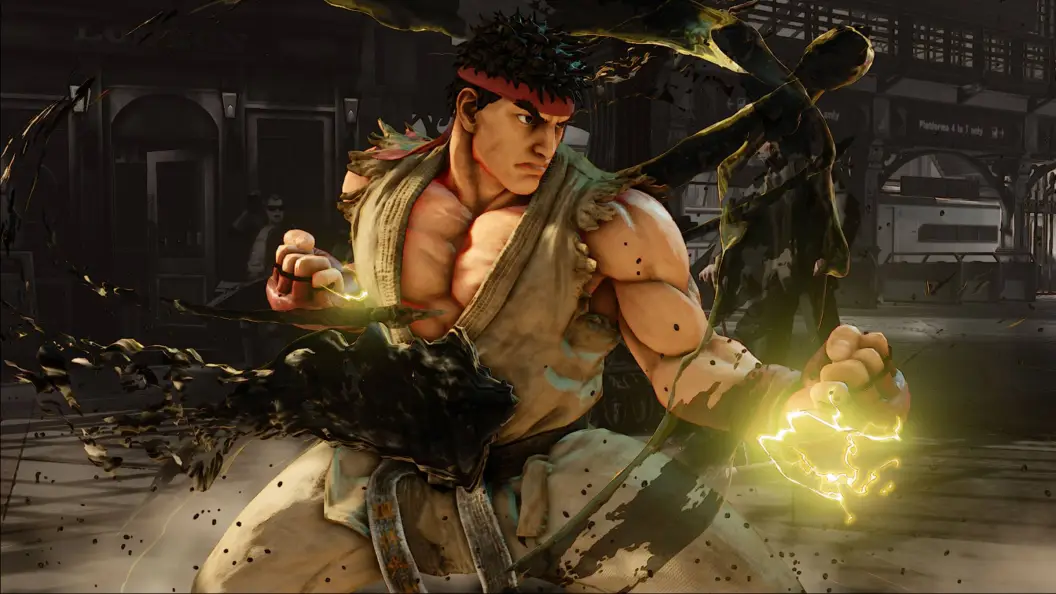
The Street Fighter series has always been led by its main character Ryu, with exceptions like Luke or Alex in specific games never having the same appeal as the Hadouken slinging hero. However, despite the iconic nature and appearance of Ryu, the wandering warrior can have a somewhat bland profile, simply looking for the next fight with a stoic attitude. Despite the inner struggle Ryu does face with giving in to the Satsui no Hado and his exciting battles against Akuma or M. Bison, these conflicts have been repeated so often that it’s easy to forget the other interesting fighting game protagonists that exist in other series.
Even the Street Fighter (2026) movie changed aspects of Ryu’s personality to make the character more layered than what is typically presented in the game franchise. By comparison, other fighting games set up their protagonists to have more complex relationships with a wider roster of fighters, rather than Ryu’s one friendship with Ken defining his character. Although this genre doesn’t typically have any character as nuanced or complex as something an RPG might create, some fighting game heroes are worth remembering on the same pedestal Ryu has.
5. Sol Badguy (Guilty Gear)
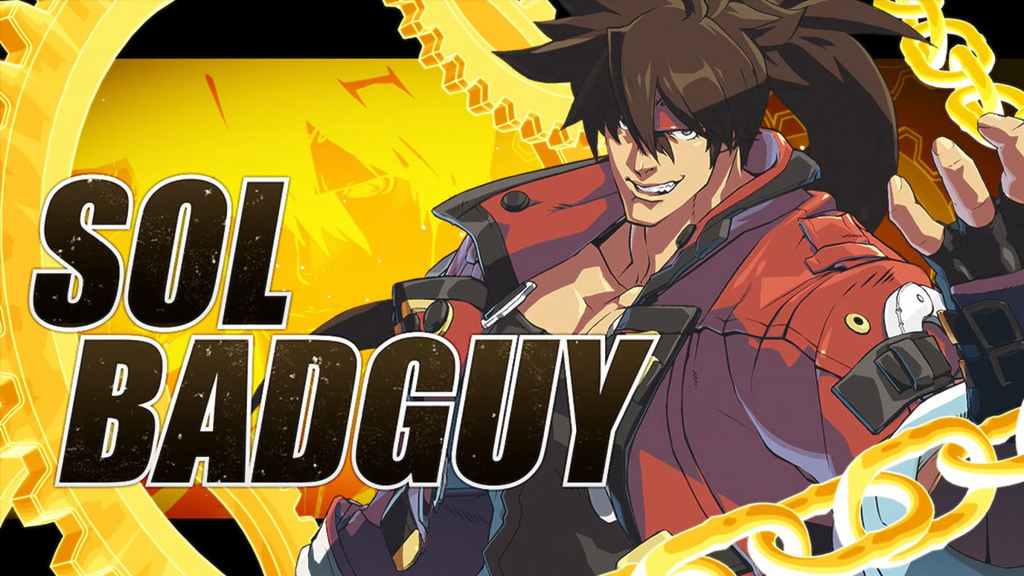
Sol Badguy is the main character of the Guilty Gear series, a line of fighting games inspired by heavy metal and anime influences that create one of the most diverse rosters in the genre. This game is defined by a conflict between humans and a mysterious artificial race known as Gears, who caused global war after the discoveries of magic by humankind. To explain the Guilty Gear story would take up this whole List, so to put things simply — Sol Badguy is a rare combination of Gear and human, being a long-lived person who desires to destroy any Gear that threatens the world, existing solely as the titular “Guilty Gear.”
That alone makes Sol Badguy somewhat of an enigma, especially in early games, but players can look at the gruff and determined personality of the character as something rebellious compared to other fighting game protagonists. Someone like Ky Kiske from Guilty Gear fits a mantle more similar to Ryu, as an altruistic protagonist with hardly any flaws to speak of. By comparison, Sol is more like a rival character, constantly questioning Ky’s position of authority with a grounded realism that makes Ky reflect on many of his actions. Sol is like that with a lot of other characters, helping them grow and change over the course of the series.
Nowhere is this more apparent than when Sol Badguy adopted Sin, the child of Ky Kiske and Dizzy, and trained him how to fight. In truth, Sol has a heart of gold underneath a rough exterior, forming strong bonds with other characters on the Guilty Gear roster. At the time, Sol is a ferocious fighter, with fiery attacks like Volcanic Viper and Gunflame roasting his opponents. Sol is highly aggressive when fighting, unlike the controlled nature of someone like Ryu or Ky Kiske. What makes Sol even more interesting is that he always seems to be holding back, with dragon-like transformations dealing huge damage juxtaposing with a strong compassion he feels toward those in Guilty Gear‘s vast world.
4. Rock Howard/Terry Bogard (Fatal Fury)
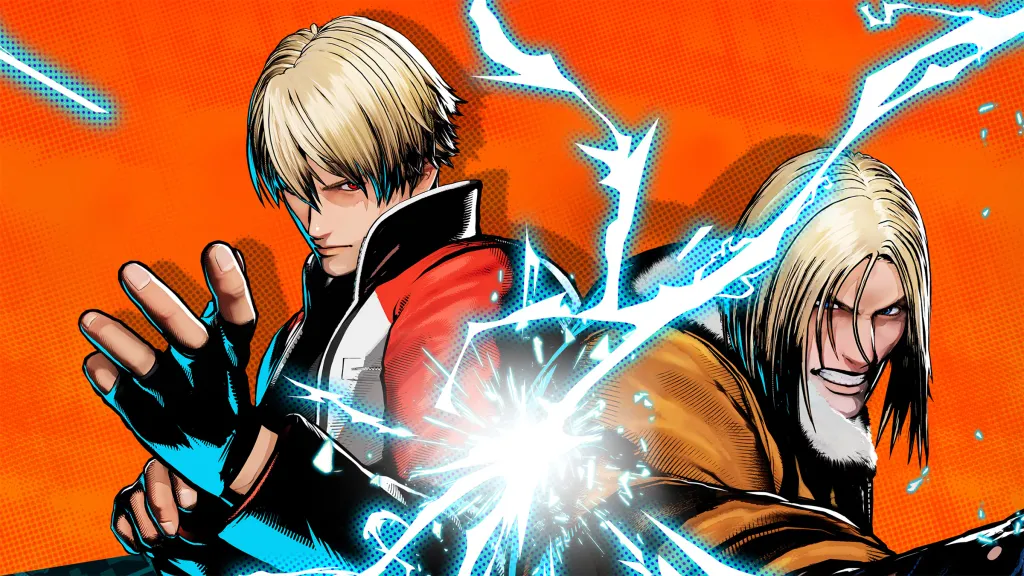
The Fatal Fury series released around the same time as Street Fighter, so it’s easy to forget just how influential it is to fighting games in the way as the Capcom series. To that point, Terry Bogard has quickly become an instantly memorable fighting game protagonist on equal footing as Ryu, mainly for how the character has crossed over into other titles. Terry has been a guest character for many other fighting games, including Super Smash Bros. Ultimate, Fighting EX Layer, and now even Street Fighter 6. With other appearances in SNK’s The King of Fighters series too, Terry is synonymous with fighting games as a whole.
Terry Bogard, in my opinion, has always been more compelling than Ryu simply because his story is the main plot of the game he comes from. The direct narrative of Fatal Fury‘s first three arcade games centers around villains knowing Terry personally, especially Geese Howard. Geese is the man who killed Terry’s father and rules the city Terry lives in like a mafia boss, doing so until Terry confronts him during the events of Fatal Fury. Terry’s Power Wave and Burn Knuckle are done with a fury that carries justice and revenge, even if he doesn’t mean for Geese to be killed in the battle that takes place between them. This leads Terry to perhaps his biggest moment as a character — choosing to raise Geese’s son Rock after accidentally killing his father.
Although Geese did choose death over Terry’s mercy, Rock Howard is another story entirely. Rock is someone Terry not only takes care of, but trains to become a fighter. Rock uses a mixture of Geese and Terry’s attacks, becoming a living legacy of both characters. As far as new protagonists in a series go, Rock is by far one of the most interesting for how he has elements of both the franchise’s main hero and villain. Fatal Fury: City of the Wolves sees Rock blossom into a much more diverse character, as he fights against the inner evil of Geese’s legacy while also trying to honor Terry for everything he’s done for him.
3. Liu Kang (Mortal Kombat)

While Scorpion and Sub-Zero are the first two characters you might think of when envisioning the Mortal Kombat series, fans will remind you that Liu Kang has always been the “Chosen One” of the franchise. Liu Kang has not always been a hero though, as some games have placed him into a villainous role, either as a walking corpse or a deadly Revenant bent on power. Yet, in the beginning, Liu Kang was the hero who won the first Mortal Kombat tournaments, defeating Shang Tsung and Shao Khan to save Earthrealm from a deadly merging with the desolate land of Outworld.
In many ways, Liu Kang shares interesting parallels with Ryu, being based on a traditional martial artist archetype with moves inspired by iconic fighters (like Bruce Lee in Liu Kang’s case). However, Liu Kang is closer to a character from a classic Chinese kung fu movie, representing a style of martial arts less defined by anime aesthetics or Japanese influences. Ryu and Liu Kang are almost like two sides of the same coin, but Liu Kang has a playful side Ryu doesn’t often get to explore. Liu Kang is often young and disciplined, but also fiery and loyal, reflecting his powers over fire in battle.
Recent games like Mortal Kombat 1 have reinvigorated Liu Kang’s protagonist status, having him replace the lightning god Raiden as the deity of Earthrealm in a new timeline. The Fire God version of Liu Kang is extremely powerful, but just as compassionate as he was before, being less tied to rules than Raiden was. Watching Liu Kang evolve over the years is like watching the student become the master, an arc that Ryu hasn’t necessarily been able to do until Street Fighter 6, where he is also shown to be older and wiser.
2. Kyo Kusanagi (The King of Fighters)
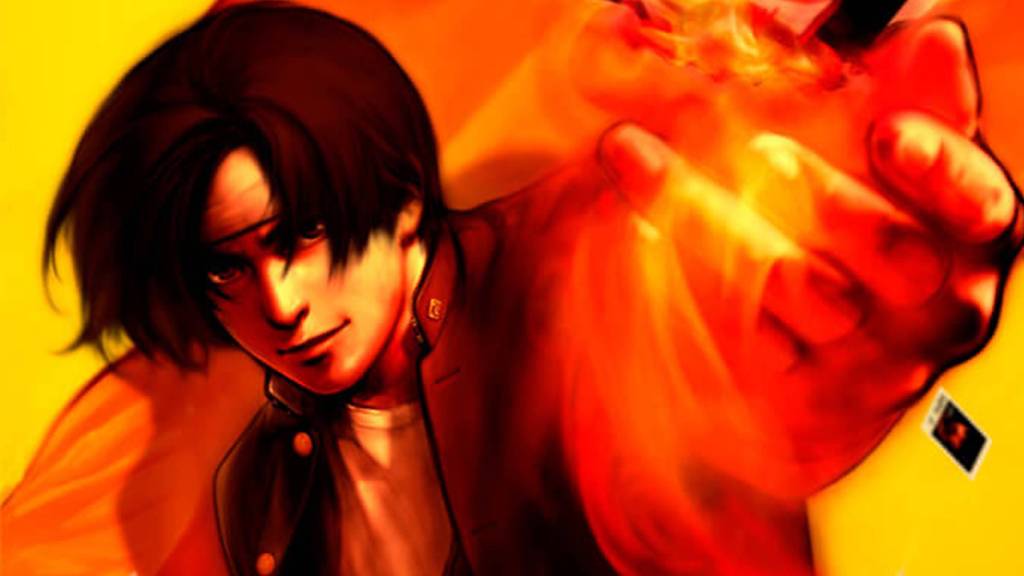
Developer SNK does a great job at creating incredibly detailed characters for their fighting games, and The King of Fighters series makes that apparent. Although that franchise is known for being a crossover between fighters from other SNK titles, its original characters are among the most notable. The red-haired Iori is but one example, with purple flames and a rude personality mixing with a strange fondness for cats and bass guitar. On the other end, Kyo Kusanagi is everything players might expect from a fighting game protagonist, from a confident persona to extremely memorable moves.
Kyo’s control over fire matches other characters on this List, but it’s how the character is presented that makes him a strong protagonist. Kyo is rarely alone, but often paired with other characters to help him stand out, such as Benimaru, Goro Daimon, Chizuru, or Iori mentioned earlier. Kyo is cocky, yet highly motivated to support others, despite being a younger student as a fairly inexperienced character in most scenarios. Unlike the controlled mastery of someone like Ryu or Liu Kang, Kyo is rushing down opponents, getting in their face and trying to break through guards that represents the foundation of The King of Fighters‘ gameplay.
The rivalry Kyo has with Iori is also a strong point, with both characters hating each other, but Kyo holding restraint to never outright kill Iori at any point. In some cases, he’ll even help Iori when his powers go out of control, reflecting the character’s inner sense of justice that help him fill the role of protagonist. Never backing down from a challenge, Kyo also has a sense of visual style that helps diversify him from characters like Terry Bogard, K’, and Ash Crimson, other The King of Fighters characters who’ve also been protagonists.
1. Jin Kazama (Tekken)

Tekken is quite a back-and-forth when it comes to protagonists, as its heroes can become villains from one game to the next. Kazuya Mishima was the hero of the first Tekken, but turns into the evil final boss of Tekken 2. Meanwhile, Jin Kazama is the main character of Tekken 3, yet turns into a dictator who starts a war by the time you reach Tekken 6. This alone is what makes Jin so multi-faceted, as the character could literally be a hero or villain from the perspective of other fighters. While Tekken 8 paints Jin as the ultimate hero to stop Kazuya, Jin’s past ensures the character is never quite “perfect.”
Jin is the son of Kazuya Mishima, and was betrayed by his grandfather Heihachi Mishima in Tekken 3 after the series’ first villain taught him the Mishima style of karate. Since Tekken 4, Jin denounced that style, coming up with a new fighting style of his own, once again showing how the character has changed multiple times since his debut. Jin has the same type of finesse-style fighting as the Mishimas, using high execution moves and well-spaced attacks to chip away at an opponent’s health. Moves like the Electric Wind God Fist are still available to Jin even as he grows apart from the Mishima style, highlighting his unique place on any Tekken game’s roster.
Jin trying not to let the Devil Gene take over and turn him into the winged and horned Devil Jin reflects Ryu’s struggle to not become consumed by darkness. That being said, Jin’s constant shifting role makes him far harder to predict, and less “clean” than Ryu is by having the character exhibit real flaws and hypocrisies. For that reason, Jin Kazama is oftentimes more interesting than someone like Ryu, even if his role as a protagonist in fighting games has been all over the place since he first appeared.
Who is your favorite fighting game hero character? Let us know in the comments below!