Here's why I'm never buying buy another Kindle ever again
The Kindle is synonymous with the e-reader, so much so that people often use the two phrases interchangeably. That's how comprehensively the Amazon product has dominated the market since the Kindle first debuted almost 20 years ago.
I quite enjoy my Kindleand have for many years. I love having a library of books available at the same time, so I can jump back and forth between stories depending on my mood. I love having a small little tablet with my on the go. I enjoy being able to read in bed in the dark with a warm screen that isn't going to disrupt my sleep. I still enjoy physical books, but I'm happy with my Kindle.
That doesn't mean I will be resubscribing when the time comes. Here's why I'm done with the Kindle.
Goodreads app is problematic

One of the biggest issues with the Kindle is the company that supports it. The popular e-reader is one of many wildly successful and omnipresent Amazon products that is connected to the company's vast ecosystem of services and promotions. The Kindle is certainly one of Amazon's better devices, but it's when you look at how the company connects with readers and authors alike, you start to see a picture that isn't pretty.
Fledgling and debut authors often rely on Amazon to gain attention and get traction with readers, but it's an uphill battle. Especially when you look at Goodreads, the book tracking and community app that Amazon took over in 2013. The app allows you to catalog, rate, and comment on books while maintaining a TBR list and generally keeping tabs on everything you've read. But because Amazon is more interested in easy engagement than honest interactions and positive community, the app allows for bad actors to review bomb stories they don't like. There have even been stories of extortion, with groups threatening new authors with an onslaught of bad reviews.
It certainly doesn't seem like Amazon cares too much about the literary community.
Amazon directs you to its products and services

Like all of Amazon's products and services, the Kindle is going to push as many ads, commercials, and promotions on you as possible. If you have an ad-supported model, it's going to show you books it wants you to know about and read. Even if you opt for an ad-free model, you're still going to encounter Amazon suggestions.
Turn off your Wi-Fi any time you're using your Kindle. It makes it easier to focus on your stories while preventing tracking, distractions, and any promotions from popping up. You can also still transfer files manually.
If you use Goodreads, you're going to see ads. If you want to browse books from Amazon, you're going to get offers on different services. You're also going to get shown books that Amazon wants you to read. Everything is designed to make you linger on the Amazon platform for as long as possible. It's designed to get you to subscribe to cheap services and buy a cheap book because that keeps you within the Amazon ecosystem. The Kindle is about reading, but Amazon wants to also make it about shopping.
Everything the company does is tied back to its marketplace. Every service, every banner advertisement, every promotion, and every page on its website is optimized to get you to buy something quickly and cash out just as fast.
Kindles can be inconvenient and glitchy
Issues with syncing and library access

A big issue with the Kindle is that it can be somewhat clunky. Users complain frequently about issues with the battery quickly draining or books freezing or trouble with syncing. There is no reason to believe that a new Kindle will be any better than previous generations, mainly because Amazon wants you to buy new ones and think that your old one isn't any good. But if you think about the features you need, and how you use your Kindle, a model should last at least five years, if not ten.
But having a Kindle that runs well isn't helpful for Amazon. It also doesn't want to make it easy for you to put books on your e-reader from places that aren't Amazon. The company heavily prioritizes getting ebooks on your device as soon as you purchase them, but it's not too fond of you taking out free ebooks from your public library that you fund with your tax dollars. For many users, that syncing process is done manually.
That process is highly inconvenient and also goes back to the idea that Amazon doesn't really support the reading community. If you're not behind the public library, then you're not supportive of the public good.
Be wary of Amazon data collection
Kindle usage can lead to privacy concerns

It's worth exercising caution towards Amazon's ways and means of collecting data and encroaching on your privacy. Now, it's difficult to use any electronic device without having some issues with privacy, but Amazon's offerings seem most problematic. And that's because of the vast ecosystem Amazon is working with.
As mentioned, Amazon wants to make it as easy as possible to shop. And it uses that shopping data, as well as browsing information, what you stream on Prime, and what you track on Goodreads, to understand more about you. Your reading choices in particular can lead to a pretty accurate assessment of who you are and what you like. What you read can inform your age, gender, identity, ethnicity, political beliefs, health issues, and family status.
All that information is good for companies that want you to push targeted ads on you. This profile of you is worth a lot of money, and you don't always know where that information will end up or how it will be used against you. With fear surrounding dynamic prices, it's as good a time as any to try to limit who has access to your information, and who can start to make guesses about who you are. At the very least, turn off the Wi-Fi on your Kindle and keep it away from your cart.
Competitors offer better alternatives
Consider simpler e-readers for your book collection
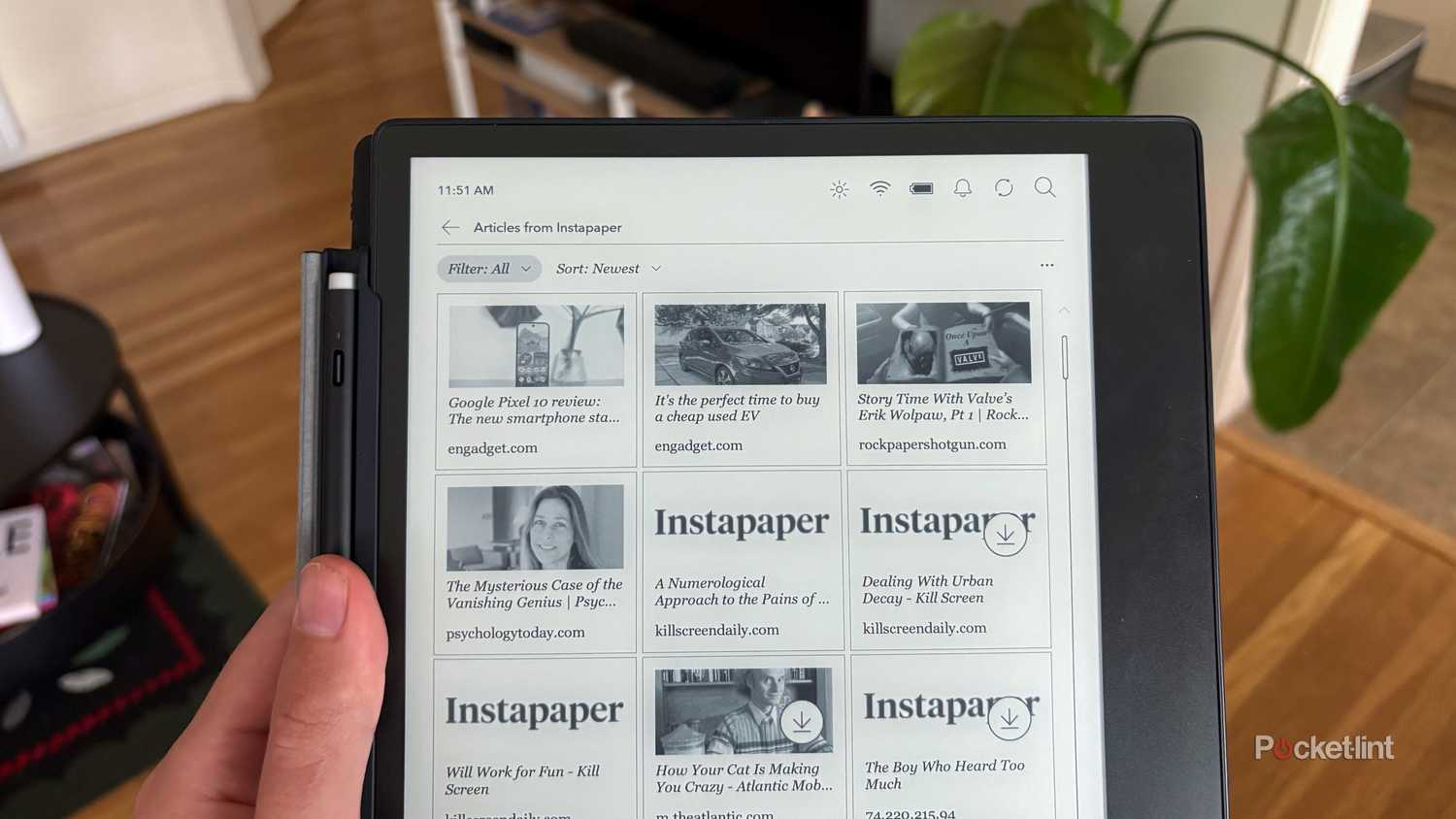
Lastly, there are better options out there to use instead of a Kindle. If you're looking for a basic e-reader, then there are no shortage of models from other companies that you can invest in. Provided you have options for the screen temperature and font size, there isn't necessarily a ton of features you really need the e-reader to possess if you simply want to read. You likely don't need a lot of storage, and the extra features that Amazon pushes don't seem to really be crucial to most people.
Indeed, Amazon seems to be turning the Kindle into some kind of creative tablet. I enjoy being able to highlight passages and write notes in the margin, but I don't need my Kindle to be some kind of artistic device where I can draw, doodle, and take extensive notes. There are other devices for that. Find an e-reader that does only what you need to it do.