Don't Say Good Luck Review: Sunny Sandler's Gorgeously Gut-Wrenching Dramedy Demands A Watch
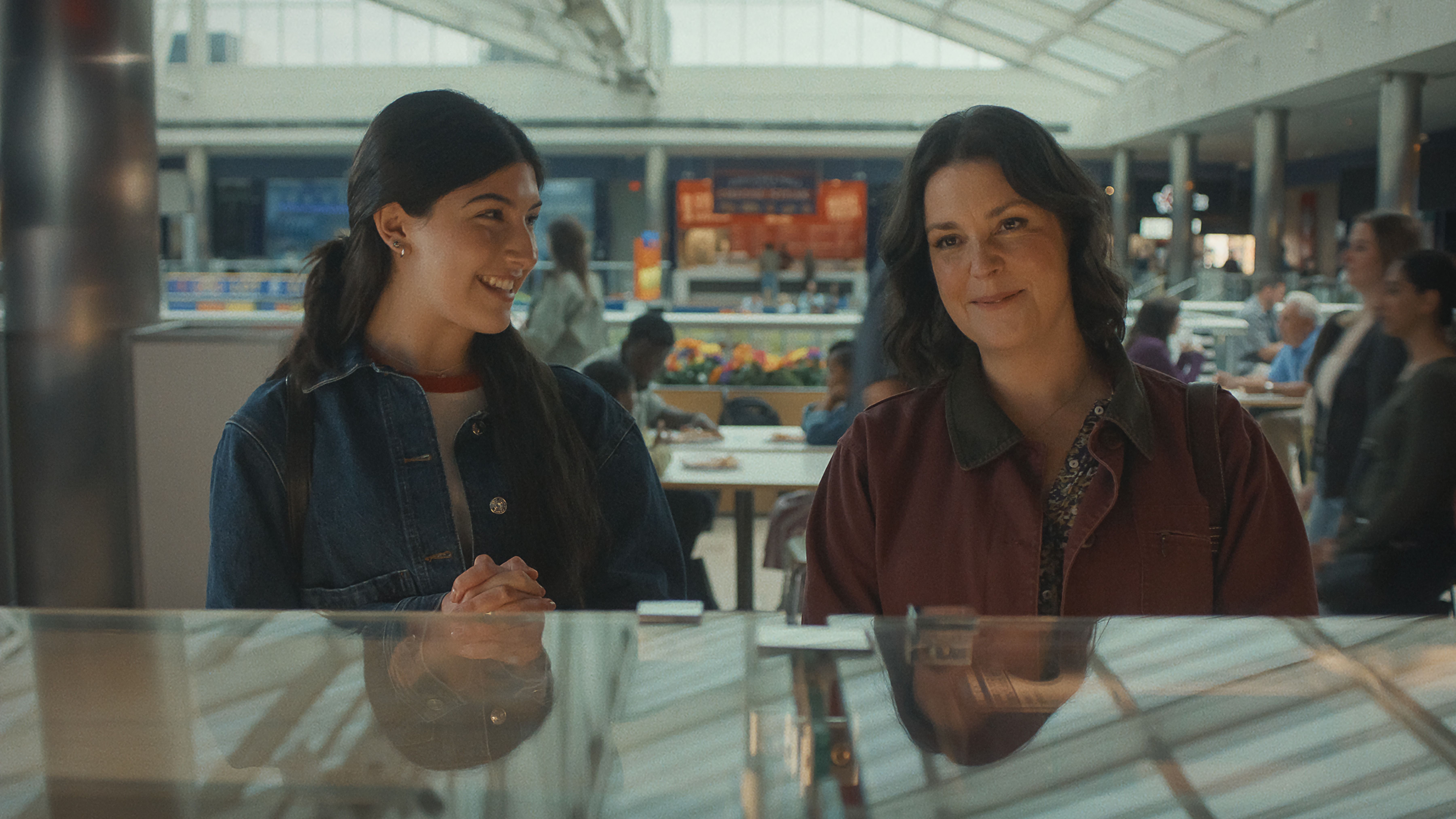
Netflix's new teen dramedy starring Adam Sandler's youngest daughter, Sunny, will take audiences by surprise in the best way.
I am as wary of nepotism in the film industry as the next person. So, when I saw that Adam Sandler's youngest daughter, Sunny Sandler, was leading a brand-new coming-of-age teen drama, Don't Say Good Luck, my expectations were tempered. It's true that Sunny and her older sister, Sadie Sandler, have had a number of roles before, including in You Are So Not Invited to My Bat Mitzvah, which actually starred both sisters together. Don't Say Good Luck looked distinctly different from many of Sunny Sandler's prior roles, however, particularly because she wasn't sharing the screen with other Sandlers (her dad is listed as a producer, though).
Imagine my surprise when Don't Say Good Luck proved a must-watch, devastatingly stunning new movie that lives up to the talent of its stacked cast. Among those names are Yellowjackets' Melanie Lynskey, New Girl's Max Greenfield, Brooklyn Nine-Nine's Stephanie Beatriz, and myriad others. A star-studded cast isn't a guarantee of success, though – Greenfield's New Girl co-star Jake Johnson unfortunately just proved that with his own new comedy The Dink, which hit Apple TV last month.
Whereas The Dink and other straight-to-streaming comedies have rested on their laurels by relying heavily on genre conventions and easy beats, this film sets itself apart by consistently doing the opposite of what audiences expect, and it completely pays off. Musical moments and all, Don't Say Good Luck is a genuinely unique narrative in an era of nonstop, difficult-to-distinguish dramedies, comedies, and romcoms. Despite the understandable skepticism audiences may have going in, it absolutely deserves your attention.
Don't Say Good Luck Is A Stunningly Beautiful (And, More Importantly, Unexpected) Coming-Of-Age Drama
Warning! This review contains some SPOILERS for Don't Say Good Luck
What starts off as a typical coming-of-age story, in which a teen girl is braving the perils of high school (in this case, trying out for a theater production) and navigating her newfound, almost-adult dynamic with her parents, quickly evolves into a heartbreaking exploration of grief and the complexities of familial bonds, particularly once families are thrown into harrowing circumstances. The movie quickly establishes that Sandler's Sophie Birenbaum is facing the reality of her mother's (Lynskey) imminent death after the latter's cancer returns more aggressively than ever.
Perhaps the single most profound, unexpected choice in Don't Say Good Luck is the decision not to depict the death of Sophie's mother at any point. It is very clear that Lynskey's Elizabeth is rapidly deteriorating; at multiple points, viewers are left holding their breath, suspecting that her death is only one scene away. But witnessing the end of this character's life isn't what this narrative is about. Rather, Don't Say Good Luck subverts that expectation, focusing entirely on what the fallout of a terminal cancer diagnosis, especially one with a very limited life expectancy, would realistically do to a young family.
Sunny Sandler is truly a marvel.
There are other intentional deviations from the norm that Don't Say Good Luck makes that are likewise impressive, and considerably more compelling than the alternative. Early in the movie, it's obvious that Sophie has a crush on her co-lead in the school production of Waitress, and the two seem to experience building romantic tension. In the end, though, Sophie doesn't end up with him. In fact, Sophie doesn't end up with anyone – she actually has a delightful scene in which she calls out this would-be love interest for seemingly only starring in plays to kiss girls. (I laughed through the very heavy tears I was already shedding at that point.)
As a former theater kid, I was also struck by how dead-on accurate Don't Say Good Luck's depiction of high school theater is, down to the awkward icebreakers and vocal warm-ups before practice starts and the cringe-worthy but nevertheless essential traditions and rituals that are carried out by the crew year after year. Even the tryouts scene, something that has been done to death in high school musicals like this one, felt authentic rather than forced. And, although Don't Say Good Luck is billed as a musical, it incorporates music naturally into the narrative, instead of having break-out-in-song moments that might drive non-theater lovers away.
Considering how risky a Netflix musical Bildungsroman starring the child of an incredibly famous actor is, Don't Say Good Luck's shortcomings are also remarkably minimal. The pacing early on is a bit uneven, particularly when it comes to the reveal that Sophie's mother is dying, and there's a long-running joke (and actually important plot point) about her dad (Greenfield) repeatedly butt dialing her that doesn't quite work. The most notable wrinkle with the plot, however, is the behavior of Sophie's best friend, Carolyn (Scarlett Estevez).
Despite immediately being established as seemingly inseparable best friends, just after Elizabeth's cancer is confirmed to be back, Carolyn bewilderingly drops out of the school play with no warning to or communication with Sophie. Even when it was eventually revealed that Carolyn had started a relationship with a girl and was trepidatious about revealing that, her effective abandonment of her friend was out of character and under-explained. That minor mishandling aside, though, the film deserves its flowers for avoiding any serious pitfalls.
Ultimately, Don't Say Good Luck defies the streaming dramedy odds, as hyperbolic as that may sound, by presenting a narrative that is sincerely touching and surprisingly inventive, rather than becoming yet another watch-and-forget, rinse-and-repeat addition to the larger genre. And it has to be said: Sunny Sandler is truly a marvel.
Don't Say Good Luck is available to stream on Netflix from Friday, August 14.