8 Best Star Trek Doctors, Ranked
Few essential ship locations in Star Trek tie every show in the franchise together quite like the sickbay. Whether it’s the campy adventures of The Original Series, the interstellar politics of Deep Space Nine, or the animated hilarity of Lower Decks, every crew in every Star Trek TV show needs to visit their sickbay frequently. This makes the doctors who oversee the crew’s well-being among the most important characters in Star Trek.
While more-or-less every Star Trek doctor is a central foundation of their respective shows, not all of them are created equal. Some are among the most recognizable and iconic characters in Star Trek, whereas others seem to fade into the background. The best doctors on Star Trek aren’t necessarily those with the greatest level of medical skill, but those who ensured that a visit to sickbay was a highlight of each episode.
Hugh Culber (Wilson Cruz), Star Trek: Discovery

Wilson Cruz’s Dr. Hugh Culber in Star Trek: Discovery is arguably one of the most emotionally important doctors in modern Star Trek. The chief medical officer of the USS Discovery’s relationship with Lieutenant Commander Paul Stamets gives Trek one of its most compelling romantic relationships, while his own journey through death and resurrection gives him an unusual depth for a character whose primary role is to keep everyone else alive. Culber's compassion makes him instantly likable, even when the story around him becomes increasingly complicated.
Still, Wilson Culber doesn’t feel quite as standout as many of the best Star Trek doctors. He is an excellent supporting character, but his medical expertise is often secondary to the larger emotional stories surrounding Discovery. However, despite not being quite as iconic as some other franchise stalwarts of the same rank, Culber consistently brings warmth and humanity to the series. His willingness to challenge his crewmates, combined with Cruz's grounded performance, makes the medical bay feel like one of the few places aboard the Discovery where characters can genuinely be vulnerable.
The EMH (Robert Picardo), Star Trek: Voyager
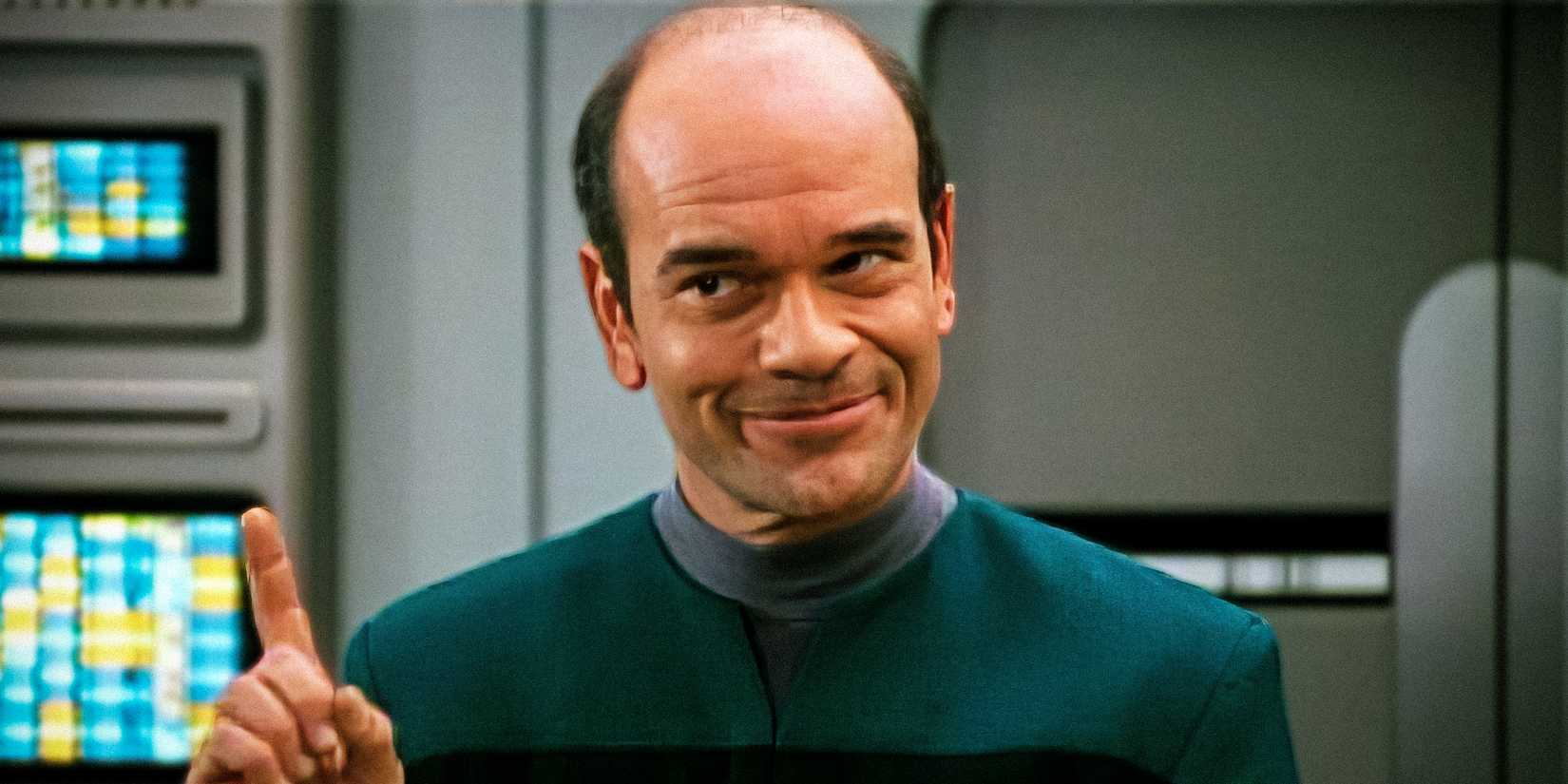
The Emergency Medical Hologram (Robert Picardo), commonly known as the Doctor, is one of the most entertaining medical officers in Star Trek history. Initially activated because the USS Voyager's regular chief medical officer was killed, the EMH was never designed to become a permanent member of the crew. That premise gives EMH an immediate comedic advantage, as the hologram has to navigate a situation for which he was never programmed while simultaneously developing a personality far beyond his original purpose.
The Doctor's arrogance is central to his appeal, but his gradual evolution is what makes him memorable. He begins as an abrasive program who desperately wants to be deactivated and eventually becomes a genuine person with artistic interests, friendships, a profound desire for recognition, and even romantic relationships. While Voyager itself may be one of the more divisive shows in the franchise, Robert Picardo's performance ensures that the Doctor remains one of Star Trek’s most entertaining medical officers.
Joseph M'Benga (Babs Olusanmokun), Star Trek: Strange New Worlds

Few Star Trek doctors are involved in storylines with as much emotional weight as the authoritative Dr. Joseph M'Benga (Babs Olusanmokun) in Star Trek: Strange New Worlds. As the chief medical officer aboard Captain Pike’s USS Enterprise, M'Benga is an exceptionally capable physician, but his most compelling stories have focused on the personal sacrifices he makes for his daughter, Rukiya. His decision to preserve her consciousness in the transporter buffer gives the character a tragic dimension that few, if any, other doctors in Star Trek can match.
M'Benga also benefits from Strange New Worlds' willingness to put its characters into wildly different genres from episode to episode. He can function as a serious medical professional one week and become central to a supernatural horror story or a high-stakes action adventure the next. M'Benga may not have the decades of storytelling behind him that some other doctors in Star Trek possess, but Strange New Worlds wasted no time establishing him as one of the franchise’s most compelling, and versatile, medical officers.
T'Ana (Gillian Vigman), Star Trek: Lower Decks

While she may be part of the franchise at its most unashamedly comedic, Dr. T'Ana (voiced by Gillian Vigman) is still incredibly skilled, and serves as proof that a great Star Trek doctor doesn't need to be especially pleasant. The chief medical officer of the USS Cerritos, T'Ana is impatient and foul-mouthed, and clearly has no interest in good bedside manner. However, those qualities make her an ideal fit for Lower Decks, where the absurdity of Starfleet life is often pushed to its limits.
T'Ana's medical expertise may rarely be in doubt, but the character's greatest strength is how efficiently Lower Decks uses her. T'Ana doesn't need an elaborate subplot to be memorable; a handful of lines can establish her entire personality with unmatched hilarity. Her constant irritation with the Cerritos crew creates an entertaining contrast with their chaotic optimism, and Gillian Vigman's vocal performance gives T'Ana an unmistakable energy that makes every appearance count. She isn't the most traditionally heroic doctor in Star Trek, but she is one of the hardest to forget.
Phlox (John Billingsley), Star Trek: Enterprise

Dr. Phlox (John Billingsley) is one of the most distinctive doctors in Star Trek, largely because Enterprise gave the franchise an opportunity to explore what an alien physician might actually bring to a human-led starship for the first time. As a Denobulan, Phlox has radically different cultural attitudes toward medicine, relationships, and death, allowing the character to provide a fresh perspective on the early days of humanity's deep-space exploration.
Phlox's cheerful personality makes him immediately entertaining, but Enterprise also knows when to challenge that optimism. His willingness to consider controversial medical practices and his complicated relationship with Denobulan traditions occasionally put him at odds with the crew, creating stories that explore the moral boundaries of Starfleet medicine. He’s a truly unique character that feels genuinely alien while remaining deeply empathetic, making his presence one of the highlights of Enterprise and one of its most memorable contributions to the wider Star Trek franchise.
Julian Bashir (Alexander Siddig), Star Trek: Deep Space Nine

Alexander Siddig’s Dr. Julian Bashir is introduced as an ambitious young medical officer desperate to prove himself, and it’s his journey from this point across DS9’s 7 seasons that ensured he’d go down in history as one of the best Star Trek doctors ever. His enthusiasm can initially make him seem naïve, but that youthful confidence becomes the foundation for one of the franchise's strongest long-term character arcs. Bashir grows considerably as the Dominion War transforms the station and forces him to confront the darker realities of the Federation.
His genetically enhanced background adds another layer to a character who was already becoming increasingly complex, and Bashir's friendships with Miles O'Brien and Elim Garak also lead to some particularly entertaining moments. Whether he is involved in a tense espionage story, a medical crisis, or one of Deep Space Nine's lighter adventures, Bashir is rarely boring. He becomes one of the show's most versatile characters, and his evolution is a major reason the station's sickbay remains one of the most exciting to visit in all of Star Trek.
Leonard McCoy (DeForest Kelley), Star Trek: The Original Series

DeForest Kelley reminding Captain James T. Kirk (William Shatner) that he’s a doctor and not anything else is one of the most iconic Star Trek catchphrases of all time, so it’s hard to argue against Dr. Leonard "Bones" McCoy being one of the best the franchise has to offer. His role as chief medical officer aboard the USS Enterprise is important, but his real value for viewers comes from the friction he creates with his closest friends.
McCoy Star Trek: The Original Series' emotional counterweight to the Enterprise's two most prominent officers. Kirk tends to represent decisive action, while Spock relies on logic; McCoy brings compassion and instinct into the middle of that debate. His medical perspective frequently gives the crew a different way of approaching a crisis, but it is his personality that makes those stories so entertaining. Kelley could turn a simple reaction into an unforgettable moment, ensuring that McCoy's presence elevated virtually every scene. Decades after The Original Series, Bones remains the template against which many later Star Trek doctors are measured.
Beverly Crusher (Gates McFadden), Star Trek: The Next Generation

While TOS’s McCoy may be a pop culture icon, it’s Gates McFadden’s Dr. Beverly Crusher from The Next Generation who embodies everything that makes a Star Trek doctor entertaining beyond their medical duties, and thus is the best in the entire franchise. As the chief medical officer of the USS Enterprise-D in Star Trek: TNG, Crusher is a trusted authority who can command a room, challenge senior officers, and handle extraordinary medical crises. Yet she is also an essential part of the show's emotional core, particularly through her relationships with her son, Wesley Crusher (Wil Wheaton), and Captain Jean-Luc Picard (Patrick Stewart).
Dr. Crusher's greatest strength as far as enhancing Star Trek: TNG as a viewing experience goes is her versatility. She can anchor a deeply emotional episode, contribute to a philosophical debate, or become the centre of a science-fiction mystery without ever feeling out of place. What’s more, McFadden's performance gives Crusher an authority that never comes at the expense of warmth, effortlessly balancing authority and empathy where most other Star Trek doctors tend to lean one way or the other. She may not be the franchise's most eccentric doctor, but she is undeniably its best.