4-Season Cop Series Starring The Boys' Homelander Actor Deserves To Be As Big As The Rookie
Antony Starr's Banshee Deserved To Be As Big As The Rookie
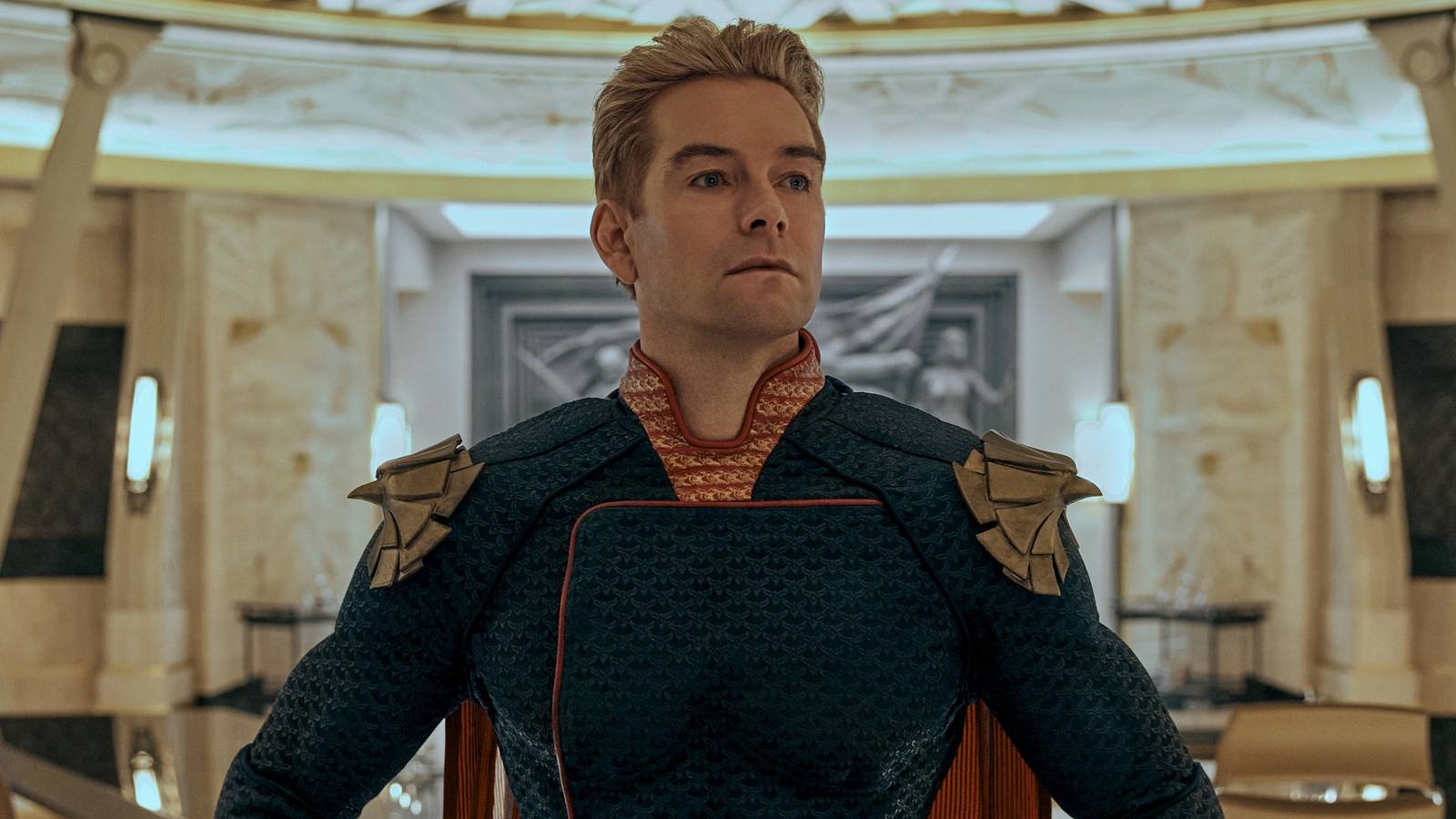
Anthony Starr's best role before Homelander deserved just as much success as The Rookie, which has become one of ABC’s biggest and most enduring dramas. The procedural has grown into a franchise, spawning the one-season spinoff The Rookie: Feds and another Rookie spinoff series currently in development centered on the FBI’s oldest rookie.
Nathan Fillion stars in The Rookie as John Nolan, a man in his 40s who starts over by joining the LAPD and becomes the department’s oldest rookie. The series blends a traditional network police procedural with workplace comedy, romance, serialized villains, and increasingly heightened action, allowing its relatively grounded premise to evolve into something much bigger and more ambitious.
With season 9 on the way, The Rookie has already become one of ABC’s longest-running current dramas. However, as beloved as The Rookie is, there was a far smaller but much grittier crime drama on Cinemax between 2013 and 2016 that could have been, and deserved to be, just as big.
Banshee combined a pulpy crime thriller with brutal action, complicated romance, and an increasingly sprawling criminal underworld. The Boys’ Antony Starr starred as Lucas Hood, an ex-con who assumes the identity of a murdered small-town sheriff. Banshee was a record-setting hit for Cinemax, but never quite broke into the mainstream.
Banshee Was Criminally Overlooked Upon Release

Banshee’s success within the relatively small Cinemax ecosystem never translated into the mainstream attention the show deserved. Critical reception also improved dramatically as Banshee found its identity, climbing from 67% on Rotten Tomatoes for season 1 to 94% for season 2 and perfect 100% scores for seasons 3 and 4.
Audiences were even more enthusiastic, and Banshee gradually developed the kind of passionate following that helped it endure as a cult favorite long after its finale. The biggest obstacle was arguably its home.
Cinemax was a relatively niche premium cable network, and Banshee premiered in 2013, before streaming could routinely give underseen shows a chance to dramatically expand their audiences. The series was also extremely violent and sexually explicit, which became its calling card but inevitably limited its potential as a broad four-quadrant hit.
Banshee also arrived in an extraordinarily competitive era for television. Some of the best prestige TV shows of all time, including Game of Thrones, Breaking Bad, The Walking Dead, Justified, Sons of Anarchy, and numerous other acclaimed dramas, were competing for viewers and cultural attention.
Banshee didn't even have the benefit of a recognizable star to help it break through. Antony Starr was largely unknown to American audiences when Banshee premiered, years before his performance as Homelander in The Boys made him internationally recognizable.
Banshee is currently available to stream on HBO Max.
Ultimately, Banshee was big for Cinemax, with season 2’s finale setting viewership records, but Cinemax wasn't big enough for Banshee. Constrained by Cinemax’s limited reach, Banshee was loved by those who watched it but remains frustratingly obscure despite being one of the best crime dramas of the 2010s.
How Banshee Set Up Antony Starr As An Ideal Homelander

Banshee now feels like an extended audition for Antony Starr’s role as Homelander, even though Lucas Hood and The Boys’ most terrifying Supe are almost moral opposites. Banshee demonstrated Starr’s ability to make extreme violence feel like an extension of his character rather than simply part of the action.
As Hood, Starr could switch almost instantly from calm and charismatic to frighteningly brutal. Starr made Hood feel dangerous from the moment he walked into the room, even before throwing a punch. The Boys takes that volatility much further with Homelander, whose powers and unpredictability mean the audience is constantly waiting for the friendly smile to disappear.
The characters also share an interesting connection through their double identities. Hood is literally performing Lucas Hood, maintaining the public identity of a small-town sheriff while concealing the violent criminal underneath. Homelander is similarly always performing. His smiling, patriotic superhero persona is a carefully maintained public image that conceals an insecure, narcissistic monster, as Homelander's best quote in The Boys underlines: "No god. The only man in the sky is me."
Banshee also gave Starr opportunities to demonstrate that he could find vulnerability beneath a seemingly straightforward hypermasculine action hero. Hood is defined by violence, but Starr gradually reveals his loneliness, trauma, complicated relationship with Carrie, and uncertainty about his own identity after spending years pretending to be someone else. Homelander takes those psychological fractures somewhere much darker.
Banshee also showcased the subtle facial acting that would become one of Starr’s greatest weapons in The Boys. Starr allows anger, jealousy, hurt, or calculation to briefly cross his face without saying a word. Banshee proved he could make an extraordinarily violent man sympathetic; The Boys uses many of those same abilities to make Homelander terrifying.
Starr's transformation was also vocal. The New Zealand actor maintained a convincing American accent throughout Banshee, preparing him for Homelander’s more polished and performative all-American voice.
Between Starr’s obvious star potential and the quality Banshee reached over its four seasons, it is a shame the series never found the wider audience it deserved. Banshee ultimately received less than half the run The Rookie is approaching and only a fraction of its mainstream recognition.