scars left by bears ripple through these japanese cedar surfboards
bear scars become part of the grain
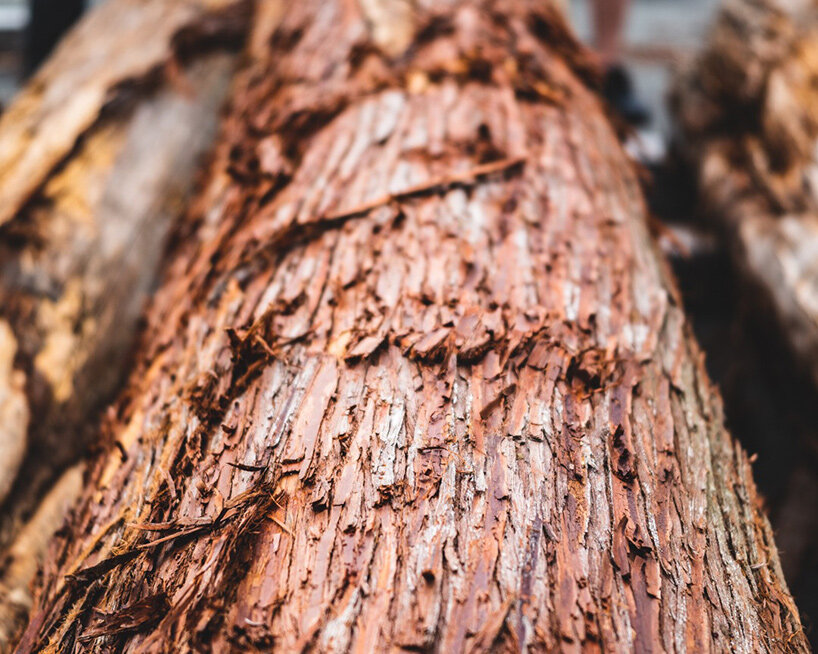
In the forests of Keihoku, north of central Kyoto, Asian black bears sometimes strip bark from cedar and cypress trees, leaving long wounds across their trunks. The behavior is known as kumahagi. As the trees continue to grow, new tissue forms around the damaged area and the wood develops warped, irregular grain. For foresters, those marks can sharply reduce the timber’s commercial value. Kyoto City says damaged trees are often chipped for fuel or left in the mountains.
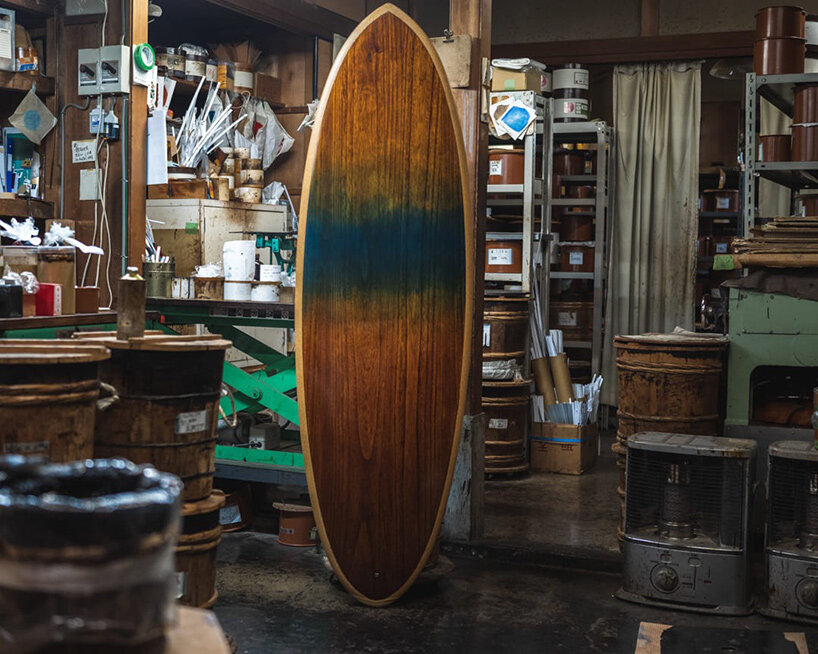
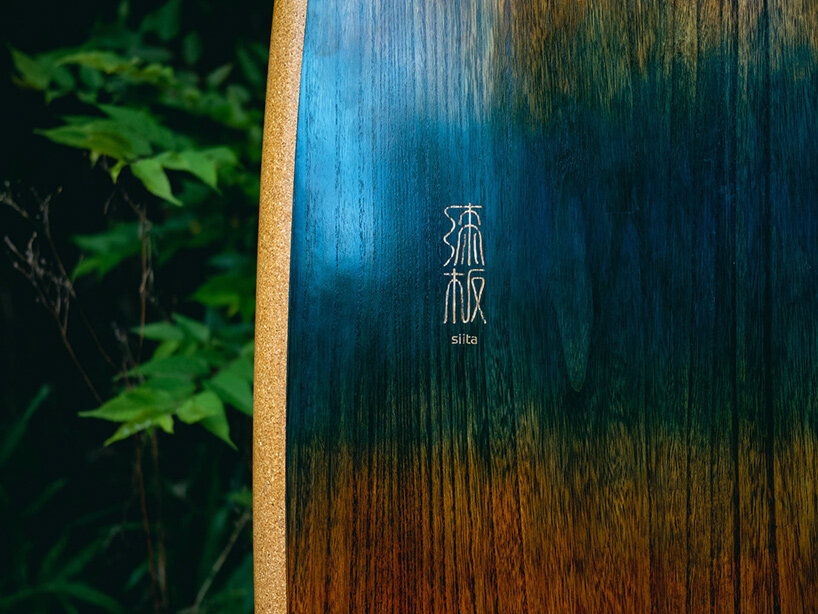
Those scars are exactly what drew the people behind the BEARS WOOD PROJECT to the material. Launched in 2022 by Kyoto’s Tsutsumi Asakichi Urushi with foresters and woodworkers in Keihoku, the project uses timber whose value has fallen after bear damage. On the wooden surfboards produced through its siita brand, the altered grain moves straight through the finished surface. Cedar shaped into a long, curved board is coated in glossy urushi, making the marks left in the forest even easier to see.
images via Tsutsumi Asakichi Urushi
takuya tsutsumi brings urushi onto the surfboard
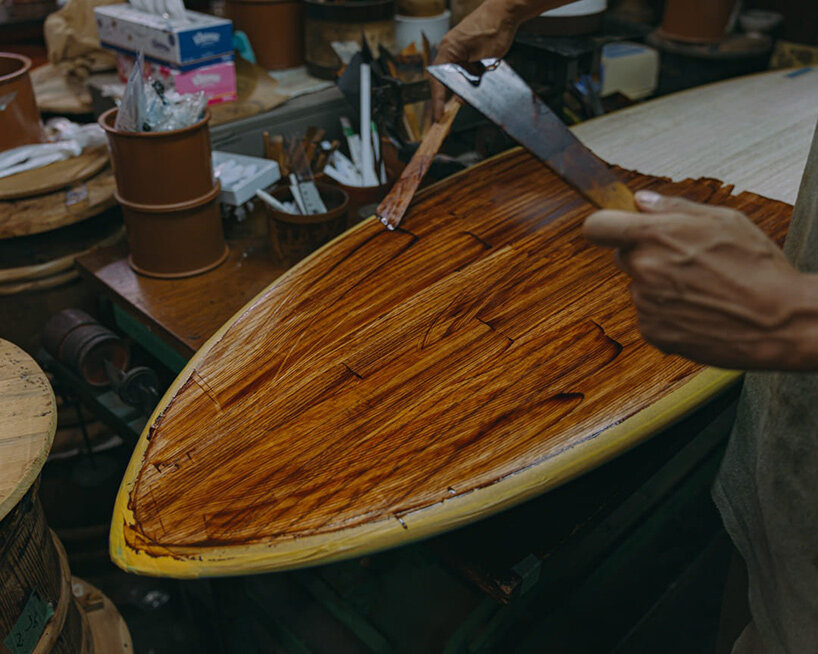
At the center of the project is Takuya Tsutsumi, fourth-generation head of Tsutsumi Asakichi Urushi, the Kyoto lacquer shop founded by his family in 1909. The company has spent more than a century refining urushi, the natural resin traditionally used across Japanese craft as a coating and adhesive. Tsutsumi joined the family business in 2004 and has since taken the material onto bicycles, skateboards and surfboards, objects that place lacquer well beyond the formats usually associated with the craft.
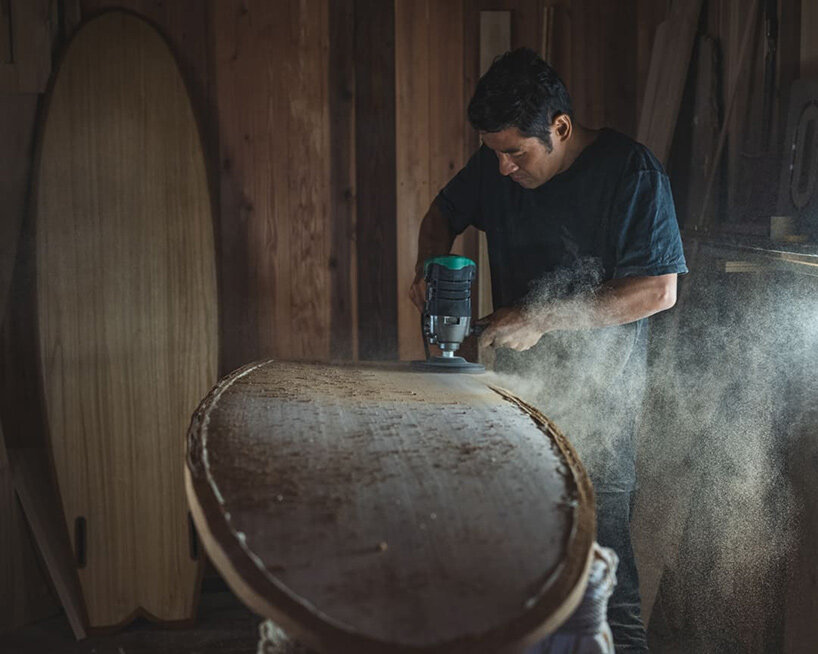
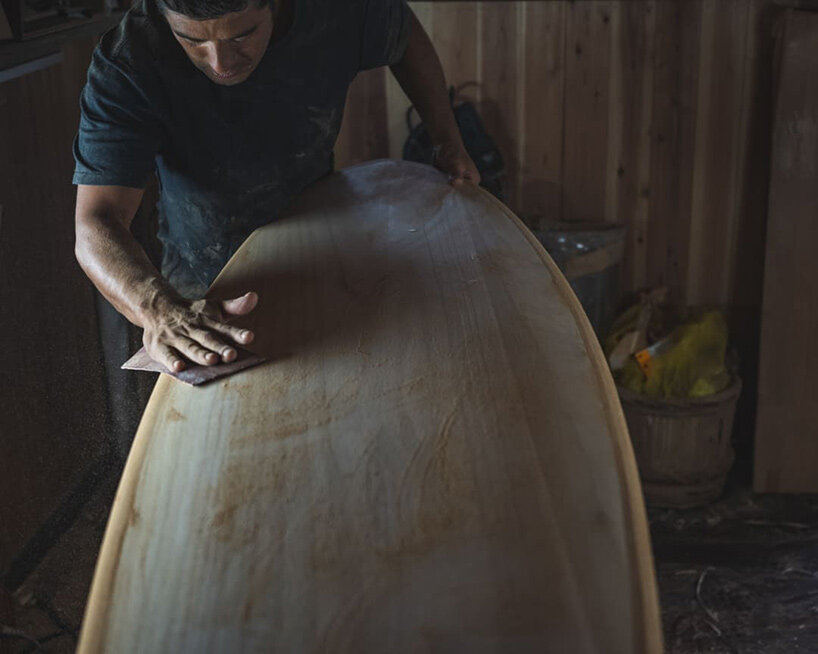
For siita, Tsutsumi works with wooden surfboard shaper Rodrigo Matsuda, who has been making wooden boards for close to two decades. Matsuda shapes the timber in Keihoku, while Tsutsumi handles the urushi finish. Their workshop sits beside the Katsura River inside a converted century-old farm shed. Temperature and humidity affect the viscosity and sheen of urushi as it is worked, so Tsutsumi adjusts the process according to the conditions of each session.
a new use for a damaged tree
The forestry problem behind the boards extends beyond their unusual appearance. Kyoto Prefecture describes kumahagi as bears peeling bark from species including cedar and cypress before biting into the exposed wood. The prefecture identifies the damage as a significant issue for forestry, while acknowledging that aspects of why and when the behavior occurs remain unresolved.
Tsutsumi describes the BEARS WOOD PROJECT as an attempt to keep that damaged timber economically useful. Rather than selecting only the clean sections of a trunk, the collaborators work with areas that have grown unevenly around the wound. He says the group asks foresters to cut the affected trees on the condition that the timber is purchased at a proper price. The scar becomes an economic question as much as an aesthetic one. A feature that once lowered the value of the wood becomes the detail that distinguishes one board from another.
from the mountains of kyoto to the water
Keihoku has supplied timber to Kyoto since the establishment of Heian-kyo more than a thousand years ago. The siita workshop sits within that long timber landscape, using local cedar alongside other woods such as paulownia. Its reference point comes from much farther away: the alaia, the finless wooden surfboards ridden in Hawaii before the arrival of modern foam and fiberglass construction. Tsutsumi’s earlier experiments with lacquered alaia eventually developed into siita, which formally launched in 2023.
There is a strange sequence embedded in each of the bear-scarred boards. A bear marks the tree first. The cedar spends years growing around the wound before Matsuda begins shaping it, and Tsutsumi eventually covers the surface in layers of urushi. Beneath the lacquer, the forest is still legible. The finish seals the distorted grain in plain sight to turn an interruption in the tree’s growth into the board’s most recognizable feature.
project info:
project: BEARS WOOD PROJECT / Urushi Board -siita-
urushi artisan: Takuya Tsutsumi | @takuuuututu
lacquer shop: Tsutsumi Asakichi Urushi | @tsutsumi_urushi
surfboard shaper: Rodrigo Matsuda | @rodo_matsuda
location: Keihoku, Kyoto, Japan
materials: local cedar including bear-damaged timber, urushi lacquer
BEARS WOOD PROJECT launched: 2022
siita launched: 2023