‘Foodie’ culture is exclusionary – these creative cookbooks are offering an alternative
When it comes to the culinary world, there are some well-worn truths. That we need to rethink how food culture appeals to all bodies; that restaurants need to update their physical designs to be more accessible; that lots of places are too dark; and that food influencing has to be more expansive than... Eating with Tod. I’ve often wondered about the narratives of food culture and who feels like it’s not speaking to them at any given time.
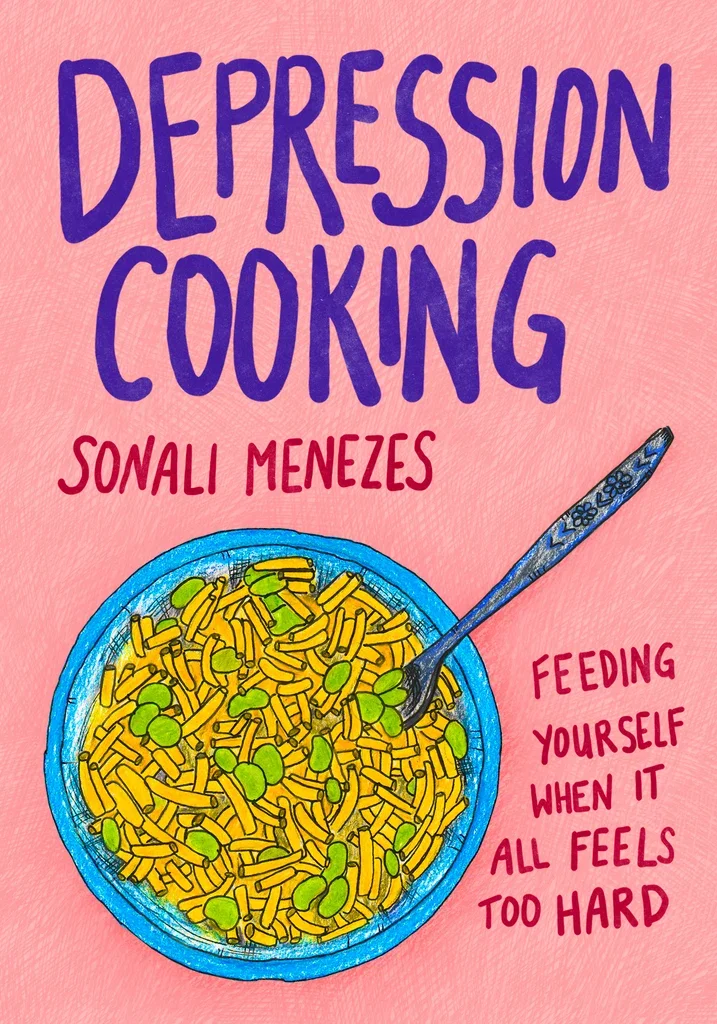
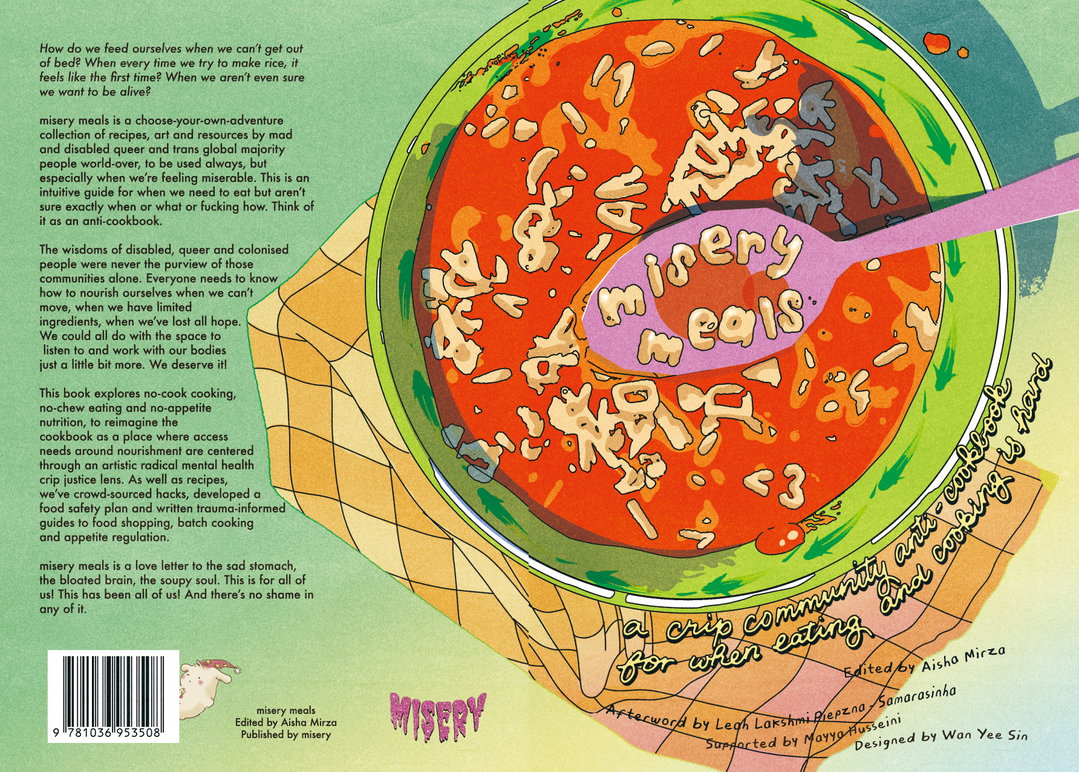
Two books, Depression Cooking; Feeding yourself when it all feels too hard by Sonali Menezes and misery meals: a crip community anti-cookbook for when eating and cooking is hard, by Aisha Mirza articulate this much better than I can by asking a central question: who is left out of food culture? They answer that question, and follow it with another question: what does being left out mean, exactly? Both artists draw on the cultural production of a creative community and enlist help to provide a full-throated alternative to a food or restaurant culture that is, at times, very exclusionary.
“To me, there’s a holy trinity of depression cooking: mac and cheese (boxed!), instant ramen and toast.” Here, Sonali Menezes is talking about food culture in the west, and crucially, that in an era of wellness that does very little to provide options for people who are unwell, language speaks volumes. The reliance on throwaway trends or influencer speak does a lot to manipulate words like ‘foodie’, ‘wellness’, or even what is and isn’t ‘accessible’.
Above
Sonali Menezes: Depression Cooking: Feeding Yourself When It All Feels Too Hard (Copyright © Sonali Menezes)
“The reliance on throwaway trends or influencer speak does a lot to manipulate words like ‘foodie’, ‘wellness’, or even what is and isn’t ‘accessible’.
Kieran Yates
Her book, Depression Cooking; Feeding yourself when it all feels too hard, (published 29 September), does some work to remedy this by using very specific language. On a zoom call from Hamilton, Ontario, she outlines how the book was ignited from a rich local perzine (personal zines) culture, those which explore everything from ex-boyfriends to bodies. She cites bonk’d zine collective, fartoofatzine and brattybre as key influences.
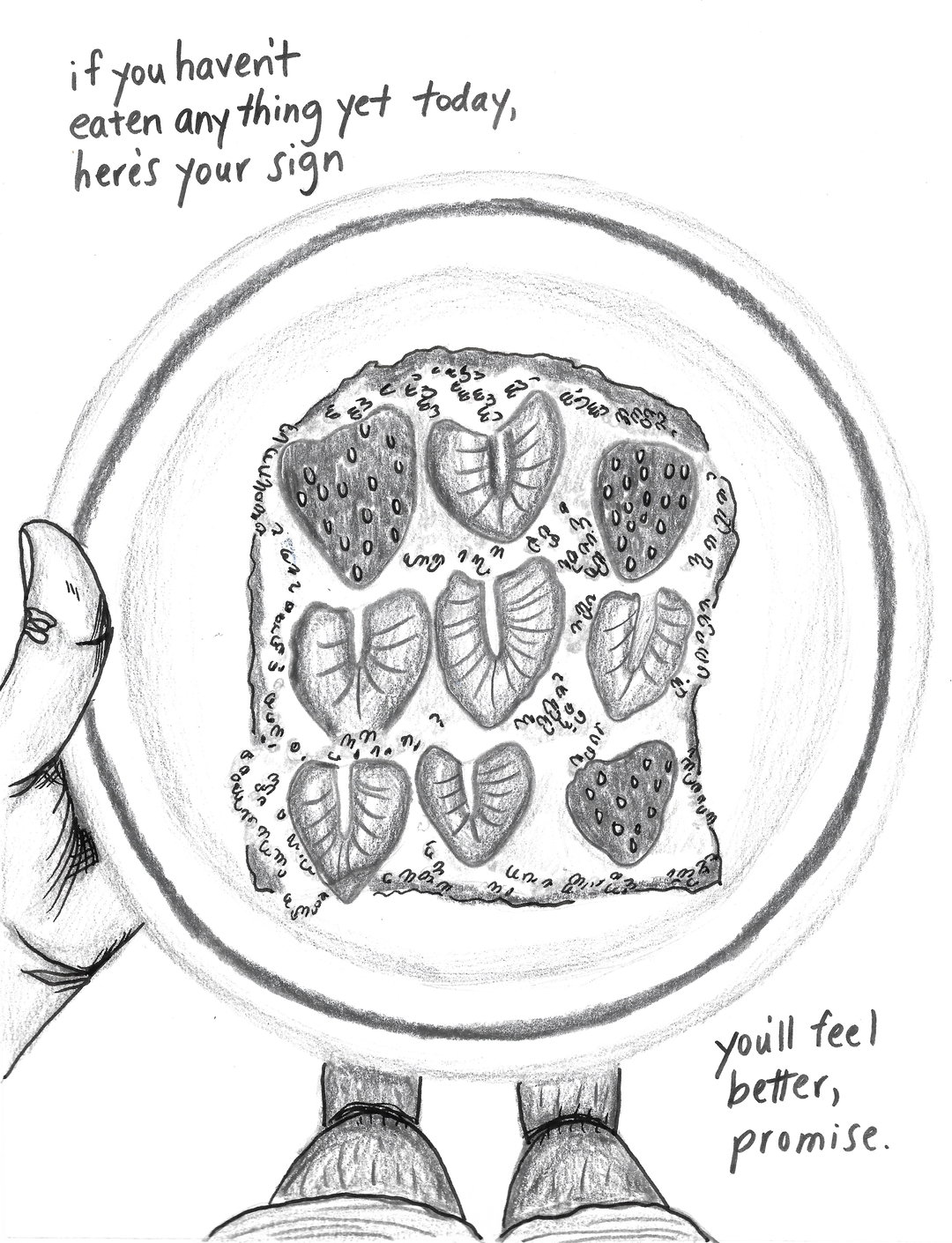
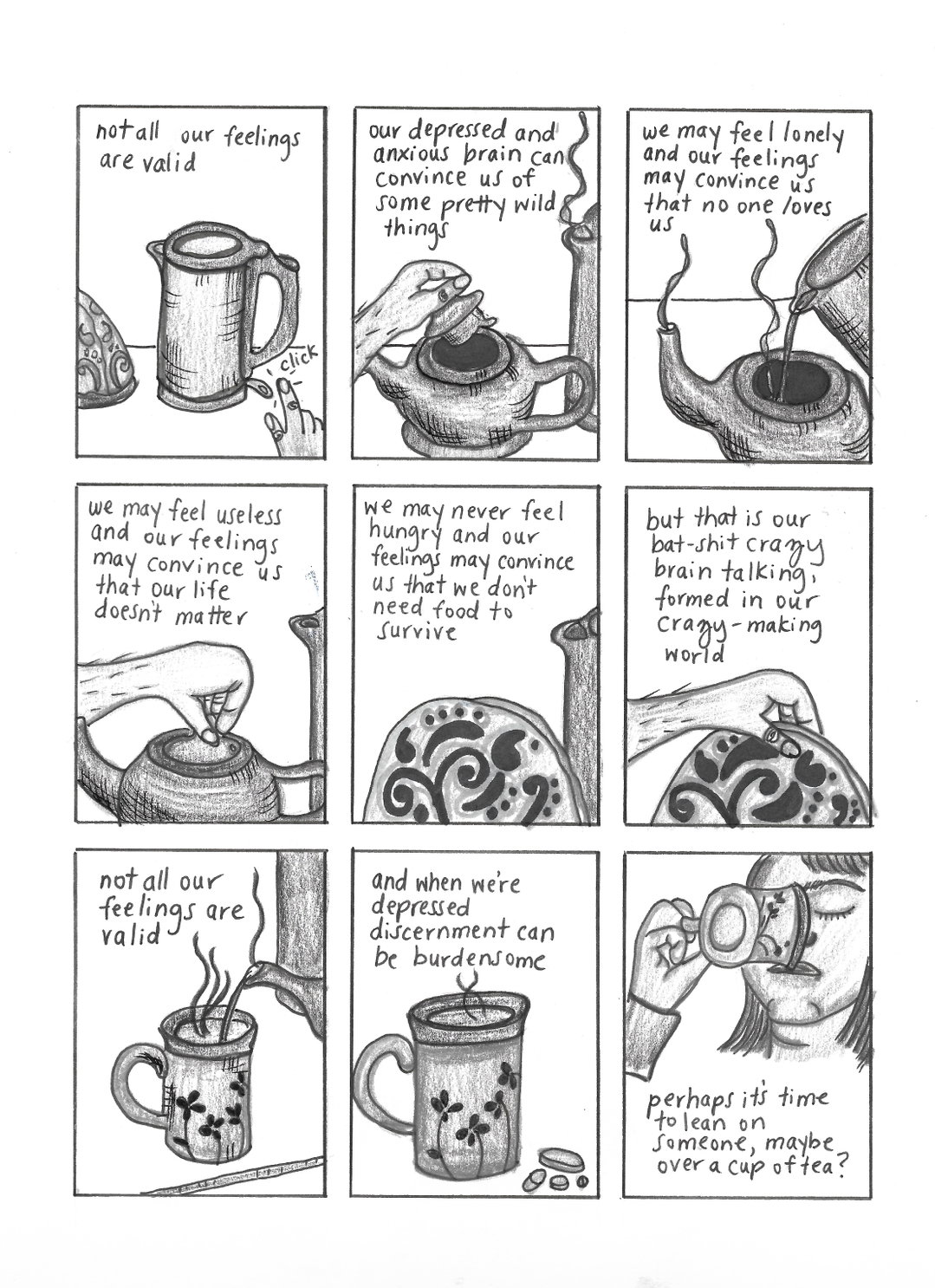
Funded in part by Disability Justice Network, the book represents this personal approach to publishing. It’s a compendium of memoir, written extracts that include recipes, and, most thrillingly, monochromatic comics that make deadpan statements aimed at warding off diet culture: ‘Are you going to eat all that?’ / ‘yes’. On one page, a handwritten Depression Cooking manifesto reads: ‘Is it edible? Cool. Put it in your mouth. It’s better to eat something than nothing’. In another chapter, she talks about house sharing and the quagmire of dishes and mental health challenges that abound. For Sonali, you cannot be a part of food culture currently without having certain crucial experiences and, unconsciously, you begin to see how hollow it can feel without them. She goes on to tell me: “I lived with a doctor roommate who wanted me to replace my morning oatmeal with steamed kale. Can you believe that?” In a chapter titled, ‘White girls with lattes’, she delights in tea brands like Wagh Bakri, Girnar, and Tea India that just require adding hot water and mixing. I smiled in recognition of accessible hot drinks that don’t cost seven quid at a Blank Street Coffee.
“I wanted it to function not just as a cookbook, but as a companion in difficult times.”
Aisha Mirza
Above
Aisha Mirza: misery meals: a crip community anti-cookbook for when eating and cooking is hard (Copyright © Aisha Mirza)
In the UK, writer and artist Aisha Mirza’s book, misery meals: a crip community anti-cookbook for when eating and cooking is hard is a 250-page glow-in-the-dark, spiral-bound cookbook, “or anti-cookbook as we like to call it”, says Aisha. It comes via misery, a queer, BIPOC mental health arts organisation, and comprises submissions from queer trans people of the global majority. It takes the idea of disability justice work as a lineage of thinking, and makes it beautiful. The title and chapters teach us that, in a vast silent chamber, it bears repeating: cooking can be fucking hard.
“There can be very lonely moments when you’re just like, ‘I can’t even feed myself today’. It’s very easy to turn on yourself in those moments,” explains book editor Aisha. “But [the book] is a flare into the world of people who are struggling to say, ‘You’re not alone.’ I wanted it to function not just as a cookbook, but as a companion in difficult times.”
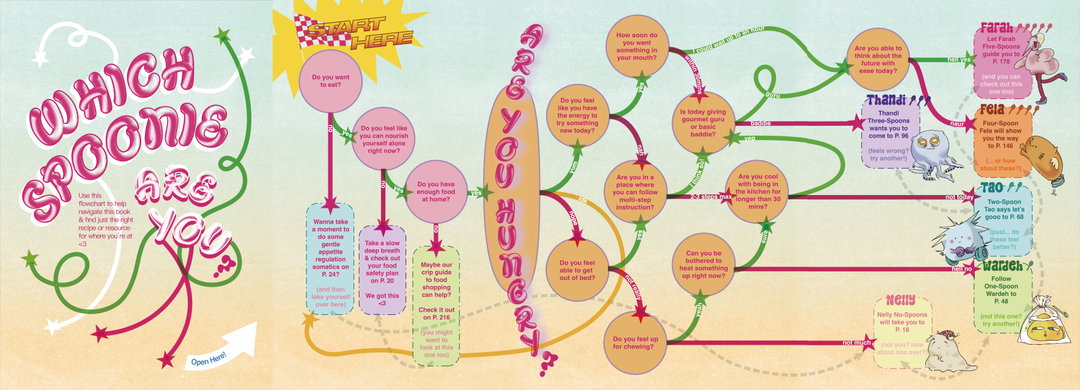
Aisha uses Christine Miserandino’s 2003 spoon theory, the idea of spoons representing an energy capacity level of people living with chronic illness, to give each a ‘spoon rating’, from zero spoons (Nimbu Pani) to five spoons (Coconut and Peanut Butter Noodle Soup). Everything is also simplified to the least number of utensils, and the least amount of washing up possible.
Misery meals, as a result, is a joyous piece of art and printed matter which takes influence from the aesthetics of computer games, diaspora menus, comic book cartoon characters and illustrated mascots, all of which feature throughout. One page is an homage to ‘emergency sucky cap water’ and details things you can put in water, as a way of seeing human needs more magically. If it was the case that food culture tends to leave people out – and it does – you’d be hard pressed to find something more universal than sucky cap water.
“Because most cookbooks never think about disabled or depressed food prep... it’s revolutionary to feed yourself and be joyous about it.”
Kieran Yates
Above
Left
Sonali Menezes: Depression Cooking: Feeding Yourself When It All Feels Too Hard (Copyright © Sonali Menezes)
Right
Sonali Menezes: Depression Cooking: Feeding Yourself When It All Feels Too Hard (Copyright © Sonali Menezes)
Above
Sonali Menezes: Depression Cooking: Feeding Yourself When It All Feels Too Hard (Copyright © Sonali Menezes)
Reimagining gives us an opportunity to rethink the creative potential of the food world. Having beautiful food publications that include ‘misery meals’ could push the Erchen Chang (artist and creative director and co-founder of Bao) model of food illustrations to its furthest limit, it could crossover into commissioning more creatives to respond to gastronomical offerings through a more varied lens, including thoughtful and surprising ways their cuisine might be used by people with limitations. More immediately, these love letters to the sad, hungry and exhausted versions of ourselves declare that we always deserve care, even if it’s just via instant ramen, or butter or ‘things on toast’.
Both offerings are a sumptuous, hilarious and thrilling exploration into disability justice food culture and implore the reader to explore imaginative horizons in your kitchen. One page from misery meals proclaims that, because most cookbooks never think about disabled or depressed food prep (namely pre-cut vegetables, straws and shelf stable milk to name a few), it’s revolutionary to feed yourself and be joyous about it. There’s one passage I’ve been thinking about before any meal that I make: ‘fuck yes I will feed myself, fuck yes I will cook or eat my ass off… Especially when the food or the strategies to get it look extremely weird and cripped/sicked out/nuts, I will stay alive. I will cook for myself by any means possible. I, we, will insist we have a right to life, to pleasure, to being nourished.’
“You break bread, realise it’s stale, and help each other turn it into croutons.”
Kieran Yates
Above
Aisha Mirza: misery meals: a crip community anti-cookbook for when eating and cooking is hard (Copyright © Aisha Mirza)
Artistically, these books reject the visual language of photography in cookbooks and instead use illustrations that are abstract, dreamscape-like and have playful, interactive elements. “There’s some nostalgia there because I just remember the flow charts from the girls’ magazines when we were kids,” says Mirza. “Like, ‘which lipstick are you?’, or, ‘which boyfriend is your boyfriend?’, or whatever. I always really enjoyed those. I was like, ‘Is there a way that we can distill disability and food justice into a cute ‘90s flow chart?’ The illustrations in Sonali’s book have a watercolour quality, and both publications use colours that feel playful – and it says so much about their tone.
Both artists echo what I often wonder about what exactly a ‘foodie’ is, and how impossible it can be to disentangle class and ableism from that term. “I think we’re responding to a level of pretentiousness that I feel has dominated food culture for a while. It feels very unfriendly to someone who might not want to necessarily identify as a foodie,” says Aisha, and I’m inclined to agree.
They smile as we talk about the importance of encouraging creatives to think about food culture, cookbooks, art and taste (both kinds) in new ways. Imagine a food scene littered with these conversations and imagine the creative potential of what that might produce. A world where, as they say, you break bread, realise it’s stale, and help each other turn it into croutons.
Aisha sees books like these as a radical act. “We wanted to respond to a world in which disability is always an add-on, by creating a piece of work where it’s central,” they lovingly proclaim. “We’re looking at a world that largely ignores the needs of marginalised people, and creating something beautiful anyway.”