Wangari Mathenge’s Vibrant Paintings Tap into Kenya’s Paradigm Shift in the 1960s
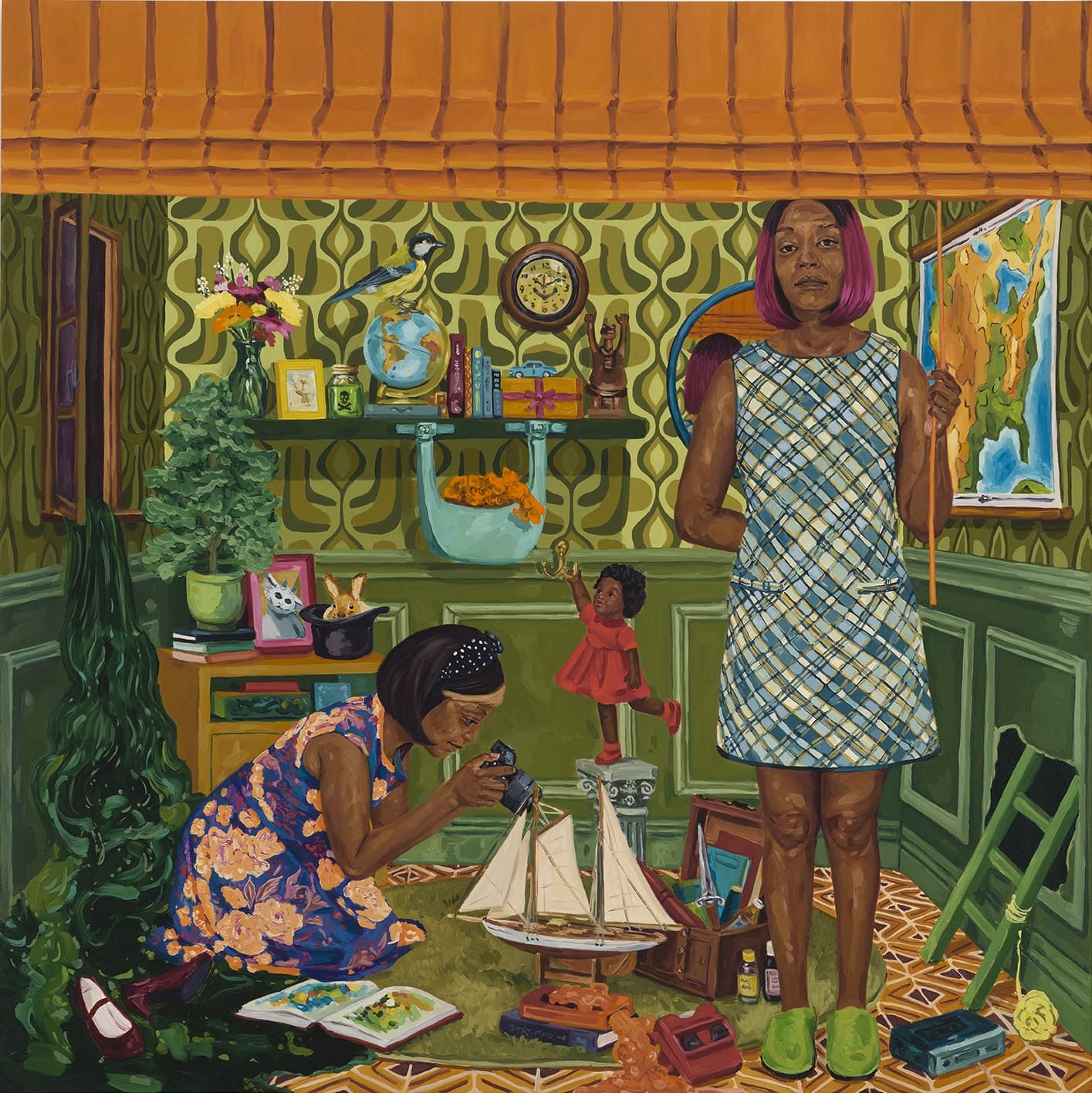
In 1963, following nearly 70 years of British colonial rule, Kenya declared independence. The nation was not alone on the African continent; in the 1960s, Gambia, Guyana, Malawi, Nigeria, and others freed themselves from Britain’s control in a watershed period of democratic redevelopment and socio-cultural shifts. Wangari Mathenge, who was born in Nairobi, looks to the not-so-distant past in an ongoing series of vivid oil paintings.
Many of the works shown here are part of the artist’s current solo exhibition, Re-membering at Lévy Gorvy Dayan. Inspired in part by scholar Ngũgĩ wa Thiong’o’s 2009 book Something Torn and New: An African Renaissance, Mathenge examines her own cultural identity through the lens of Kenya in the first half of the 20th century. Something Torn and New focuses on the long-lasting impacts of colonialism and slavery in Africa.
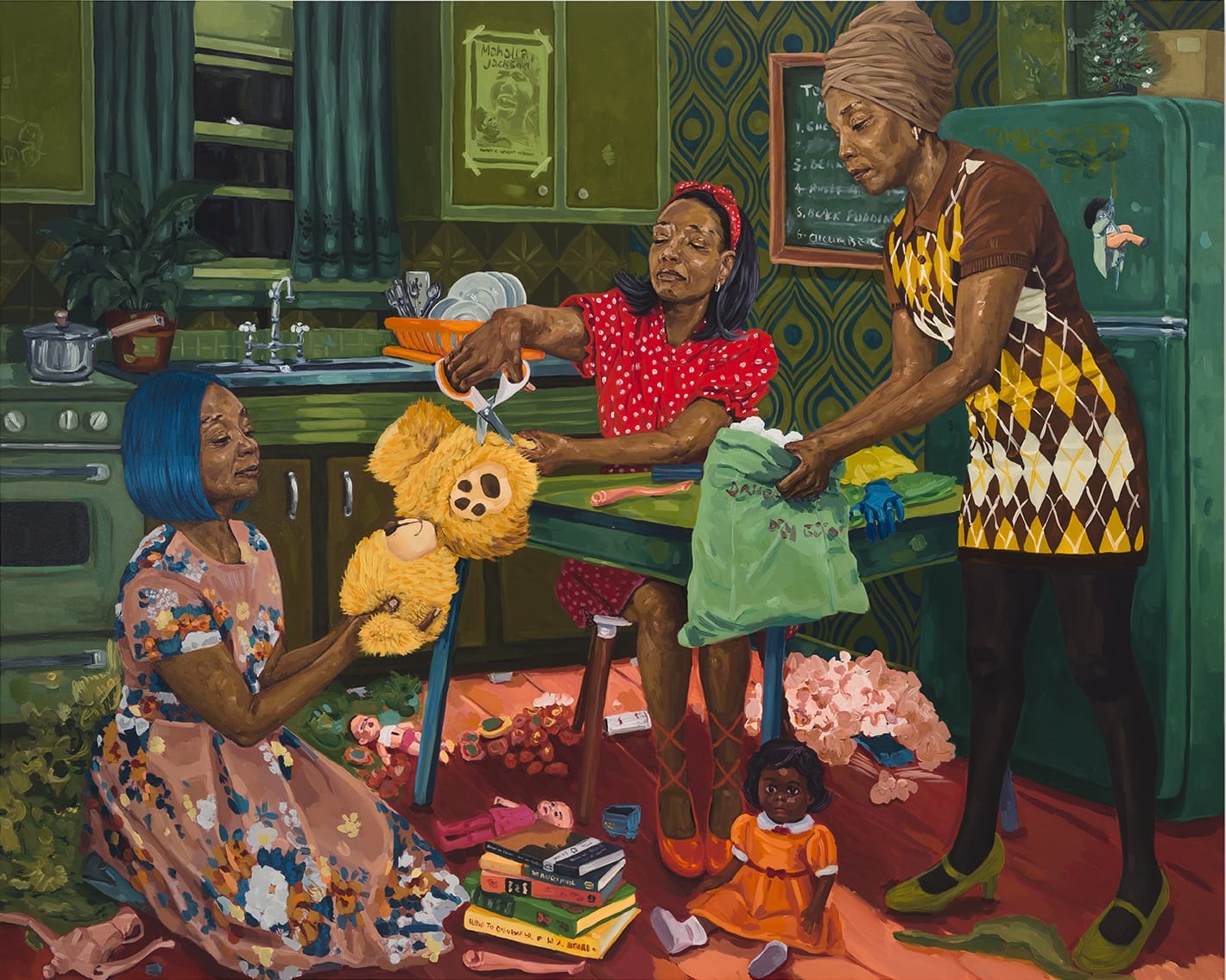
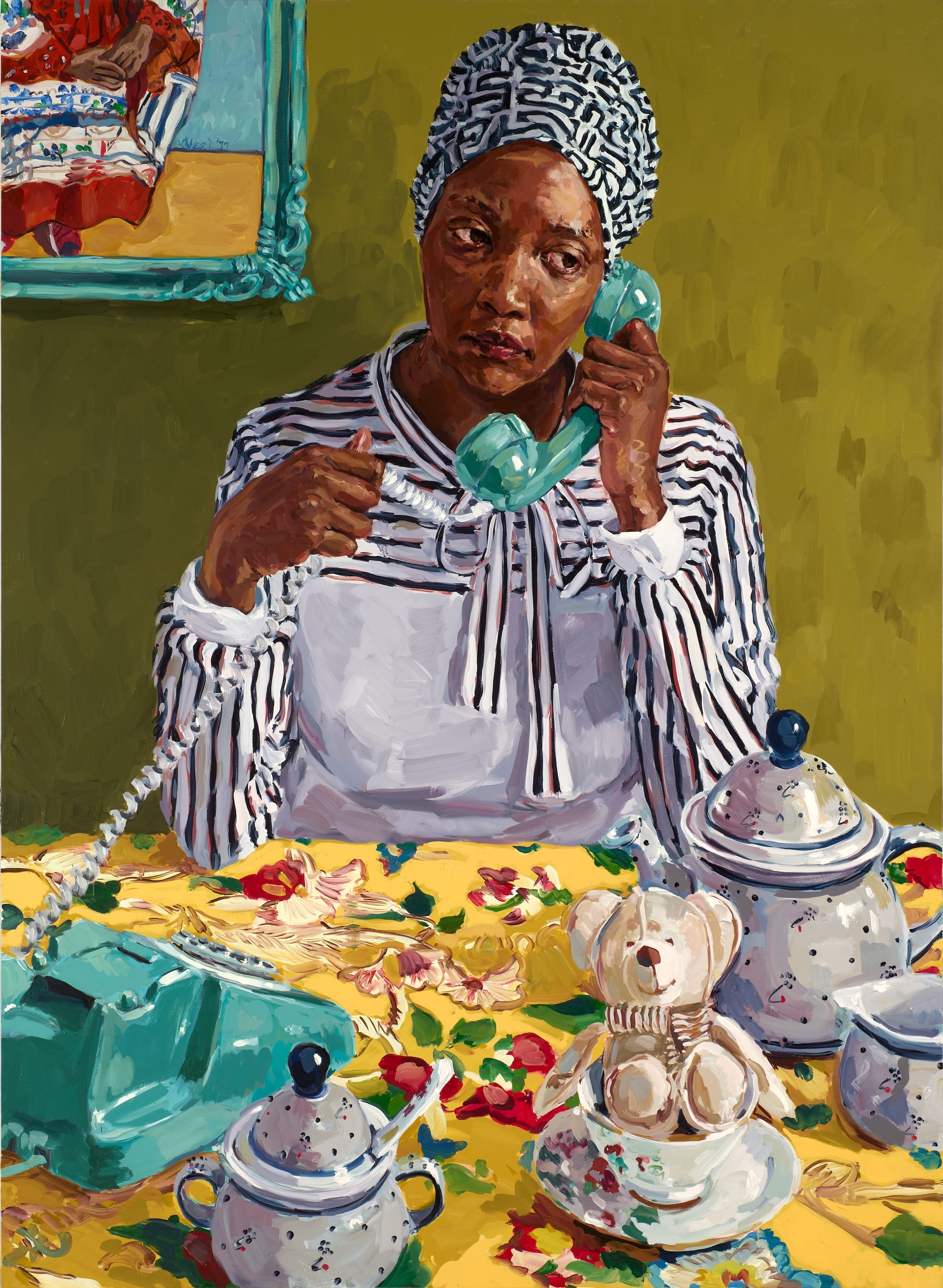
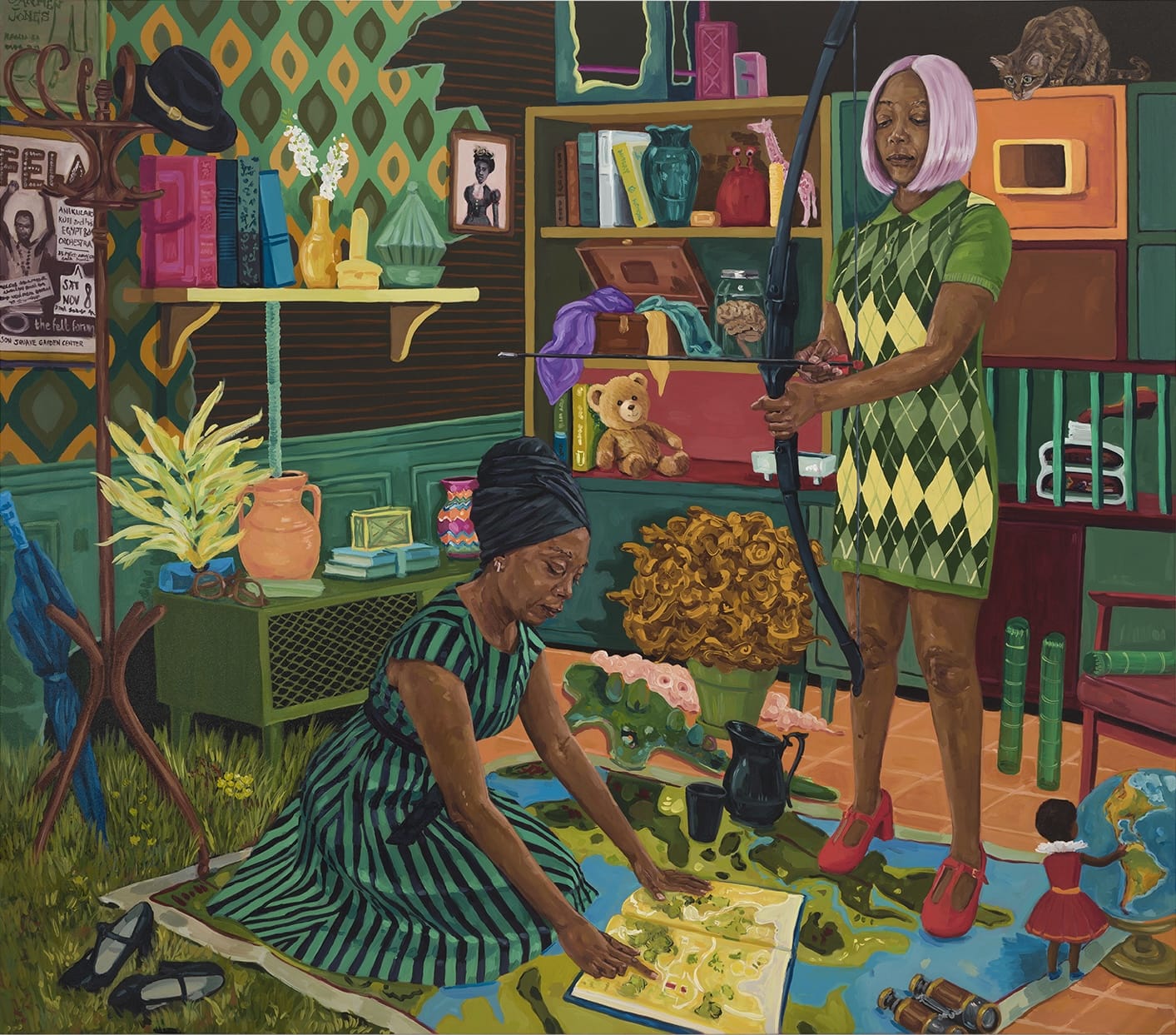
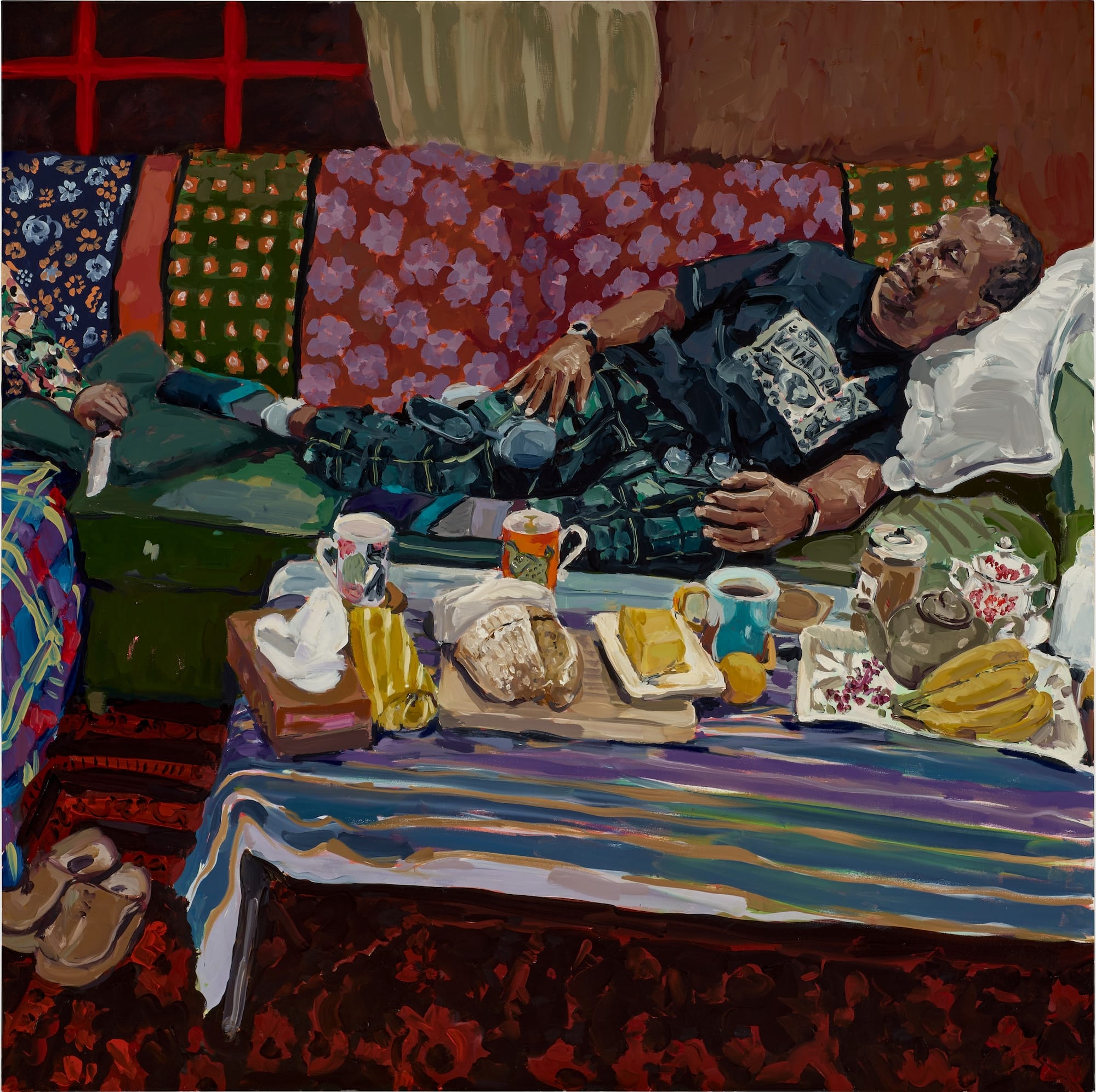
The artist’s recent work depicts herself as all of the women, who each interact in domestic spaces. Toys, books, maps, and the occasional uncanny scenario, such as the green ladder in the wall of “Re-membering XI (To Leave This Steady Unendurable Land),” nod to a period of significant change in Africa. The figures often play with or alter the items in front of them, such as documenting a transatlantic vessel or jostling a teddy bear in an activity that blurs gutting and mending.
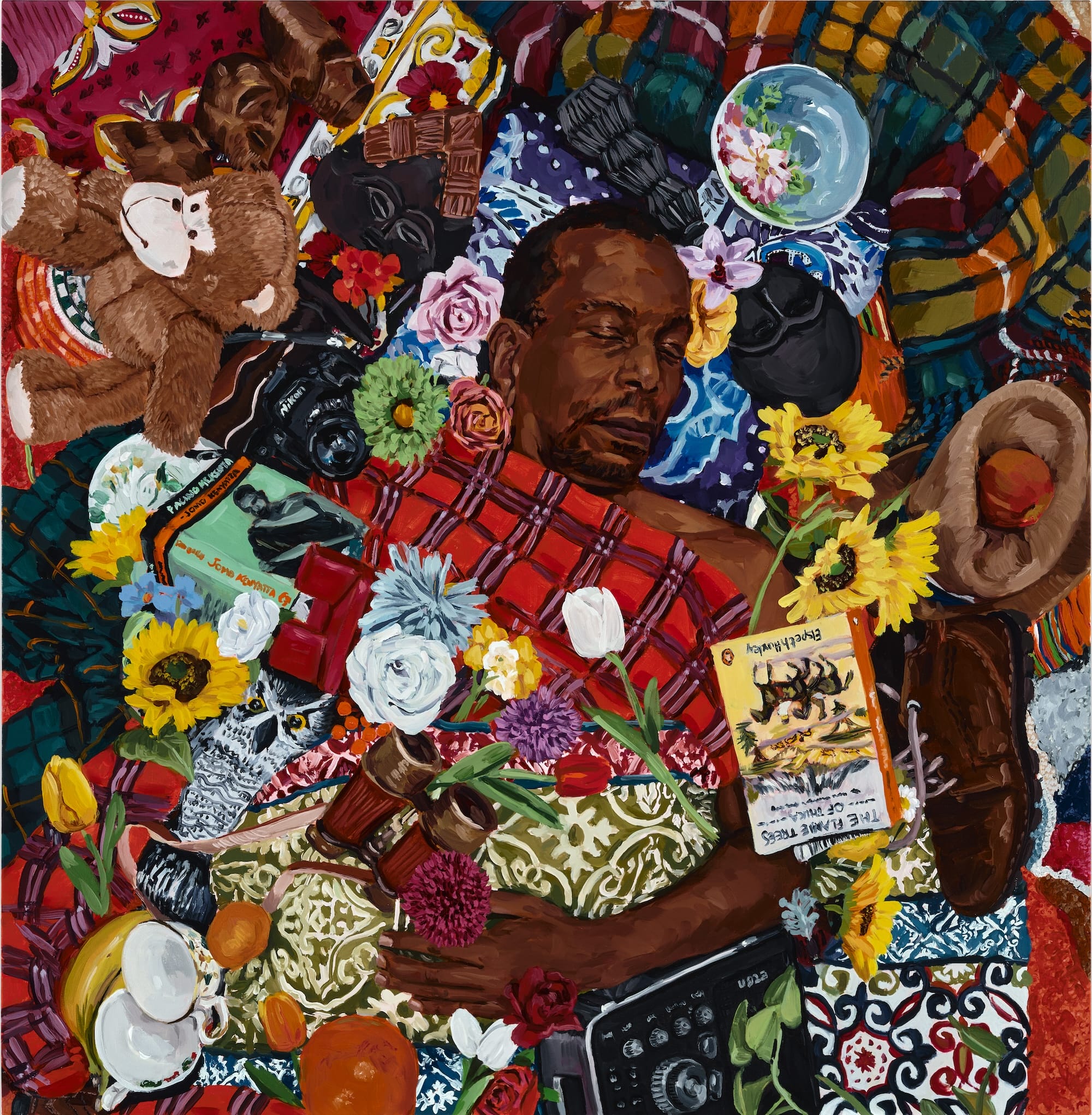
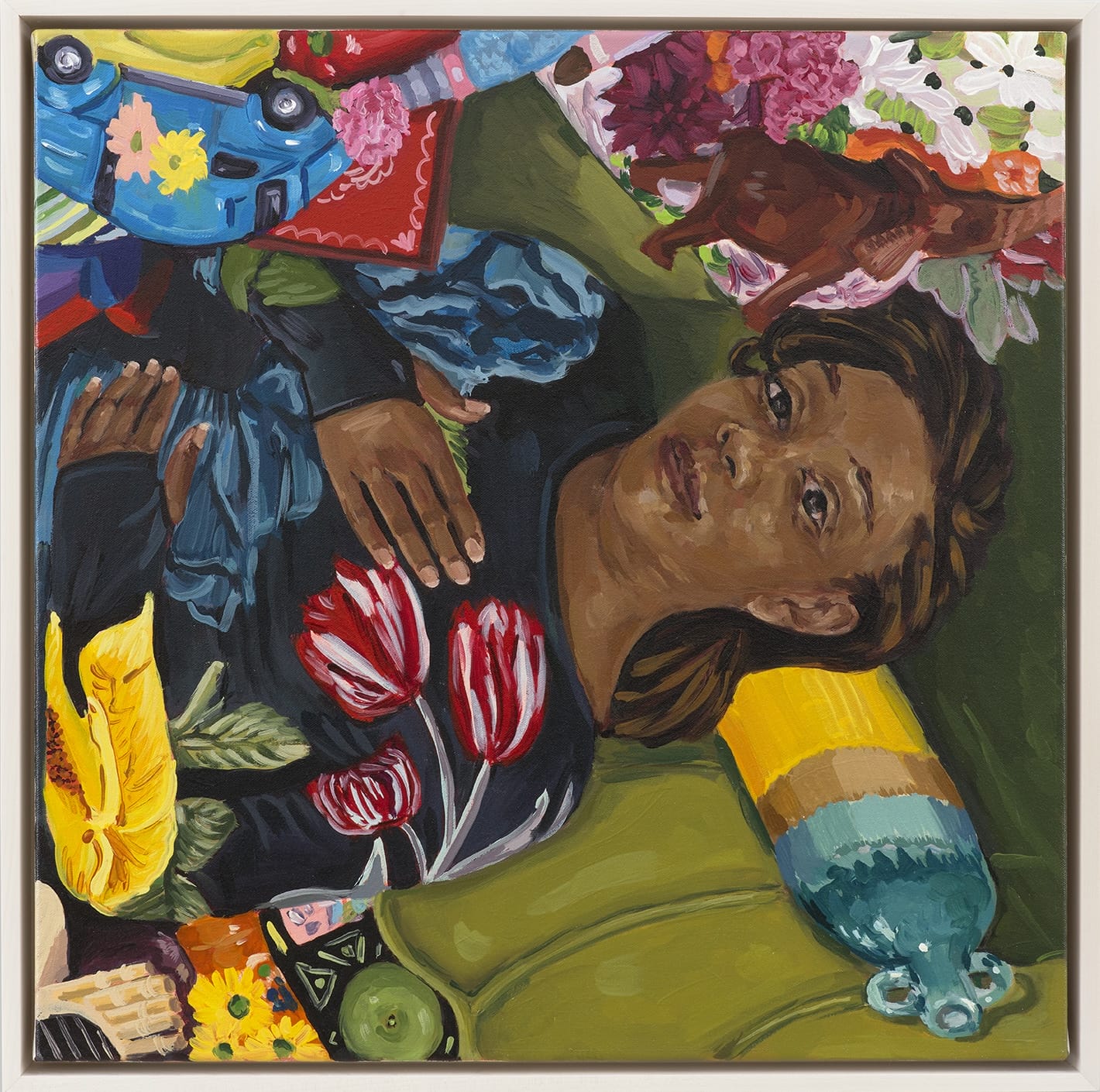
Sometimes, Mathenge’s protagonists meet the viewer’s gaze directly, almost confrontationally, while in other settings, she or he relaxes amid an array of items. Through the lens of cultural memory, the artist gathers symbols of resistance and healing. The compositions are sometimes paradoxical in their depictions of toys and nostalgic items with an underlying tension, like “Re-membering XIII (May the Wind Be Always at Your Back)” in which one of the figures readies an arrow in a bow.
“Re-membering signifies not merely the act of recall, but the active gathering and reassembly of what has been fragmented: cultural memory, inherited forms, histories, and ways of seeing,” the artist says in a statement. The exhibition continues through October 24 in New York. See more on Mathenge’s Instagram.
Do stories and artists like this matter to you? Become a Colossal Member today and support independent arts publishing for as little as $7 per month. The article Wangari Mathenge’s Vibrant Paintings Tap into Kenya’s Paradigm Shift in the 1960s appeared first on Colossal.