Fieldwork Facility Unveils V&A East Storehouse Wayfinding
V&A East Storehouse wayfinding by Fieldwork Facility treats the museum like software: a low-carbon, programmable system built for updates.
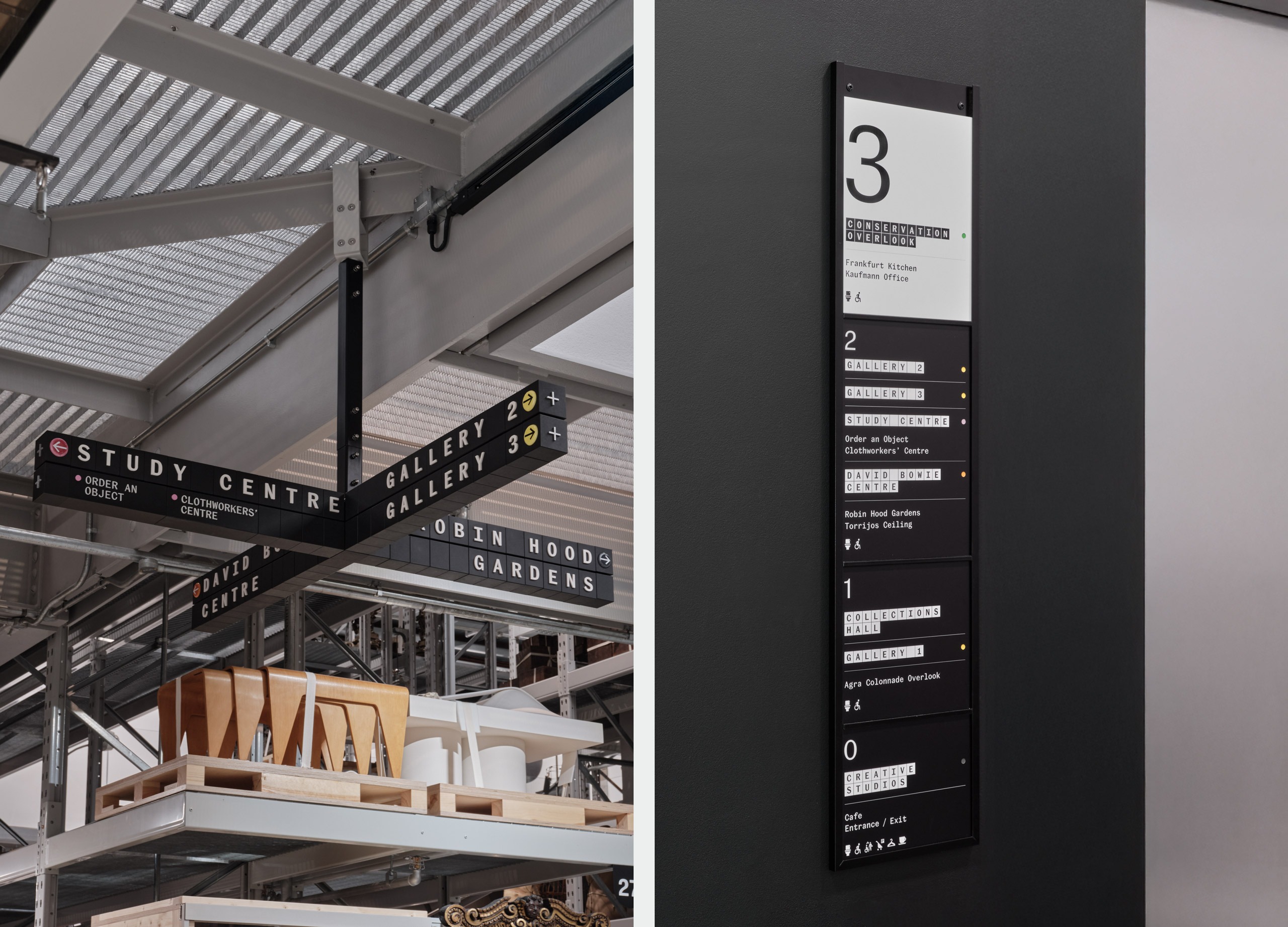
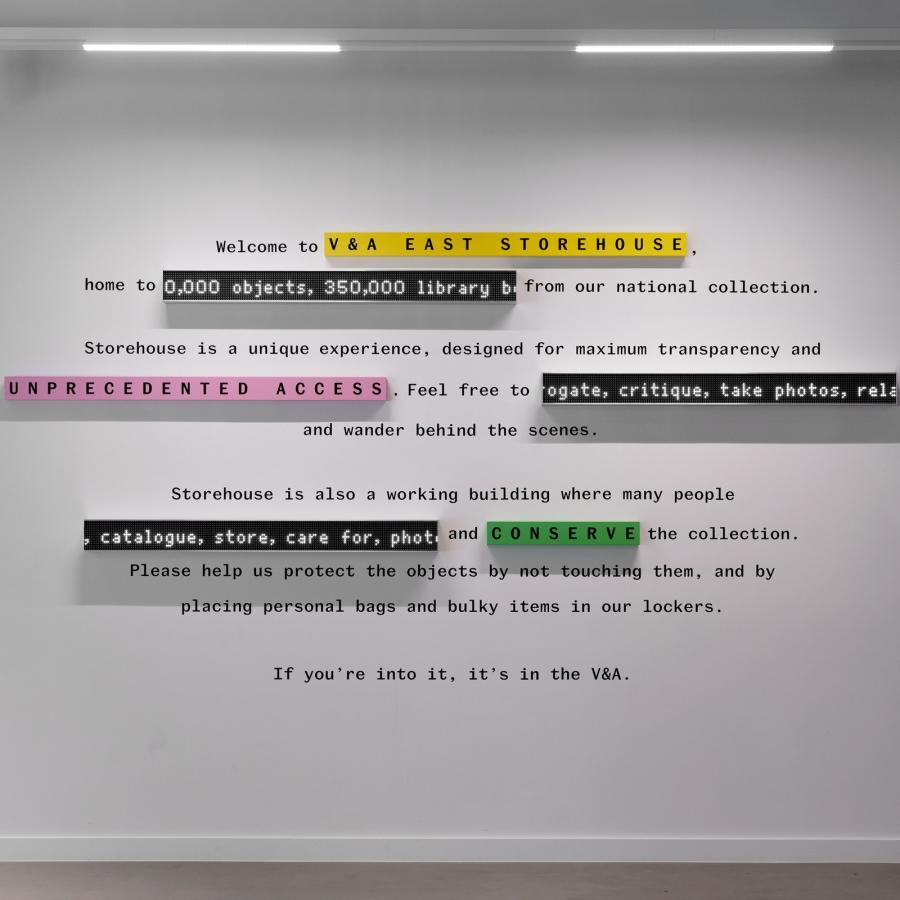
The system's face is Spiller Mono, a bespoke monospace cut of the V&A's brand typeface commissioned from Commercial Type. Monospace carries the memory of early computers and code editors, and Fieldwork Facility turns that memory into the building's native language: letterforms set on modular tiles that shuffle like a departure board. One wall spells out the welcome manifesto in mixed media, physical letter tiles, dot-matrix rails and marker-pen highlighter bars in yellow, pink and green. Another asks visitors "WHAT WOULD YOU DO WITH THE V&A COLLECTION" in flip-board capitals. Nothing about it feels like standard museum graphics; it reads like a machine you can read. The studio calls the effect programmable in an analogue way, and the project picked up a Dezeen Awards 2026 regional showcase spot.
V&A East Storehouse wayfinding runs like an operating system
The monospace setting is doing real systems work. Fixed character widths tile every message to a strict grid, so labels, directory totems and interpretation panels snap together from interchangeable parts instead of being printed one-off. The directory totems stack level numbers, destination names and pictograms in a dense code-editor rhythm, while oversized painted numerals give each floor a glyph-sized landmark. The type behaves like components in an interface: fixed, swappable, endlessly re-typeset. It is a visual language the studio calls atypical for a museum, and that is exactly the point.
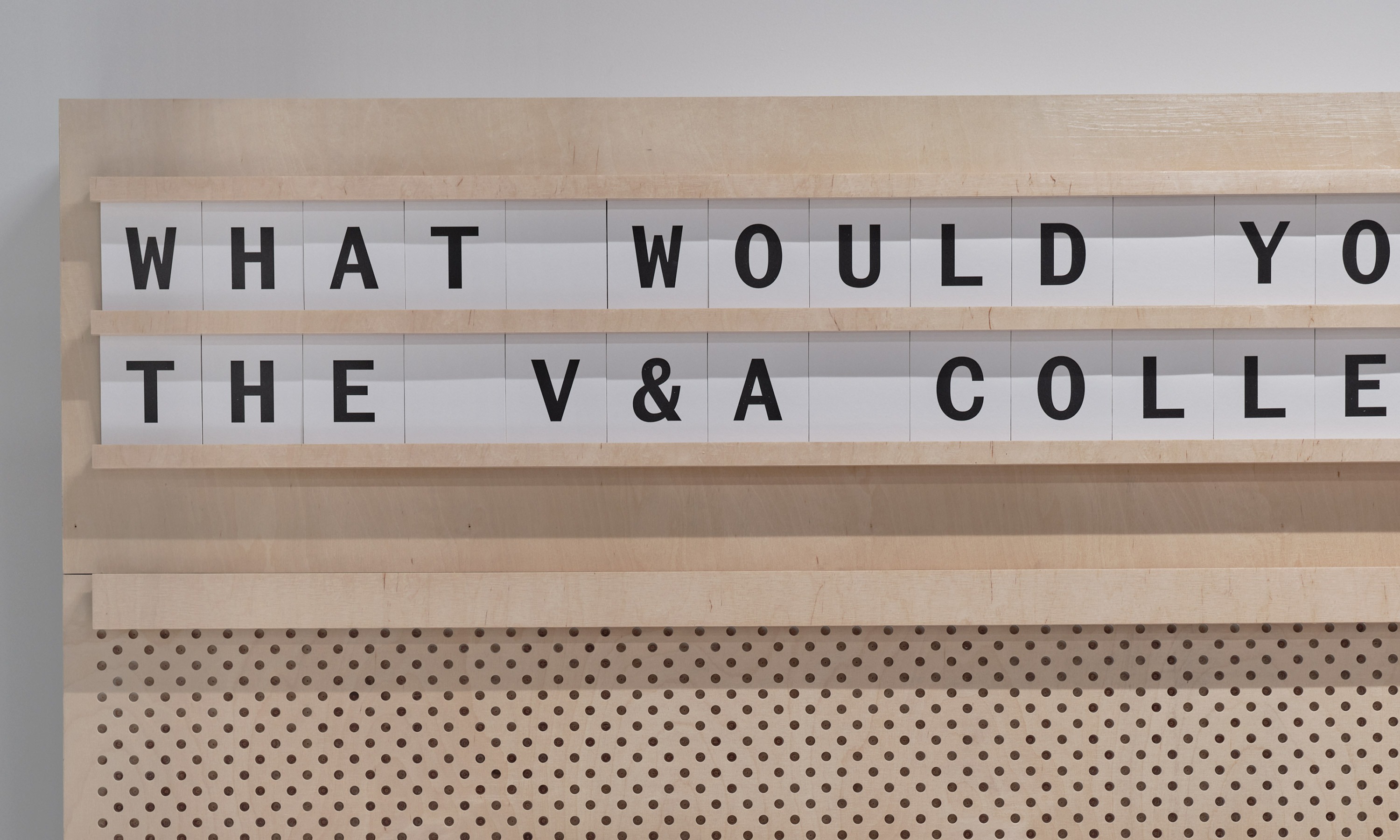
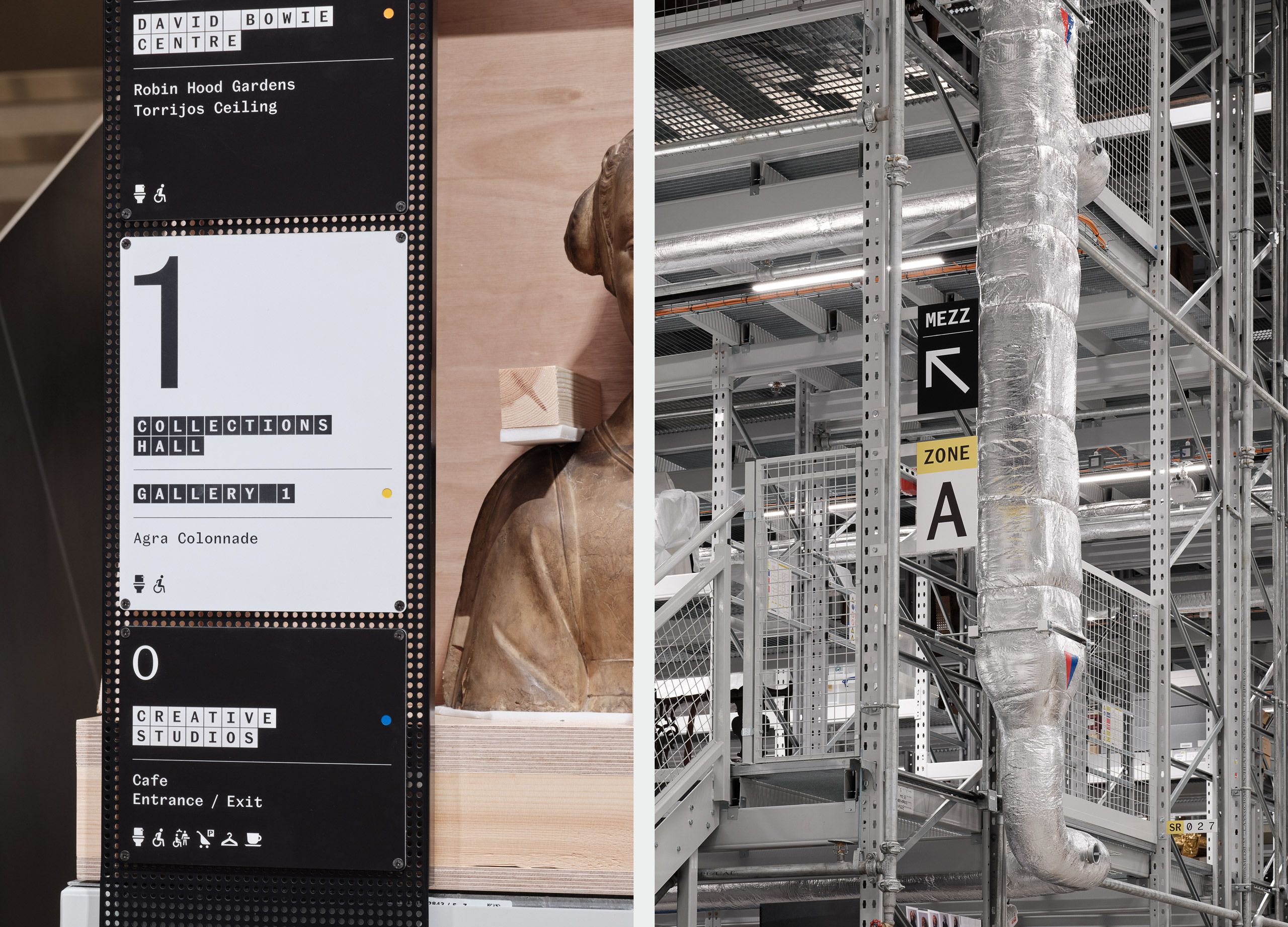
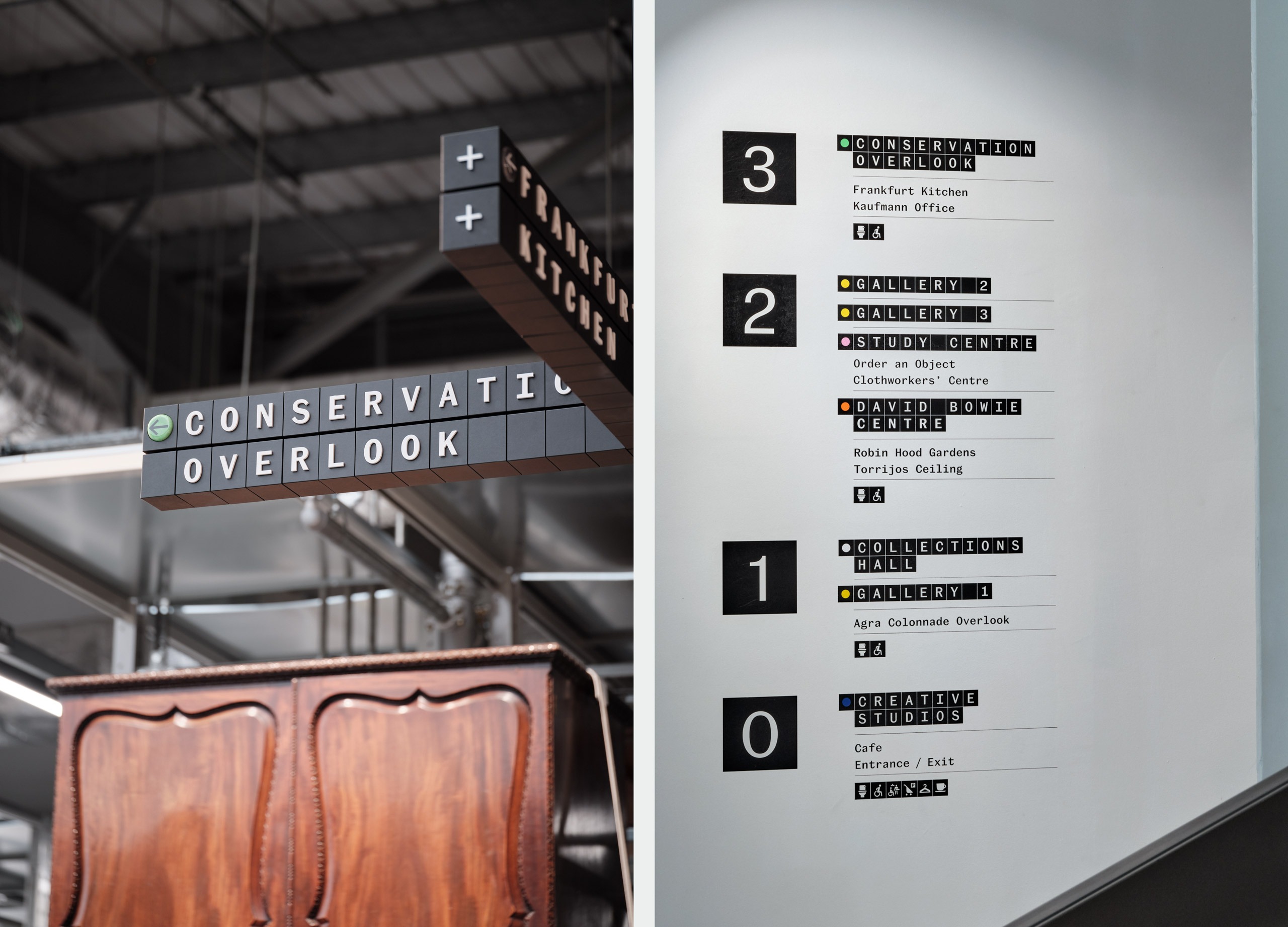
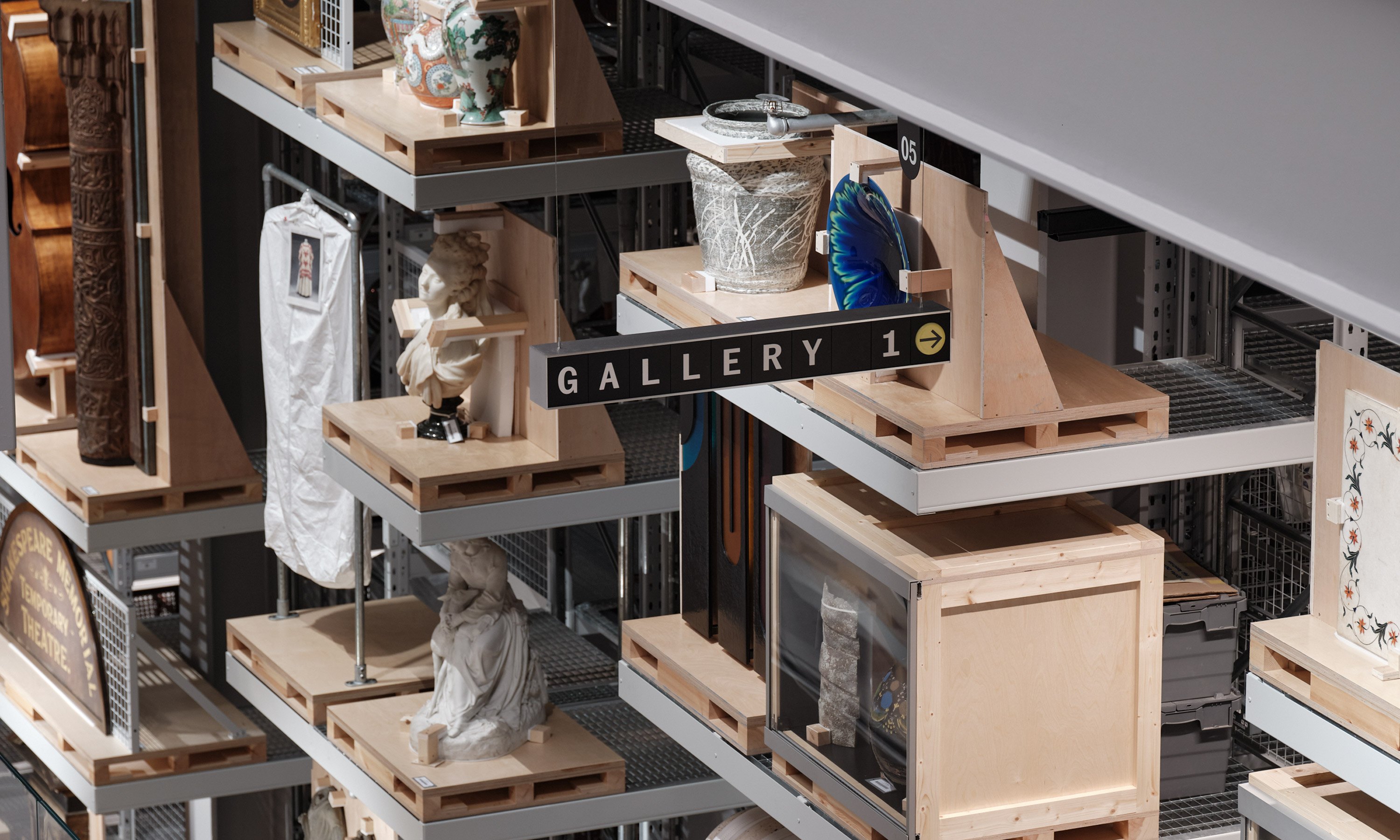
The material story is just as considered. The signage is built as a bricolage of low-carbon and recycled materials, assembled in a modular language that sits comfortably against the building's industrial architecture. Every unit is designed for disassembly, so components separate cleanly for reuse or material recovery when a display moves on. The whole scheme was briefed to be updatable and reusable from the start, closing material loops instead of designing for the skip. Production partner Standard8 fabricated the system, with interpretation hardware by IDK and Solved Workshop, large print guides by Calverts Co-op and type design by Commercial Type.
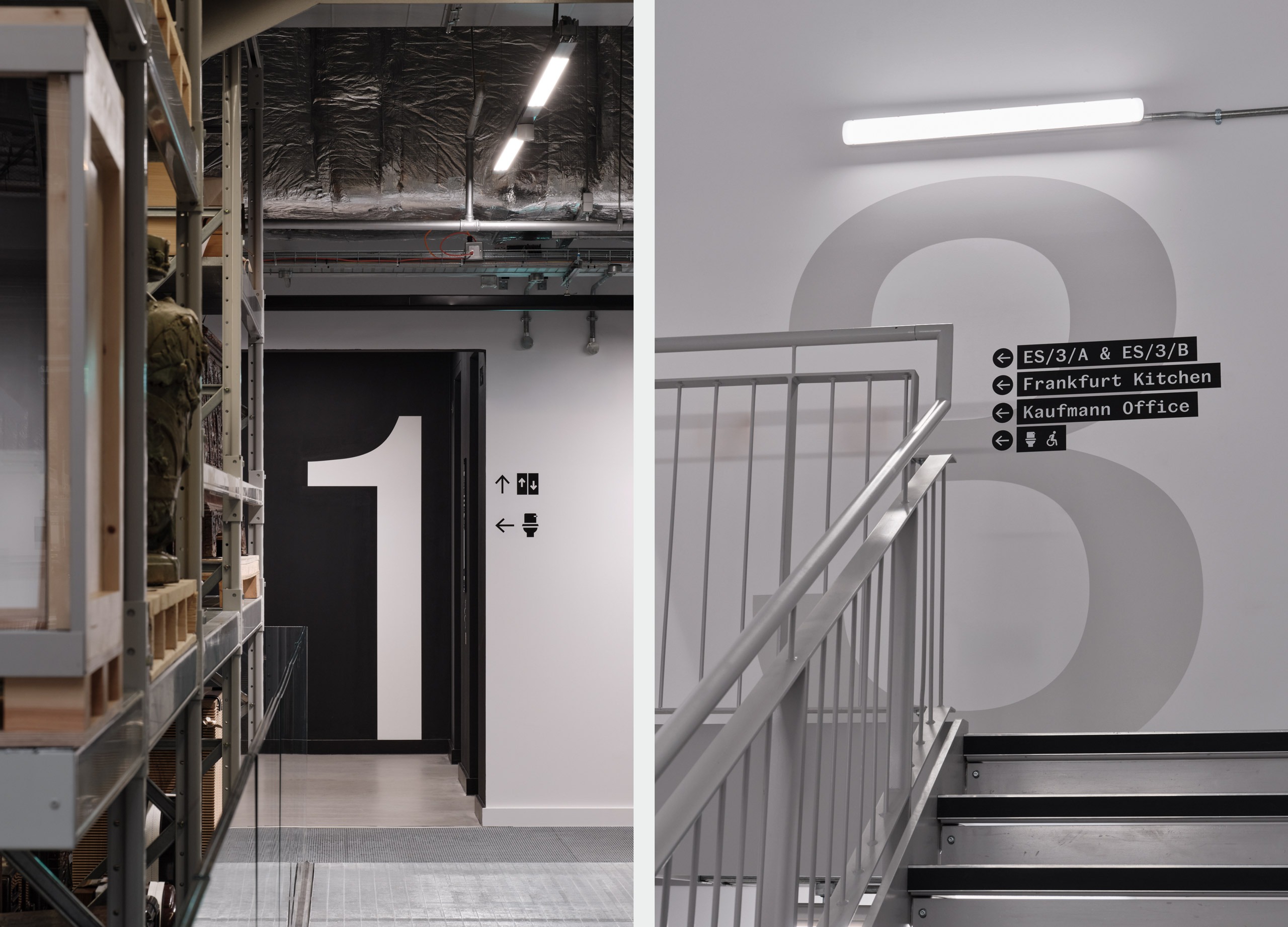
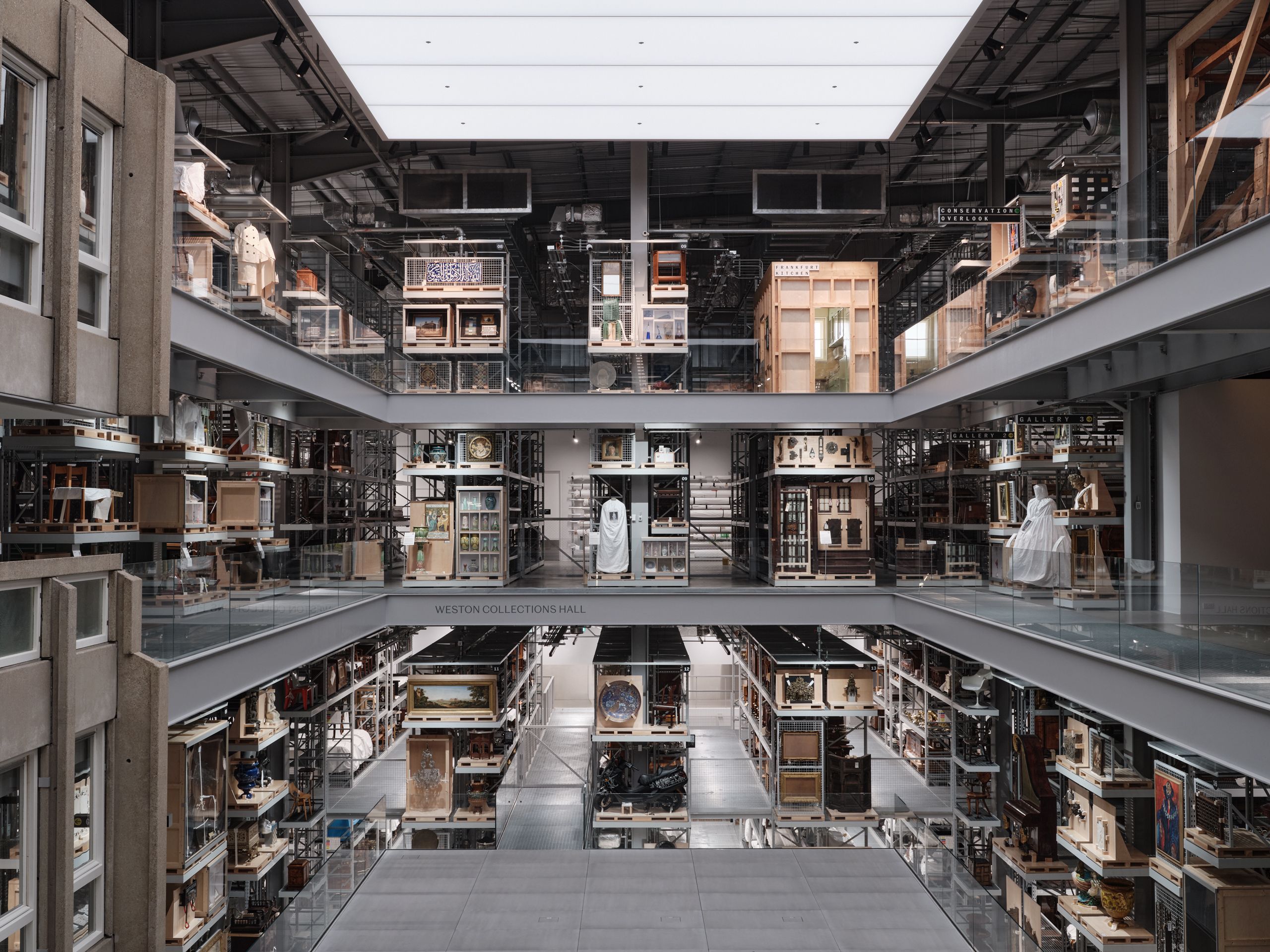
Wayfinding and interpretation by Fieldwork Facility, with creative direction and strategy by Robin Howie and design by Tilia Bertrand-Shelton, Imogen Ayres and Lan Lê. See more from Fieldwork Facility.