Bea Korsch’s Intrusive Thots is an explosive zine about depression, treatment and recovery
Trigger warning: this article contains mentions of physical self harm as well as descriptions of depression, anxiety and struggles with personality disorders.
While Brooklyn-based artist, musician and designer Bea Korsh attended a year-long intensive outpatient programme for personality disorders, she created an experimental comic called Intrusive Thots. The core of her programme was an open discourse process group that met three times a week – a sandbox, unbound by the confines and ramifications of society, where she and her peers could experiment with developing deeper connections to themselves, each other and most importantly: reality. Bea treated Intrusive Thots as her personal counterpart to the raw and confrontational therapy she received from her programme. Today, it remains as evidence that art and design can function as a way to cope with psychological distress.
“Intrusive Thots started out as mine alone, but by the end, I was intent on publishing it. I began depicting self harm, masturbation, childhood trauma and dissociative episodes. [...] As I whirl through painful cycles of joy and dread, love and paranoia, introspection and psychoticism, new desires emerge on the page: to embrace reality, to be understood, to relax,” shares Bea. “Nothing resolves, but everything evolves, most of all my sense of self and others.”
Impressively, Bea carved Intrusive Thots out of her inner world at the time. She digitised the analogue artefacts of her life – such as photographed drawings, scanned ephemera and translated journals – then combined the results in Adobe Illustrator and Photoshop. As a talented type designer, she also used her own typefaces and screenshots of text messages, sometimes transforming them into analogue formats. “[My] procedural and aesthetic variation wasn’t a stylistic choice, but rather the effect my emotions had on my abilities; my capacity and process were exceedingly temperamental,” says Bea. “Some days I couldn’t figure out how I drew the day before, other days I couldn’t bear to touch my computer. I did what I could. Most of the strips took me a day – sometimes two – and were left unedited thereafter.”
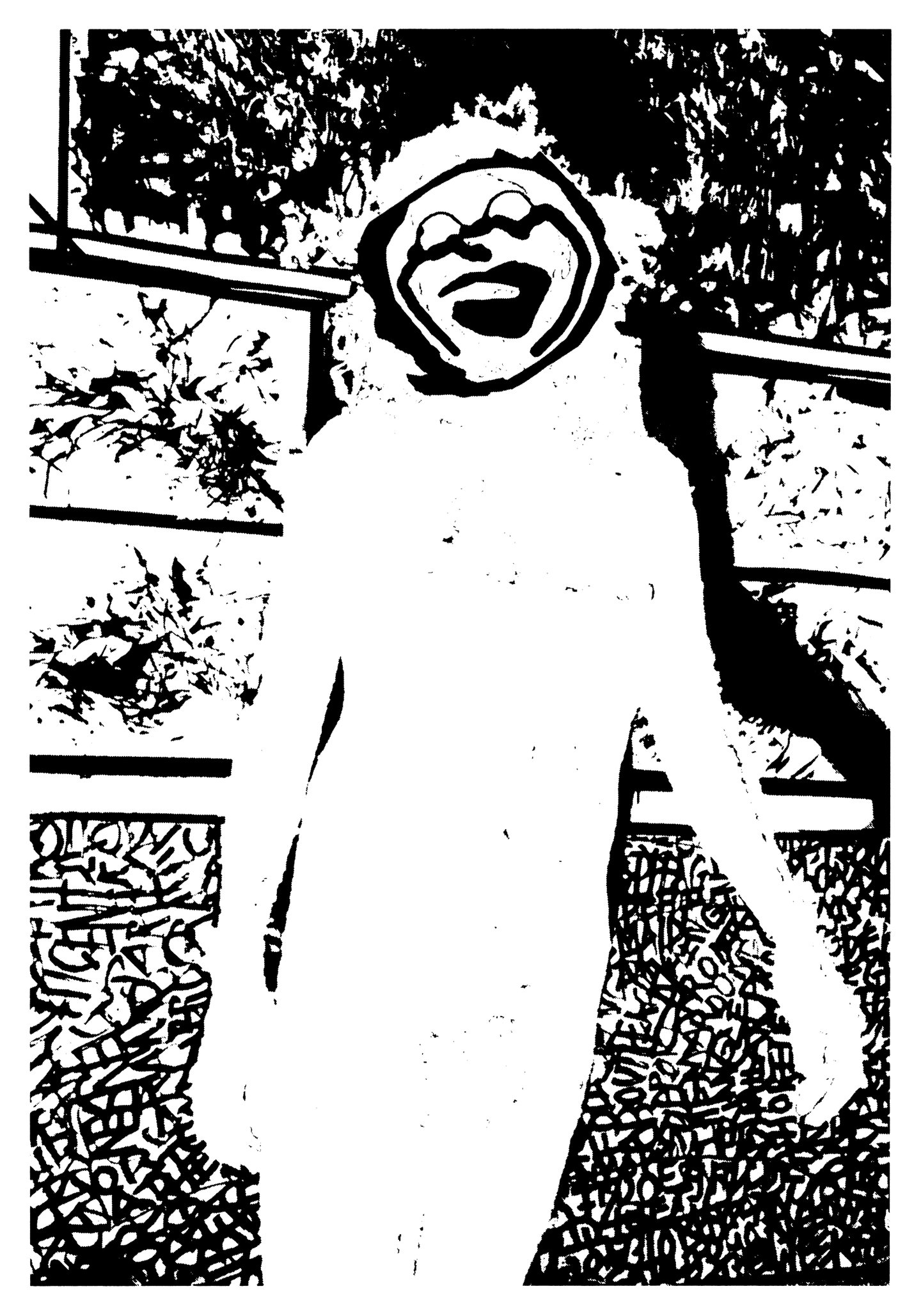
Intrusive Thots is both an archive and a comic book, albeit experimental versions of each. Each page is starkly monochromatic, with the deep blacks and high contrast of classic punk zines. Some spreads are murals of illegible writing, others have drawings that look like something exploded on the page. Some images appear again and again, becoming increasingly obfuscated, which seems to be a metaphor for Bea’s turbulent feelings about herself. One page is full of chaotic collages of Star Trek magazines, drawings, journal entries and insurance forms. On the very next page, there’s a drawing she destroyed “in a tantrum”. Intrusive Thots is undeniably raw and unfiltered.
Feelings appear as they’re felt – and as we all know, some feelings are felt so hard that they cannot be contained. Of course, art and design is just one of the many useful outlets for these feelings, making the invisible visible and the unheard heard. “When I think back to self harm, I see myself making my psychological distress bodily – my emotions imposing as physical, visible and permanent marks… the marks documented my anguish,” shares Bea. And those marks make appearances on the page too, tying a narrative thread between two different types of mark making.
“By channeling my dissociative and documentary impulses into drawing, I was able to safely and deeply unblock and embody staggering levels of suppressed anger and terrifyingly violent intrusive thoughts,” says Bea, who also shared that, since completing certain drawings in Intrusive Thots, she hasn’t self-harmed again. “The cover photograph was shot from my bed on the floor in one corner of my room, and I drew the back cover looking at the rest of my room from approximately the same vantage point,” says Bea. “In between these moments of spatial clarity, I present the material of my life face first.”