Timothy Boomer Captures the Uncanny World of Insect Galls
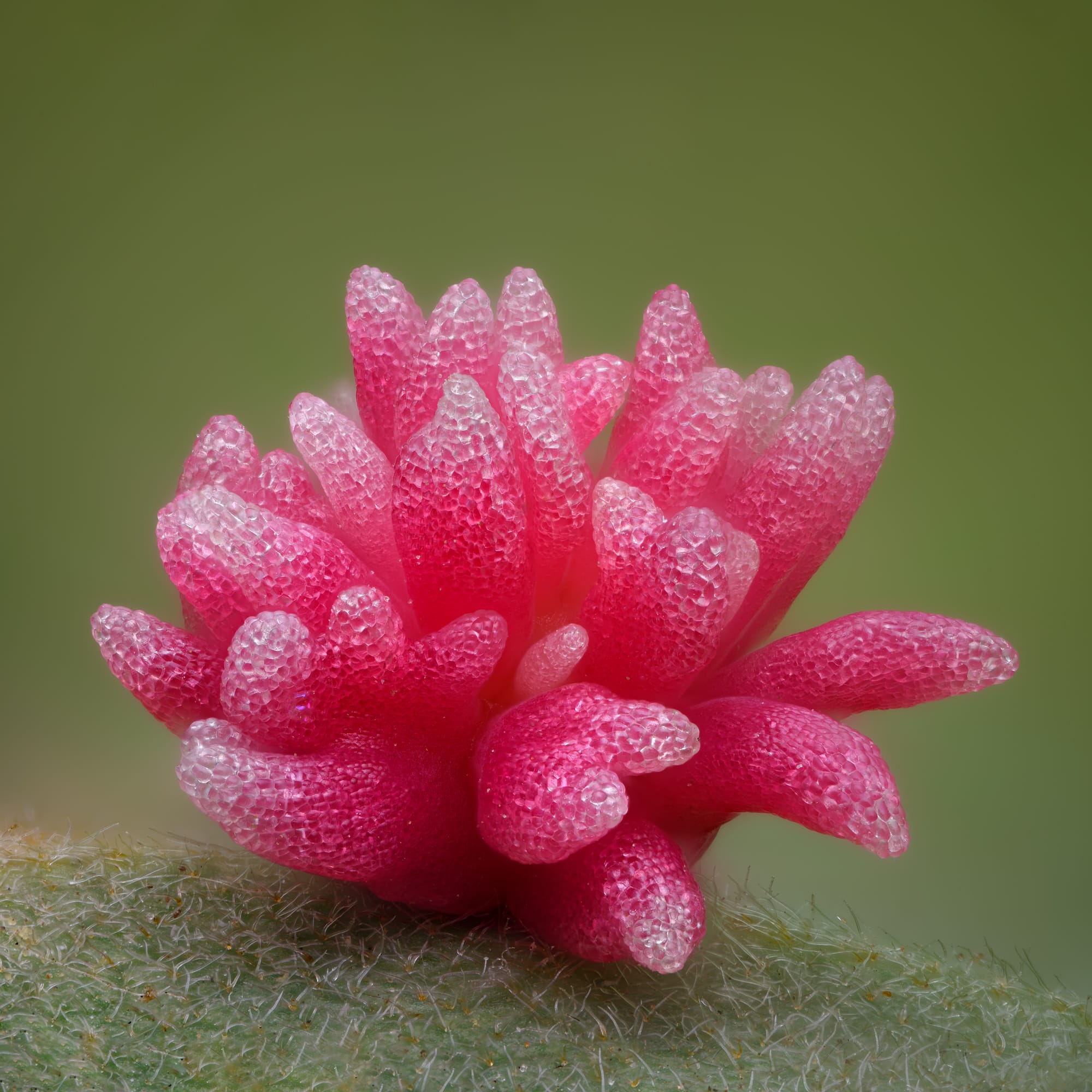
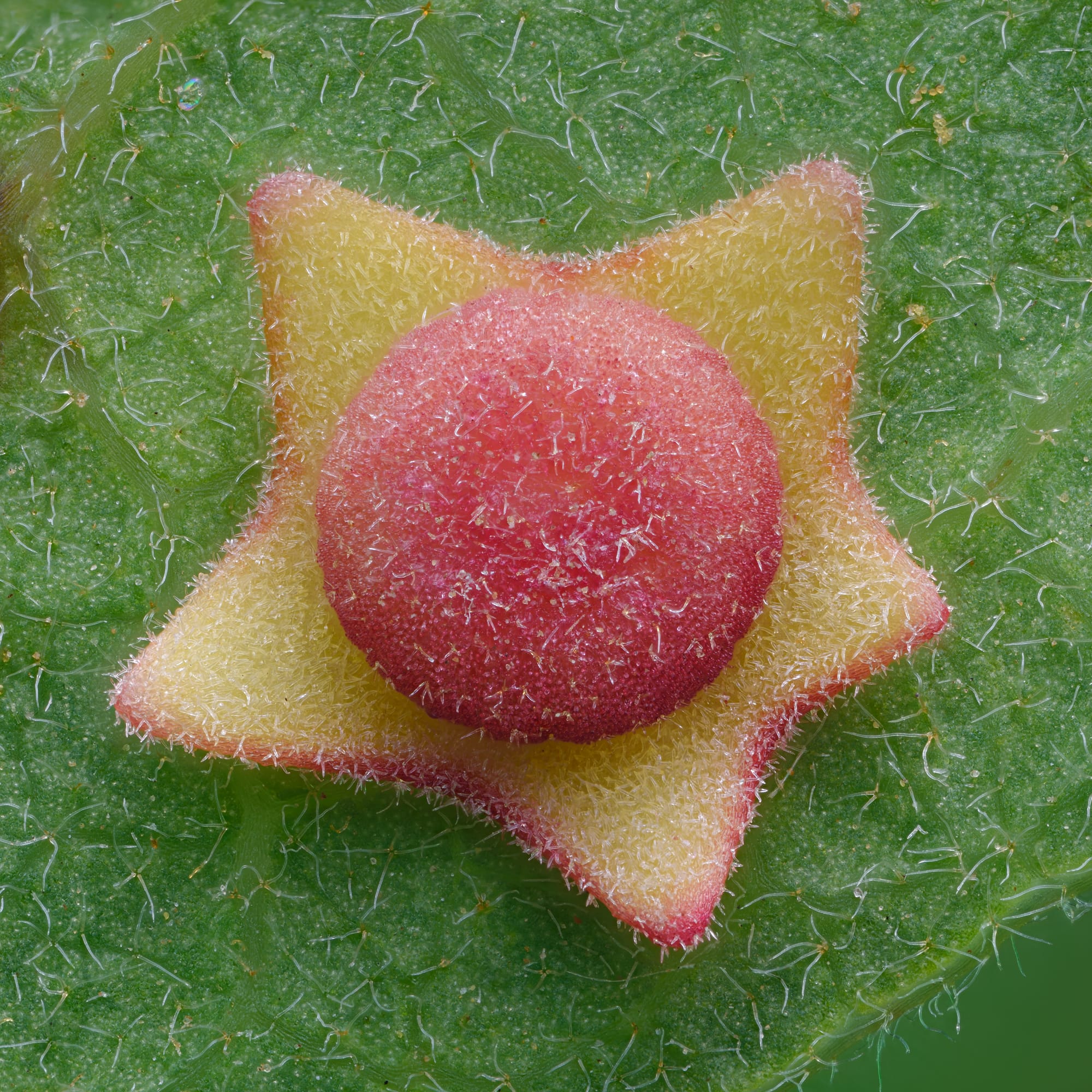
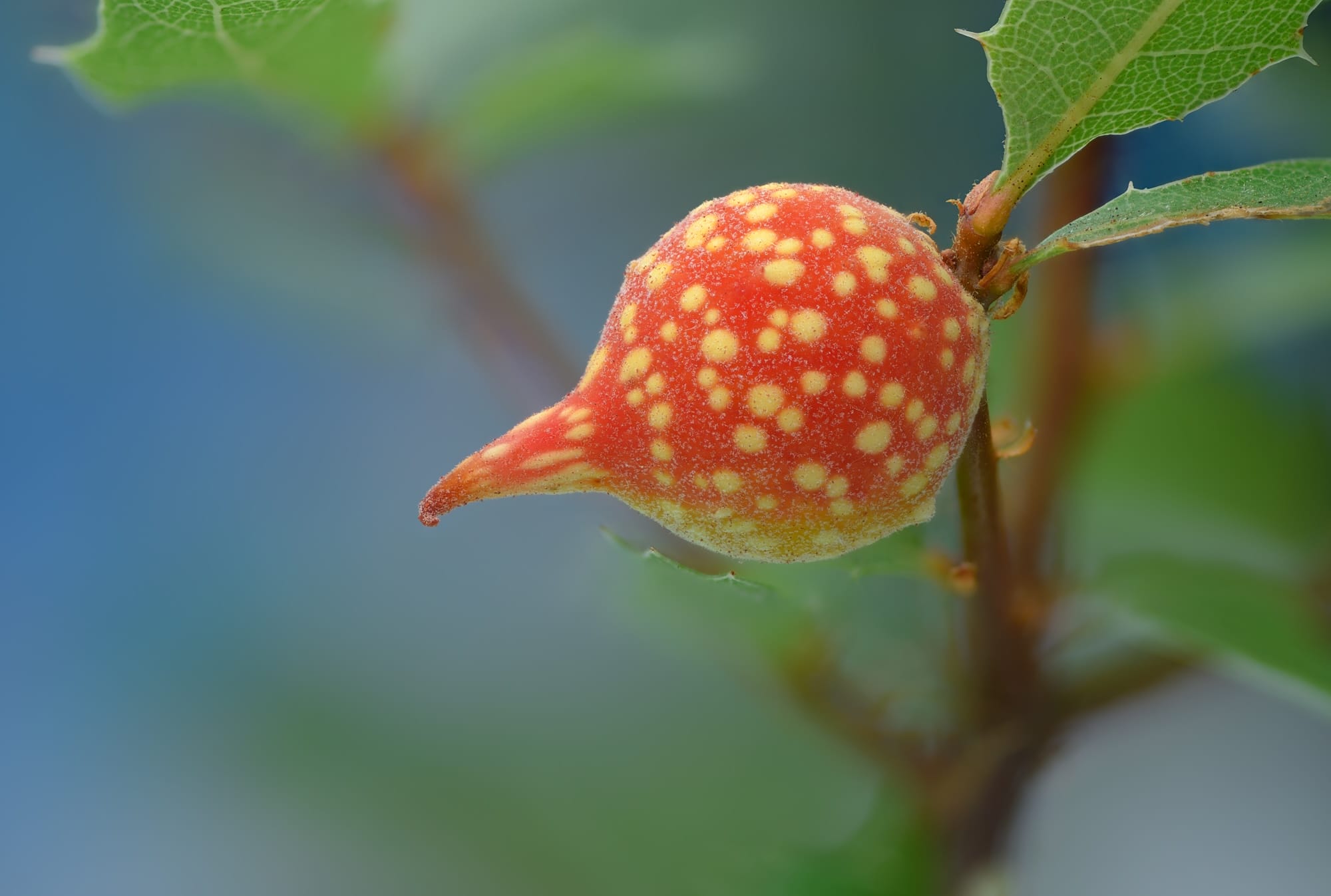
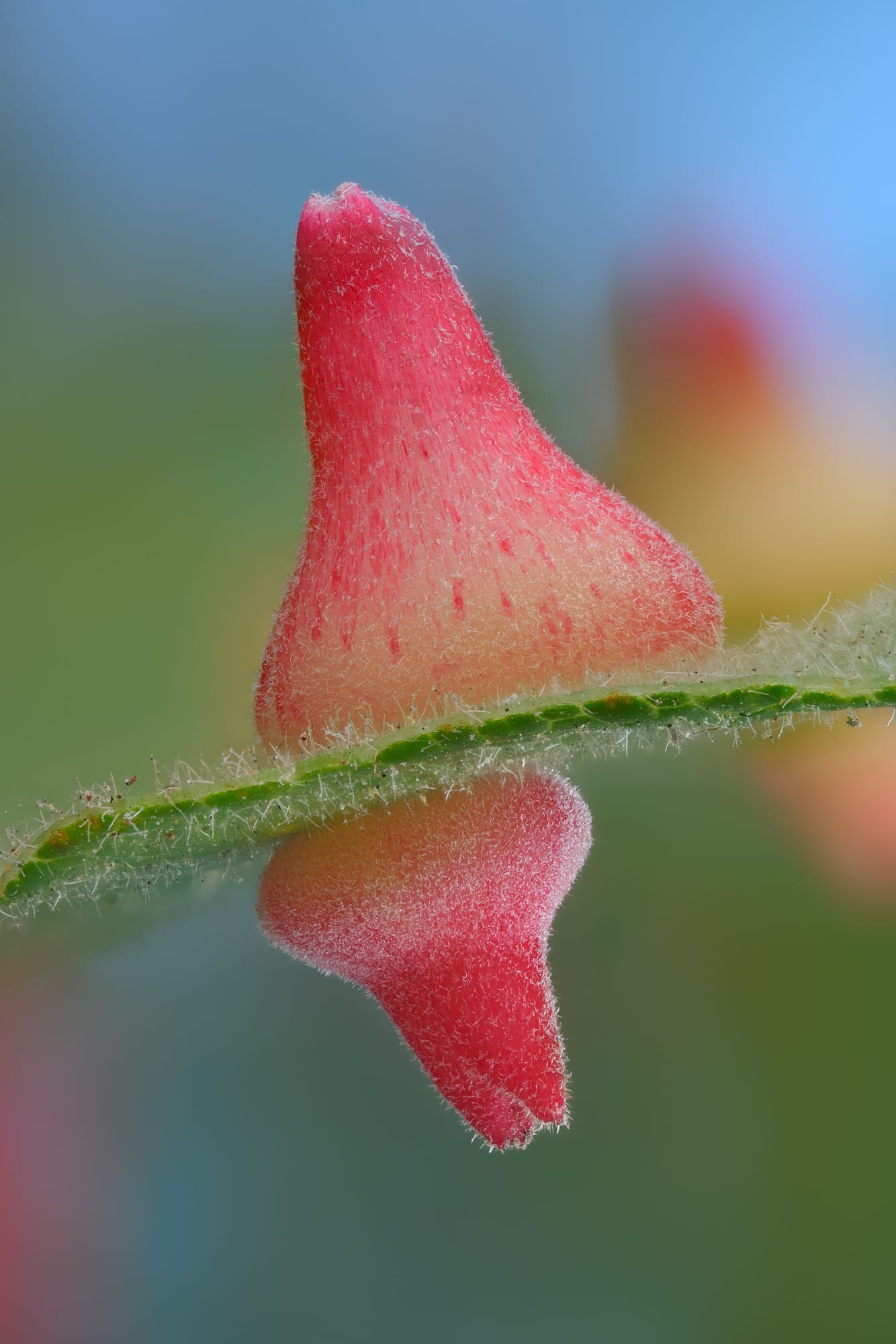
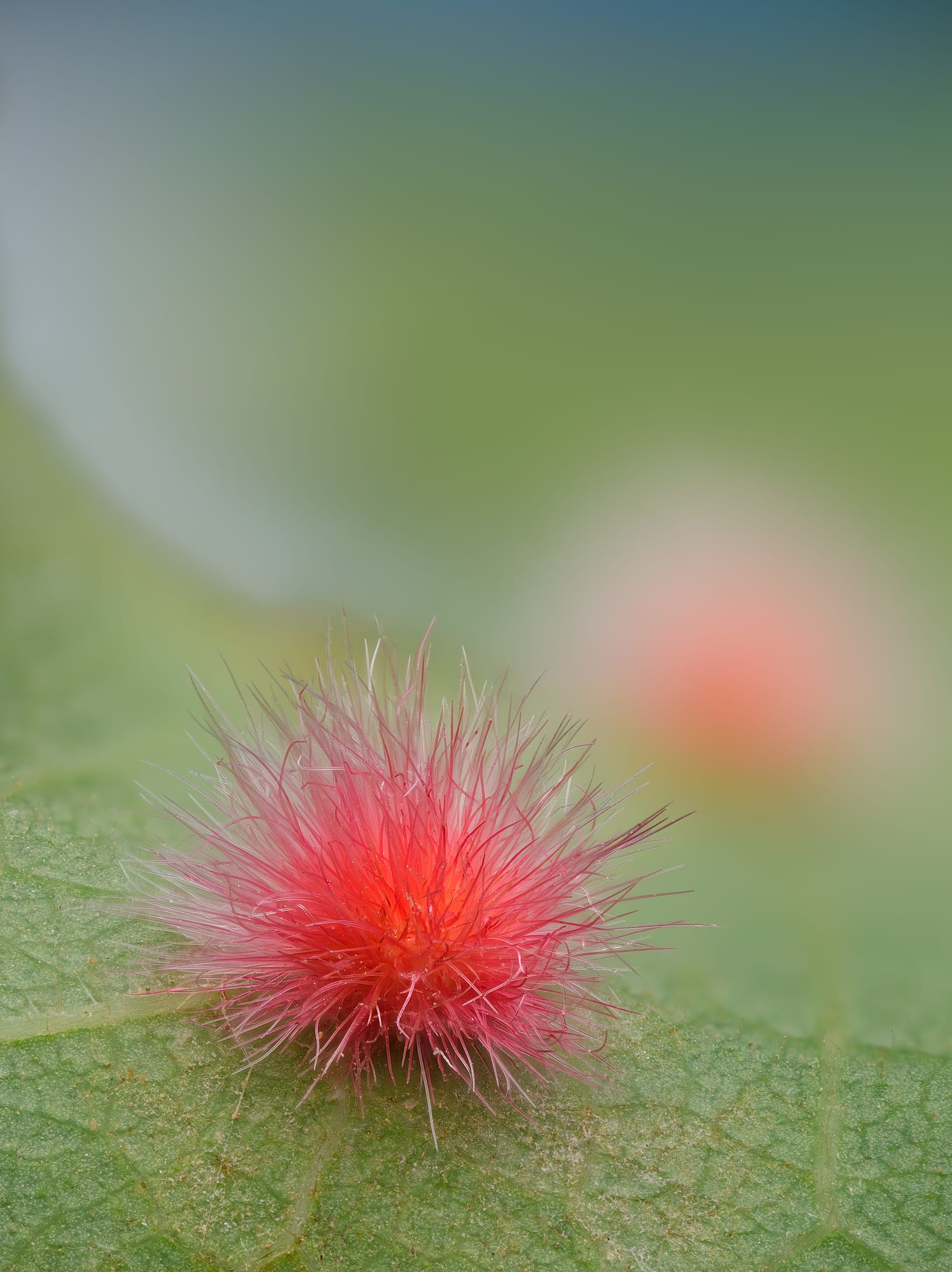
Gall wasps, also known as cynipids, have a unique mutual relationship with plants. Their name is derived from the deposits, called galls, which they induce on host plants to support their larvae. The benign growths are created by chemicals that the larvae insert into the plant, drawing on its resources. These phenomena are often very tiny, occasionally appear in clusters, and can range from ruddy brown to vibrant pinks and yellows. Nature photographer Timothy Boomer can’t get enough of them.
“Galls can be brought about by many different organisms, but I tend to focus on the ones induced by cynipid wasps because they are the most visually stunning (at least in my opinion),” Boomer tells Colossal.
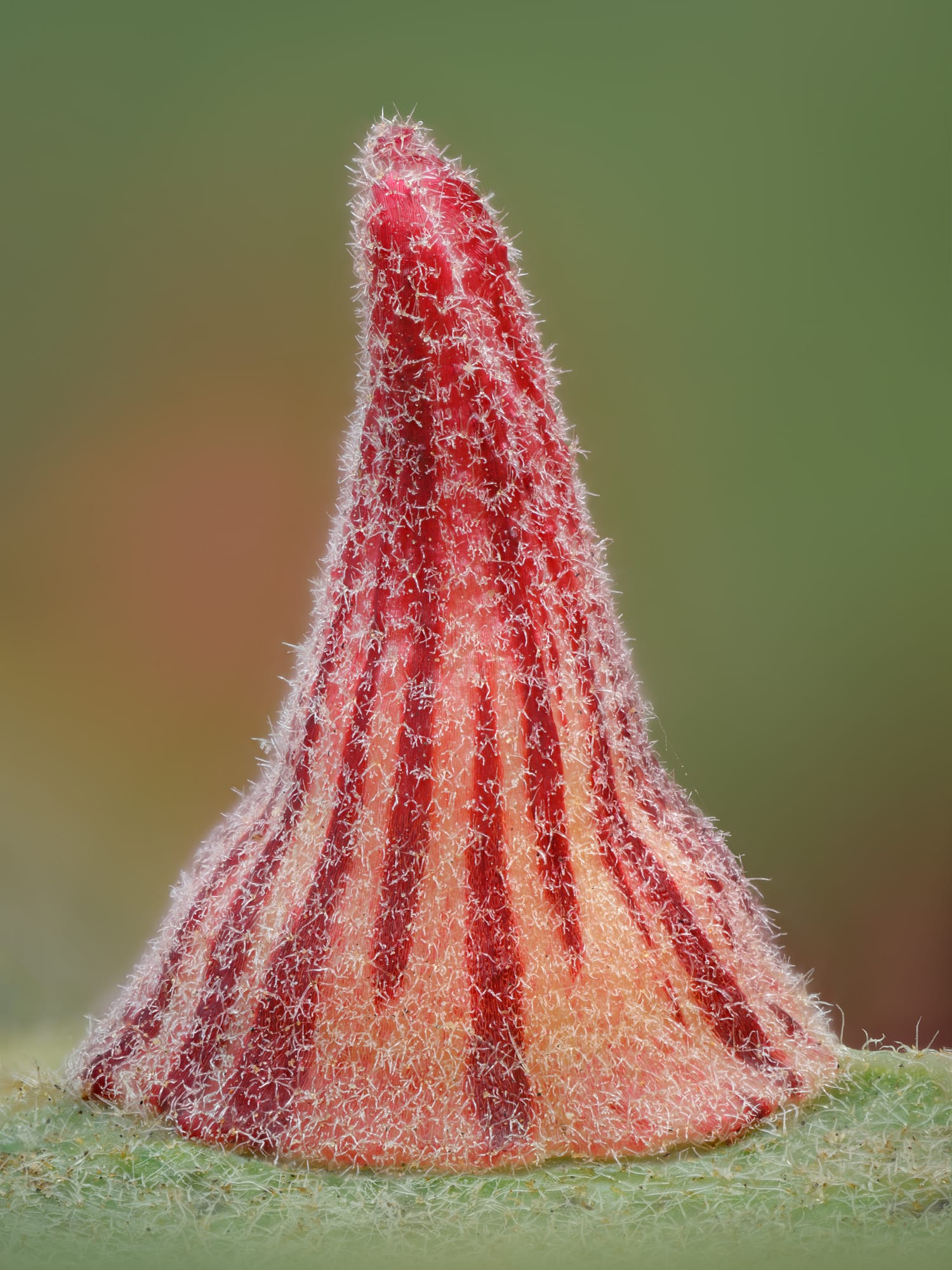
A gall serves as both protection and a food source for the insect growing inside. If all goes according to plan, the larva remains safe from predators, receives enough food, and grows into an adult before climbing out and continuing the cycle. Different species of wasp create unique characteristics, often on very specific parts of the plants. Scientists believe there are at least around 1,300 cynipids globally.
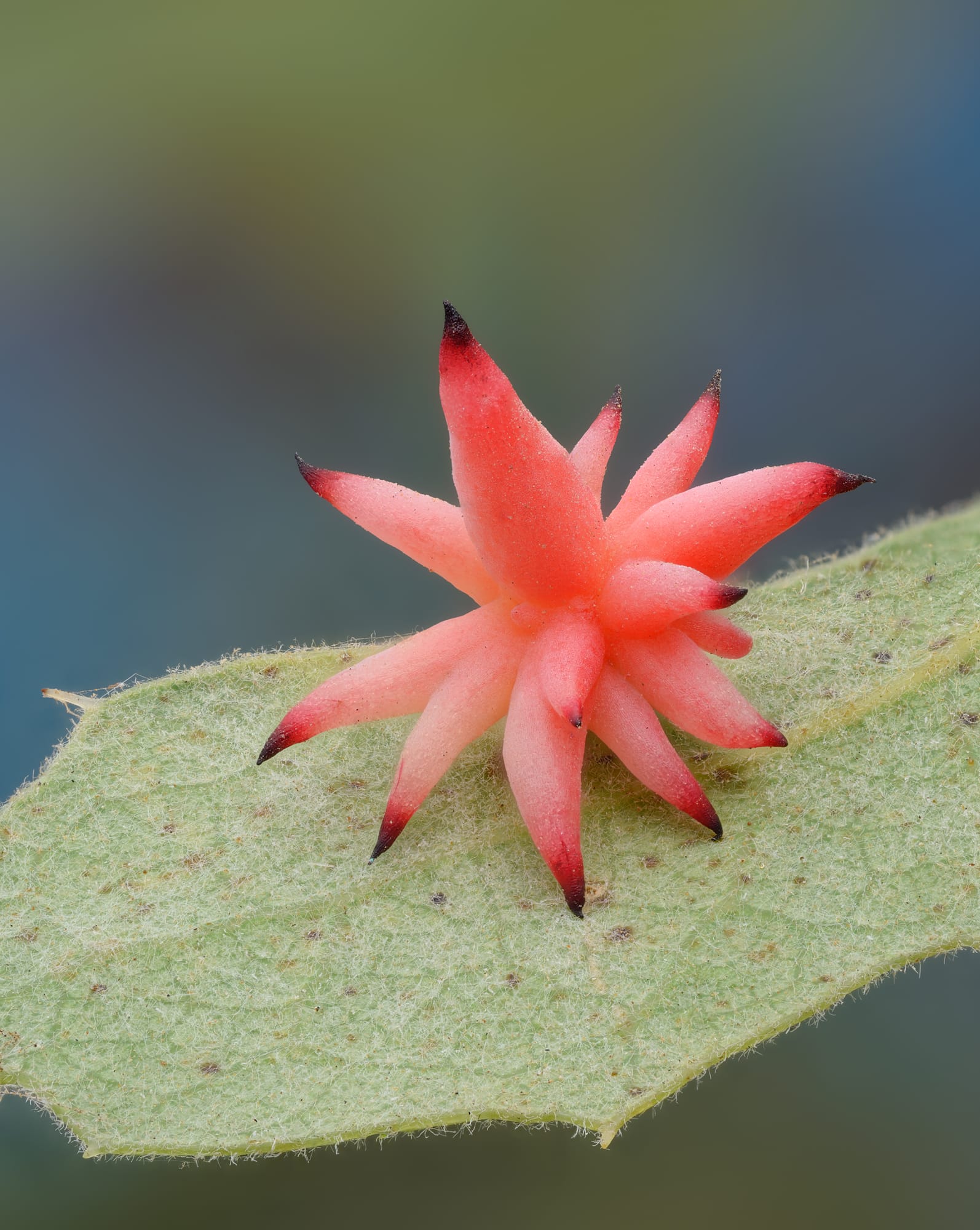
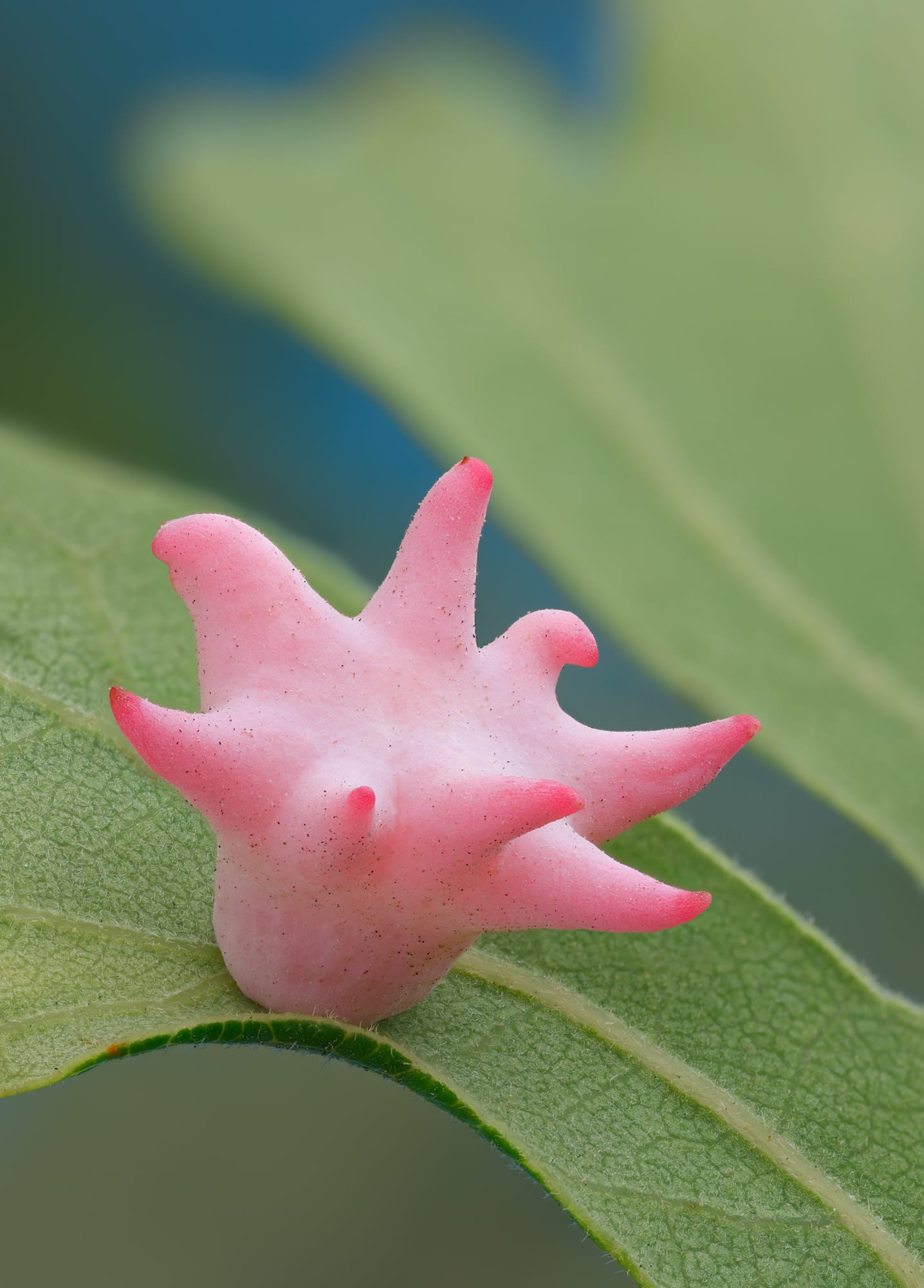
Sometimes, environmental effects change the nodules’ appearance. Boomer points to the spined turban gall, which typically has a bubblegum-pink hue with spines protruding from a relatively flat center. He also captured an atypical one, which is a darker pink with blackened tips and spikes all over. “In this case, normal development was interrupted by a non-inducer entering the gall at an early stage,” Boomer says. “I’m not a scientist, so I won’t pretend to fully comprehend the intricacies of how all this plays out, but I think of it as a ‘home invasion’ that actually alters the home.”
At such minuscule scale with shallow depth-of-field, Boomer uses a focus-stacking technique, which involves taking hundreds, sometimes thousands of images and layering them digitally to make the tiny objects clear. He edits minimally in Photoshop to retain the integrity of the original scene and is passionate about sharing only what occurs naturally. Essentially, he lets the beautiful, bizarre geometries be what they are. “Nature does not need to be ‘enhanced,'” he says.
Find Boomer’s work on Instagram, where you can explore slime molds, flowers, and more.

Do stories and artists like this matter to you? Become a Colossal Member today and support independent arts publishing for as little as $7 per month. The article Timothy Boomer Captures the Uncanny World of Insect Galls appeared first on Colossal.