How Pentagram Reimagined Brand Identity for De Bijloke
Pentagram gives Ghent's De Bijloke a living identity: a fluid, oscilloscope-born brand built for classical, jazz and new music alike.
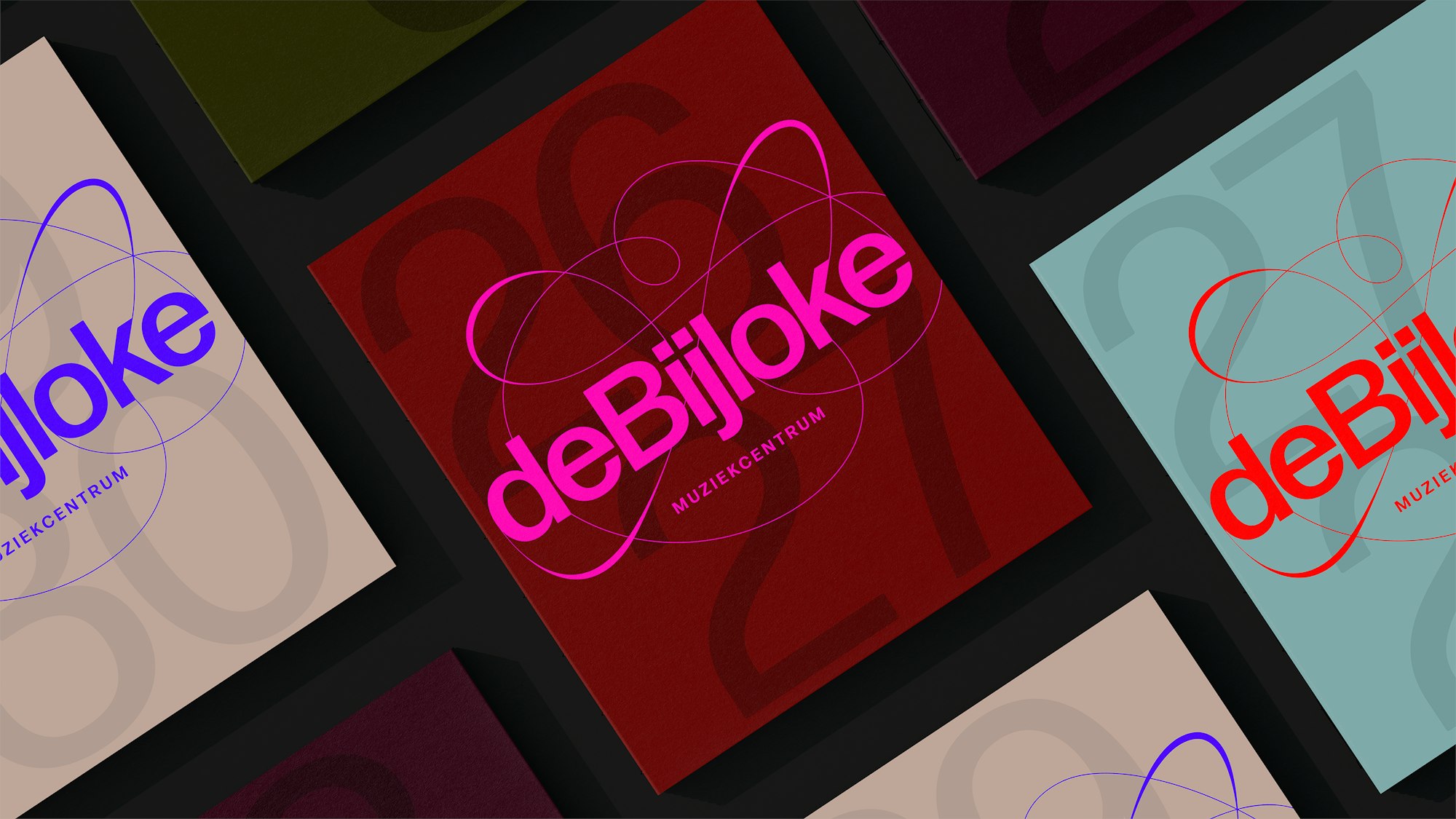
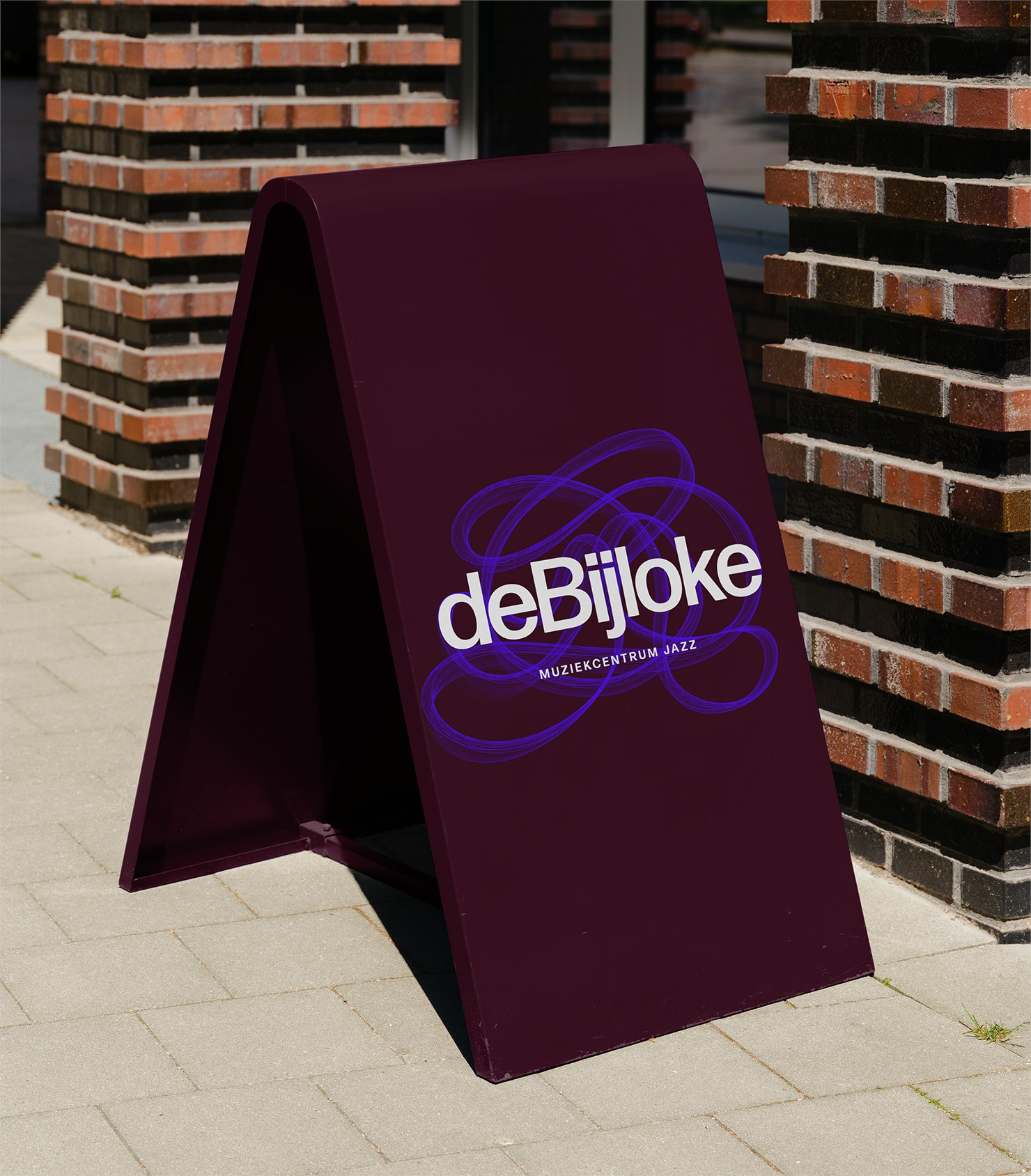
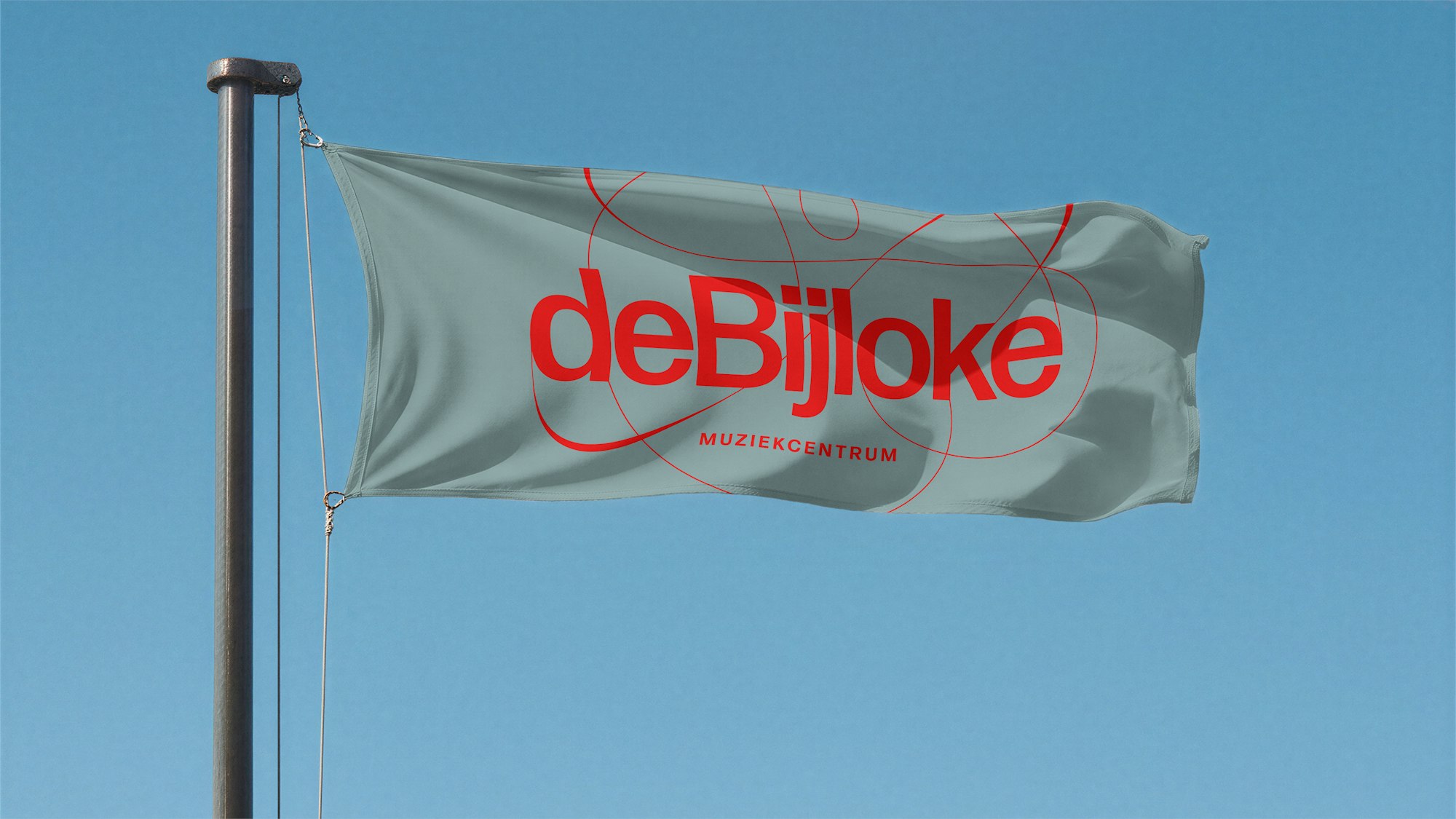
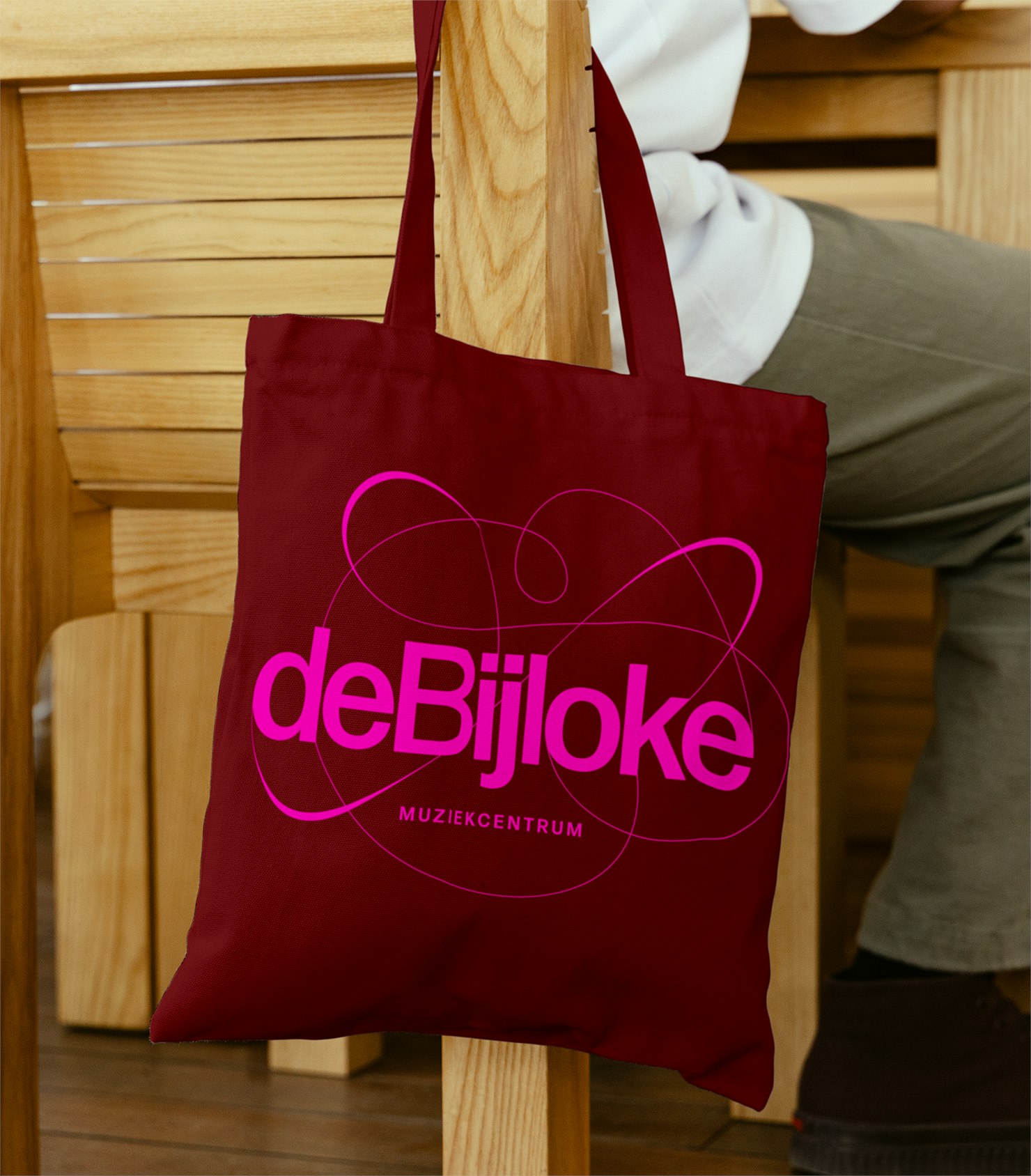
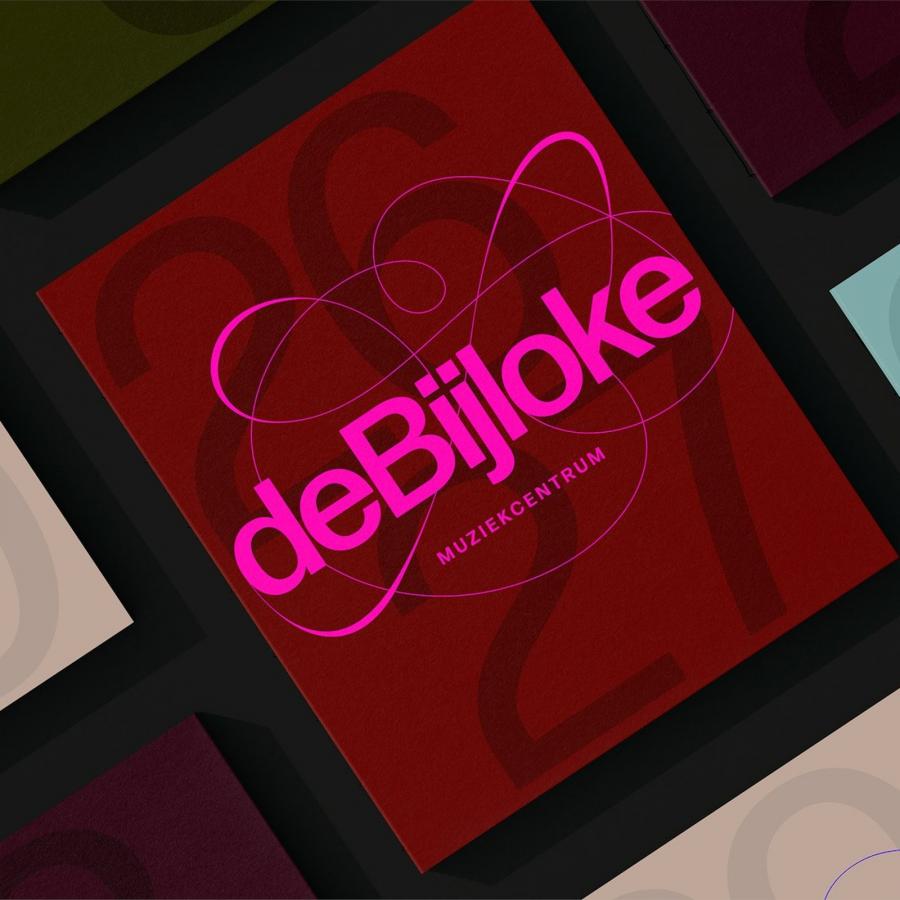
The heart of the identity is a swooping mark that reads like a sound wave caught mid-flight. Marina Willer's team at Pentagram drew it from two unlikely muses: John Cage's unconventional notation and the oscilloscope, the analogue tool that turns audio signals into line. The logo lives as an orbit of thin looping lines around the deBijloke wordmark, shifting color with each application: neon pink on maroon, electric blue on cream, red on sage green. Behind the wordmark sits a ghosted oversized numeral, a structural backdrop that gives each layout its scaffolding. The whole thing is digital-first and alive, built to shift between the intimate and the grand without ever losing its shape.
De Bijloke's Quiet Type
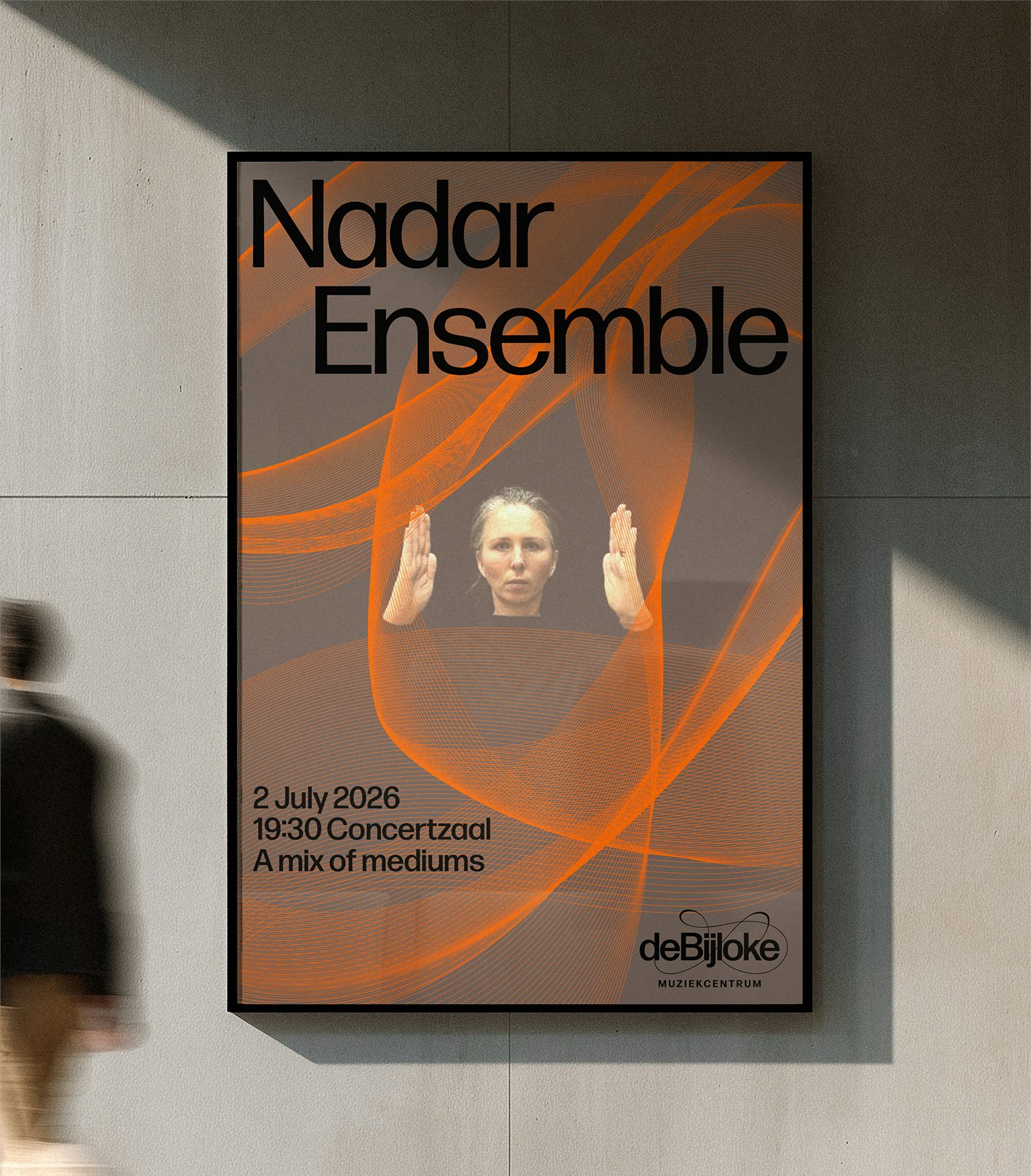
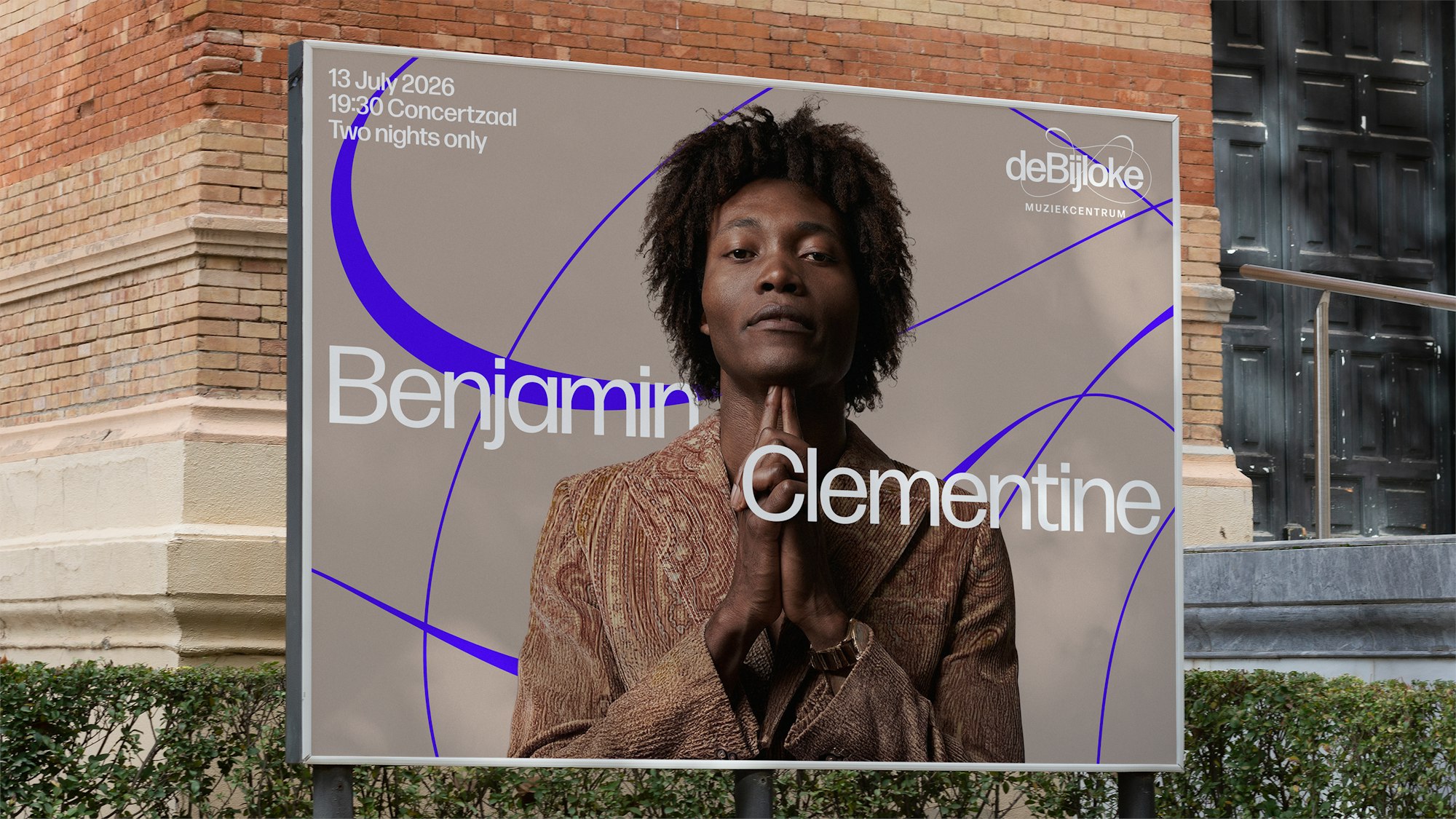
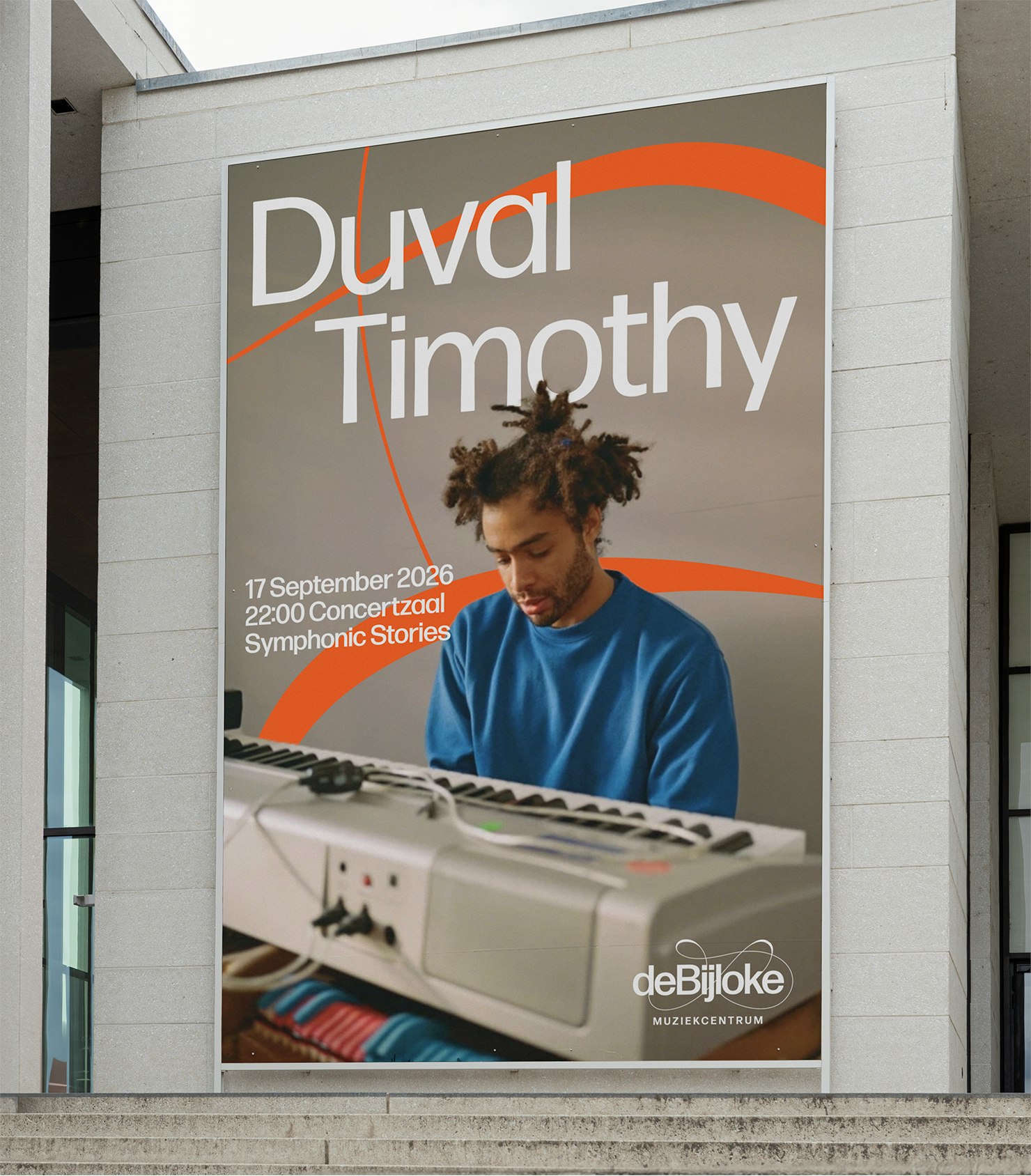
Against the expressive logo, the type system stays deliberately calm. Pentagram set the typographic voice in Forma DJR, a simple grotesque whose clean letterforms give the swooshes a neutral balance. Headlines run large and confident: the Benjamin Clementine billboard stacks the artist's name in giant cap-height letters over a portrait, and the framed Nadar Ensemble poster lets "Nadar Ensemble" fill the entire top half of the sheet above a field of burnt-orange waveforms. Small-caps details tuck beneath the wordmark, "MUZIEKCENTRUM" or "MUZIEKCENTRUM JAZZ" in tracked-out caps, giving the lockup its institutional anchor while the orbit lines do the talking.
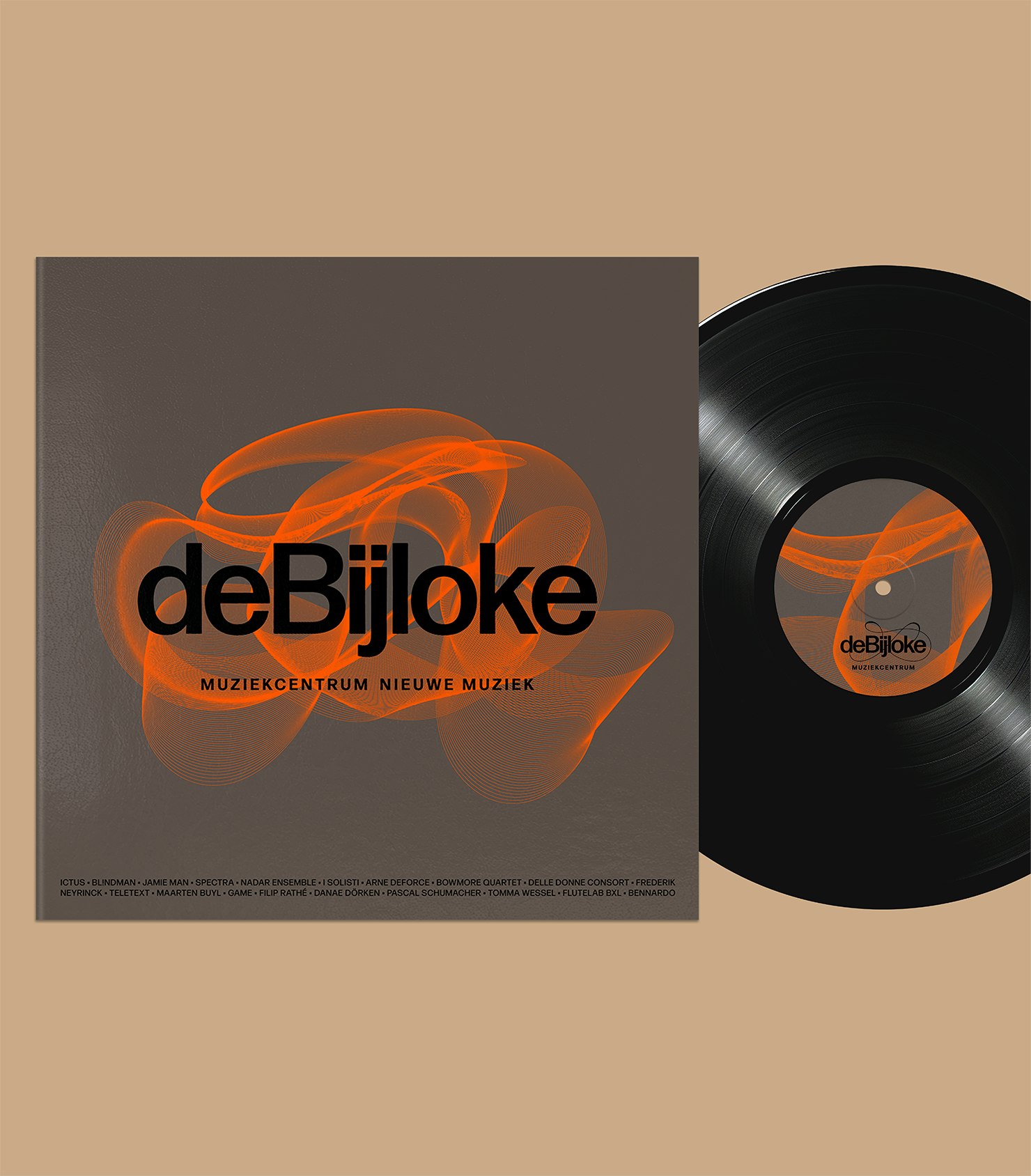
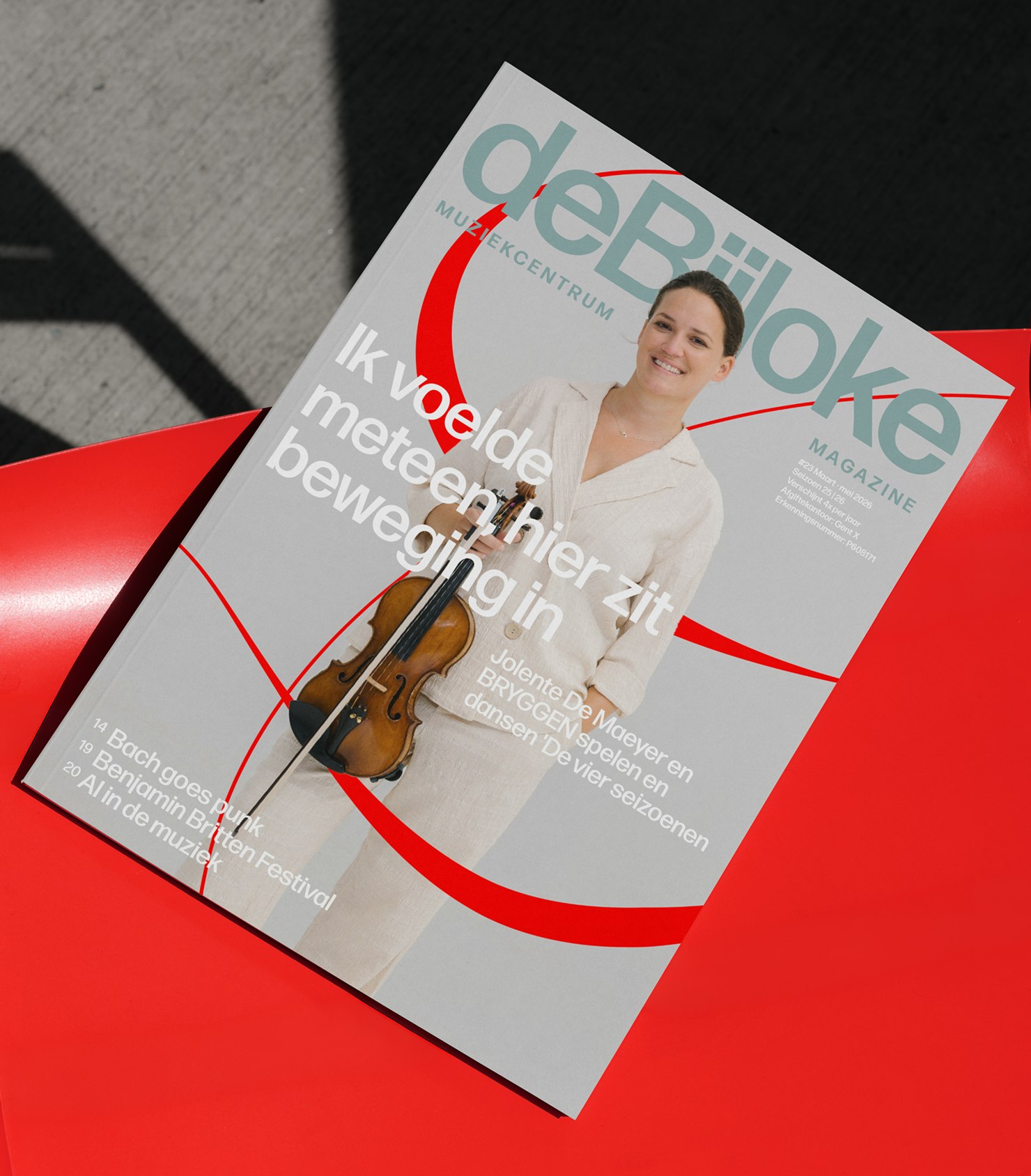
The system earns its keep in physical space. It scales from a maroon pavement A-board outside the venue, carrying the Jazz strand lockup in white and violet, to an outdoor flag in sage and red, a maroon tote bag with the pink wordmark, and a season magazine where a violinist cover wears the red arc graphics. The New Music strand pushes the mark furthest: the vinyl sleeve pairs black type with orange oscilloscope waves on a matte warm-grey ground, the lockup repeated on the record label, a long line of artist names running small along the bottom edge. A generative tool reinterprets the Jazz and New Music patterns into ever-changing forms, so the system stays in motion across every format it touches.
See the full case study from Pentagram.