Resource Nationalism Hits Tungsten: US Locks Down Scrap, UK Funds Mine, Zimbabwe Bans Exports, Vietnam Weighs Curbs
Governments are tightening control over tungsten supplies, creating an opening for Almonty Industries as Western buyers seek alternatives to China's quasi-monopolistic market position on not just tungsten but rare earths. Tungsten and other critical materials underpin defense production, semiconductor manufacturing, AI data center buildouts, power grid upgrades and industrial tooling, basically some of the building blocks of the modern economy.
First, US banning tungsten scraps export
— Teo (@Teo_Sinamin) September 11, 2026
Second,UK government investing in Tungsten West
Third, Zimbabwe banning Tungsten concentrates export
Forth, Vietnam does the same
Who's next?! https://t.co/zmPs1K5rJM
The latest developments point to growing competition for shrinking available supply. The US has restricted tungsten scrap exports, the UK has backed Tungsten West with up to £71 million, and Zimbabwe has suspended exports of tungsten and antimony in all forms, including ores and concentrates. Vietnam is also considering restrictions on ore and concentrate shipments to support domestic processing. This all suggests resource nationalism will make deliverable tungsten ex-China even harder to source.
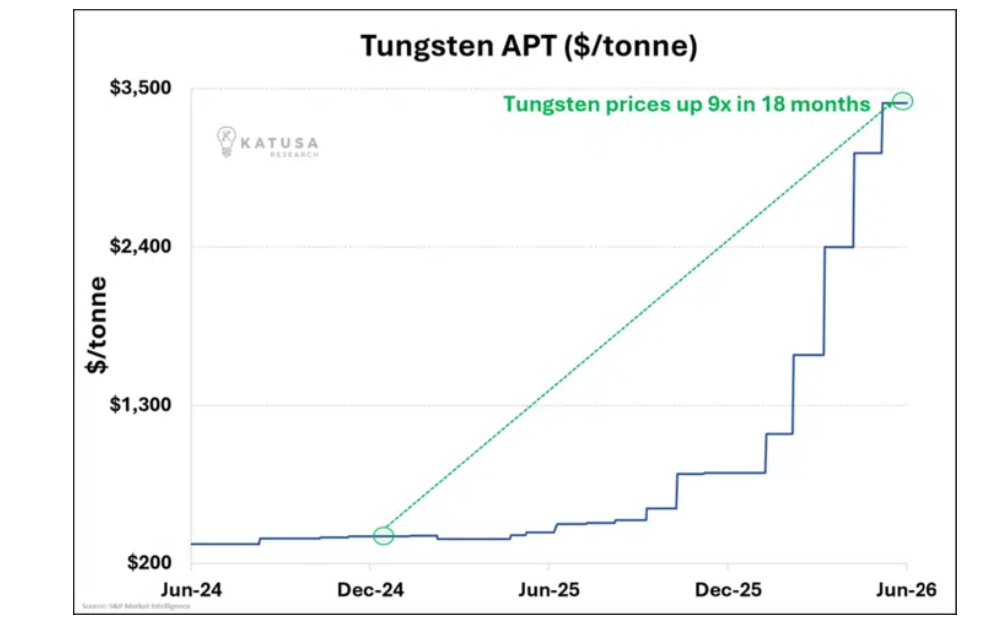
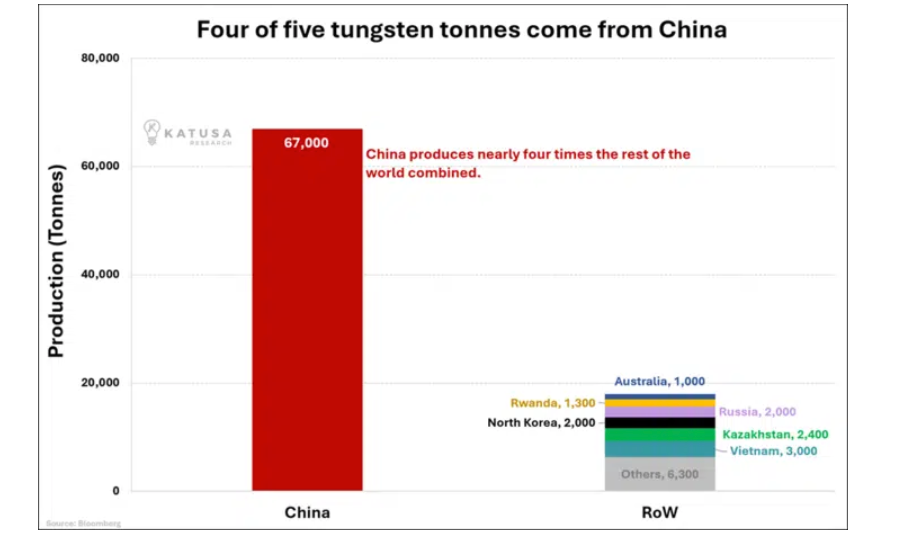
With China accounting for roughly 80% of global tungsten production and having throttled exports of this critical metal for over one year, resource nationalism will only broaden from here.
The supply crunch strengthens the investment case for producers, not necessarily speculative junior miners, because deliverable tungsten is urgently needed today ahead of a massive rearmament supercycle across the US and Europe. It also positions Almonty as the largest and only North America-based producer of conflict-free tungsten for the West.
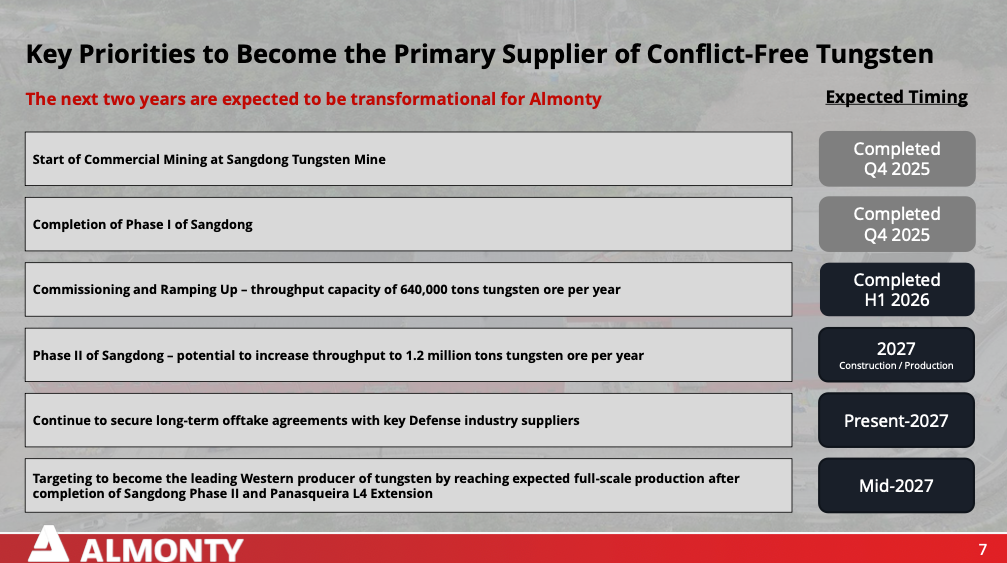
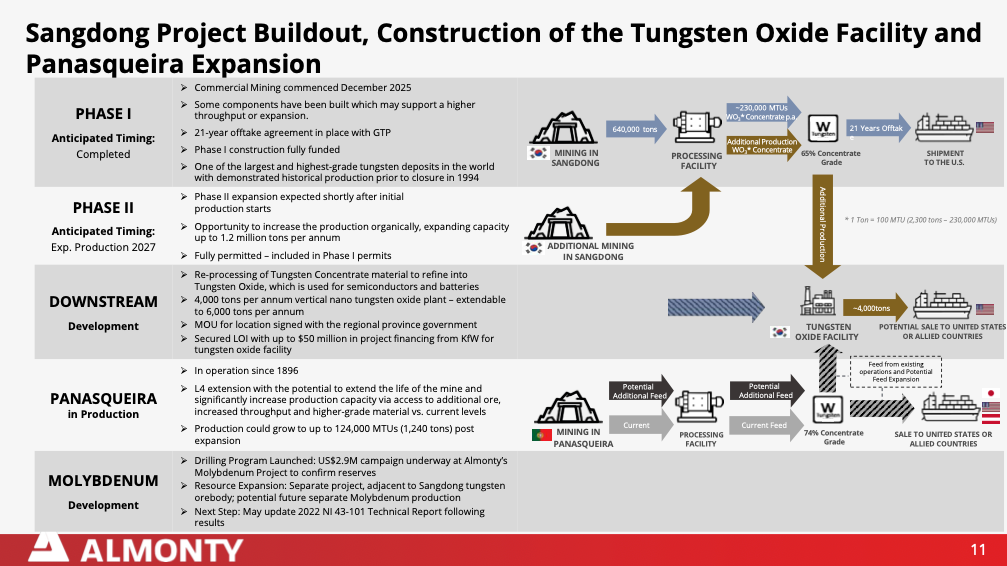
Almonty began processing ore at its Sangdong mine in South Korea in June, marking its transition to scalable tungsten ore production, with throughput potentially increasing to 1.2 million tons of tungsten ore in 2027.
In July, Almonty expanded its agreement with Pennsylvania-based Global Tungsten & Powders, extending the term to 21 years, increasing total contracted volumes by 40% and improving pricing by approximately 6.3%. This establishes a direct route into US industrial and defense supply chains.
Almonty's most recent presentation describes itself as becoming the leading Western tungsten producer following Sangdong's Phase II expansion and an extension at Portugal's operating Panasqueira mine.
Almonty is pursuing that higher-value processing opportunity through a planned South Korean tungsten oxide plant with an initial annual capacity of 4,000 tons, then expanding to 6,000 tons.
This new source of tungsten is urgently needed because, last week at the Jefferies Industrials Conference, MSC Industrial executive Martina McIsaac warned of a tungsten supply shock rippling through the company's supply chain and continuing to drive up industrial tooling costs.
McIsaac warned that the "ripples through the supply chain aren't over yet" and that the tungsten supply crunch will remain a major headache.
Almonty's opportunity is to establish an early lead in supplying the US and its allies with conflict-free tungsten, reinforcing our broader decoupling theme.
China's dominance of critical-material supply chains gives Beijing leverage over Washington, and any further tightening of export controls on critical materials would only reinforce the decoupling theme.