Xi Presses Trump For Taiwan Policy Shift As $14 Billion Weapons Deal Hangs In Limbo
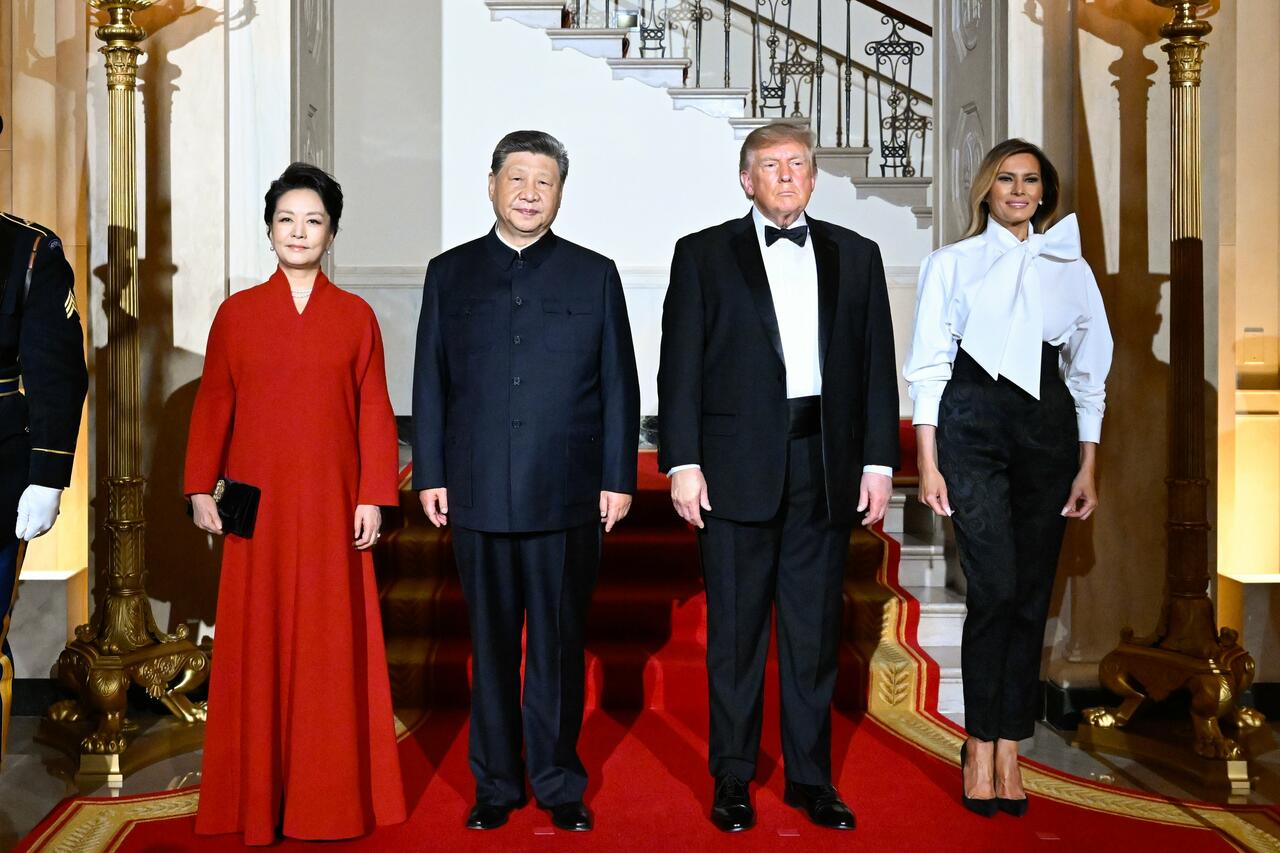
Following our earlier coverage of Barclays senior China economist Yingke Zhou's view that Chinese leader Xi Jinping's state visit delivered "more signaling, less substance," attention turns to Taiwan, where Xi pressed President Donald Trump to oppose Taiwan independence.
According to China's official Xinhua News Agency, Xi urged Trump to "adhere to the correct position of opposing Taiwan independence." The conversation took place at Thursday's White House summit.
For years, Washington has held the stance that it "doesn't support" the independence of Taiwan, the island Xi and his Communist Party claim as their own.
"While this may appear a semantic shift, the impact would be meaningful," said Bloomberg Economics' Jennifer Welch, who served as director for China and Taiwan on the National Security Council under the previous Biden and Trump administrations.
Welch pointed out that Beijing would use any switch in language from Trump to undermine Taiwan's confidence in US support. She added, "Opposing Taiwan independence implies an active effort to contain what Beijing sees as pro-independence forces."
This push by Xi to Trump comes as he heads toward an expected fourth term in office next year; he's ramping up diplomatic pressure to isolate the island, home to the world's most advanced semiconductor production, and block future weapons sales by the Trump administration.
For many months, Trump has delayed the $14 billion weapons package for Taiwan, which may come in the weeks or months ahead now that Xi's state dinner at the White House is over. It appears that Taipei is seeing its defense needs becoming leverage in the US-China trade spat.
In a preview of what next year might hold, China deployed a record 244 coast guard, research, and other government vessels around Taiwan this summer in what could only be viewed as a dry run for a blockade.
Beijing has warned that mishandling the Taiwan issue could lead to "clashes" between the superpowers - certainly a flashpoint.
"The key acid test will be what Trump says on Taiwan," said Ryan Hass, director of the China Center at the Brookings Institution, who Bloomberg quoted. "Not just what Xi urges Trump to endorse."
Meanwhile, Reuters cited Taiwan's foreign ministry as saying that Xi's remarks represent "the consistent Chinese approach of distorting facts and unilaterally conveying its position and claims."
"Taiwan's sovereignty belongs to all the people of Taiwan. The Chinese Communist Party has no right to represent the Taiwanese people, and Taiwan's future can only be determined by the Taiwanese people through democratic means," the ministry added.
There were no immediate signals that the Trump administration would agree to Xi's request, a shift in wording that could carry significant implications for Washington's stance on Taiwan.
Jeremy Chan, senior analyst on China for the US-based political risk consultancy Eurasia Group, told Reuters, "It would erode a lot of the...strategic ambiguity of whether the US would come to Taiwan's aid in that context."