$6 Diesel Flashes 2008 Warning As Energy Shock, AI Slowdown Fears Fuel Perfect Storm
As of Monday morning, AAA's national average retail diesel price topped $6.23 a gallon as a global refining crisis sparked by the Russia-Ukraine war and compounded by the Gulf conflict sent the price of the most critical fuel powering the industrial world skyrocketing.
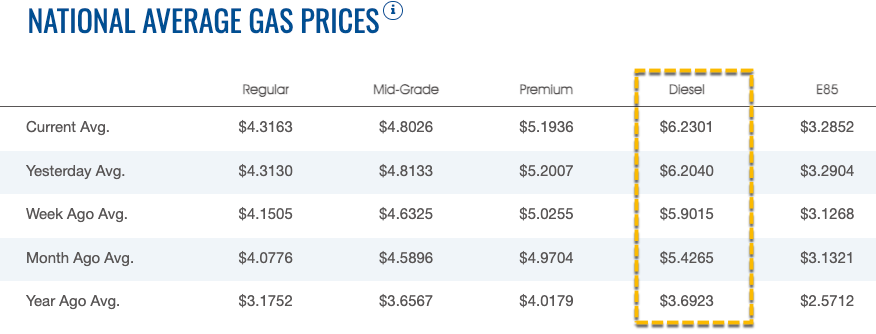
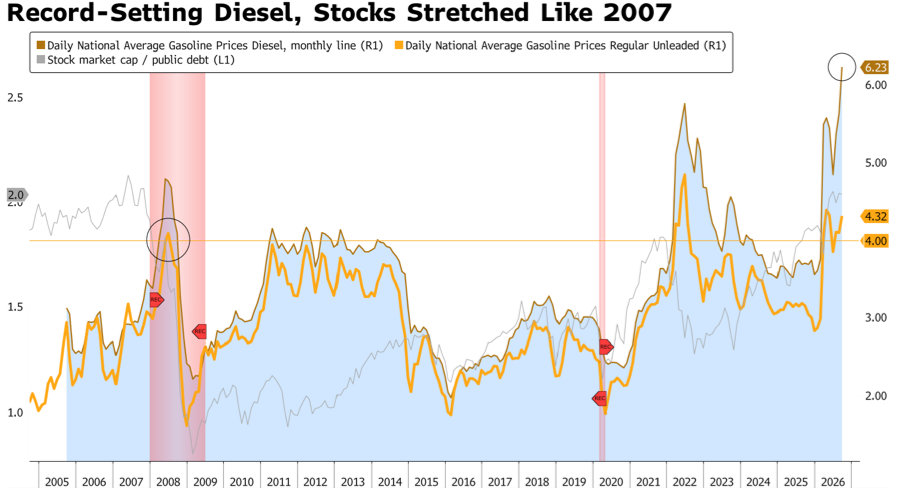
Bloomberg Intelligence senior commodity strategist Mike McGlone warned Monday that "$6 diesel echoes 2008 gasoline shock."
"Commodity spikes tend to sow the seeds of their own reversal, and diesel's first-ever surge above $6 a gallon may echo gasoline's 2008 experience. The US daily average gasoline price, at roughly $4.30 on Sept. 11, is only about 4% above its 2008 peak, which helped fuel the Great Recession," McGlone wrote in a note.
He added, "Elevated stock market valuations could add to the vulnerability."
On top of a fuel price shock, tech is sliding Monday morning amid fears of an AI slowdown (read the morning note).
McGlone's warning comes as Patrick De Haan, head of petroleum analysis at GasBuddy, pointed out at the end of last week that some gas pumps across California hit a record $9.99 per gallon for the industrial fuel.
MAXXED OUT at $9.999!! GasBuddy data showing 5 stations in California that have hit the limit and are selling diesel at the dispensers highest possible price: $9.999/gal
— Patrick De Haan (@GasBuddyGuy) September 10, 2026
Any sustained diesel price shock can push inflation higher while slowing economic growth, creating a stagflationary squeeze. Higher energy costs raise production expenses and reduce households' purchasing power, also denting consumer sentiment.
The global refining crisis has drawn the White House's attention. President Trump on Sunday called on Ukrainian President Volodymyr Zelenskyy to halt strikes on Russian diesel infrastructure.
"Zelenskyy has to do one thing. He has to stop knocking out diesel fuel in Russia," Trump told reporters at the Irish Open yesterday.
"We spoke to Mr. Zelenskyy about it. There are plenty of other targets. Don't hit diesel fuel, because that's hurting, that's hurting the world," the president said.
Meanwhile, the Trump administration is considering how to use the Defense Production Act to expand US oil refining capacity as the Iran conflict drives up fuel prices.
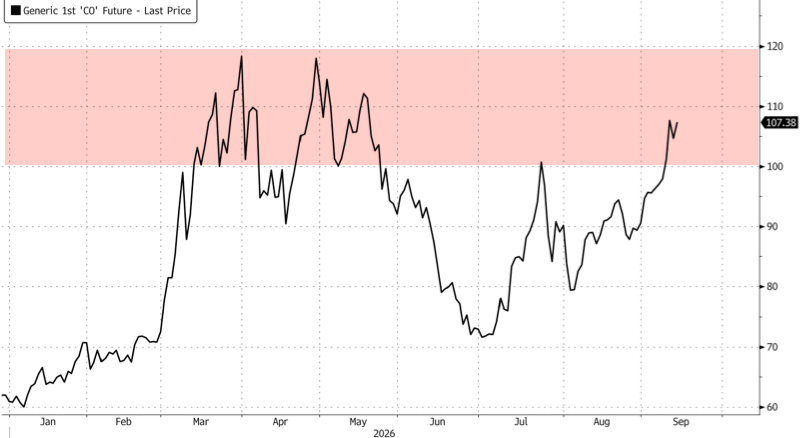
Brent crude traded around $109 a barrel this morning. Last week, the IEA published a report warning of potential demand destruction for industrial fuels. US diesel crack spread remains above $110 a barrel.
S&P Global Energy warned Thursday that it does not forecast Middle East crude production to return to prewar levels by the end of 2027.
Citi analysts warned Friday that soaring commodity costs and diesel prices will weigh on many of the companies in their coverage universe through the first half of next year:
In 2025, commodity costs were mildly inflationary except for select inputs such as coffee, gas, and tallow which up meaningful +DD%. However, in 2026, commodity inflation has reaccelerated with acute pressure on direct and indirect energy-based products driven by the geopolitical conflict in the Middle East including oil, resins, and diesel/freight costs. Additionally, prices for commodities impacted by tariffs and the global trade dynamics have also increased in 2026 including in aluminum and steel. Many of our companies have highlighted these input cost headwinds, which are pressuring margins this year and which we suspect will remain headwinds into at least 1H'27.
In March, JPMorgan's head of commodity research, Natasha Kaneva, outlined six policy levers the Trump administration could pull to contain oil prices. Some, including Jones Act waivers and Strategic Petroleum Reserve releases, have already been used. Other options include export restrictions and waiving federal fuel taxes.