Second Shot At The Second Amendment: Could Heller Be Undone By An Errant Qualifier?
Authored by Jonathan Turley via JonathanTurley.org,
Many of us are gearing up with columns previewing the Court's October term and have highlighted the upcoming arguments over bans on AR-15s and semiautomatic weapons in out of the Seventh Circuit in Chicago (Viramontes v. Cook County) and the Second Circuit in New York (Grant v. Higgins).
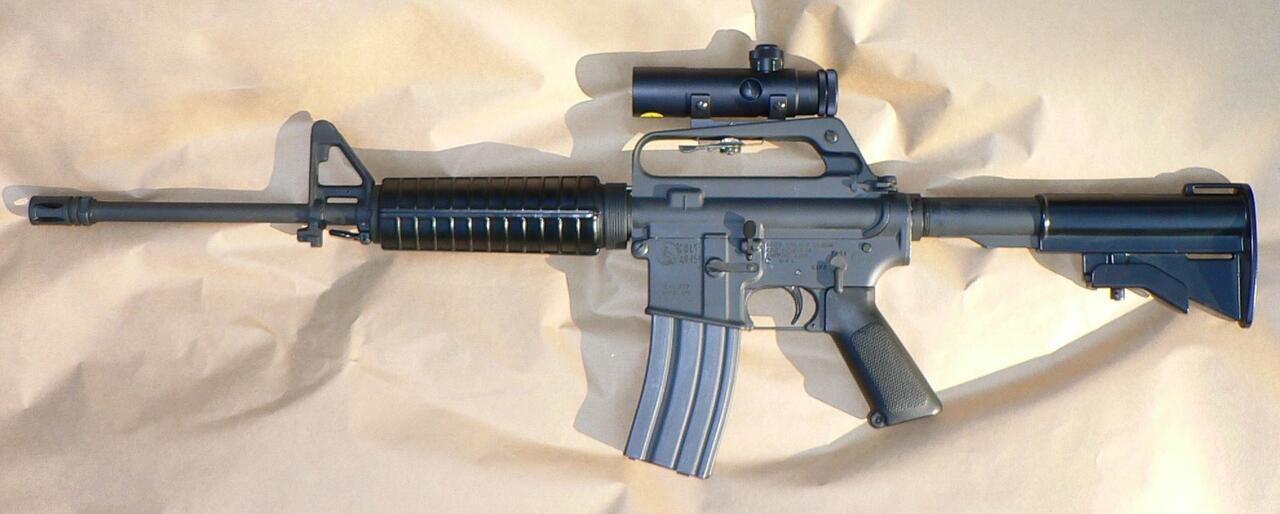
A recent column from Professor Rory Little suggests that these cases will strike at what he considers a glaring flaw in the Heller decision that recognized the individual right under the Second Amendment. Professor Little repeats a common claim about Heller that some of us have challenged. I wanted to briefly address that controversy again. The column appeared in Scotusblog, a respected site that offers tracking and commentary on pending Supreme Court cases. Here is the portion that I wanted to address:
The 2008 Heller decision, which changed precedent to find a Second Amendment right to own handguns for self-defense, was decided 5-4. To me (and others) it is clear that Justice Antonin Scalia had to include various qualifiers in his opinion, or he would have lost one or two of his five votes and Heller would have come out differently. Part III of the opinion was clearly added to capture, or keep, the narrow but earth-shattering majority, and ought to be viewed as the binding judgement of the court. Specifically, in addition to listing various "longstanding prohibitions on the possession of firearms" left undisturbed, part III said "we also recognize another important limitation on the right to keep and carry arms. ... the sorts of weapons protected were those 'in common use at the time'" (quoting United States v.Miller, a 1939 precedent upholding bans on machine guns). I add emphasis on "at the time," because the Viramontes briefing all but ignores what the court said was this "important limitation."
As the solicitor general's brief notes, "the AR-15 rifle was developed in 1956," and the first semiautomatic rifle of any kind was sold in 1903. Thus, while they may be the "most commonly owned rifle[] in America" today (albeit by less than 10% of all Americans), semi-automatic rifles were undisputedly not in common use "at the time" the Second Amendment was adopted in 1791. Indeed, as the SG's brief also explains, it is the modern technological developments in the AR-15 that makes it popular today. (This is also why they are commonly used in mass-shootings.) Rather, the solicitor general's Viramontes brief subtly changes the language, saying (on page 21) that the proper Second Amendment test is whether AR-15s "are in common use" today (again, my emphasis). This radically departs from the doctrinal limits that were essential to cementing the Heller result. In his 2025 dissent from denial of certiorari, Kavanaugh (joined by Justice Samuel Alito) adopted this same semantic transfiguration of Heller (changing "were" to "are") - an error (or strategy) presaged in Kavanaugh's 2011 Circuit judge dissent when Heller was remanded in 2011. Many folks will be listening on Dec. 2 to see whether a majority of justices will agree that Heller did not actually mean what it appeared to say.
As others have noted, this is an old saw repeated by many critics of Heller.
Justice Scalia anticipated this argument in the actual Heller decision. He wrote:
"Some have made the argument, bordering on the frivolous, that only those arms in existence in the 18th century are protected by the Second Amendment. We do not interpret constitutional rights that way...Just as the First Amendment protects modern forms of communications, and the Fourth Amendment applies to modern forms of search, the Second Amendment extends, prima facie, to all instruments that constitute bearable arms, even those that were not in existence at the time of the founding."
As I recently discussed in a column, this issue came up nine years ago when Massachusetts attempted to ban stun guns. The Court issued a per curiam opinion in Caetano v. Commonwealth of Massachusetts that sent back a case to the First Circuit and rejected the logic that they were not in common use at the time of the Second Amendment's enactment. The Court pointed out that in District of Columbia v. Heller, 554 U. S. 570, 582 (2008), it expressly rejected that argument and held that the Second Amendment "extends . . . to . . . arms . . . that were not in existence at the time of the founding." It also rejected two other rationales. (Notably, the Court is considering another stun gun case in Calce v. New York after the Second Circuit failed to heed the warning of the Court).
Notably, a new challenge has been filed in Connecticut over a ban of convertible handguns. It is likely to raise many of these same issues. The Firearm Industry Trade Association filed a lawsuit this week that will be before the district court as the Supreme Court hears arguments on the two pending cases.
I obviously disagree with Professor Little and other experts who raise this claim. There are, of course, good-faith arguments against the Heller decision. Some like Professor Little view that decision as "earth-shattering." I do not.
I still believe the Court was correct in viewing this as an individual right. However, I do not believe that this claim of a glaring and hypocritical contradiction between Heller and later cases is fair or supported. There was no sleight of hand in "changing 'were' to 'are.'"
This really does not come down to a change in verbs. While many hope that packing the Supreme Court will result in an immediate reversal of Heller, it is unlikely to turn on the word "were."
Jonathan Turley is a law professor and the New York Times best-selling author of "Rage and the Republic: The Unfinished Story of the American Revolution."